Showing posts with label ISRU. Show all posts

Wednesday, February 4, 2015

Hydrogen retention on pole-facing slopes

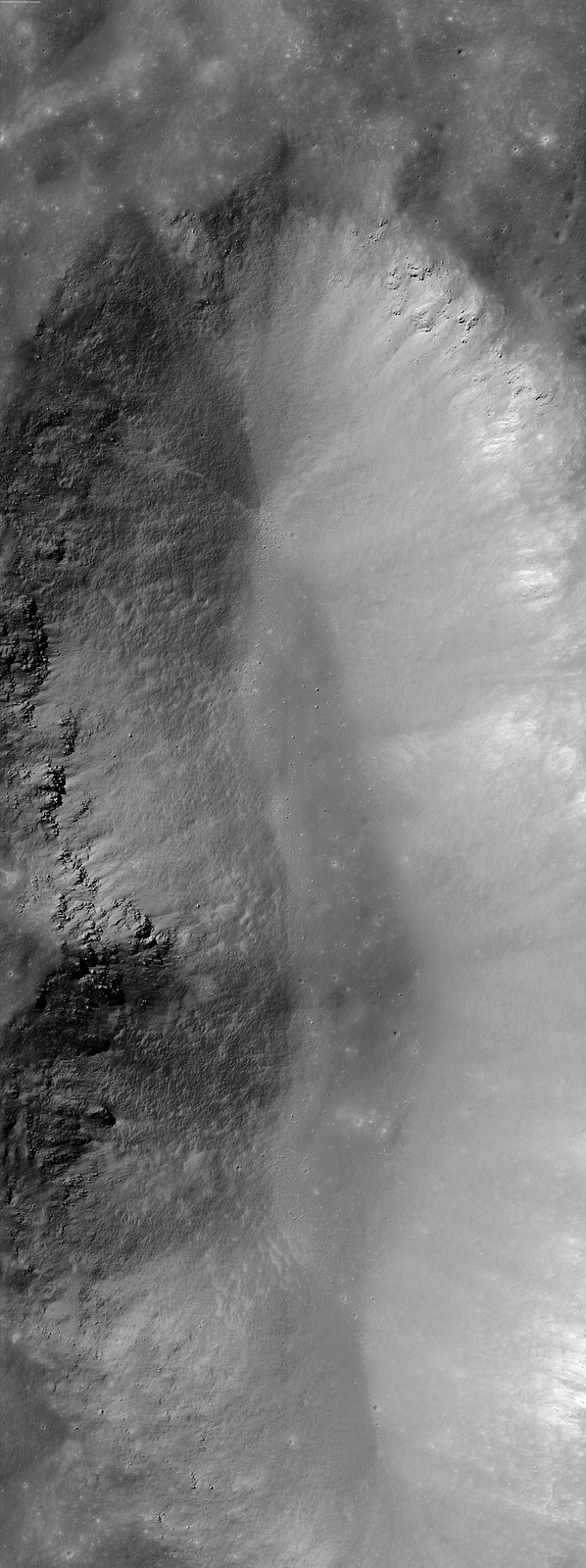
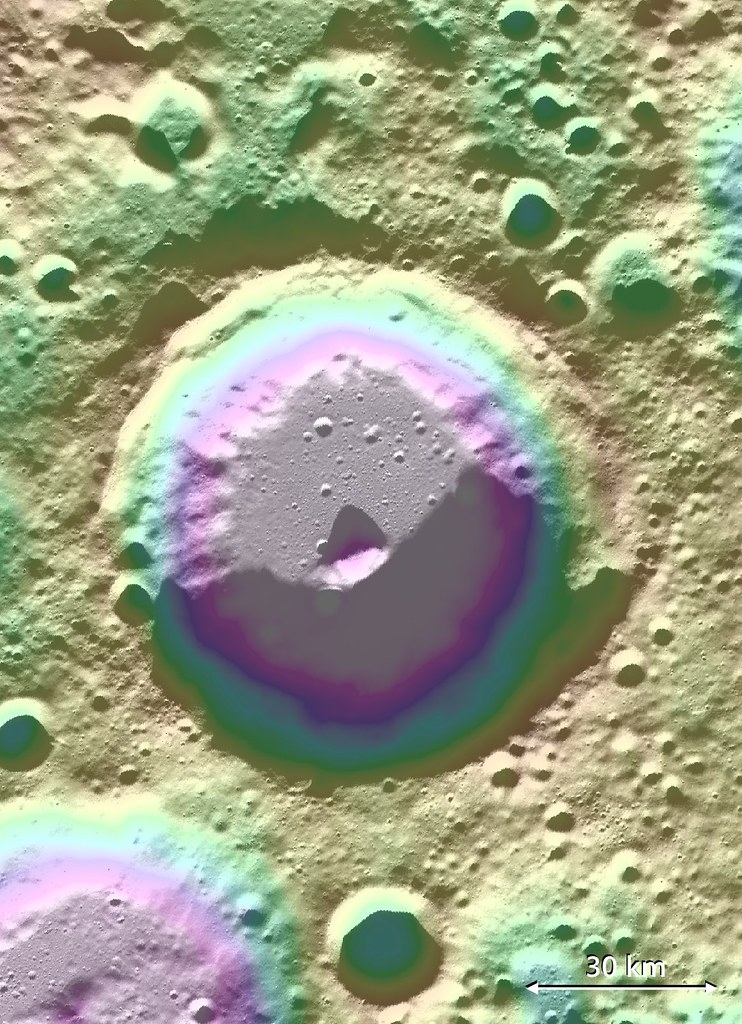
Lovelace (57.06 km; 82.08°N, 250.49°E) crater, of the Moon's far north, hosts a signature of volatiles within permanently shadowed regions (PSR) on the inside slope of its south wall. Long-term studies of the Moon's reserves of hydrogen and other volatiles, made possible by the extended science missions of the Lunar Reconnaissance Orbiter (LRO), show a diurnal cycle of hydrogen retention on pole-facing slopes, perhaps a result of neutral hydrogen from the Sun. [NASA/GSFC/ASU/LOLA/PDS].
Bill Steigerwald
Goddard Space Flight Center

Space travel is difficult and expensive – it would cost thousands of dollars to launch a bottle of water to the moon. The recent discovery of hydrogen-bearing molecules, possibly including water, on the Moon has explorers excited because these deposits could be mined if they are sufficiently abundant, sparing the considerable expense of bringing water from Earth.

Karnik
Lunar water could be used for drinking or its components – hydrogen and oxygen – could be used to manufacture important products on the surface that future visitors to the moon will need, like rocket fuel and breathable air.

Recent observations by NASA's Lunar Reconnaissance Orbiter (LRO) spacecraft indicate these deposits may be slightly more abundant on crater slopes in the southern hemisphere that face the lunar South Pole.

"There’s an average of about 23 parts-per-million-by-weight (ppmw) more hydrogen on Pole-Facing Slopes (PFS) than on Equator-Facing Slopes (EFS)," said Timothy McClanahan of NASA's Goddard Space Flight Center.

This is the first time a widespread geochemical difference in hydrogen abundance between PFS and EFS on the moon has been detected. It is equal to a one-percent difference in the neutron signal detected by LRO's Lunar Exploration Neutron Detector (LEND) instrument. McClanahan is lead author of a paper about this research published online October 19 in the journal Icarus.

The hydrogen-bearing material is volatile (easily vaporized), and may be in the form of water molecules (two hydrogen atoms bound to an oxygen atom) or hydroxyl molecules (an oxygen bound to a hydrogen) that are loosely bound to the lunar surface. The cause of the discrepancy between PFS and EFS may be similar to how the Sun mobilizes or redistributes frozen water from warmer to colder places on the surface of the Earth, according to McClanahan.

"Here in the northern hemisphere, if you go outside on a sunny day after a snowfall, you'll notice that there's more snow on north-facing slopes because they lose water at slower rates than the more sunlit south-facing slopes" said McClanahan. "We think a similar phenomenon is happening with the volatiles on the moon – PFS don't get as much sunlight as EFS, so this easily vaporized material stays longer and possibly accumulates to a greater extent on PFS."

The team observed the greater hydrogen abundance on PFS in the topography of the moon's southern hemisphere, beginning at between 50 and 60 degrees south latitude.

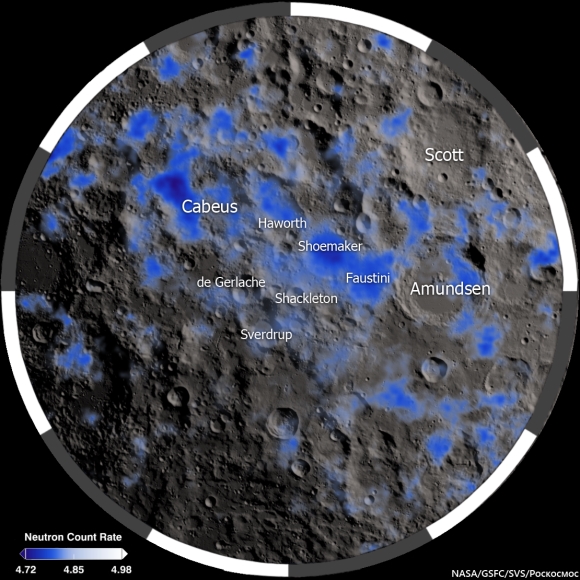
The Moon's polar south and its neutron suppression zpmes, indicative of the presence of hydrogen (inside and outside permanent shadow) mapped from data collected from the LRO LEND instrument over two and a half years [NASA/GSFC/SVS/Pockocmoc].
Slopes closer to the South Pole show a larger hydrogen concentration difference. Also, hydrogen was detected in greater concentrations on the larger PFS, about 45 ppmw near the poles. Spatially broader slopes provide more detectable signals than smaller slopes. The result indicates that PFS have greater hydrogen concentrations than their surrounding regions. Also, the LEND measurements over the larger EFS don't contrast with their surrounding regions, which indicates EFS have hydrogen concentrations that are equal to their surroundings, according to McClanahan. The team thinks more hydrogen may be found on PFS in northern hemisphere craters as well, but they are still gathering and analyzing LEND data for this region.
There are different possible sources for the hydrogen on the moon. Comets and some asteroids contain large amounts of water, and impacts by these objects may bring hydrogen to the moon. Hydrogen-bearing molecules could also be created on the lunar surface by interaction with the solar wind. The solar wind is a thin stream of gas that's constantly blown off the Sun. Most of it is hydrogen, and this hydrogen may interact with oxygen in silicate rock and dust on the moon to form hydroxyl and possibly water molecules. After these molecules arrive at the moon, it is thought they get energized by sunlight and then bounce across the lunar surface; and they get stuck, at least temporarily, in colder and more shadowy areas.

Since the 1960's scientists thought that only in permanently shadowed areas in craters near the lunar poles was it cold enough to accumulate this volatile material, but recent observations by a number of spacecraft, including LRO, suggest that hydrogen on the moon is more widespread.

It's uncertain if the hydrogen is abundant enough to economically mine. "The amounts we are detecting are still drier than the driest desert on Earth," said McClanahan. However, the resolution of the LEND instrument is greater than the size of most PFS, so smaller PFS slopes, perhaps approaching yards in size, may have significantly higher abundances, and indications are that the greatest hydrogen concentrations are within the permanently shaded regions, according to McClanahan.

The team made the observations using LRO's LEND instrument, which detects hydrogen by counting the number of subatomic particles called neutrons flying off the lunar surface. The neutrons are produced when the lunar surface gets bombarded by cosmic rays. Space is permeated by cosmic rays, which are high-speed particles produced by powerful events like flares on the Sun or exploding stars in deep space. Cosmic rays shatter atoms in material near the lunar surface, generating neutrons that bounce from atom to atom like a billiard ball. Some neutrons happen to bounce back into space where they can be counted by neutron detectors.

Neutrons from cosmic ray collisions have a wide range of speeds, and hydrogen atoms are most efficient at stopping neutrons in their medium speed range, called epithermal neutrons. Collisions with hydrogen atoms in the lunar regolith reduce the numbers of epithermal neutrons that fly into space. The more hydrogen present, the fewer epithermal neutrons the LEND detector will count.

Neutron suppression information in the Moon's polar north is, as yet, less granular than data mapped in greater detail over the far South. Here neutron suppression is overlaid on a LROC WAC mosaic with permanently shadowed regions (PSRs) outlined in black. Again, the occurrence of hydrogen is related to sunlight but not necessarily tied to its total absence.
The team interpreted a widespread decrease in the number of epithermal neutrons detected by LEND as a signal that hydrogen is present on PFS. They combined data from LEND with lunar topography and illumination maps derived from LRO's LOLA instrument (Lunar Orbiter Laser Altimeter), and temperature maps from LRO's Diviner instrument (Diviner Lunar Radiometer Experiment) to discover the greater hydrogen abundance and associated surface conditions on PFS.

In addition to seeing if the same pattern exists in the moon's northern hemisphere, the team wants to see if the hydrogen abundance changes with the transition from day to night. If so, it would substantiate existing evidence of a very active production and cycling of hydrogen on the lunar surface, according to McClanahan.

The research was funded by NASA's LRO mission. LEND was supplied by the Russian Federal Space Agency Roscosmos. Launched on June 18, 2009, LRO has collected a treasure trove of data with its seven powerful instruments, making an invaluable contribution to our knowledge about the moon. LRO is managed by NASA's Goddard Space Flight Center in Greenbelt, Maryland, for the Science Mission Directorate at NASA Headquarters in Washington.

Sunday, November 30, 2014

Is there an economic case for mining the Moon?

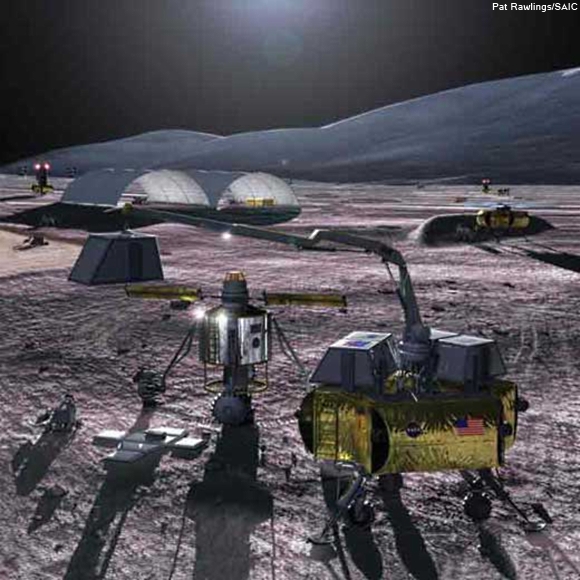
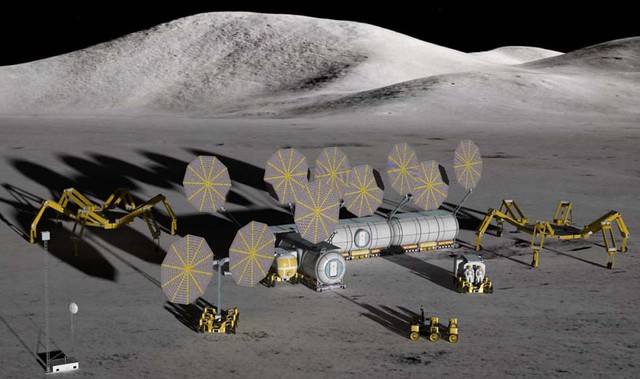
Of necessity, much of the actual work of harvesting resources for true in situ resource utilization (ISRU) will have to be done robotically [Pat Rawlings/SAIC].
Ian Crawford
Birkbeck, University of London

To date, all human economic activity has depended on the material and energy resources of a single planet; understandably, perhaps. It is conceivable though that future advances in space exploration could change this by opening our closed planetary economy to essentially unlimited external resources of energy and raw materials.

Look up at the Moon this evening, and you might be gazing at a solution. The Earth’s closest celestial neighbour seems likely to play a major role and already a number of private companies have been created to explore the possibilities.

It is important to stress that even now, 40 years after the Apollo missions, we still don’t have a complete picture of the Moon’s economic potential, and obtaining one will require a more rigorous programme of lunar exploration than has been undertaken to-date. In part, this is why proposed future lunar exploration missions (such as the recently announced Lunar Mission One) are so important.

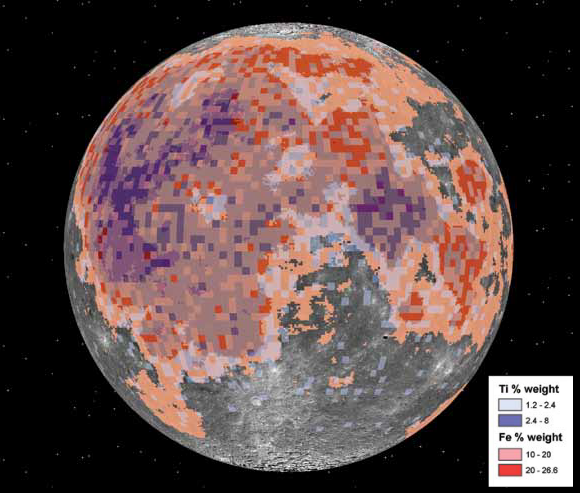
"In addition, lunar surface rocks and soils are rich in potentially useful, but heavy (and thus expensive to launch from Earth) raw materials such as magnesium, aluminium, silicon, iron and titanium." - Relative abundances of titanium and iron, as a percentage of weight, plotted against the nearside hemisphere. Note the heaviest incidences appear in the Ocean of Storms and Sea of Tranquility.
Nevertheless, as a result of work over the past four decades, we do now know enough to make a first-order assessment of lunar resource potential. In doing so it is useful to distinguish between three possible future applications of such resources.

Read the full article published at The Conversation, HERE.

NOTE from Mr. Crawford: "This essay is based on a much more detailed review article which will be published next year, and in which references to sources and more extensive discussion will be found here: arXiv.org/abs/1410.6865."

Friday, November 7, 2014

Exploring the lunar subsurface

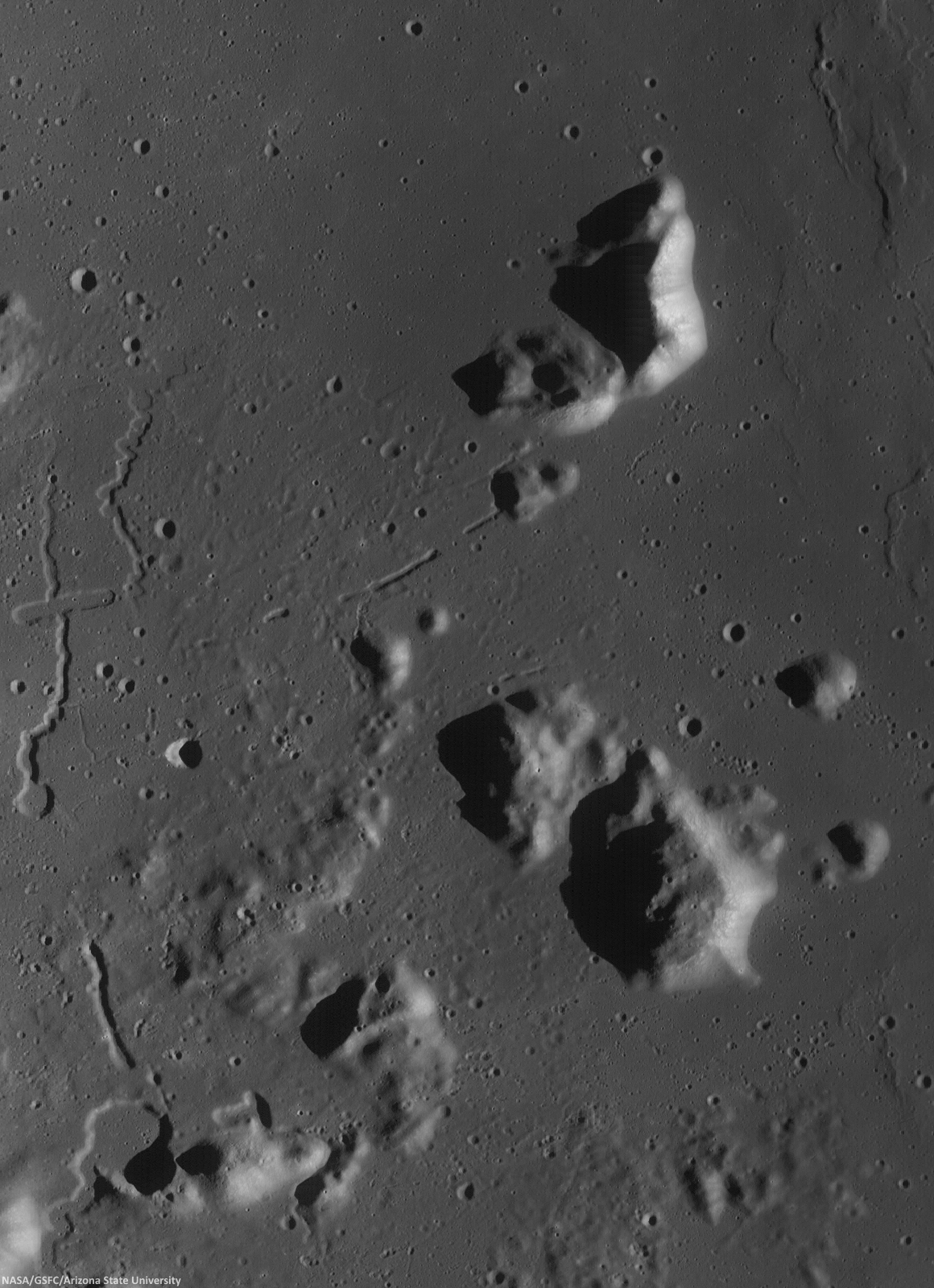
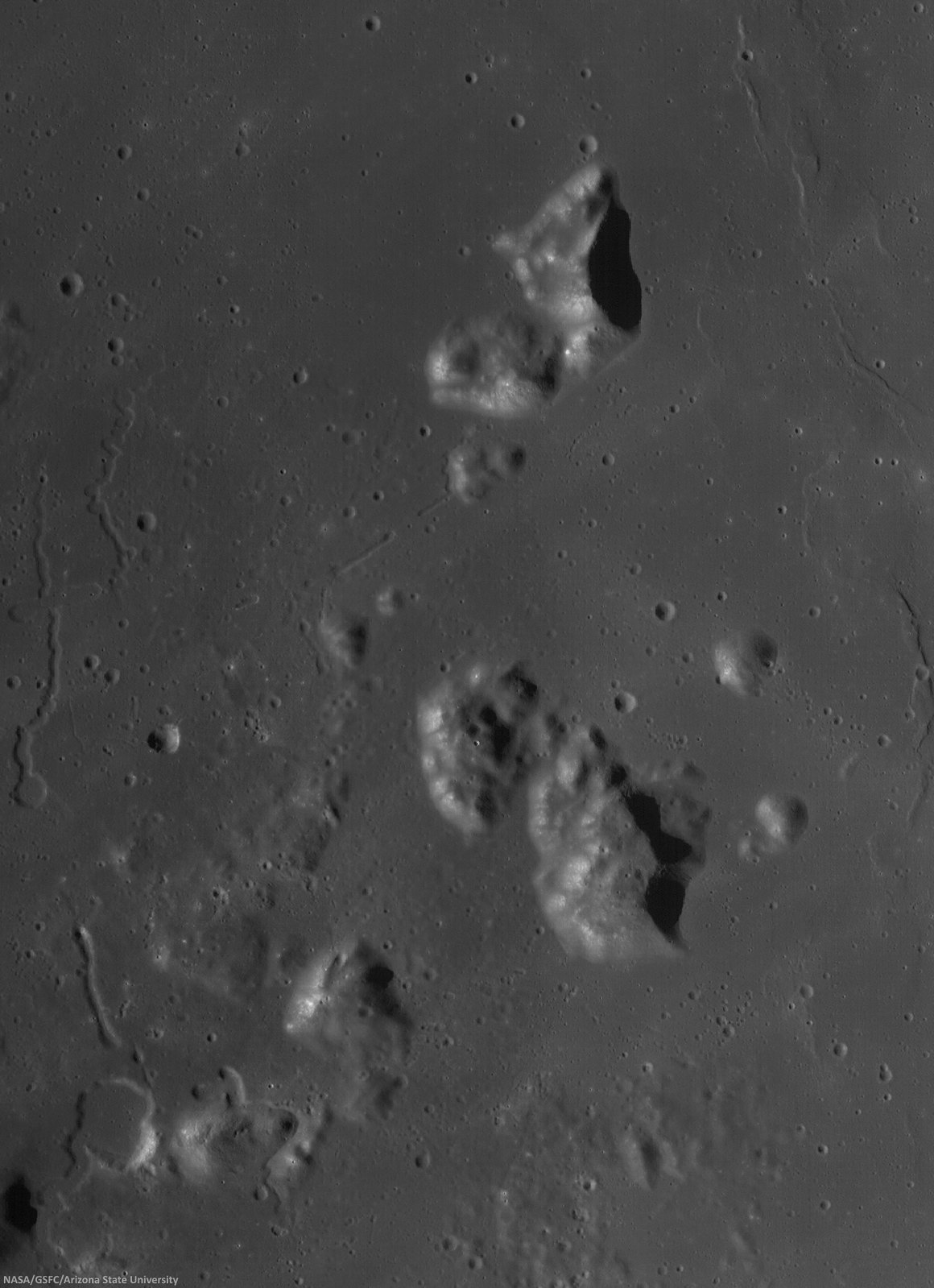
Two collapsed segments of a lava tube run from the southwest to the northeast, in the Rimae Prinz-Harbinger mountain region of Oceanus Procellarum (27.46°N, 318.33°E). These collapsed segments may provide access to the subsurface, which has never been directly sampled. The average width of the collapsed segments is ~650 meters. The lava tube is ~50 meters deep, seen in this 7 km-wide field of view from a mosaic of unreleased 2014 LROC NAC observation M1165080128 (L&R) [NASA/GSFC/Arizona State University].
H. Meyer
LROC News System

A lava tube is a volcanic conduit through which lava travels beneath the hardened crust of a lava flow. The presence of lava tubes on the Moon and beyond are inferred based on observations of terrestrial lava tubes, such as those found in Hawaii. Oftentimes, a rille suddenly disappears only to reappear a short distance away.

These are called discontinuous rilles and are thought to be areas where a lava tube collapsed. Collapsed lava tube segments may provide access to the subsurface, which is exciting as a possible site to collect rock samples that remain unaltered due to surface weathering (radiation, thermal cycling, micrometeorite bombardment).

Slightly differing, slightly lower resolution, 11.5 x 15.9 km field of view of the area of interest from a mosaic of LROC Narrow Angle Camera (NAC) observation M1152143995RL, LRO orbit 21776, April 14, 2014; resolution averages 1.33 meters per pixel, incidence angle 48.9° from 132.14 km over 26.86°N, 318.11°E. View the original 8706 x 12008 and an assortment of other sizes HERE [NASA/GSFC/Arizona State University].
Sunrise over Mons Harbinger. 65 km-wide field of view from mosaic of three LROC Wide Angle Camera (WAC) monochrome (604 nm) observations, swept up during three sequential orbital passes, December 7, 2011,  from 43 km; resolution 58 meters per pixel, incidence 77° [NASA/GSFC/Arizona State University].
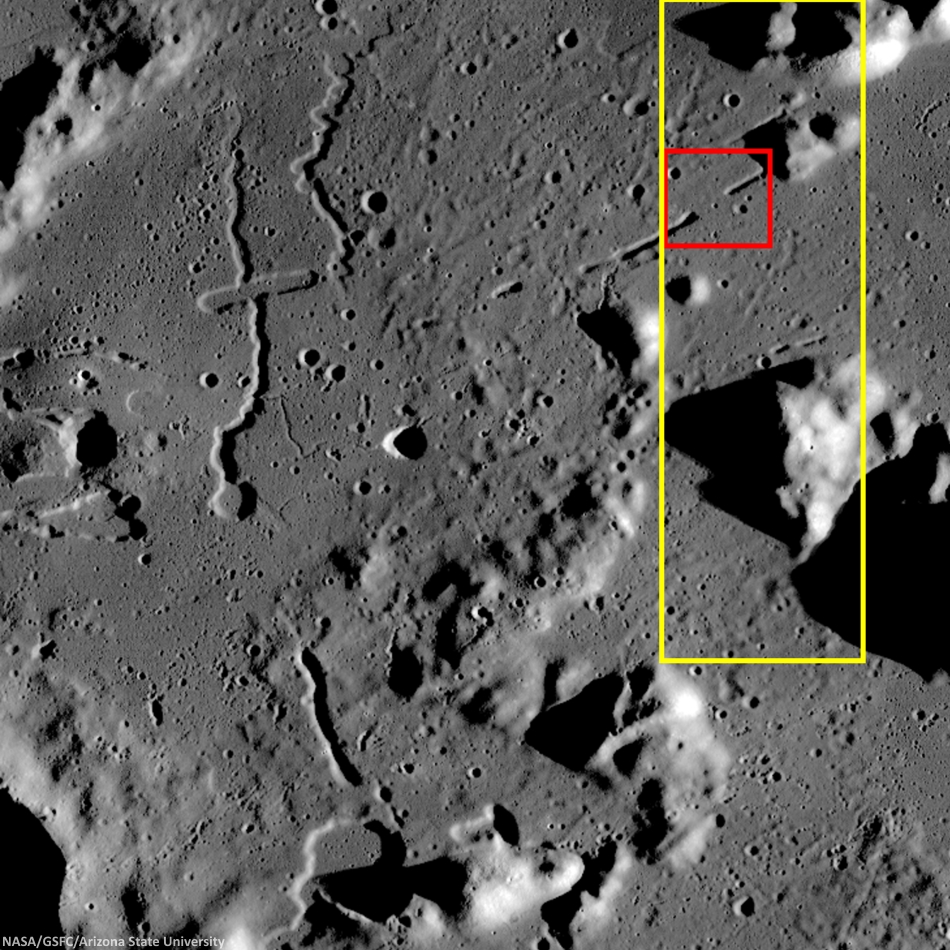
Context for LROC Featured Image released November 6, 2014, field of view in red, full field swept up in LROC NAC observations M1152143995R & L in yellow. LROC WAC mosaic [NASA/GSFC/Arizona State University].
The lava tube from the LROC Featured Image released November 5, 2014 is located to the west of Montes Harbinger, a large kipuka in Oceanus Procellarum, and to the east of the Rimae Prinz region.

The Rimae Prinz region displays exquisite sinuous rilles as well as other elongate depressions, indicating that there could be other lava tubes in the area.

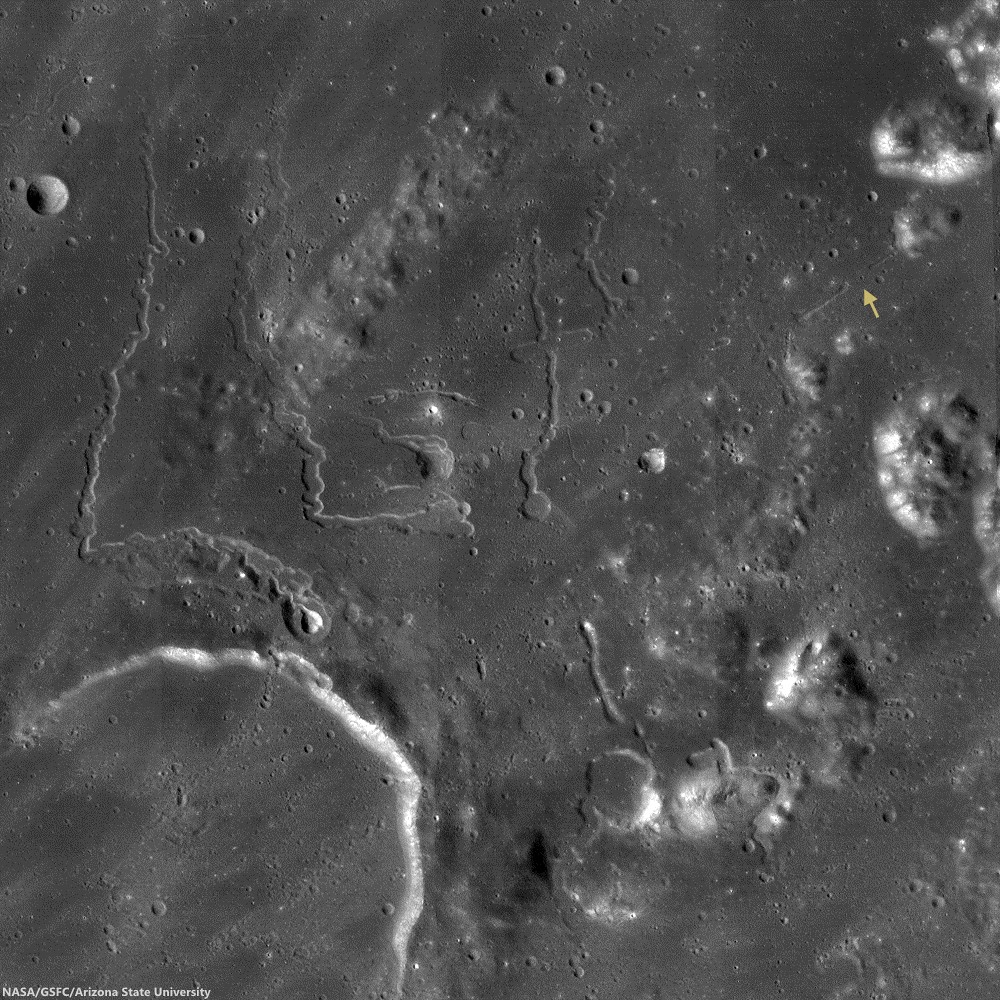
The Prinz, Rimae Prinz and Vera vent region, east of Aristarchus Plateau. The area of interest is marked with a yellow arrow, upper right in this roughly 120 km square field of view from the LROC WAC 100m global mosaic. the Vera vent 'cobra head' of Rima Prinz I rille (on the north-northeast rim of basalt-inundated Prinz crater, at lower left), is the subject of intense study (see HERE). [NASA/GSFC/Arizona State University].
The entire region, pictured above, is of interest for exploration for several reasons. The diversity of volcanic landforms in the area can tell scientists much about the volcanic history of the Moon. By collecting samples from the surface and subsurface in this region and by careful mapping on-site, scientists can better characterize the diverse basaltic lava flows in terms of both age and composition, which also helps us understand the timing and evolution of lunar volcanism and possible heterogeneities in the lunar mantle. Any time a sample is taken from a site on the Moon and age-dated, it can also be used to calibrate crater densities that are currently used to remotely age-date surfaces in the absence of direct sampling (both on the Moon and other planets).

Lava tubes are of particular interest in terms of human exploration because they are not only scientifically valuable, but they might also provide shielding from the radiation that poses a hazard to future explorers. Furthermore, the region surrounding the lava tube from this Featured Image also hosts large pyroclastic deposits, which are a potential in situ resource that will be critical to sustaining a human presence on the Moon.

Scientists and engineers are looking into the possibility of using the natural structure of the lava tube and associated resources (ISRU) to our advantage to construct habitats for explorers.

Explore the full NAC mosaic here! How many features of interest do you see?

Rimae Prinze Region - Constellation ROI
Discontiguous Rilles

Addendum: Under mid to late afternoon sunlight, another LROC WAC mosaic, swept up under conditions remarkably similar in scale with the third image from above, from the same period of low altitude opportunities the LRO mission afforded during orbital maneuvers in the second half of 2011. Differing sun-moon-spacecraft phase angles allows for an excellent comparison. This particular mosaic was also assembled from LROC WAC observations, but five months earlier, and from three sequential orbital passes, at 43 km altitude. The resolution is 59 meters, incidence angle 64° [NASA/GSFC/Arizona State University].

Tuesday, April 15, 2014

Sometimes you just need to 'vent'

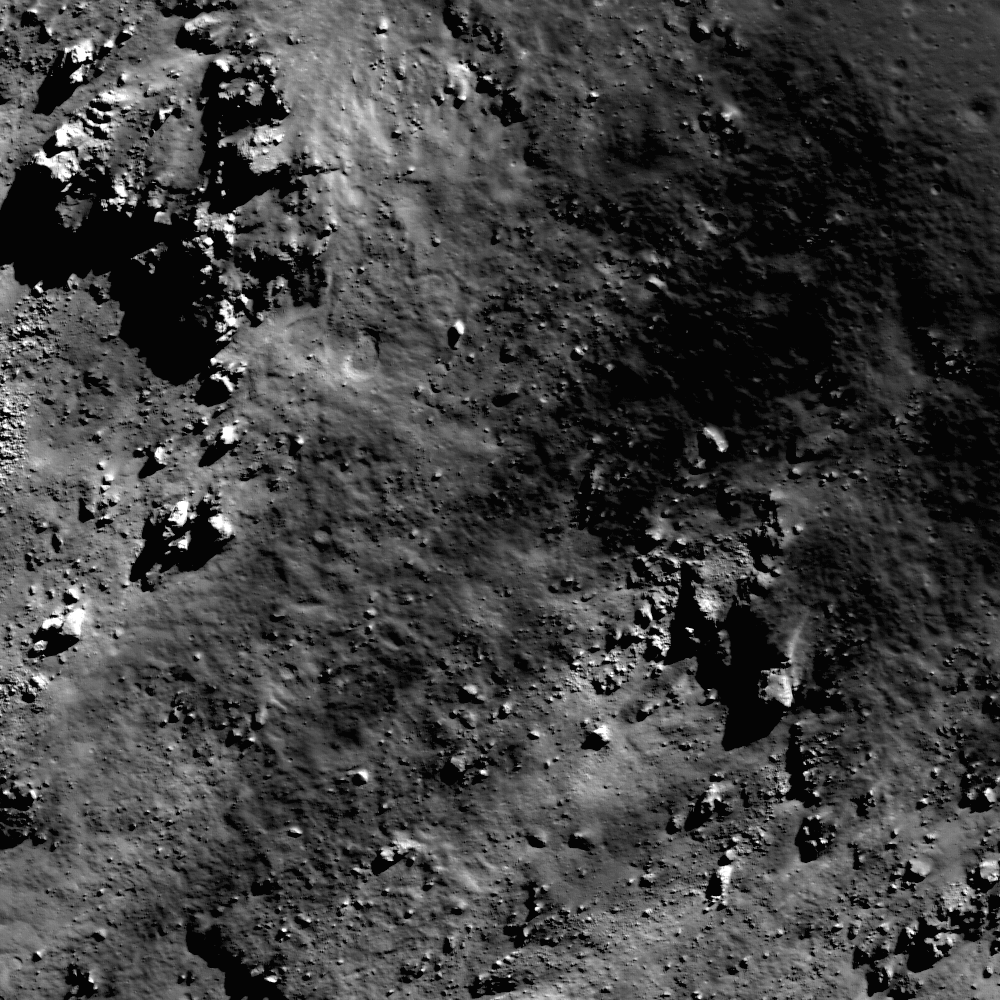
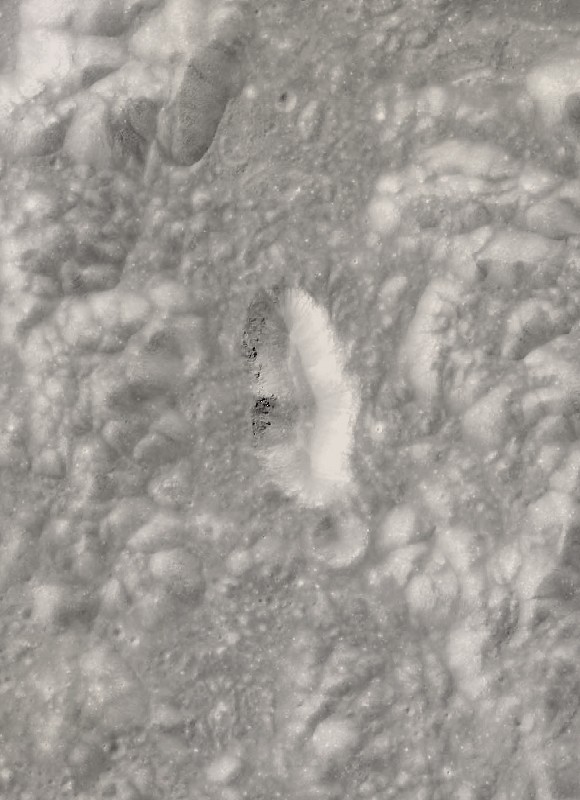
Low reflectance material cascaded down the wall of what is likely a volcanic vent in the southwestern portion of the Orientale basin. Image field of view approximately 750 meters, from LROC NAC observation M1150135366,  LROC orbit 21493, March 22, 2014; incidence 37.45° resolution 77 cm from 75.55 km over 30.12°S, 262.19° [NASA/GSFC/Arizona State University].
H. Meyer
LROC News System

Pyroclastic deposits on the Moon are often identified by a mantled appearance and low reflectance. These deposits are the result of an explosive eruption (or many) that involved a volatile component, likely carbon monoxide. The resulting fine-grained debris, including glass beads like those sampled by Apollo 17, gives the surface a dark, mantled appearance (See WAC image below).

So, where did the low reflectance material come from? The low reflectance material here flowed down the wall of a kidney-shaped (reniform) depression located at the center of the annulus.

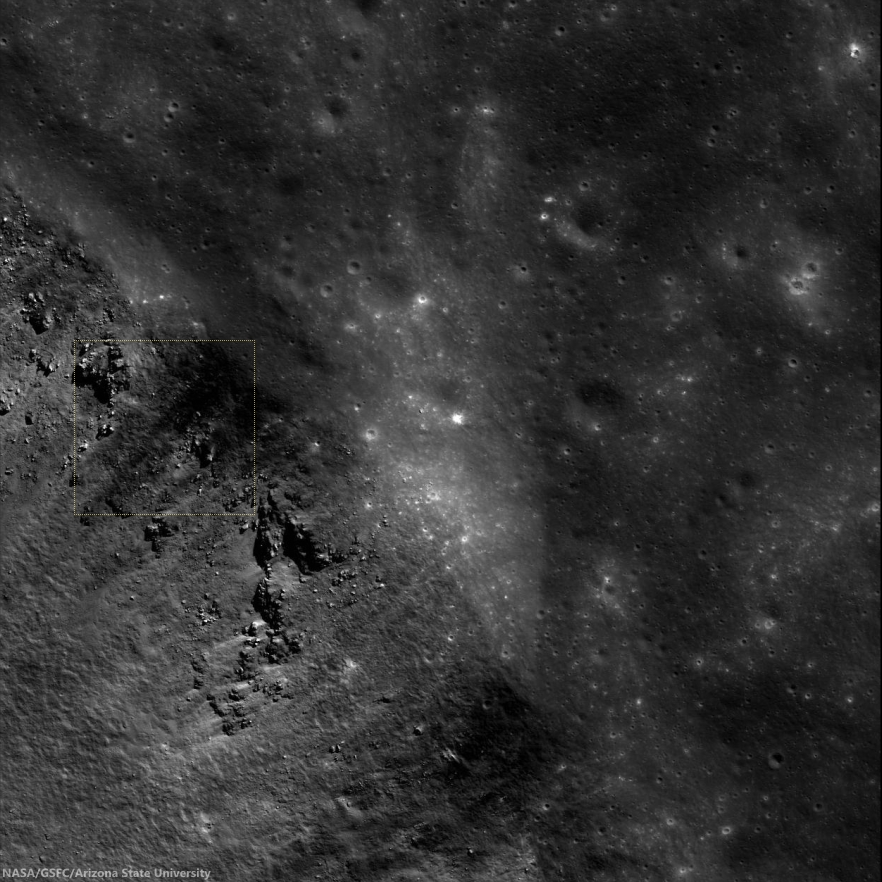
Expanded 3.8 km-wide context for LROC Featured Image released April 15, 2014 - outlined box - northwestern rim of pyroclastic vent, southern frontier Mare Orientale impact basin. Mosaic of left and right frames of LROC NAC observation M1150135366  [NASA/GSFC/Arizona State University].
The lack of a discernible crater rim and irregular shape make this depression a suspect (See WAC image below). The walls of the depression are steep-sloped, yet the floor is fairly flat, which is best observed in a color-shaded digital terrain model (DTM). Such reniform depressions are observed in other locations across the Moon, such as Sulpicius Gallus, interpreted to be a pyroclastic source vent.

A higher angle of incidence, in this 2.8 x 7.5 km-wide field of view, washes out much of the finer grain albedo, though a look at the larger 40 percent -3760 x 9920- reproduction does reveal much of the detail of the rim, walls, boulder trails and debris-filled floor of the two-kilometer deep "smoke ring vent."  The area of interest on the upper right, also in the LROC Featured Image can be compared. LROC NAC mosaic of the left and right frames of observation M1099502843, LRO orbit 14378, August 13, 2012; illumination incidence angle 45° at 76 cm per pixel resolution, from 72.13 km over 30.11°S, 261.81°E [NASA/GSFC/Arizona State University].
If the kidney-shaped depression is the source of the low reflectance material, it is likely that material was ejected from the source vent at high velocity, creating an umbrella-shaped plume and depositing the dark, fine-grained material in a ring around the vent.

The larger than lunar average - 12.5 x 19.75 km pyroclastic "smoke ring vent," on the southwestern frontier of the Mare Orientale impact basin, is also hub to a regionally distinct 190 km-in diameter ring of darker material that, while not apparent in topographic studies, stands out in all native reflectance photography. Medium resolution Chang'e-2 Global albedo Mosaic [CNSA/CLEP].
Pyroclastic deposits are currently of interest to lunar scientists as a possible resource for future missions to the Moon. Such deposits are rich in hydrogen and helium-3, two potential resources for energy production, and iron and titanium, which have engineering applications.

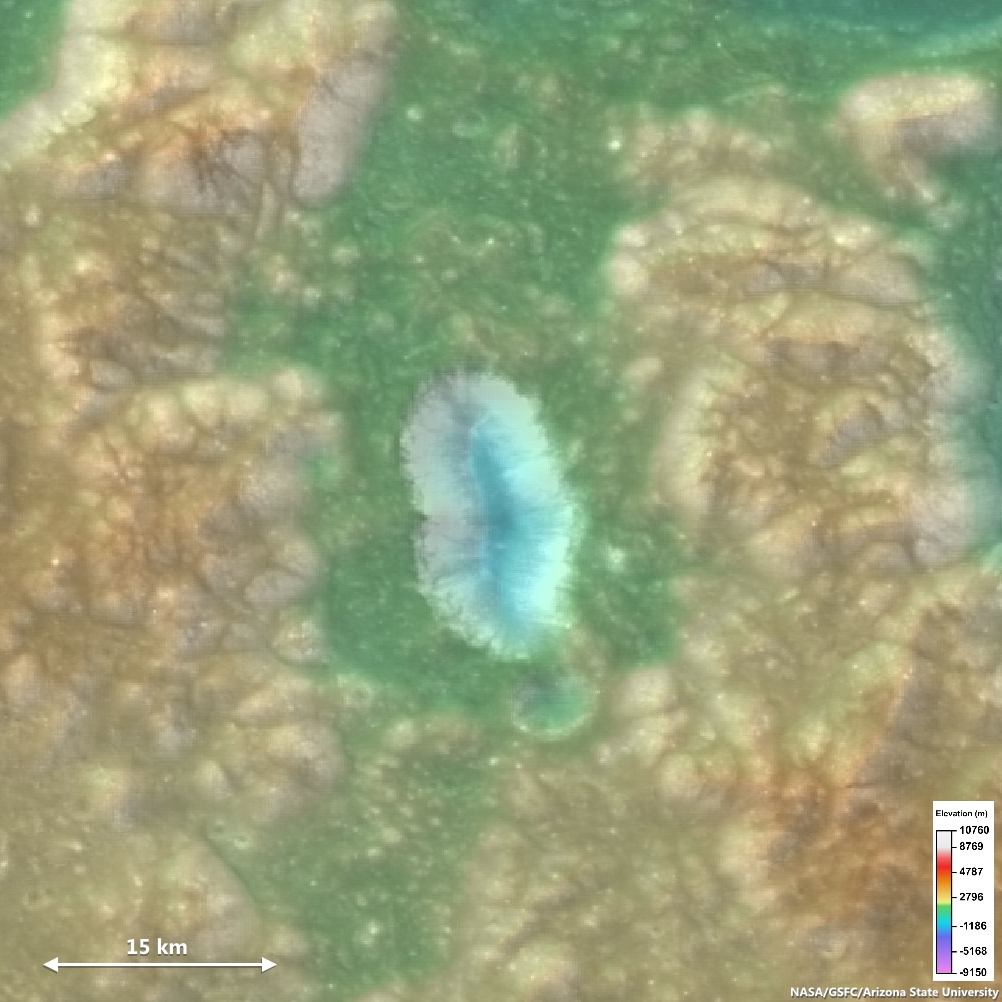
Elevation study, LROC WAC-derived GLD100 topography in color-coded overlay onto LROC global normalized reflectance data. The high mountains of the concentric Orientale impact basin ring, where the vent is nested, offers a high vantage. Elevations range over 4000 meters in 10 km [NASA/GSFC/Arizona State University].
LROC WAC normalized reflectance 643 nm, of the low-reflectance pyroclastic annulus on the southwest Orientale impact basin. The annulus is approximately 180 km in diameter [NASA/GSFC/Arizona State University].
The necessary capabilities for utilizing resources such as these in-situ, or on site, are currently under development. In-situ resource utilization (ISRU) is critical to the future of exploration of areas that would otherwise be beyond our reach, both physically and financially.

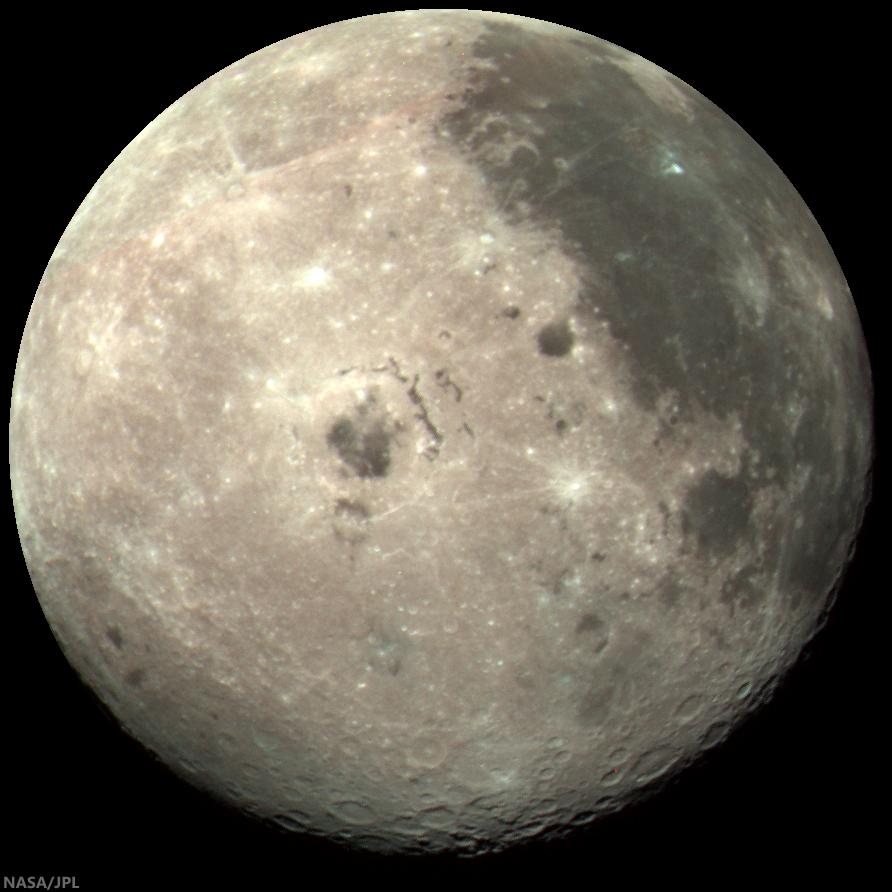
Another opportunity to display this stacked three-color image of the Moon's western hemisphere, which features Mare Orientale so prominently and demonstrates that the pyroclastic annulus south-southwest of its central plain, is large and prominent enough to be photographed from more than half a million kilometers away. In this case, captured by the Jovian probe Galileo at 1735 UT, December 9, 1990 [NASA/JPL].
Do some investigating of your own with the full NAC, HERE.

Related Posts:
Pyroclastics and an unnamed Procellarum vent
Source vent for Rima Prinz I
Craters on the Schrödinger pyroclastic cone
Morphology and distribution of volcanic vents in the Orientale basin from Chandrayaan-1
Unassuming volcanic vent north of Aristarchus Plateau
New pyroclastic structures identified using LROC data
A dark cascade at Sulpicius Gallus
Hyginus and pyroclastics
Layer of pyroclastics in Sinus Aestuum
Lavoisier Pyroclastics
Pyroclastic Excavation
Pyroclastic Trails
Pyroclastic Vent at Orientale DTM

Tuesday, January 21, 2014

Clementine - The Legacy, Twenty Years On

Engineering model of the Clementine spacecraft in the Lunar Exploration Vehicles exhibit at the National Air and Space Museum. Interstage and solid rocket motor (bottom half) was discarded before insertion into lunar orbit.
Paul D. Spudis
Smithsonian Air & Space

The first spacecraft to globally map the Moon left lunar orbit on May 3, 1994.  Clementine, a joint Department of Defense-NASA mission, had systematically mapped the Moon’s surface over 71 days, collecting almost 2 million images.  For the first time, scientists could put results of the Apollo lunar sample studies into a regional, and ultimately, a global context.  Clementine collected special data products, including broadband thermal, high resolution and star tracker images for a variety of special studies.  But in addition to this new knowledge of lunar processes and history, the mission led a wave of renewed interest in the processes and history of the Moon, which in turn, spurred a commitment to return there with both machines and people.  We peeked into the Moon’s cold, dark areas near the poles and stood on the edge of a revolution in lunar science.

Prior to Clementine, good topographic maps only existed for areas under the ground tracks of the orbital Apollo spacecraft.  From Clementine’s laser ranging data, we obtained our first global topographic map of the Moon.  It revealed the vast extent and superb preservation state of the South Pole-Aitken (SPA) basin and confirmed many large-scale features mapped or inferred from only a few clues provided by isolated landforms.  Correlated with gravity information derived from radio tracking, we produced a map of crustal thickness, thereby showing that the crust thins under the floors of the largest impact basins.

Two cameras (with eleven filters) covered the spectral range of 415 to 1900 nm, where absorption bands of the major lunar rock-forming minerals (plagioclase, pyroxene and olivine) are found.  Varying proportions of these minerals make up the suite of lunar rocks.  Global color maps made from these spectral images show the distribution of rock types on the Moon.  The uppermost lunar crust is a mixed zone, where composition varies widely with location.  Below this zone is a layer of nearly pure anorthosite, a rock type made up solely of plagioclase feldspar (formed during the global melting event that created the crust).  Craters and large basins act as natural “drill holes” in the crust, exposing deeper levels of the Moon.  The deepest parts of the interior (and possibly the upper mantle) are exposed at the surface within the floor of the enormous SPA basin on the far side of the Moon.

Topographic map of the Moon made from Clementine laser altimetry in mid-latitudes and stereo images near the poles. Large depression in southern far side is the South Pole-Aitken basin.
Clementine showed us the nature and extent of the poles of the Moon, including peaks of near permanent sun-illumination and crater interiors in permanent darkness.  From his first look at the poles, Gene Shoemaker (Leader of the Clementine Science Team) got an inkling that something interesting was going on there.  Gene was convinced that water ice might be present, an idea about which I had always been skeptical.  At that time, no trace of hydration had ever been found in lunar minerals and the prevailing wisdom was that the Moon is now and always had been bone dry.  With Gene arguing to keep an open mind and Stu Nozette (Deputy Program Manager) devising a bistatic radio frequency (RF) experiment to use the spacecraft transmitter to “peek” into the dark areas of the poles, we moved ahead on planning the observations.

To my astonishment (and delight), a pass over the south pole of the Moon showed evidence for enhanced circular polarization ratio (CPR) – a possible indicator of the presence of ice.  A control orbit over a nearby sunlit area showed no such evidence.  However, CPR is not a unique determinant for ice, as rocky, rough surfaces and ice deposits both show high CPR.  It took a couple of years to reduce and fully understand the data, but collection of the bistatic collection was successful.  In part, our ice interpretation was supported by the discovery of water ice at the poles of Mercury (a planet very similar to the Moon).  We published our results in Science magazine in December 1996, setting off a media frenzy and a decade of scientific argument and counter-argument about the interpretation of radar data for the lunar poles (an argument that continues to this day, despite subsequent confirmation of lunar polar water from several other techniques).

Along with Clementine’s success came a growing interest in lunar resources and a new appreciation for the complexity of the Moon.  This interest led to the selection of Lunar Prospector (LP) as the first PI-led mission of NASA’s new, low-cost Discovery series of planetary probes.  LP flew to the Moon in 1998 and carried instruments complementary to the data produced by Clementine, including a gamma-ray spectrometer to map global elemental composition, magnetic and gravity measurements, and a neutron spectrometer to map the distribution of hydrogen.  LP found enhanced concentrations of hydrogen at both poles, again suggesting that water ice was probably present.  The debate on the abundance and physical nature of the water ice continued, with estimates ranging from a simple enrichment of solar wind implanted hydrogen in polar soils, to substantial quantities of water ice trapped in the dark, cold regions of the poles.

Buttressed by this new information, the Moon became an attractive destination for robotic and human missions.  With direct evidence for significant amounts of hydrogen (regardless of form) on the surface, there now was a known resource that would support long-term human presence.  This hydrogen discovery was complemented by the identification in Clementine images of several areas near the pole that remain sunlit for substantial fractions of the year – not quite the “peaks of eternal light” first proposed by French astronomer Camille Flammarion in 1879 but something very close to it.  The availability of material and energy resources  – the two biggest necessities for permanent human presence on the Moon – was confirmed in one fell swoop.  Combined, the results of Clementine and LP finally gave scientists the Lunar Polar Orbiter mission we had long sought.  These two missions certified the possibility of using lunar resources to provision ourselves in space, permanently establishing the Moon as a valuable, enabling asset for human spaceflight.  Remaining was to verify and extend the radar results from Clementine and map the ice deposits of the poles.

The Clementine bistatic experiment led to the development of an RF transponder called Mini-SGLS (Space Ground Link System), which flew on the Air Force mission MightySat II in 2000.  This experiment miniaturized the RF systems necessary for a low mass, low power imaging radar.  With the 2008 inclusion of our Mini-SAR on India’s Chandryaan-1 lunar orbiter, we finally got the chance to build and fly such a system.  Chandrayaan-1 not only mapped the high CPR material at both poles, it also carried a spectrometer (the Moon Mineralogy Mapper, or M3) that discovered large amounts of adsorbed surface water (H2O) and hydroxyl (OH) at high latitudes.  Coupled with the measurement of exospheric water above the south pole by its Moon Impact Probe, Chandrayaan-1 significantly advanced our understanding of polar water, revealing it to be abundant and present in more varied forms on the Moon than had previously been imagined.

Mosaic of Clementine images of the south pole of the Moon. Dark regions contain water ice and small areas near pole are sunlit for significant fractions of the lunar day.
The ever increasing weight of evidence for the presence of significant amounts of water at the lunar poles led to the LCROSS experiment being “piggybacked” on NASA’s 2008 Lunar Reconnaissance Orbiter (LRO) mission.  LCROSS was a relatively inexpensive add-on, designed to observe the collision of the LRO launch vehicle’s Centaur upper stage with the lunar surface, looking for water in the ejecta plume of that impact.  Water in both vapor and solid form was observed, suggesting the presence of water ice in the floor of the crater Cabaeus (at concentration levels between 5 and 10 weight percent).  LRO orbits the Moon and collects data to this day.  Although much remains unknown about lunar polar water, we now know for certain that it exists; such knowledge has completely revised our thinking about the future use and habitation of the Moon.

The Clementine programmatic template has influenced spaceflight for the last 20 years.  The Europeans flew SMART-1 to the Moon in 2002, largely as a technology demonstration mission with goals very similar to those of Clementine.  NASA directed the Applied Physics Laboratory (APL) to fly Near-Earth Asteroid Rendezvous (NEAR) to the asteroid Eros in 1995 as a Discovery mission, attaining the asteroid exploration opportunity missed when control of the Clementine spacecraft was lost after leaving the Moon.  India’s Chandrayaan-1 was of a size and payload scope similar to Clementine.  The selection of LCROSS as a low-cost, fast-tracked, limited objectives mission further extended use of the Clementine paradigm.

The “Faster-Better-Cheaper” mission model, once panned by some in the spaceflight community, is now recognized as a preferred mode of operations, absent the emotional baggage of that name.  A limited objectives mission that flies is more desirable than a gold-plated one that sits forever on the drawing board.  While some missions do require significant levels of fiscal and technical resources to attain their objectives, an important lesson of Clementine is that for most scientific and exploration goals, “better” is the enemy of  “good enough.”  Space missions require smart, lean management; they should not be charge codes for feeding the beast of organizational overhead.  Clementine was lean and fast; perhaps we would have made fewer mistakes had the pace been a bit slower, but overall the mission gave us a vast, high-quality dataset, still extensively used to this day.  The Naval Research Laboratory transferred the Clementine engineering model to the Smithsonian in 2002.  The spacecraft hangs today in the Air and Space Museum, just above the Apollo Lunar Module.

It is probably not too much of an exaggeration to say that Clementine changed the direction of the American space program.  After the failure of SEI in 1990-1992, NASA was left with no long-term strategic direction.  For the first time in its history, NASA had no follow-on program to Shuttle-Station, despite attempts by Dan Goldin and others to secure approval for a human mission to Mars (then and now, a bridge too far – both technically and financially).  This programmatic stasis continued until 2003, when the tragic loss of Columbia led to a top-down review of U.S. space goals.  Because Clementine had documented its strategic value, the Moon once again became an attractive destination for future robotic and human missions.  The resulting Vision for Space Exploration (VSE) in 2004 made the Moon the centerpiece of a new American effort beyond low Earth orbit.  While Mars was vaguely discussed as an eventual (not ultimate) objective, the activities to be done on the Moon were specified in detail in the VSE, particularly with regard to the use of its material and energy resources to build a sustainable program.  Regrettably, various factors combined to subvert the Vision, thereby ending the strategic direction of America’s civil space program.

Clementine was a watershed, the hinge point that forever changed the nature of space policy debates.  A fundamentally different way forward is now possible in space – one of extensibility, sustainability and permanence.  Once an outlandish idea from science fiction, we have found that lunar resources can be used to create new capabilities in space, a welcome genie that cannot be put back in the bottle.  Americans need to ask why their national space program was diverted from such a sustainable path.  We cannot afford to remain behind while others plan and fly missions to understand and exploit the Moon’s resources.  Our path forward into the universe is clear.  In order to remain a world leader in space utilization and development – and a participant in and beneficiary of a new cislunar economy – the United States must again direct her sights and energies toward the Moon.

Note: Background history for the Clementine mission is described in a companion post at my Spudis Lunar Resources blog, HERE.

Originally published at his Smithsonian Air & Space blog The Once and Future Moon, Dr. Spudis is a senior staff scientist at the Lunar and Planetary Institute. The opinions expressed are those of the author but are better informed than average.

Monday, January 13, 2014

The International Lunar Decade

Effective utilization of lunar resources may require an international regime to avoid potential conflicts and maximize the return on investment [NASA].
Vid Beldavs
The Space Review

While much has been learned about the Moon over the decades since the beginning of spaceflight, understanding of its potential resource wealth is incomplete and the technologies to exploit those resources remain to be developed. Now with China, Russia, and the US demonstrating the ability to land and operate on the Moon, and with ESA, India, Japan, and others developing such abilities, it is becoming increasingly clear that capabilities to exploit the resources of the Moon can be developed. Furthermore, the discovery of water in the lunar polar regions, near elevations in permanent sunshine, has led to the development of specific plans for the exploitation of the water resources for fuel for transportation operations in cislunar space, notably by Paul Spudis.

The obvious high value of the Moon’s water resources creates a basis for international competition—a Moon Race—and potential conflict. The necessity of an international regime for the exploitation of the natural resources of the Moon is likely to become an urgent matter for all spacefaring powers. The development of an effective international regime for the exploitation of the Moon’s resources would benefit from a thorough, internationally coordinated study of those resources and from the development of necessary technologies and governance mechanisms for their exploitation including funding for this purpose. What is proposed is an “International Lunar Decade” to study lunar resources and to develop capabilities for exploiting such resources with the following goals:

Read the full article at The Space Review, HERE.

Sunday, January 5, 2014

Mining the Moon, Fueling the Future

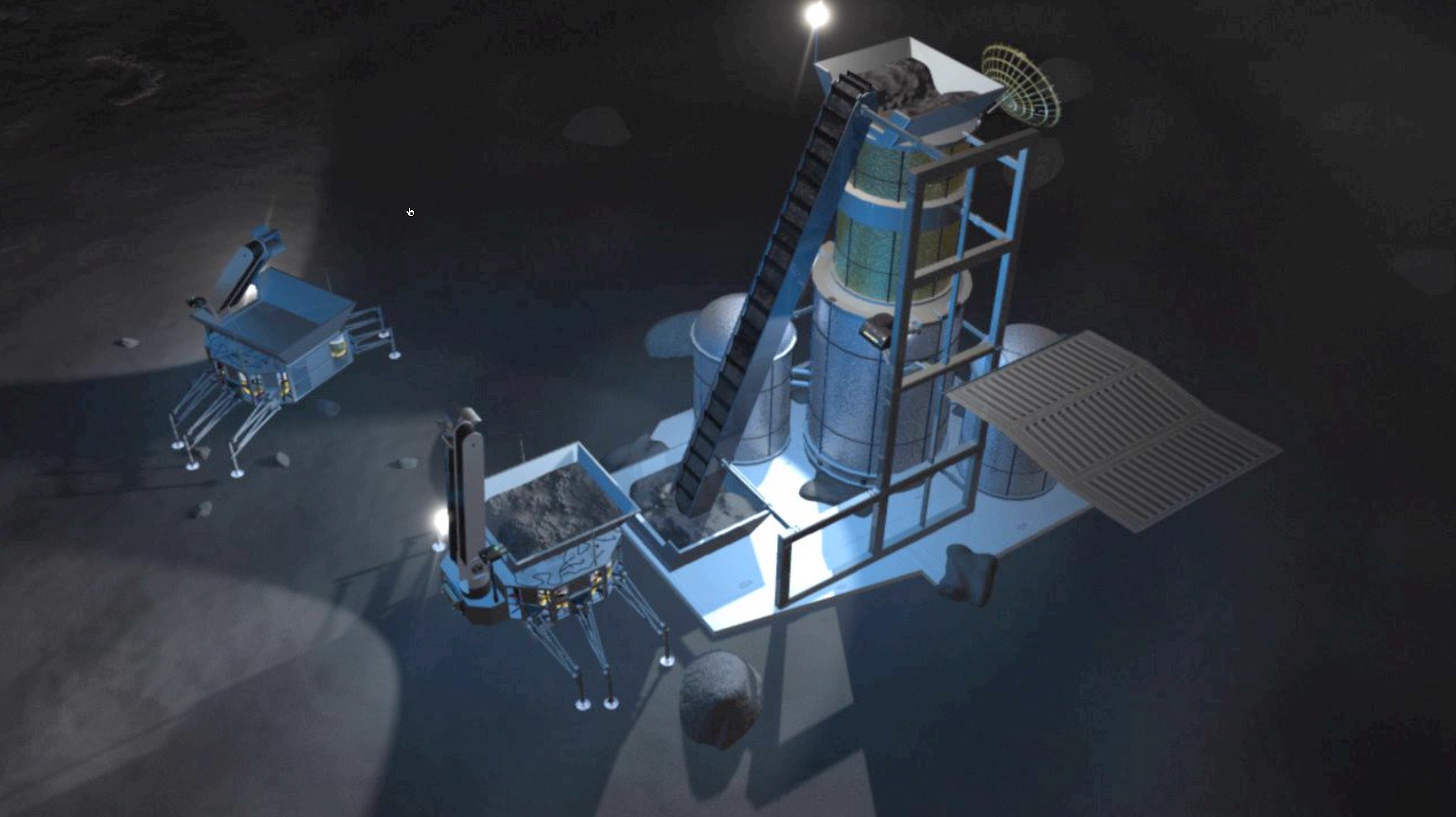
Remote-operated demonstration of in situ resource utilization (ISRU), believed to be a necessary prelude to mining the Moon and gaining a true foothold in space. Should the artist's notional decals have been those of the Peoples Republic of China? [Pat Rawlings].
Paul D. Spudis
The Once and Future Moon
Smithsonian Air & Space

Much of the mass we launch for space missions is what I call “dumb mass” – heavy things like water and fuel that, while absolutely necessary, contain low amounts of information.  Regardless of launch costs, there is no virtue in launching this type of mass from Earth.  Learning to use what we find in space to create new capabilities is a skill that we must master to become “space faring.”  The Moon is in an excellent location relative to Earth; it is a well-stocked laboratory where we can learn and hone these skills.

Press coverage since the December 14 soft landing of China’s Chang’E 3 on the Moon has quoted officials of the Chinese space program as stating their interest is in “mining” the Moon.  The desired commodity usually bandied about is 3He, the light isotope of helium that (in theory) could be used to fuel a “clean” nuclear fusion reaction and generate electrical power here on Earth.  Other possible lunar products mentioned in passing include metals such as titanium and aluminum.  But what exactly is meant when we talk about “mining” the Moon?  What materials on the lunar surface are useful and thus valuable?  Perhaps the term “useful” needs some exposition.

Mining merely means the extraction of some useful product from a planet.  In the context of extraterrestrial mining, useful might mean useful in space, not necessarily useful to import back to the Earth.  For example, right now, there are abundant terrestrial supplies of aluminum.  It makes no economic sense to mine aluminum from the Moon or some other space object for import back to Earth.  However, if we’re in the process of establishing a permanent presence on some extraterrestrial object, several tons of aluminum from local sources might be very handy.   While no one would suggest exporting simple, low-processing materials such as bulk soil (regolith) and aggregate (concrete and adobe) back to Earth, they have uses and thus enormous value on the Moon and in space for local building and other engineering requirements.

The real value of extraterrestrial mining is accessing material outside of Earth’s gravity well and making products that enable and create new capabilities in space and on other worlds.  So far, we have not found any deposits of unknown materials in space that cannot be found on Earth (the “unobtainium” beloved of science fiction writers).  But we have found deposits of common materials that, while having no economic value for return to Earth, have enormous value in space.  Anything that we can find and use on another world means that much less material that has to be launched from the surface of the Earth.  With launch costs of many thousands of dollars per pound, every bit of mass that we can find and use in space is that much less budget-busting dumb mass hauled up from Earth.

I believe that the real game-changer for mining the planets is water.  This most common of substances is the most valuable commodity in space because it has so many uses.  Water is attractive because it is easily transportable in solid or liquid form, but it is massive and thus, expensive to move around in space.  Most of the uses of water in space will probably happen close to the sources from which we extract it, either on the planetary surface or in the space just above and near them.

[Karnik]
Water is required for life in general and in particular, for human life here and in space.  We can drink the water, use it to reconstitute dehydrated food, use it for thermal ballast, and protect ourselves from the hard radiation environment of deep space by jacketing spacecraft and habitats with it.  Water is a simple molecule (H2O) and can be broken into its constituent elements by the process of passing an electrical current through it; we can thus easily “crack” water into its components (hydrogen and oxygen) and store these gases for later use.  The obvious use for this oxygen is to provide breathable air for space habitats.  But additionally, because the water cracking process is reversible, we can take these gases and combine them in fuel cells to create electricity.  This makes for a fascinating possibility; during the day, we can crack water into hydrogen and oxygen using electrical power derived from solar panels and store these products in tanks.  During times when the Sun is not visible (either night on a planet or during eclipse in space), we can re-combine these gases to generate electrical power.  Such a device is called a rechargeable fuel cell (RFC) and can provide continuous electrical power for space vehicles and habitats.  Thus, water becomes a medium for energy storage, being broken apart during daylight and recombined during the night, allowing for continuous and reliable power in space.  The valuable by-product of this process is excess water for life-support and other uses.

The last major use of water is probably the most important in terms of creating new capabilities in space.  When water is broken into its constituent gases and then frozen into liquid (cryogenic form), it becomes rocket fuel.  Liquid hydrogen and oxygen are the most powerful chemical propellant known.  The ability to make rocket fuel in space changes almost everything we know about the economics of spaceflight.  Because of its high cost, anything that we can do to lower the required mass launched from Earth saves money and makes spaceflight more capable.  In the case of missions beyond low Earth orbit, most of the mass of the Earth departure vehicle is fuel.  For a human Mars mission, more than 80% of its total mass is propellant.  Most of that propellant will be used in the rocket burn to leave Earth.  Thus, by obtaining the required propellant from a space-based source and refueling there, the total lift-off weight (cost) from Earth is much lower.

Although hydrogen-oxygen is the most powerful rocket propellant, its use does have some drawbacks.  Hydrogen has a very low boiling point, only about 20° above absolute zero (-253° C).  This extremely low temperature is difficult to generate (i.e., power intensive) so making cryogenic hydrogen is a tough proposition.  Moreover, hydrogen has an extremely low density, so storage tanks for liquid hydrogen are very large and bulky and must be carefully insulated to minimize the “boil-off” of the fuel.  Boil-off is an important problem that must be solved if we are to use space-derived cryogens for propellant; it involves capturing the boiling vapor and condensing it back into liquid form again to prevent its loss to space.

Some argue that since hydrogen is so volatile and difficult to work with, we should focus solely on obtaining oxygen from planetary sources as that gas is 16/18ths (89%) of the mass of water.  Producing liquid oxygen (boiling point of -183° C) is much easier than liquid hydrogen and it is more easily handled and stored.  However, we would still need some type of fuel to burn with this oxidizer; a variety of other substances could be used for rocket fuel, including methane (CH4), ammonia (NH3), sulfur (S) and even powered aluminum (Al).  Interestingly and fortunately for us, all of these substances are found in the deposits of the lunar poles – the most valuable real estate in our Solar System with peaks of near-constant sunlight for power generation.

The real value created by mining the Moon (or any extraterrestrial object) is capability – the ability to move more freely, more often and with more mass in and about cislunar (Earth-Moon) space where most of our national security and economic satellites reside.  By creating an off-planet supply depot, we free ourselves from the tyranny of the rocket equation.  I don’t know if the Chinese see the “problem” this way or not.  But they should.  I believe that eventually, they will.  And so must we.

The Chinese do not appear to be waiting for “magic beans” to lower launch costs.  There are many reasons to believe that those costs have already fallen about as much as they will, barring some major new launch vehicle paradigm.  By holding back and betting on some major new launch breakthrough materializing, the United States could be walking away from a sure thing – leaving the innovation and technology field, and with it the economic and national security benefits that will follow, to countries who recognize the strategic value and potential of the Moon and are already making plans to tap into it.

Originally published December 27, 2013 at his Smithsonian Air & Space blog The Once and Future Moon, Dr. Spudis is a senior staff scientist at the Lunar and Planetary Institute. The opinions expressed are those of the author but are better informed than average.

Some Related Posts:
'A Resolve to mine the Moon' (July 16, 2012)

Tuesday, December 10, 2013

How to form the Lunar Development Corporation to implement the Moon Treaty

Sunflowers
An international corporation, operating under the auspices of the Moon Treaty, could allow for commercial uses of the Moon while providing a regime for property rights that doesn’t exist today [NASA)].
Vid Beldavs
The Space Review

The lack of an internationally agreed-to regime for the commercial development of the Moon and other celestial bodies is arguably the most significant barrier to more rapid commercial development beyond Earth orbit. Near-Earth services are structured to meet direct Earth-based needs and fit relatively easily within both established commercial practices and definitions of ownership and property rights. Very little business would be done in a place without property rights and rules of doing business. Much of modern wealth results from intellectual property rights. Without effective patenting systems innovation would stop.

Space is an environment where even the possibility of a claim to resources does not formally exist. The California gold rush that got underway with little government structure would soon have been a bust without a system of claims. A regime for the establishment of claims appears to be necessary due to the likelihood of disputes that will increase rapidly in response to competitive pressures.

Many have pointed to the need for an international regime to enable commercial space development. The Moon Treaty was a serious attempt by the world community to address the need for an international regime for space resources based on agreements reached earlier with the Law of the Sea and the concept of Common Heritage of All Mankind. The Moon Treaty was negotiated in the context of the North-South divide marked by the poverty of developing countries that had votes in the UN and the increasing power of multinational corporations to control economic resources. Space advocacy constituencies in the US saw the Moon Treaty as a power grab by poor developing countries to claim space resources through the power of UN bureaucracies that they did not have the technical means to reach on their own.

The US did not sign nor ratify the Moon Treaty, and neither have any of the major spacefaring powers. However, the Moon Treaty has been signed and ratified by Australia, Austria, Belgium, Chile, Kazakhstan, Lebanon, Mexico, Morocco, Netherlands, Pakistan, Peru, Philippines, Saudi Arabia, Turkey, and Uruguay. France, Guatemala, India and Romania have signed the Treaty, but have not yet ratified it. As Michael Listner noted last year (see “The Moon Treaty: it isn’t dead yet”, The Space Review March 12, 2012):

    "Turkey’s accession to the Moon Treaty will give the accord strength not so much in terms of individual political strength, but through political strength in numbers. As those numbers grow, the “Big Three” could find that their influence as non-parties of the Moon Treaty will be challenged by a chorus of many smaller nations who are parties."

It is noteworthy that three members of the European Union have signed and ratified the Treaty while an additional two EU countries have signed, opening the possibility for the entire EU to agree to the Treaty to enhance and accelerate opportunities for space development of member states, as well as to enhance the large-scale developmental assistance programs of the EU towards African and other developing nations.

Developing Cislunar Space Next
Proposed robotic demonstration of In Situ Resource Utilization (ISRU) presented to the AIAA  in 2012. Even a modest, perhaps critical, program to prove the reward worth the risk seems almost pointless without the concept of property [Frassinito/Spudis].
Today, China, India, and other countries that were poor and without major space programs in the 1970s have programs to explore the Moon and the rockets to get there. China’s Chang’e-3 lander is slated to land on the Moon on December 14. Russia has plans for an ambitious lunar base program and the EU, Japan, India, and South Korea have programs directed at lunar resources. The US, by contrast, has no serious Moon-directed program in its forward plan. Unless there is a dramatic shift in US space policy, the US will be trailing China, the EU, and others in lunar exploration and commercialization in the coming years. Even the entrepreneurial initiative of US firms represented by the Google Lunar X PRIZE is unlikely to meet GLXP goals by 2015 and lesser objectives are being substituted, even as the programs of China, India, Russia and the EU appear to be expanding.

Exploration of the Moon by China, Russia, and others is being planned in a very different spirit from the NASA missions of the 20th century that were scientific in nature. Water and other valuable resources have been confirmed on the Moon. New programs have a focus on potential commercial and strategic exploitation. The Moon is the greatest mineral find in human history. Astronomically speaking the Moon is nearby, gravity is low, it has vacuum and very abundant materials from which things can be built that people need in space: solar power arrays, habitats, electronics, and soil and water for growing food and producing industrial chemicals.

A number of companies have been formed to exploit lunar resources and more are on the drawing boards. However, they all assume that a miracle of some kind will allow them to set up and start operations undisturbed by the dozens of other groups readying to do the same. This adds urgency to the lack of an international regime for commercial development of the Moon.

What are the options?
Read the full article, HERE.

Saturday, November 9, 2013

Watch where you step on the Moon

Should those on Earth control and restrict the use of off-Earth real estate or should people use and profit from what they find in space? We have conducted reconnaissance and mapping of celestial bodies for centuries using telescopes, orbital and landing spacecraft, and (forty years ago) explored it with people. Earth’s scientists have studied the returned data and we’ve dreamed of returning to the Moon and to new places where humanity has never set foot. Entrepreneurs and social engineers see a time in the near future when we will make that next step and they each hold somewhat different views — some want to develop and capitalize on their investment, some want to preserve and permit only limited access.
AS11-40-5880HR
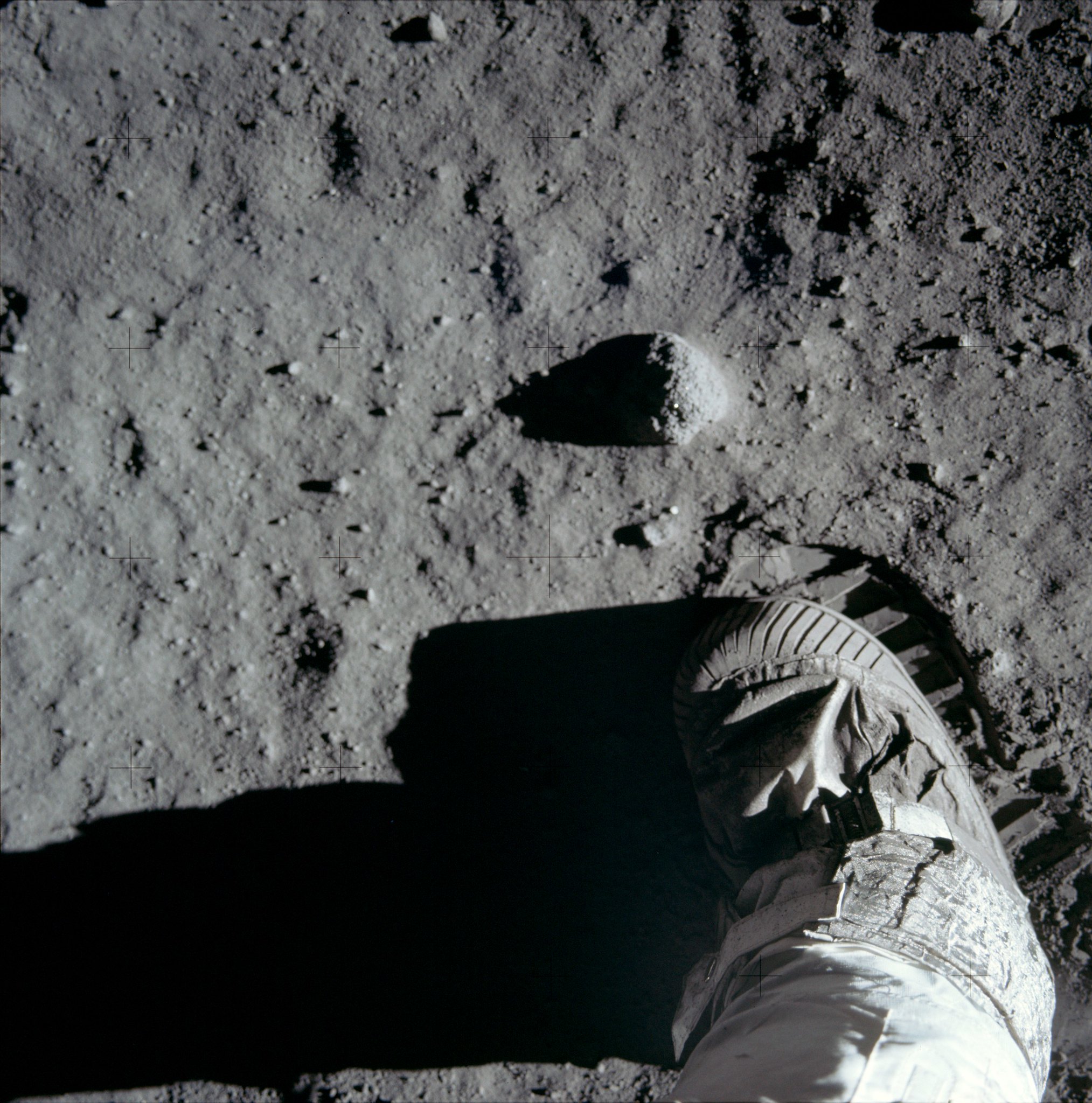
Soon after following Neil Armstrong down the descent stage ladder Apollo 11 lunar module pilot Buzz Aldrin snaps his own footprint. Left undisturbed, average levels of micrometeorite "gardening" will erase these first direct human contacts with the lunar surface in 2 million years. These individual first foot prints, however, were probably erased by subsequent steps minutes later. [NASA/JSC].
Paul D. Spudis
The Once and Future Moon
Smithsonian Air & Space


In a recent Popular Science article, Veronique Greenwood argues for having the Moon declared an “International Park – an off-World Heritage site.”  And not just the Apollo sites but all 14 million square miles of the lunar surface.  Greenwood likes the legal model of Antarctica, an entire continent that the nations of the world agreed to not develop but use solely for scientific study.  Understanding that profit motives will be behind the drive to the Moon, she allows there may be carve-outs for mining (after environmental impact studies) but legally, the Moon will be protected as a preserve for history and science, serving as the template for human expansion beyond the Moon.  She doesn’t want it “damaged.”

Greenwood’s concerns stem from her belief that humans (even when they’re careful) “tromp all over things” and that without government preservation and oversight, cultural artifacts on the Moon (such as the Apollo 11 crew’s “One Small Step” footprints and various “important craters”) are in danger of destruction.  She argues that “because the Moon was part of Earth until 4.5 billion years ago” (a proposition not yet established), the United Nations should have legal sovereignty over its use and disposition.  She notes that the 1979 Moon Treaty was never ratified (“flopped spectacularly”), a presumed “victim of the Cold War era.”  In fact, the treaty’s “flop” had nothing to do with the Cold War – a concerted lobbying effort by various space advocacy groups (such as the L-5 Society) was largely responsible for the Senate’s refusal to ratify it.  No nation that had space faring capability at that time ratified the Moon Treaty.

Her article illustrates that the “green” anti-development worldview has expanded to include opposition to unfettered space utilization.  Because we’re not dealing with anything green, I suggest that we dub the lunar environmentalists “Grays.”  Stemming from their belief that humans are harming the Earth, the Grays fear that it is not right to allow unrestricted access and development of the Moon.  Fifty years after those interloping Apollo astronauts tromped on, drove over and kicked up a lot of dust on the Moon, a more enlightened humanity will return to peacefully – and carefully – explore its surface and, in the words of the National Park Service, “Taking only photographs, leaving only footprints.”  If environmental impact studies allow it, some limited mining activity might be permitted, presumably to pay for these Luna Park overseers.

The analogy to Antarctica, beloved of academics, is of limited value in this instance.  The reason nations of the world do not bother to mine or drill for oil in Antarctica is that there are alternative and cheaper sources of oil and minerals that do not require the costly build up of infrastructure in that challenging environment.  Such is not true for the Moon; the alternative to using the resources of the Moon is to bring everything you need with you from the deep gravity well of the Earth.  With launch costs of thousands of dollars per pound (and unlikely to come down significantly for the foreseeable future), it makes good sense to look for and obtain as much of the required “dumb mass” (i.e., air, water, shielding and propellant) needed for extended presence from “local” sources – the extraterrestrial bodies themselves.  Launch from Earth should be reserved only for high information density items – high-technology equipment, instruments and people.  The raw materials of space will provision us – and we need to learn how to do it out there, starting with the Moon.  You cannot lock up new territory and then expect entrepreneurs to invest their capital in getting you there.
"There is no “ecology” to preserve on the Moon..."
While Greenwood uses Antarctica as a model for the Moon, in my mind, a better analogy is Alaska, a vast area (656,424 square miles) of great natural beauty and abundant resources.  Alaska serves a multitude of purposes, including mining, fishing, oil and gas production, tourism, recreation and settlement, as well as maintaining and protecting vast reserves of national and state wilderness.  No one could call Alaska a decimated paradise or an industrial wasteland – it is an immense landscape with room for every imagined activity, commercial and non-commercial.  It is a harsh place, yet one where self-reliant humans migrated for profit, play and its wide-open spaces.  It also has the virtue of being part of a self-governing republic, not an “administrative area” controlled by international bureaucrats.  And yet, even though the land has been developed and used, the people have conserved, protected and managed the landscape and resources of the state.  But Greenwood points to the Antarctica “peaceful and scientific use of” model, whereby the U.N. would own and control the Moon, thereby setting a precedent for the rest of the Solar System.  Talk about throwing cold water on pioneering outer space!  Greenwood’s suggestions certainly do that.

One of the best LROC NAC surveys of the artifacts of Apollo 11, observation M175124932R, from only 24 km overhead, November 5, 2011. From the LROC Featured Image Apollo 11 collection [NASA/GSFC/Arizona State University]..
Setting aside the obvious objection that the United Nations has not shown any particular management capability (nor does it possess the ability to oversee natural resources 250,000 miles from Earth), a more important objection to this proposal is the negative impact it will have on investment toward the development and support of commercial space activity.  If advocates of commercial spaceflight think dealing with the federal government is difficult, they haven’t seen anything until they start dealing with a U.N. authority.  Greenwood wants “important craters” protected from defacement by ATVs, but that begs the question as to who decides which craters are “important,” what needs to be protected, and who gets those limited mining rights?  Would she leave these environmental assessments and commercial allocation judgments in the hands of U.N. decision makers and arbitrators?

The basic problem with the attitude of the Grays is that it is misdirected.  There is no “ecology” to preserve on the Moon because there is no life there.  The only thing that can be preserved is the Moon’s pristine state – an ancient surface unsullied by the tread of endless footprints.  It would take tens of thousands of years, if then, (since few would live on the Moon) to put a footprint on every square meter of the lunar surface, an area greater than the continent of Africa.  Even the most rare and valuable terrains on the Moon – the water-containing areas near the poles – are enormous regions, hundreds of square kilometers in extent, containing tens of billions of tons of water ice and other valuable deposits.  As these materials are the most accessible and useful products in near Earth space, they are crucial to the creation of new space faring capability.

If the entire territory of the Moon is designated the property of Earth with U.N. oversight, we will handicap ourselves from becoming a space faring species.  We must learn how to use what we find in space to create new capabilities.  Even the most ardent developers would not object to preserving the historical sites of the first impacts of spacecraft on the Moon (Luna 2), the first soft-landers (Luna 9 and Surveyor 1), and of course, the site of the first human landing on another world (Apollo 11).  But the rest of the Moon should be open to exploration, development and use.  It is wrong to restrict the use and development of whole new worlds in order to assuage the overly emotional and misguided aesthetic sensibilities of the Grays, as opposed to opening up of a frontier that can be profitably used and enjoyed for the benefit of all humanity.

Originally published November 8, 2013 at his Smithsonian Air & Space blog The Once and Future Moon, Dr. Spudis is a senior staff scientist at the Lunar and Planetary Institute. The opinions expressed are those of the author but are better informed than average

Monday, August 19, 2013

Good things delivered in small packages

Mighty Eagle Aces Exam (NASA, International Space Station, 09/05/12)
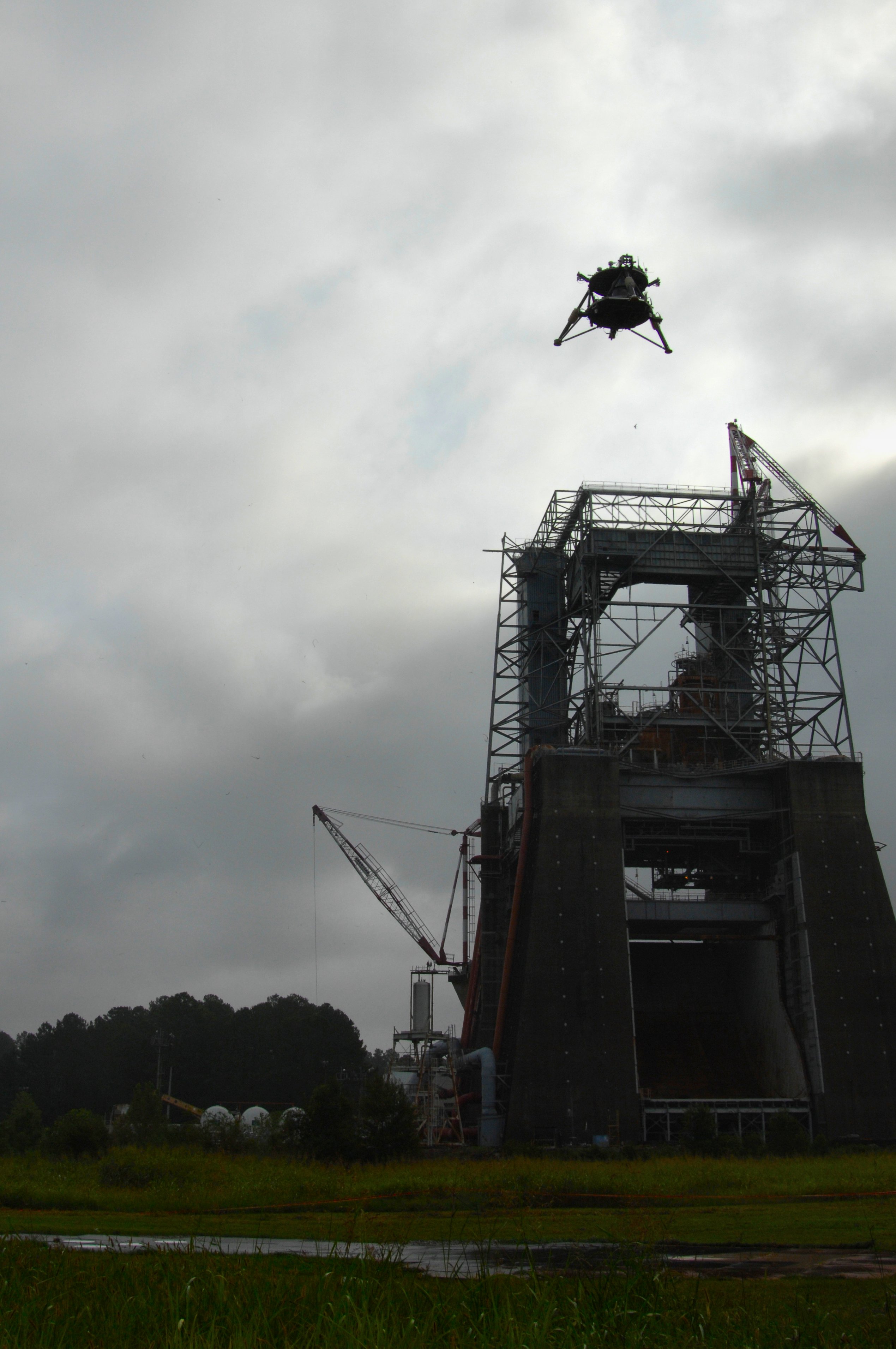
Overcast skies didn't deter the "Mighty Eagle," flying high over the historic F-1 test stand and completing a milestone round of flight test objectives, September 5, 2012. One of two NASA robotic prototype landers, the vehicle was flown to an altitude of 30.48 meters and descended gently to a controlled landing during a successful free flight Marshall Space Flight Center in Huntsville, Alabama. Nicknamed the "Mighty Eagle" after one of the characters in the popular "Angry Birds" game, the vehicle is a three-legged prototype,  that resembles an actual flight lander design. It is 1.219 meters high, 2.438 in diameter and, when fueled, weighs 317.5 kg. It's a, so-called, “green” vehicle, 90 percent fueled by pure hydrogen peroxide, guided by an onboard computer [NASA/MSFC].
Paul D. Spudis
The Once and Future Moon
Smithsonian Air & Space


Wanted: lander spacecraft to deliver payloads to the Moon.  Must be cheap and reliable.

NASA recently issued an “RFI” – a Request for Information – a method used by the agency to solicit concepts from various companies and gauge their ability to fulfill a future anticipated need.  In this case, the need is for a small robotic lander, one capable of delivering two classes of payloads to the lunar surface: small (from 30 to 100 kg) and medium (from 250 to 450 kg).

Probably focused near-term with the RESOLVE (Regolith and Environment Science and Oxygen and Lunar Volatiles Extraction) payload, the intent of this RFI is to survey existing capabilities for the commercial delivery of a variety of payloads to the Moon.  RESOLVE is a NASA experiment designed to test and demonstrate some techniques of in situ resource utilization (ISRU) on the Moon, specifically the generation of oxygen and the extraction of volatile elements (such as hydrogen) from lunar soil.  The RESOLVE package consists of several highly integrated experiments designed to collect soil on the Moon, heat this feedstock to various temperatures and measure the amount and type of volatile elements released, and practice some techniques of processing the soil into useful products (such as water or oxygen).

Though we’ve been talking about using off-planet resources for years, this is the first time the agency would fly an experiment designed to evaluate the processes and difficulties involved.  Some of us contend that until it is proven possible (by demonstrating it in space), space-based resource utilization (ISRU) will remain classified as “too risky” to incorporate into an architecture.  Engineers don’t doubt the chemistry or physics behind ISRU, but to evaluate risk and return, they want demonstrations using real hardware versus theoretical concepts and paper studies.

Although it will not answer all ISRU questions, RESOVLE can provide useful data and would be an important milestone.  Our ignorance is particularly vast in regard to the nature of the polar volatile deposits.  Some near-polar sites are under consideration for RESOLVE, but because the lander must be able to communicate with Earth, sites near the poles must be in radio view of Earth.  This eliminates the most promising polar volatile sites (permanently dark, out of radio sight) from consideration, at least for the first mission.  However, we know that water ice occurs in some areas in view of Earth, so careful targeting will permit us to get ground truth for a critical area near the one of poles.

There are a wide variety of possible payloads (scientific and resource utilization) for lunar missions using small landers.  A key priority for the lunar science community has been the deployment of a global network of geophysical instruments.  Such a package would include a seismometer (to monitor and measure moonquakes), a heat flow probe (to take the Moon’s temperature) and other instruments, such as a magnetometer and a laser reflector.  The five-station surface network laid out during the Apollo missions was operational for more than 7 years and gave us a first-order understanding of the nature of the deep lunar interior.  A new global network – widely spaced and operating longer with more stations – would vastly improve on that knowledge.

The success of a network mission necessitates a long-lived power source to operate instruments during the very cold, 14-day lunar night (the Apollo network used nuclear power supplies), along with an inexpensive way to deploy the network stations.  New technologies have developed small, reliable radioisotope generators that operate for many years.  A small lander could deliver geophysical stations across the entire globe; each station is low mass, so the smaller (and presumably cheaper) the lander, the more likely that this mission will be realized.  A global seismic network would decipher the crust and mantle structure of the Moon and could monitor its surface for large impacts.  A precise measurement of lunar heat flow (measuring the abundance of radioactive elements in the Moon) will give us more information about the bulk composition of the Moon and advance our understanding of lunar origin.  Laser ranging will also be useful in addressing some critical geophysical and astrophysical problems.


Project Morpheus vehicle "Morpheus Bravo," executes a successful tether test August 7, 2013 at Johnson Space Center. The combined Morpheus/JPL team met all their objectives including engine ignition, ascent, a 3 meter lateral translation over simulated Mars regolith simulant from JPL to help with plume study, 40 seconds of hover at apex and a slant descent to "landing" using free flight guidance. The entire flight duration was around 80 seconds. All though the Mars surface simulant was not typical for Morpheus test fires, it "sure made for a spectacular show"

Single-point landers, making simple measurements, can investigate the surface composition and geology at select landing sites.  If the landing sites and investigations are carefully chosen, they could significantly advance science by answering key questions.  For example, a critical issue in the cratering history of the Moon is knowledge of the absolute age of some of the youngest craters on the Moon.  The formation of the crater Copernicus marks a key time horizon in lunar history (the Copernican Period).  We know its relative age very well but are uncertain about its absolute age.  A small lander can be sent directly to the crater floor, where the impact melt is exposed and accessible, to analyze crater melt rocks for chemical composition and to learn the nature of the impact target (as well as determining the age of the rock by measuring the radiogenic potassium and argon in the rock). Although the potassium-argon technique is not the most precise method of radiometric dating, it can distinguish among the different proposed absolute ages, which vary over a billion years.  By determining this age more precisely, we will better understand the impact flux in the Earth-Moon system, knowledge that will help us better interpret the surface ages of units on other terrestrial planets.

Small landers could deliver a variety of long-lived assets for future surface operations and resource utilization experiments.  Techniques for making oxygen from lunar soil have been proposed but no comparative demonstration has been done on the Moon.  A small laboratory could be send to the Moon to conduct simultaneous experiments on oxygen manufacture.  The advantage of this experiment would be the use of identical feedstock under identical thermal and time constraints to compare their relative efficacy and identify any problems.  This experiment would fit on a small lander (~ 50 kg capacity) and by using solar power, within the span of a single lunar day (2 weeks) could quickly complete its evaluation.

The larger version of the RFI lander opens up other possibilities.  With a payload capacity on the order of 500 kg, this lander could deliver an advanced, automated surface rover (powered by an RTG – nuclear battery) able to undertake extensive and protracted exploration of the polar cold traps.  Equipped with instruments utilizing well established technology, this rover would characterize the physical, chemical and isotopic make up of the polar volatiles – a task critical for mapping the extent and purity of deposits of water ice on the Moon, and evaluating their mining and extraction potential.

The Canadian Space Agency test platform Artemis, Jr. fitted with NASA's RESOLVE instrument package, Day 3 of field testing on Mauna Kea, Hawai'i, July 2012 [CSA].
At this scale, it’s possible to deliver an ascent vehicle to the Moon to retrieve and return samples to Earth.  Scientists have a long list of desired targets for sample return and the potential for low cost, commercial landers to deliver payloads simply and inexpensively to the Moon could revolutionize our understanding of the Moon’s (and Earth’s) history and processes.  From remote sensing data, we know that many fascinating areas on the Moon display rocks either unrepresented or unrecognized in the existing collections from the American Apollo, Soviet Luna, and lunar meteorite samples.  Samples from the oldest impact feature on the Moon – the floor of the South Pole-Aitken basin – are especially desired.  Although a simple “grab” sample won’t answer all of our questions, rocks from this site could address major questions about the bombardment history of the Moon and the early Earth.

Small lander spacecraft will open up new horizons for science and exploration.  Critical to their success is making them simple, robust and inexpensive.  That’s been a tall order for NASA.  Whether the commercial sector can provide this capability more effectively remains to be seen.

Related Posts:
CHONDROBOT-2: Simple, Efficient Semi-Autonomous Lunar Excavator (January 4, 2013)
Technical Readiness (November 17, 2012)
Marshall's new-generation lunar lander flies again (September 11, 2012)
Update: ISRU mission simulations on Hawai'i (July 30, 2012)
'A RESOLVE to mine the Moon' (July 15, 2012)
KSC shows off RESOLVE, ISRU and lunar analog study platform (June 13, 2012)
Mighty Eagle lander's 100 foot flight at Redstone (November 4, 2011)
New Robotic Lander Prototype skates tests (January 29, 2011)
NASA update: ILN Anchor Nodes and Robotic Lunar Lander Project (August 17, 2010)
Field testing of In-Situ Resource Utilization (July 1, 2010)
The Lunar Quest Program and the International Lunar Network (September 6, 2009)
Spotlight on Carnegie-Mellon's SCARAB (April 10, 2009)

Originally published August 17, 2013 at his Smithsonian Air & Space blog The Once and Future Moon, Dr. Spudis is a senior staff scientist at the Lunar and Planetary Institute. The opinions expressed are those of the author but are better informed than average