Showing posts with label Space Law. Show all posts

Monday, March 2, 2015

Understanding the legal status of the Moon

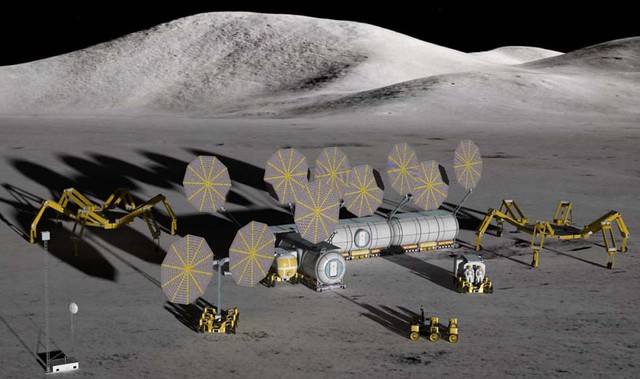
Astrobotic (CM) Moon Digger concept [Mark Maxwell/Astrobotic/JAXA].
Urbano Fuentes
The Space Review

In 1969, the United States successfully performed the first human landing on the surface of the Moon. Neil Armstrong and Buzz Aldrin placed an American flag in the lunar surface, winning the space race against the Soviet Union. The US government stated later that no sovereignty claims of any kind were made on the Moon. After that historical breakthrough and for decades to come, space exploration suffered a considerable slowdown. The United States had won the space race, and no serious efforts have since been made by any nation to return to the Moon.

In 1985, researchers at the University of Wisconsin discovered that the lunar soil had a considerable amount of the rare isotope of helium known as helium-3 (He-3). This scarce element could be used in energy production, in fusion power plants that—hypothetically—could produce an amount equivalent to 130,000,000 barrels of oil per ton of He-3.1 . It is also environmentally friendly, producing no greenhouse gases or radiation.

Whether because of helium-3 or not, several nations have recently shown interest in returning to the Moon. In 2013, China became the third country to land a spacecraft on the Moon, and other nations have places for lunar missions in the next several years. Besides nations, several private corporations had expressed interest in lunar missions of one kind or another.

Law in this area is not particularly broad. Nevertheless, during the Cold War and because of the progress in the field of space exploration in those early years, some international treaties related to the legal status of the Moon and the outer space region arose, creating a legal regime that is still valid today. Those treaties are the Outer Space Treaty (1967) and the Moon Treaty (1979), currently the existing legal framework valid to some extent.

These treaties, while overlapping to some degree, settled a series of principles regarding human activities outside Earth. The Outer Space Treaty forbids the placement of weapons of mass destruction in space; it also addressed the situation of lunar sovereignty, claiming that the celestial bodies could not be subject of national appropriation. The later Moon Treaty established that the Moon shall be regarded as common heritage of mankind, in a similar regime as the one applicable to the Deep Sea Bed Area.

This essay will address primarily the legal status of the Moon, using the existing framework on the subject. Taking into account the current state of space exploration and other legal systems similar to the one of the Moon, such as the Deep Sea Bed Area, it will analyse the question of whether the Moon could be considered the Common Heritage of Mankind, or if some other legal concept should be used in relation to its resources.

Read the full essay in The Space Review, HERE.

Tuesday, December 10, 2013

How to form the Lunar Development Corporation to implement the Moon Treaty

Sunflowers
An international corporation, operating under the auspices of the Moon Treaty, could allow for commercial uses of the Moon while providing a regime for property rights that doesn’t exist today [NASA)].
Vid Beldavs
The Space Review

The lack of an internationally agreed-to regime for the commercial development of the Moon and other celestial bodies is arguably the most significant barrier to more rapid commercial development beyond Earth orbit. Near-Earth services are structured to meet direct Earth-based needs and fit relatively easily within both established commercial practices and definitions of ownership and property rights. Very little business would be done in a place without property rights and rules of doing business. Much of modern wealth results from intellectual property rights. Without effective patenting systems innovation would stop.

Space is an environment where even the possibility of a claim to resources does not formally exist. The California gold rush that got underway with little government structure would soon have been a bust without a system of claims. A regime for the establishment of claims appears to be necessary due to the likelihood of disputes that will increase rapidly in response to competitive pressures.

Many have pointed to the need for an international regime to enable commercial space development. The Moon Treaty was a serious attempt by the world community to address the need for an international regime for space resources based on agreements reached earlier with the Law of the Sea and the concept of Common Heritage of All Mankind. The Moon Treaty was negotiated in the context of the North-South divide marked by the poverty of developing countries that had votes in the UN and the increasing power of multinational corporations to control economic resources. Space advocacy constituencies in the US saw the Moon Treaty as a power grab by poor developing countries to claim space resources through the power of UN bureaucracies that they did not have the technical means to reach on their own.

The US did not sign nor ratify the Moon Treaty, and neither have any of the major spacefaring powers. However, the Moon Treaty has been signed and ratified by Australia, Austria, Belgium, Chile, Kazakhstan, Lebanon, Mexico, Morocco, Netherlands, Pakistan, Peru, Philippines, Saudi Arabia, Turkey, and Uruguay. France, Guatemala, India and Romania have signed the Treaty, but have not yet ratified it. As Michael Listner noted last year (see “The Moon Treaty: it isn’t dead yet”, The Space Review March 12, 2012):

    "Turkey’s accession to the Moon Treaty will give the accord strength not so much in terms of individual political strength, but through political strength in numbers. As those numbers grow, the “Big Three” could find that their influence as non-parties of the Moon Treaty will be challenged by a chorus of many smaller nations who are parties."

It is noteworthy that three members of the European Union have signed and ratified the Treaty while an additional two EU countries have signed, opening the possibility for the entire EU to agree to the Treaty to enhance and accelerate opportunities for space development of member states, as well as to enhance the large-scale developmental assistance programs of the EU towards African and other developing nations.

Developing Cislunar Space Next
Proposed robotic demonstration of In Situ Resource Utilization (ISRU) presented to the AIAA  in 2012. Even a modest, perhaps critical, program to prove the reward worth the risk seems almost pointless without the concept of property [Frassinito/Spudis].
Today, China, India, and other countries that were poor and without major space programs in the 1970s have programs to explore the Moon and the rockets to get there. China’s Chang’e-3 lander is slated to land on the Moon on December 14. Russia has plans for an ambitious lunar base program and the EU, Japan, India, and South Korea have programs directed at lunar resources. The US, by contrast, has no serious Moon-directed program in its forward plan. Unless there is a dramatic shift in US space policy, the US will be trailing China, the EU, and others in lunar exploration and commercialization in the coming years. Even the entrepreneurial initiative of US firms represented by the Google Lunar X PRIZE is unlikely to meet GLXP goals by 2015 and lesser objectives are being substituted, even as the programs of China, India, Russia and the EU appear to be expanding.

Exploration of the Moon by China, Russia, and others is being planned in a very different spirit from the NASA missions of the 20th century that were scientific in nature. Water and other valuable resources have been confirmed on the Moon. New programs have a focus on potential commercial and strategic exploitation. The Moon is the greatest mineral find in human history. Astronomically speaking the Moon is nearby, gravity is low, it has vacuum and very abundant materials from which things can be built that people need in space: solar power arrays, habitats, electronics, and soil and water for growing food and producing industrial chemicals.

A number of companies have been formed to exploit lunar resources and more are on the drawing boards. However, they all assume that a miracle of some kind will allow them to set up and start operations undisturbed by the dozens of other groups readying to do the same. This adds urgency to the lack of an international regime for commercial development of the Moon.

What are the options?
Read the full article, HERE.

Tuesday, May 1, 2012

First, kill all the lawyers*

A low tech alternative to rail guns or explosive kinetics.
Paul D. Spudis
The Once and Future Moon
Smithsonian Air & Space

There’s quite a buzz in space policy circles over the recent announcement of the creation of a new company that intends to survey, study and mine near Earth asteroids (NEAs).  Given my previous advocacy regarding the desirability of learning how to extract and use off-planet resources, many people have asked me to weigh in with my opinion of their proposed business plan.  I’d like to frame my remarks around Michael Listner’s recent piece on the possible legal issues involved in the plan as he has illuminated an interesting angle on the project.

The roll-out of the business plan of Planetary Resources Inc. made a big media splash, as is typical for many of these “New Space” private operations.  Close examination reveals the outline of a plan, but the technical details are rather fuzzy.  Given that no business should reveal too much detail about their plans lest they lose their competitive advantage, the company’s reticence is not too surprising.  To summarize it in broad terms, the plan is to launch a space-based telescope, dedicated to identifying candidate NEAs; at least initially, the main interest seems to be metal asteroids (presumably those rich in metallic elements of economic value, including gold and platinum) and water-bearing asteroids.  The former would have significant economic value in terrestrial markets, providing the possibility of high, near-term payback for investors.  The latter would have value for future in-space operations and could be sold to both national governments and to the private sector, presuming that such markets develop.

NEA 433 Eros [NASA].
The next step involves sending robotic prospectors to the best candidate bodies to survey them, determine their physical, chemical and mineralogical make up, and identify the best targets for resource extraction.  The last step involves snagging a small asteroid (possibly several tons in total mass) and tow it back to cislunar space where Earth-based, teleoperated robotic machines can process and refine the material for sale.  This last step contains the most open questions.  Although such a mission can be envisioned in principle, it is technically out of reach at the present time.  However, I envision no particular show stoppers here – practical details of the material processing and handling these materials in microgravity are the biggest unknowns, but even these issues can be addressed and mitigated before any NEA is retrieved through the execution of some carefully designed experiments in low Earth orbit.

But then what?  This – as always is the case when human endeavors begin in earnest – is where the lawyers come in.

Listner’s article suggests that the proposed activity of capturing and processing an asteroid falls outside the current bounds of any outer space legal regime.  He recalls that the terms of the 1967 Outer Space Treaty (to which the United States is a signatory) prohibits claims of national sovereignty over extraterrestrial objects.  Space mining companies will be subject to the laws of the nation in which they are incorporated and thus, bound to the terms of any international treaty that nation has ratified.  While national ownership of outer space assets is prohibited by the 1967 treaty, the treaty is silent on private ownership.  Thus, the treaty is open to interpretation and subject to the philosophical and economic predilections of the parties involved.  One thing is certain however – if anyone ever does this, they are guaranteed to face protracted litigation that will no doubt take years (and many billable hours) to wind its way through the courts.

Listner goes on to describe issues with liability, mostly in relation to possible damages caused by future space operations or to existing space-based assets.  However, other more alarming scenarios are possible (e.g., suppose a retrieved NEA collides with the Earth during its arrival in cislunar space?)  Although no specific conclusions are drawn, the foreshadowing is a prerequisite for private companies to post a surety bond, one potentially of enormous scale.  If nothing else, such a requirement would certainly put a crimp in many new commercialization plans.

The infamous (at least in space circles) Moon Treaty is the last legal issue discussed by Listner.  In brief, this treaty prohibits private ownership of space bodies and demands that any profits from resource extraction from these bodies be “distributed” amongst the nations of the world.  This document was submitted to the United States Senate in 1980 for ratification and was defeated, thanks to a vigorous educational campaign by the L-5 Society.  Thus, thirty-two years ago, the United States (and also other major space faring nations, including Russia and China) rejected the Moon Treaty.  However, from the standpoint of most lawyers, the treaty has been ratified by 17 nations, giving it the full force of international law.  Considering the multinational make-up of many companies and that their corporate assets can be frozen or in some extreme cases seized (sometimes for entirely specious or arbitrary reasons), the legal status of the use and ownership of extracted space resources must be considered seriously.

Where does this legal confusion leave the prospects for the economic development of the Solar System?  That is unclear at the moment.  In broad terms, business does not like legal uncertainty to a degree usually in direct proportion to the amount of money involved.  For both technical and legal reasons, it is highly unlikely that there will be a “gold rush in space.” The technical issues are substantial (particularly for the Planetary Resources Inc. plan) but the legal ones are no less so.  In part, this is why I favor making the determination of how to extract and use off-planet resources a central goal of the American civil space program.  Note well: I do not say that we should turn NASA into a space mining company.  Rather, the role of government is to undertake technically risky ventures with the aim of determining how difficult they might be and to settle any thorny legal issues that may arise.  Questions of international law can only be addressed and settled by national governments – through agreements, treaties, new law and if need be, by stronger actions.  No private sector corporation has this inherent ability – only national governments can resolve these issues.  If such issues are resolved, the private sector can then successfully proceed and grow their businesses and governments will profit too.

I applaud both the vision and the chutzpah of Planetary Resources Inc.  For now, their plan to launch and operate a space-based telescope to map asteroids and locate promising prospects is a good start.  They may even manage to eventually send a probe of two for a close-up examination of a couple of NEAs.  As for the last piece of their plan, at this writing, color me skeptical.

* Henry VI Part 2, Act 4, Scene 2.  Yes, I am aware lawyers claim that this phrase is taken out of context (i.e., it is actually an ironic assertion that if one wants a poorly run, bad society, eliminate the rule of law), but it is simply too good not to use here.

Originally published at his Smithsonian Air & Space blog The Once and Future Moon, Dr. Spudis is a senior staff scientist at the Lunar and Planetary Institute. The opinions expressed are those of the author and are better informed than average.

Thursday, April 1, 2010

Absentee ownership of Lunokhod 2


Garriott Crater? Even when a story is picked up and echoed in multiple corners of the Blogosphere, and may or may not be sprinkled with facts, doesn't make it true, especially but not exclusively on All Fools Day. Perhaps the video-mogul and space tourist from a family of astronauts does have a claim on this corner of the Moon. If so, his claim is staked between the Luna 21 lunar lander carrier and writ in the tracks of Lunokhod 2, with a location long-verified by laser reflection and most recently photographed in situ by the Lunar Reconnaissance Orbiter [Google Earth].

Richard Garriott now thinks the possibility of one day visiting the last rover to land on the Moon, which he bought for $68,000 in 1993, has gone from a zero probability to a long shot.

Andy Chalk
the escapist

In 1993 Richard Garriott purchased the former Soviet Union's Luna 21 moon lander and its Lunokhod 2 moon rover at a Sotheby's auction for $68,000... Luna 21 landed on the lunar surface on January 15, 1973, and its Lunokhod passenger remained operational until May 9, when it accidentally rolled into a crater and was buried under dust, ending its mission.

[Ed Note: This last piece of information is definitely not completely accurate. The french-built lunar laser range reflector on Lunokhod 2 continues to return the occasional photon, defying the author's inference that the vehicle was "buried under dust."]

Or so it was thought. But last week, a camera on NASA's Lunar Reconnaissance Orbiter sent home pictures of the wayward rover, parked safe and sound on the surface of the moon. "It's great to actually have a contemporary photograph of my property on the moon," Garriott said. He's clearly thinking beyond just a unique piece of memorabilia, however; according to Space.com, he's also had "casual conversations with lawyers about international law and property rights on the moon."

"I think I can truly make the only private, legitimate claim to territory - at the very least around my rover and, potentially, along its point of travel, to give me some actual property rights on the moon," Garriott said. And while he admitted that his claim is "somewhat tongue in cheek," he added, "It is interesting speculation... And I think that there's already international framework to support that territorial claim."

Unfortunately for Garriott, Joanne Irene Gabrynowicz, the director of the National Center for Remote Sensing, Air and Space Law and Research Professor of Law at the University of Mississippi, said his claim is off-base. "A contention that buying a space object that landed on the lunar surface from a sovereign nation gives rise to a property right to the territory under it is wrong," she said. "The U.S.S.R. was and Russia is a party to the Outer Space Treaty. It did not acquire the territory under the object when it landed. One cannot sell what one does not own. Since U.S.S.R./Russia did not have a property right to the territory under the landed object, there was nothing to sell."

Regardless of whose legal opinion prevails, Garriott now holds a new hope: That one day he'll get to see his lunar rover in person. "If you would have asked me [about going to the moon] in 1993 when I acquired Lunokhod 2 I would have said [the odds are] pretty close to zero. It's still a very low probability... But the probability is dramatically higher than it was," Garriott said. But the new "private space race" has changed all that. "As long as I keep myself healthy," Garriott said, "there's reasonable odds I can get a chance to go visit it. It has gone from zero probability to just a long shot."

Read the balance of this fanciful opinion piece, HERE.

Tuesday, October 20, 2009

A Legal Regime for the Mining of Helium-3 on the Moon: U.S. Policy Options

Richard Bilder
University of Wisconsin Law School

This article addresses questions of U.S. international legal and space policy arising from current proposals of the U.S., Russia, China and India to establish bases on the Moon, in part with the purpose of mining and bringing to Earth Helium-3 (He-3).

He-3 is an isotope of helium that is available in quantity only on the Moon and could, as an ideal fuel for nuclear fusion reactors, furnish humanity a virtually unlimited source of safe, non-polluting energy for centuries to come. It is estimated 40 tons of liquefied He-3 brought from the Moon to Earth (about the amount that could comfortably fit in the cargo bays of two Space Shuttles) would provide sufficient fuel for He-3-based fusion reactors to meet the full electrical needs of the U.S. (or a quarter of the entire world’s electrical needs) for an entire year.

There is as yet, however, no international consensus on whether, or how, any nation or private enterprise can exploit or acquire title to He-3 or other lunar resources. The article calls attention to what may become a “race to the Moon” to obtain He-3 and discusses: (1) the technical and economic prospects for the development of He-3-based energy, (2) the present legal situation concerning the exploitation of lunar resources such as He-3 and (3) policy options for the U.S. regarding the establishment of an international legal regime capable of avoiding conflict in the exploitation of He-3 and other lunar resources and facilitating the broad scale development of He-3-based energy.

Download the full report (Adobe Reader file) HERE.
Mirror Site

Monday, March 23, 2009

Haley Space Law papers archived at Ol Miss

Historians working on the professional papers of the late Andrew G. Haley, considered the world's first Space Law attorney, have found letters from John Kennedy, Gerald Ford, Arthur C. Clarke and international leaders, as work beginning last year is underway archiving Haley's papers online.

Haley's papers for the National Center for Remote Sensing, Air and Space Law at the University of Mississippi law school, are being virtually "housed," HERE.

Forty-two boxes of files were donated by Haley's son Andrew Haley Jr. to the late Stephen Gorove, after Haley died in 1966. Gorove, who taught at Ole Miss Law School from 1965 to 1988, was also among the world's first Space Law attorneys.

http://www.spacelaw.olemiss.edu/archive/haleyarchive.htm

Tuesday, February 10, 2009

The Law of Neutrality in Outer Space

Robert Jarman
McGill University, Montreal
Defense Technical Information Center (DTIC)

Satellite telecommunications, global navigation and remote sensing systems are key drivers in the ongoing transformation of an industrial based global economic order to one increasingly dominated by information services.

A growing number of States are establishing an independent presence in outer space and all States (and indeed, individuals) can access a broad range of affordable space-related products and services (e.g., Google Earth imagery, PSreceivers, and global voice and data transmissions). Consistent with broad historical trends, these technologies are inevitably influencing the way States think about, plan for, and conduct warfare.

Inspired by the prospect of seizing the ultimate "high ground" of outer space and achieving "information superiority" over an enemy, militaries around the world are rapidly pursuing independent space capabilities and adapting their strategies, doctrine and force structures to reflect these capabilities. These trends have prompted various political and legal efforts to ban the placement and/or use of weapons in outer space.

As these efforts have failed to gain traction and seem unlikely to do so in the foreseeable future, this thesis argues that existing bodies of international law grounded in a pragmatic acceptance of armed conflict must be consulted if humankind wishes to mitigate the impact and spread of warfare conducted in, from and through outer space. In particular, this thesis examines how the traditional customary principles underlying the law of neutrality may be reconceptualized by States to serve as a mechanism to mediate competing claims of belligerents and neutrals during armed conflict in outer space.

After a brief introduction, Chapters One and Two will develop the economic and military trends discussed above. Chapter Three will provide an overview of the relevant international law governing military activities in outer space. Chapter four will analyze the law governing State responsibility for Outer Space.
Download the pdf Study HERE.

Implementing International Standards for "Continuing Supervision"

Ronald L. Spencer
McGill University, Montreal
Defense Technical Information Center (DTIC)

The Outer Space Treaty established the obligation to provide continuing supervision of its national space activities by the appropriate state. The implementation of this obligation remains a matter of state discretion.

Since this Treaty came into force the world has evolved to become reliant on space based utilities to enable the global economy and state governance. Today, space faring states are increasingly dependent upon the supervision practices of other states to assure its space interests as the attribution of state responsibility becomes more difficult to ascribe. Therefore, the absence of binding supervision standards may become an impediment to future space applications due to three identified trends.

First, the trend towards space commercialization requires active state supervision. Second, the rise in environmental hazards requires minimal safety standards to decrease the harmful effects on space applications. Third, space security requires identification of intentional acts and prudent measures to safeguard vital space applications.
Download the Study pdf HERE.

Sunday, May 11, 2008

Who will own the moon and the worlds?

Yes, but... What about the "International Star Registry?"

Such was the power of the Will of Pope Alexander VI that in 1493, barely a year after the European discovery of the Americas, while still exceptionally ignorant of their true extent, their range or even their location, let alone their golden Empires, at that moment manifested in the Inca and Aztec, that he could still set upon the Globe a longitudinal Line of Demarcation separating the future claims of both loyal Portugal and Spain in the "New World."

Five centuries later, east of that Line is Portuguese-speaking Brazil while generally west of that Line, in the far larger part of South America, Spanish is spoken, even by descendants of the Inca and Aztec.

Such was the power of a man who, beginning with an abstraction, and who would never visit those lands or know more than next-to-nothing about their extent, could still have a very lasting effect on the course of history.

The law may be a metaphor, but it is "a metaphor with teeth."

This Demarcation, however, also included an area we know (and by the power of one mapmaker) as North America - which was included inside the Division given to Spain. One tribe of the hundreds of millions of aboriginal Indios, nomads of the North American Plains who had been Mountain Utes who would later learn the power of the horse and become known to the Spanish as Comanche, or "those who are always against us," kept the Spanish out of Texas for two centuries. Meanwhile, the Protestant English gradually became de facto owners of the eastern seaboard of North America.

Both groups simply failed to reconcile themselves to foreign ecclesiastical supremacy, and their long conflict, between Iron and Stone Age peoples, had its inevitable result. In the United States, English predominates, despite the Pope's declaration. The bloodiest battles in the subsequent history of all the Americas would be fought between English-speaking descendants and over the status of slaves imported from Africa.

Still further north, the French held sway, and in Quebec their language is spoken today. Thus, the range of Alexander VI's influence was indeed lasting, but it had its practical limits also, as did the dictates of European Empires over their colonies.

Now, in deciding who "owns" the myriad New Worlds in this star system alone, there are lessons to be learned from history about the long arm of recognized authority and the limitations of symbolic abstractions on ink on paper thousands of miles away, in both space and time.

The Winter 2008 Journal of Space Law & Commerce from Southern Methodist University School of Law, delivers a scholarly review of the notion of private claims on Lunar and other extraterrestrial Real Estate.

The authors make the case that an earth-bound authority could encourage space settlement by recognizing the apportionment of lands as incentive for people to act, a method used to hasten the completion of the Trans- Continental Railroad in the United States, and helped along by the recognition of parcels and townships on either side of the easement while deeding their Mineral Rights to private Trusts and corporations.

Claims that might have been made by some of my Indio ancestors were crippled, naturally, by their lack of any cultural understanding of a Chain of Title and by their genuine horror even at the thought of Mineral Rights.

There are other ways, more chaotic perhaps than may be comfortable to the authors or to the United Nations. In North Carolina, for example, the unchallenged squatting upon someone else's property for 17 years or more can become ownership when a claim is afterwards simply filed at the county courthouse. (The reparation later awarded Aboriginal Americans, however, after millennial "squatting" on parts of North America is apparently the right to operate a Casino.)
Gene Cernan at the beginning of the last EVA on the moon, in the Taurus-Littrow Valley, December 1972. (Image Credit - Jack Schmitt)

Selling the moon, like EM spectrum auctions which have netted the U.S. federal government $64 Billion, is also asking for trouble.

Extraterrestrial land transactions in general are almost certain to lead to ridiculous conflicts and/or impossible or expensive-to-enforce litigation, between absent owners, or nations and nationals, who mine anothers claim.

The Outer Space Treaty puts signatories under an obligation to share data collected by exploration, but no one said this would have to be done in "real time." This creates a market for "insider trading."

And so on... Frustration over such problems, however, along with the persistant, ancient illusions of a Collective, rationalized by terrestrial pressures to "share resources" with the less intrepid may eventually lead to such "hands-off" disincentives to settlement as is seen today in Antarctica, a terrible model for exploiting off-world resources - which might one day prevent the sale of minerals taken from the asteroids, for example, in the only market in this star system, down here in Earth's Gravity Well.

Putting outer space Real Estate in the hands of the United Nations would accomplish the opposite intented by the authors. It would be a disincentive.

The only incentive model that may be workable, in both the short run and the long run, is real people on real property, Boots on the Ground, and mutual agreements made in "township" by those parties in situ - with written agreements made on the land itself, by people who wear spacesuits, not suits and ties, to get to the bargaining table.

Agreements in Townships may exclude absent "authorities" from de facto Eminent Domain or specifically exclude claims by absent owners, and be accompanied by agreements to mutual defense. The latter may seem ridiculous today, but humans are adept at innovating warfare.

You may already see a "War for Lunar Independence" may occur and sooner rather than later. It may have already begun.

Authority, presumed or otherwise, on the part of any Nation-State or International Body, with a Monopoly of Force and written on paper to extend off-Earth must diminish in inverse-proportion to the square of its distance. Earth's Moon may, therefore, be too close for intrepid pioneers.

While the nations of Earth spend relatively little to "explore," history shows they will spend $10 Trillion to enforce proven claims to resources valuing $100 Trillion. When it comes to Power, "Zero-Sum Economies" are quickly tossed aside.

Declaring Space Entrepreneurs to be "privateers," and enforcing Trade Restrictions, preventing access to free markets, may be the best and perhaps the only practical way they might enforce their future treaties - a ball and chain on the speed of our becoming a space-faring species.

Then again, one other way would be to restrict access to Launch and Re-entry windows before they can foresee a loss of bureaucratic control over potential off-world resources; something already well-established in existing Space Law and Regulation.

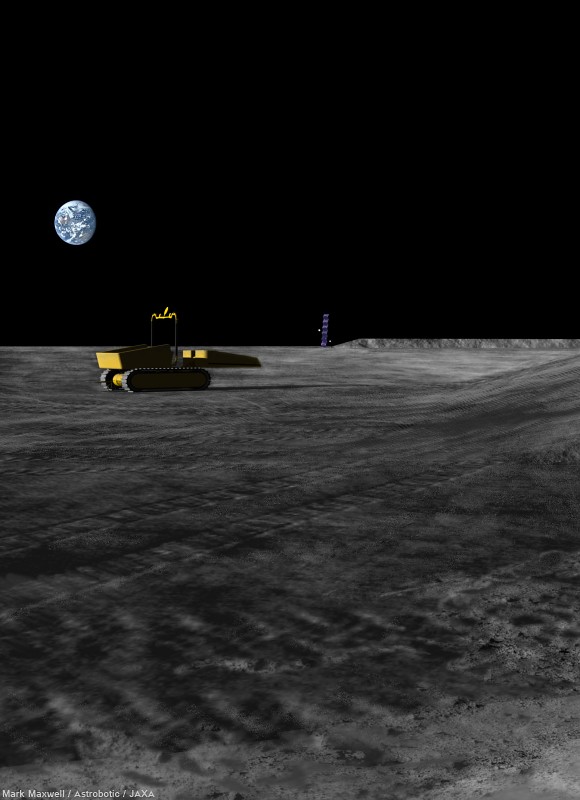
Florida passes space incentive bills

No surprise there.