Showing posts sorted by relevance for query ISRU. Sort by date Show all posts

Thursday, July 1, 2010

Field analog testing of of In-Situ Resource Utilization for Moon & Mars exploration

Outpost-scale O2 from regolith - Among ISRU hardware field-tested by NASA, the Canadian Space Agency, Carnegie Mellon University & NASA JPL, PILOT hydrogen reduction, water electrolysis and bucketdrum excavator [NASA JSC/NASA KSC].


Sanders & Larson
NASA JSC

The NASA project to develop In-Situ Resource Utilization (ISRU) technologies, in partnership with commercial and international collaborators, has achieved full system demonstrations of oxygen production using native regolith simulants. These demonstrations included robotic extraction of material from the terrain, sealed encapsulation of material in a pressurized reactor; chemical extraction of oxygen from the material in the form of water, and the electrolysis of water into oxygen and hydrogen for storage and reuse.

These successes have provided growing confidence in the prospects of ISRU oxygen production as a credible source for critical mission consumables in preparation for and during crewed missions to the moon and other destinations. Other ISRU processes, especially relevant to early lunar exploration scenarios, have also been shown to be practical, including the extraction of subsurface volatiles, especially water, and the thermal processing of surface materials for civil engineering uses and for thermal energy storage.

This paper describes these recent achievements and current NASA ISRU development and demonstration activity. The ability to extract and process resources at the site of exploration into useful products such as propellants, life support and power system consumables; and radiation and rocket exhaust plume debris shielding, known as In-Situ Resource Utilization or ISRU, has the potential to significantly reduce the launch mass, risk, and cost of robotic and human exploration of space.

The incorporation of ISRU into missions can also significantly influence technology selection and system development in other areas such as power, life support, and propulsion. For example. the ability to extract or produce large amounts of oxygen and/or water in-situ could minimize the need to completely close life support air and water processing system cycles, change thermal and radiation protection of habitats, and influence propellant selection for ascent vehicles and surface propulsive hoppers.

While concepts and even laboratory work on evaluating and developing ISRU techniques such as oxygen extraction from lunar regolith have been going on since before the Apollo 11 Moon landing, no ISRU system has ever flown in space, and only recently have ISRU technologies been developed at a scale and at a system level that is relevant to actual robotic and human mission applications.

Because ISRU hardware and systems have never been demonstrated or utilized before on robotic or human missions, architecture and mission planners and surface system hardware developers are hesitant to rely on ISRU products and services that are critical to mission and system implementation success.

To build confidence in ISRU systems for future missions and assess how ISRU systems can best influence and integrate with other surface system elements, NASA, with international partners, are performing analog field tests to understand how to take advantage of ISRU capabilities and benefits with the minimum of risk associated with introducing this game-changing approach to exploration.

This paper will describe and review the results of four analog field tests (Moses Lake in 6/08, Mauna Kea in 11/08. Flagstaff in 9/09; and Mauna Kea in 1/10) that have begun the process of integrating ISRU into robotic and human exploration systems and missions, and propose future ISRU-related analog field test activities that can be performed in collaboration with international space agencies.

NASA Scientific and Technical Information knowledge base
COSPAR 2010 - 38th Scientific Assembly
Bremen, Germany, July 18, 2010

View the detailed presentation (PDF) HERE.

Monday, September 13, 2010

Potential lunar ISRU experiments and missions


Scarab concept lunar rover (undergoing analog testing in Hawai'i in 2009), a test-bed for the Lunar Polar Resource Characterization precursor mission concept. Robotic missions designed to determine the precise nature of volatiles within permanently darkened regions on the Moon (such as Cabeus, impact site of LCROSS in 2009) will necessarily need to be robust [NASA].

Gerald B. Sanders
Lunar Surface System Office
NASA JSC


Extraction and use of resources on the Moon, known as In-Situ Resource Utilization (ISRU), can potentially reduce the cost and risk of human lunar exploration while also increasing science achieved. By not having to bring all of the shielding and mission consumables from Earth missions may require less mass to accomplish the same objectives, carry more science equipment, go to more sites of exploration, and/or provide options to recover from failures not possible with delivery of spares and consumables from Earth alone.

The concept of lunar ISRU has been considered and studied for decades, and scientists and engineers were theorizing and even testing concepts for how to extract oxygen from lunar soil even before the Apollo 11 mission to the Moon.

There are four main areas where ISRU can significantly impact how human missions to the Moon will be performed: mission consumable production, civil engineering and construction, energy production, storage and transfer, and manufacturing and repair. The area that has the greatest impact on mission mass, hardware design and selection, and mission architecture is mission consumable production, in particular, the ability to make propellants, life support consumables, and fuel cell reagents. Mission consumable production allows for refueling and reuse of spacecraft, increasing power production and storage, and increased capabilities and failure tolerance for crew life support. The other three areas allow for decreased mission risk due to radiation and plume damage, alternative power systems, and failure recover capabilities while also enabling infrastructure growth over Earth delivered assets.

While lunar ISRU has significant potential for mass, cost, and risk reduction for human lunar missions, it has never been demonstrated before in space. To demonstrate that ISRU can meet mission needs and to increase confidence in incorporating ISRU capabilities into mission architectures, terrestrial laboratory and analog field testing along with robotic precursor missions are required. A stepwise approach with international collaboration is recommended.

The first step is to understand the resources available through orbital and surface exploration missions. Resources of particular interest are hydrogen, hydroxyl, water, and other polar volatile resources recently measured by Chandrayaan-1, Lunar Reconnaissance Orbiter (LRO) and the Lunar Crater Observation and Sensing Satellite (LCROSS). The second step is to demonstrate critical aspects of ISRU systems to prove ISRU is feasible under lunar environmental and resource conditions (e.g. sub-scale oxygen extraction from regolith). The third step is to perform integrated missions with ISRU and other connected systems, such as power, consumable storage, surface mobility, and life support at a relevant mission scale to demonstrate ISRU capabilities as well as the critical interfaces with other exploration systems. If possible, the mission should demonstrate the use of ISRU products (e.g. in a rocket engine or fuel cell). This ‘dress rehearsal’ mission would be the final step before full implementation of ISRU into human missions, and may be performed during human lunar exploration activities.

This stepwise approach is the most conservative approach, and may only be possible with international cooperation due to the limited number of robotic missions each nation/space agency can perform within their budget.

View the presentation and slides (pdf), HERE.

Monday, August 17, 2009

Bio-ISRU: living off the lunar land

Concept of a bio-tech cycle for extraction of rocket fuel, oxygen and food production at a lunar outpost. David McCay, the principal author of the presentation in Korea cited below also co-authored the work cited above. (The Development and Perspectives of Bio-ISRU, Brown, et.al., LEAG-ICEUM-SRR (2008) #4048)

NASA Scientists at Johnson Space Center, working on ways to live off the land on the Moon, are going beyond using solar or nuclear power alone to produce air, food and rocket fuel from lunar materials. They are suggesting importing litholytic cyanobacteria to the Moon, to be grown in a closed system and used together with biotechnology to accomplish in situ resource utilization, (ISRU).

"Litholytic" literally means "rock-eating," micro-organisms that would free oxygen, hydrogen and recycle carbon, among other things, as a metabolic biproduct. Highly-reactive oxygen, of course, is what animates animal life on Earth, and it exist here primarily because it is a waste product of plant life.

Cyanobacteria are among the most primitive life forms, deriving energy from photosynthesis, directly from sunlight. They are adapted as both simple plant and animals (and perhaps in-between) to nearly every environment on Earth; deep underground, under crushing ocean depths, in the driest deserts and even twenty kilometers overhead in the stratosphere.

Dr. David McCay of Johnson Space Center, with many colleagues, has focused on ISRU from the beginning, when national policy set upon returning to the Moon to stay. Learning to live off the land there is among the most critical of technological elements in need of development before extended human activity on the Moon. Every ounce of material produced on site, to put it bluntly, is hundreds of thousands of dollars less in material that needs to be lofted out of Earth's relatively strong "Gravity Well."

In October 2008, McCay co-authored a presentation on the concept of "Bio-ISRU" at a Joint Meeting of the Lunar Exploration Analysis Group (LEAG), the International Conference on Exploration and Utilization of the Moon (ICEUM) and the Space Resources Roundtable (SRR).

In October, McCay, together with Igor Broun of Jacobs Technology's Sverdrup Group, will make a similar presentation to the 60th International Astronautical Congress in Daejeon.

BIO-ISRU: A New Approach for Producing Oxygen
and Recycling Carbon on the Moon


In-situ production of consumables (mainly oxygen) using local resources (In-Situ Resource Utilization-ISRU) will significantly facilitate current plans for human exploration and settlement of the solar system, starting with the Moon.

With few exceptions, nearly all technology development to date has employed an approach based on inorganic chemistry. None of these technologies include concepts for integrating the ISRU system with a bioregenerative life support system and a food production system. It is known however that bacteria are able to dissolve different rocks, including lunar regolith simulants.

As the regolith minerals and glasses dissolve, their bound oxygen and implanted carbon and hydrogen become available for utilization at a lunar outpost. The cyanobacteria can extract many needed elements directly from the dissolved regolith.

Our concept for the development of a biotechnological loop for in-situ resources extraction, propellant and food production at the lunar outpost is based on the cultivation of litholytic cyanobacteria with lunar regolith in a geobioreactor.

Sunlight provides most of the energy needed for growth of the bacteria colony within the geobioreactor. As a result of pilot studies, we are developing a concept for a semi-closed integrated system that uses a bioreactor containing cyanobacteria for extracting useful elements from the regolith. This bioreactor can revitalize air by utilization of excess CO2 and production of O2.

Some components of cyanobacterial biomass can be used directly as nutritional supplements.

Such a system could be the foundation of a self-sustaining extraterrestrial outpost. The most critical conclusion is that a semi-closed life support system tied to an ISRU biofacility might be more efficient for support of an extraterrestrial outpost than closed environmental systems.

Such a synthesis of technological capability could decrease the demand for energy, uplift mass and overall cost of future exploration.

Monday, July 30, 2012

Update: ISRU mission simulations on Hawai'i 2012

The Canadian Space Agency test platform Artemis, Jr. is fitted with NASA's RESOLVE instrument, Day 3 of field testing on Mauna Kea, Hawai'i, 2012 [CSA].
NASA has just completed a another annual field test on the Big Island of Hawai'i to evaluate new exploration techniques for the surface of the Moon. These analog missions, are performed at remote locations on Earth to prepare for robotic and human missions to the Moon and Mars.

The In-Situ Resource Utilization (ISRU) analog mission is a collaboration of NASA partners, primarily the Canadian Space Agency (CSA), with help from the Pacific International Space Center for Exploration Systems (PISCES).

The ISRU analog mission will demonstrate techniques to prospect for lunar ice. The testing site (on Mauna Kea) features lava-covered mountain soil similar to the ancient volcanic plains on the moon. The two main tests under way are the Regolith and Environment Science and Oxygen and Lunar Volatile Extraction (RESOLVE) and the Moon Mars Analog Mission Activities (MMAMA).

Review the NASA press release, HERE.

Contributing:
Roving for resources on an Analog Moon, astronaut for hire (July 23, 2012)
NASA conducts mission simulations in Hawai'i AmericaSpace (July 30, 2012)

Related Posts:
Lunar robotic tests on the 'Big Island' (September 2, 2008)
Carnegie Mellon tests Scarab on Mauna Kea (October 15, 2008)
Turning Lunar Dust into Gold (January 8, 2009)
Spotlight on Carnegie-Mellon's Scarab (April 10, 2009)
Mauna Kea hosts space tests (February 7, 2010)
Field testing of In-Situ Resource Utilization (July 1, 2010)
ISRU: NASA KSC prototype rover photo op (June 11, 2012)
KSC shows off Resolve, ISRU and lunar analog study platform (June 13, 2012)
A Resolve to mine the Moon (July 15, 2012)

Thursday, February 28, 2008

NASA Team Demonstrates Robot Technology for Moon Exploration

CLEVELAND, Feb 27, 2008 /PRNewswire-USNewswire via COMTEX/ -- During the 3rd Space Exploration Conference Feb. 26-28 in Denver, NASA will exhibit a robot rover equipped with a drill designed to find water and oxygen-rich soil on the moon.

"Resources are the key to sustainable outposts on the moon and Mars," said Bill Larson, deputy manager of the In-Situ Resource Utilization (ISRU) project. "It's too expensive to bring everything from Earth. This is the first step toward understanding the potential for lunar resources and developing the knowledge needed to extract them economically."

The engineering challenge was daunting. A robot rover designed for prospecting within lunar craters has to operate in continual darkness at extremely cold temperatures with little power. The moon has one-sixth the gravity of Earth, so a lightweight rover will have a difficult job resisting drilling forces and remaining stable. Lunar soil, known as regolith, is abrasive and compact, so if a drill strikes ice, it likely will have the consistency of concrete.

Meeting these challenges in one system took ingenuity and teamwork. Engineers demonstrated a drill capable of digging samples of regolith in Pittsburgh last December. The demonstration used a laser light camera to select a site for drilling then commanded the four-wheeled rover to lower the drill and collect three-foot samples of soil and rock.

"These are tasks that have never been done and are really difficult to do on the moon," said John Caruso, demonstration integration lead for ISRU and Human Robotics Systems at NASA's Glenn Research Center in Cleveland.

In 2008, the team plans to equip the rover with ISRU's Regolith and Environment Science and Oxygen and Lunar Volatile Extraction experiment, known as RESOLVE. Led by engineers at NASA's Kennedy Space Center, Fla., the RESOLVE experiment package will add the ability to crush a regolith sample into small, uniform pieces and heat them.

The process will release gases deposited on the moon's surface during billions of years of exposure to the solar wind and bombardment by asteroids and comets. Hydrogen is used to draw oxygen out of iron oxides in the regolith to form water. The water then can be electrolyzed to split it back into pure hydrogen and oxygen, a process tested earlier this year by engineers at NASA's Johnson Space Center in Houston.

"We're taking hardware from two different technology programs within NASA and combining them to demonstrate a capability that might be used on the moon," said Gerald Sanders, manager of the ISRU project. "And even if the exact technologies are not used on the moon, the lessons learned and the relationships formed will influence the next generation of hardware."

Engineers participated in the ground-based rover concept demonstration from four NASA centers, the Canadian Space Agency, the Northern Centre for Advanced Technology in Sudbury, Ontario, and Carnegie Mellon University's Robotics Institute in Pittsburgh.

Carnegie Mellon was responsible for the robot's design and testing, and the Northern Centre for Advanced Technology built the drilling system. Glenn contributed the rover's power management system. NASA's Ames Research Center in Moffett Field, Calif., built a system that navigates the rover in the dark. The Canadian Space Agency funded a Neptec camera that builds three-dimensional images of terrain using laser light.

All the elements together represent a collaboration of the Human Robotic Systems and ISRU projects at Johnson. These projects are part of the Exploration Technology Development Program, which is managed by NASA's Langley Research Center in Hampton, Va.

To view images of the rover in development, visit:

http://www.nasa.gov/mission_pages/constellation/main/lunar_truck.html

For more information about NASA's exploration plans to the moon and beyond, visit:

http://www.nasa.gov/exploration

SOURCE NASA

Saturday, November 17, 2012

Technical Readiness

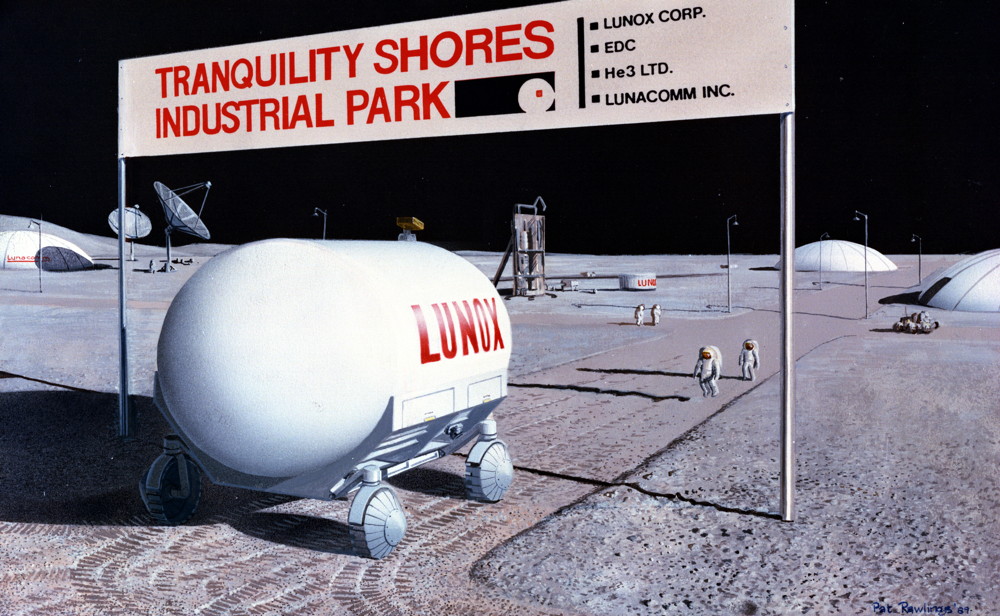
Future industrial activity on the Moon -- science fiction? (Artwork by Pat Rawlings)
Paul D. Spudis
The Once & Future Moon
Smithsonian Air & Space

Space missions are commonly thought of as the ultimate in “high tech.”  After all, rockets blast off into the wild blue yonder, accelerate their payloads to hypersonic and orbital speeds and then operate in zero gravity in the ice-cold, black sky of space.  It requires our best technology to pull off this modern miracle and even then, things can go wrong.  Why would anyone believe that with high technology, sometimes less can be more – that we’re missing a bet by not utilizing current technology.   Like the intellectual tug of war involving man vs. machine, there also is a tug of war between proven technology and high-tech.  Creating these barriers and distinctions is nonsensical.  We need it all.  And we can have it all.

Point in question – in situ resource utilization (ISRU), which is the general term given to the concept of learning how to use the materials and energy we find in space.  The idea of learning how to “live off the land” in space has been around for a long, long time.  Countless papers have been written discussing the theory and practice of this operational approach.  Yet to date, the only resource we have actually used in space is the conversion of sunlight into electricity via arrays of photovoltaic cells.  Such power generation is clearly “mature” from a technical viewpoint, but it had to be demonstrated in actual spaceflight before it became considered as such (the earliest satellites were powered by batteries).

The reason we have not used ISRU is because we’ve spent the last 30 years in low Earth orbit, without access to the material resources of space.  Many ideas have been proposed to use the material resources of the Moon.  A big advantage of doing so is that much less mass needs to be transported from Earth.  The propellant needed to transport a unit of mass from the Earth to the Moon keeps us hobbled to the tyranny of the rocket equation – a constant roadblock to progress.  If it takes several thousand dollars to launch one pound into Earth orbit, multiply that amount times ten to get the cost to put a pound of mass on the Moon.

In the space business, new technologies tend to be viewed with a jaundiced eye.  Aerospace engineers in particular are typically very conservative when it comes to integrating new technology into spacecraft and mission designs, largely on the basis that if we are not careful, missions can fail in a spectacularly dreadful fashion.  To determine if a technology is ready for prime time, NASA developed the Technology Readiness Level (TRL) scale, a nine-step list of criteria that managers use to evaluate and classify how mature a technical concept is and whether the new technology is mission ready.

Resource utilization has a very low TRL level – usually TRL 4 or lower.  Thus, many engineers don’t think of ISRU as a viable technique to implement on a real mission.  It seems too “far out” (more science fiction than science).  Believing that a technology is too immature for use can become a self-fulfilling prophecy, a “Catch-22” for spaceflight:  a technology is too immature for flight because it’s never flown and it’s never flown because it’s too immature.  This prejudice is widespread among many “old hands” in the space business, who wield TRL quite effectively in order to keep new and innovative ideas stuffed in the closet and off flight manifests.

In truth, the idea that the processing and use of off-planet resources is “high technology” is exactly backwards – most of the ideas proposed for ISRU are some of the simplest and oldest technologies known to man.  One of the first ideas advanced for using resources on the Moon involve building things out of bulk regolith  (rocks and soil of the lunar surface).  
Nothing that we plan to do on the Moon involves magic, alchemy or extremely high technology.
This is certainly not high-tech; the use of building aggregate dates back to ancient times, reaching a high level of sophistication under the Romans, who over 2000 years ago built what is still the largest free-supported concrete dome in the world (the Pantheon).  The Coliseum was made of concrete faced by marble.  The Romans also built a complex network of roads, some which remain in use to this day; paving and grading is one of the oldest and most straightforward technologies known.  Odd as it may seem, sand and gravel building material is the largest source of wealth from a terrestrial resource – the biggest economic material resource on Earth.

Recently, interest has focused on the harvesting and use of water, found as ice deposits, at the poles of the Moon.  Digging up ice-laden soil and heating it to extract water is very old, dating back to at least prehistoric times.  This water could contain other substances, including possibly toxic amounts of some exotic elements, such as silver and mercury.  No problem – we understand fractional distillation, a medieval separation technique based on the differing boiling temperatures of various substances.  Again, this concept is not particularly high-tech as only a heater and a cooling column is needed (basically the configuration of an oil refinery).  Some workers have suggested that lunar regolith could be mined for metals, which can then be used to manufacture both large construction pieces and complex equipment.  Extracting metal from rocks and minerals is likewise very old, developed by the ancients and simply improved in efficiency over time.  Processes like carbothermal reduction have been used for hundreds of years. The reactions and yields are well known, and the machinery needed to create a processing stream is simple and easy to operate.

In short, the means needed to extract and use the material wealth of the Moon and other extraterrestrial bodies is technology that is centuries old.  Even advanced chemical processing was largely completely developed by the 19th Century in both Europe and America.  The “new” aspects of ISRU technology revolve around the use of computers to control and regulate the processing stream.  Such control is already used in many industries on Earth, including the new and potentially revolutionary technique of three-dimensional printing.  A key aspect of the old “Faster-Cheaper-Better” idea (one NASA never really embraced) was to push the envelope by relying more on “off-the-wall” ideas, whereby more innovation on more flights would lead to greater capability over time.

Water, Rare Earths and metals are collected and transferred autonomically, using remotely-operated vehicles in a scenario prepared by MIT and presented a gathering of AIAA Houston last spring [John Frassanito & Associates].
Nothing that we plan to do on the Moon involves magic, alchemy or extremely high technology.  Like most new fields of endeavor, we can start small and build capability over time.  The TRL concept was designed as a guideline.  It was not intended as a weapon eliminating possibly game-changing techniques from consideration or to carve out funding territories.  Attitudes toward TRL must change at all levels, from the lowly subsystem to the complete, end-to-end architectural plan.  A critical first step toward true space utilization and for understanding and controlling our destiny there is to recognize and take advantage of the leverage one gets from lunar (and in time planetary) resource utilization.

Originally published at his Smithsonian Air & Space blog The Once and Future Moon, Dr. Spudis is a senior staff scientist at the Lunar and Planetary Institute. The opinions expressed are those of the author and are better informed than average.

Monday, August 19, 2013

Good things delivered in small packages

Mighty Eagle Aces Exam (NASA, International Space Station, 09/05/12)
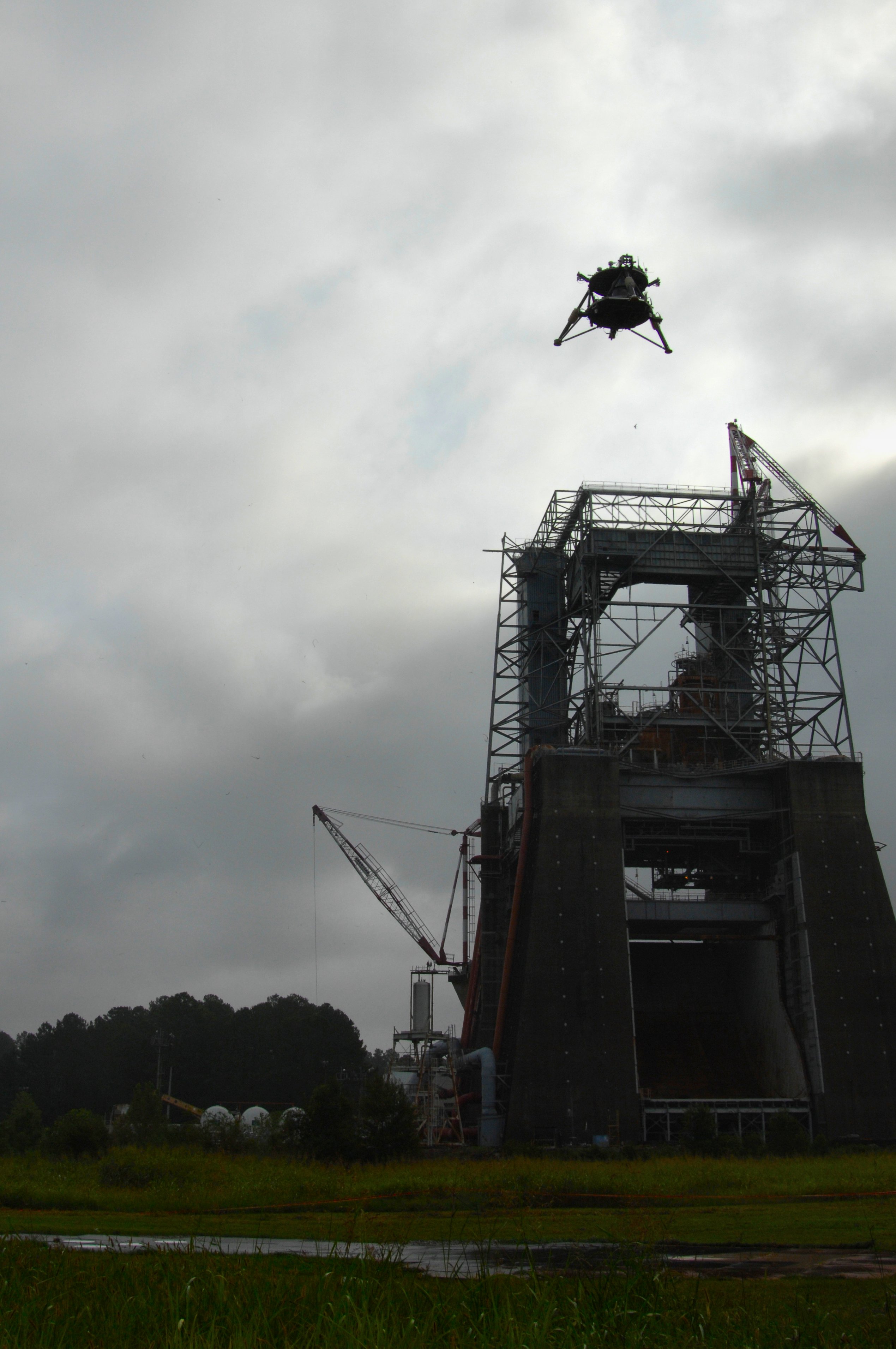
Overcast skies didn't deter the "Mighty Eagle," flying high over the historic F-1 test stand and completing a milestone round of flight test objectives, September 5, 2012. One of two NASA robotic prototype landers, the vehicle was flown to an altitude of 30.48 meters and descended gently to a controlled landing during a successful free flight Marshall Space Flight Center in Huntsville, Alabama. Nicknamed the "Mighty Eagle" after one of the characters in the popular "Angry Birds" game, the vehicle is a three-legged prototype,  that resembles an actual flight lander design. It is 1.219 meters high, 2.438 in diameter and, when fueled, weighs 317.5 kg. It's a, so-called, “green” vehicle, 90 percent fueled by pure hydrogen peroxide, guided by an onboard computer [NASA/MSFC].
Paul D. Spudis
The Once and Future Moon
Smithsonian Air & Space


Wanted: lander spacecraft to deliver payloads to the Moon.  Must be cheap and reliable.

NASA recently issued an “RFI” – a Request for Information – a method used by the agency to solicit concepts from various companies and gauge their ability to fulfill a future anticipated need.  In this case, the need is for a small robotic lander, one capable of delivering two classes of payloads to the lunar surface: small (from 30 to 100 kg) and medium (from 250 to 450 kg).

Probably focused near-term with the RESOLVE (Regolith and Environment Science and Oxygen and Lunar Volatiles Extraction) payload, the intent of this RFI is to survey existing capabilities for the commercial delivery of a variety of payloads to the Moon.  RESOLVE is a NASA experiment designed to test and demonstrate some techniques of in situ resource utilization (ISRU) on the Moon, specifically the generation of oxygen and the extraction of volatile elements (such as hydrogen) from lunar soil.  The RESOLVE package consists of several highly integrated experiments designed to collect soil on the Moon, heat this feedstock to various temperatures and measure the amount and type of volatile elements released, and practice some techniques of processing the soil into useful products (such as water or oxygen).

Though we’ve been talking about using off-planet resources for years, this is the first time the agency would fly an experiment designed to evaluate the processes and difficulties involved.  Some of us contend that until it is proven possible (by demonstrating it in space), space-based resource utilization (ISRU) will remain classified as “too risky” to incorporate into an architecture.  Engineers don’t doubt the chemistry or physics behind ISRU, but to evaluate risk and return, they want demonstrations using real hardware versus theoretical concepts and paper studies.

Although it will not answer all ISRU questions, RESOVLE can provide useful data and would be an important milestone.  Our ignorance is particularly vast in regard to the nature of the polar volatile deposits.  Some near-polar sites are under consideration for RESOLVE, but because the lander must be able to communicate with Earth, sites near the poles must be in radio view of Earth.  This eliminates the most promising polar volatile sites (permanently dark, out of radio sight) from consideration, at least for the first mission.  However, we know that water ice occurs in some areas in view of Earth, so careful targeting will permit us to get ground truth for a critical area near the one of poles.

There are a wide variety of possible payloads (scientific and resource utilization) for lunar missions using small landers.  A key priority for the lunar science community has been the deployment of a global network of geophysical instruments.  Such a package would include a seismometer (to monitor and measure moonquakes), a heat flow probe (to take the Moon’s temperature) and other instruments, such as a magnetometer and a laser reflector.  The five-station surface network laid out during the Apollo missions was operational for more than 7 years and gave us a first-order understanding of the nature of the deep lunar interior.  A new global network – widely spaced and operating longer with more stations – would vastly improve on that knowledge.

The success of a network mission necessitates a long-lived power source to operate instruments during the very cold, 14-day lunar night (the Apollo network used nuclear power supplies), along with an inexpensive way to deploy the network stations.  New technologies have developed small, reliable radioisotope generators that operate for many years.  A small lander could deliver geophysical stations across the entire globe; each station is low mass, so the smaller (and presumably cheaper) the lander, the more likely that this mission will be realized.  A global seismic network would decipher the crust and mantle structure of the Moon and could monitor its surface for large impacts.  A precise measurement of lunar heat flow (measuring the abundance of radioactive elements in the Moon) will give us more information about the bulk composition of the Moon and advance our understanding of lunar origin.  Laser ranging will also be useful in addressing some critical geophysical and astrophysical problems.


Project Morpheus vehicle "Morpheus Bravo," executes a successful tether test August 7, 2013 at Johnson Space Center. The combined Morpheus/JPL team met all their objectives including engine ignition, ascent, a 3 meter lateral translation over simulated Mars regolith simulant from JPL to help with plume study, 40 seconds of hover at apex and a slant descent to "landing" using free flight guidance. The entire flight duration was around 80 seconds. All though the Mars surface simulant was not typical for Morpheus test fires, it "sure made for a spectacular show"

Single-point landers, making simple measurements, can investigate the surface composition and geology at select landing sites.  If the landing sites and investigations are carefully chosen, they could significantly advance science by answering key questions.  For example, a critical issue in the cratering history of the Moon is knowledge of the absolute age of some of the youngest craters on the Moon.  The formation of the crater Copernicus marks a key time horizon in lunar history (the Copernican Period).  We know its relative age very well but are uncertain about its absolute age.  A small lander can be sent directly to the crater floor, where the impact melt is exposed and accessible, to analyze crater melt rocks for chemical composition and to learn the nature of the impact target (as well as determining the age of the rock by measuring the radiogenic potassium and argon in the rock). Although the potassium-argon technique is not the most precise method of radiometric dating, it can distinguish among the different proposed absolute ages, which vary over a billion years.  By determining this age more precisely, we will better understand the impact flux in the Earth-Moon system, knowledge that will help us better interpret the surface ages of units on other terrestrial planets.

Small landers could deliver a variety of long-lived assets for future surface operations and resource utilization experiments.  Techniques for making oxygen from lunar soil have been proposed but no comparative demonstration has been done on the Moon.  A small laboratory could be send to the Moon to conduct simultaneous experiments on oxygen manufacture.  The advantage of this experiment would be the use of identical feedstock under identical thermal and time constraints to compare their relative efficacy and identify any problems.  This experiment would fit on a small lander (~ 50 kg capacity) and by using solar power, within the span of a single lunar day (2 weeks) could quickly complete its evaluation.

The larger version of the RFI lander opens up other possibilities.  With a payload capacity on the order of 500 kg, this lander could deliver an advanced, automated surface rover (powered by an RTG – nuclear battery) able to undertake extensive and protracted exploration of the polar cold traps.  Equipped with instruments utilizing well established technology, this rover would characterize the physical, chemical and isotopic make up of the polar volatiles – a task critical for mapping the extent and purity of deposits of water ice on the Moon, and evaluating their mining and extraction potential.

The Canadian Space Agency test platform Artemis, Jr. fitted with NASA's RESOLVE instrument package, Day 3 of field testing on Mauna Kea, Hawai'i, July 2012 [CSA].
At this scale, it’s possible to deliver an ascent vehicle to the Moon to retrieve and return samples to Earth.  Scientists have a long list of desired targets for sample return and the potential for low cost, commercial landers to deliver payloads simply and inexpensively to the Moon could revolutionize our understanding of the Moon’s (and Earth’s) history and processes.  From remote sensing data, we know that many fascinating areas on the Moon display rocks either unrepresented or unrecognized in the existing collections from the American Apollo, Soviet Luna, and lunar meteorite samples.  Samples from the oldest impact feature on the Moon – the floor of the South Pole-Aitken basin – are especially desired.  Although a simple “grab” sample won’t answer all of our questions, rocks from this site could address major questions about the bombardment history of the Moon and the early Earth.

Small lander spacecraft will open up new horizons for science and exploration.  Critical to their success is making them simple, robust and inexpensive.  That’s been a tall order for NASA.  Whether the commercial sector can provide this capability more effectively remains to be seen.

Related Posts:
CHONDROBOT-2: Simple, Efficient Semi-Autonomous Lunar Excavator (January 4, 2013)
Technical Readiness (November 17, 2012)
Marshall's new-generation lunar lander flies again (September 11, 2012)
Update: ISRU mission simulations on Hawai'i (July 30, 2012)
'A RESOLVE to mine the Moon' (July 15, 2012)
KSC shows off RESOLVE, ISRU and lunar analog study platform (June 13, 2012)
Mighty Eagle lander's 100 foot flight at Redstone (November 4, 2011)
New Robotic Lander Prototype skates tests (January 29, 2011)
NASA update: ILN Anchor Nodes and Robotic Lunar Lander Project (August 17, 2010)
Field testing of In-Situ Resource Utilization (July 1, 2010)
The Lunar Quest Program and the International Lunar Network (September 6, 2009)
Spotlight on Carnegie-Mellon's SCARAB (April 10, 2009)

Originally published August 17, 2013 at his Smithsonian Air & Space blog The Once and Future Moon, Dr. Spudis is a senior staff scientist at the Lunar and Planetary Institute. The opinions expressed are those of the author but are better informed than average

Tuesday, November 19, 2013

Has NASA 'RESOLVE'd' on Canadian lunar rover?

The Canadian Space Agency test platform "Artemis, Jr.," fitted with NASA's RESOLVE surface materials probe package "RESOLVE," on Day 3 of field testing on Hawai'i, July 2012 [CSA].
Tom Spears
Ottawa Citizen

Neptec Design Group of Ottawa is the front-runner to build the next moon rover — a traveling robot that will hunt for water on an unmanned NASA mission in 2017. NASA has asked the Canadian Space Agency specifically for Neptec’s rover, called Artemis Jr., said Mike Kearns, president of space exploration with the Ottawa aerospace engineering firm.

It has chosen a Canadian drill and Canadian avionics, too.

“One of the missions on that path is called RESOLVE, renamed by some people now as the Lunar Prospector Mission,” Kearns said.“NASA, for funding reasons, has asked CSA to provide the rover and the drill. And they actually asked for our Neptec rover ... and for the drill that is made by a company called Deltion.” (Deltion Innovations of Sudbury took over the design that originated with NORCAT. Its drill developed out of Canadian mining technology.)

What sealed NASA’s interest was a test drive of the rover prototype on the side of a Hawaiian volcano, in 2012. Chosen to simulate the harsh landscape of the moon and Mars, it provided a place for Artemis Jr. to drive, pivot and steer past obstacles using its vision system and navigation software. It passed nine days of tests.It’s called “Jr.” because this is a scaled-down version of a Neptec rover designed to carry astronauts, called Artemis.

Searching for water in space is vital. Not only can astronauts drink it, but it can be broken down into oxygen and hydrogen, both used in rocket propellant. Artemis Jr. could also search for methane.Neptec hopes the 2017 date will resonate with politicians who want some flag-waving in Canada’s 150th year.

“The question that always comes up is: That’s very nice but what’s the financial benefit? What’s the return to the taxpayers. And the answer is that ... for every dollar that CSA gives us, we end up with $10, mostly in export sales. We sell those products around the world.”

While the Canadian Space Agency can open the bidding to include MDA, the CANADARM builders, Kearns says NASA’s preference gives his company’s Artemis Jr. rover a strong chance. MDA officials weren’t available for comment Monday.

NASA is publicly leaning toward the Neptec team. In a description of the mission it writes: “RESOLVE is not just a NASA effort; the Canadian Space Agency provided Artemis Jr., which is the rover for the payload; the onboard drill and sample transfer system; as well as avionics microprocessors.”

Fanciful rendering of the Artemis, Jr. platform on the floor of Mare Crisium. A better view of the system, in the real world and in more detail is available, HERE.
Artemis Jr. is actually the product of a group of Canadian companies: Ontario Drive and Gear, from New Hamburg, Ont.; ComDev and Neptec from Ottawa; Deltion; and NGC from Sherbrooke.

The four-wheeled rover can pivot on one spot, moving the right wheels forward and the left ones in reverse. It has coarse metal treads for traction, and a solar panel on top.

It’s designed for NASA’s Regolith & Environment Science and Oxygen & Lunar Volatile Extraction (RESOLVE) project, which involves heating the “regolith” (loose minerals on the moon’s surface) to extract gas.

Related Posts:
Good things delivered in small packages, Paul Spudis (August 19, 2013)
Geological sampling and planetary exploration, Paul Spudis (February 19, 2013)
'a RESOLVE to mine the Moon,' Brian Shiro (July 15, 2012)

Tuesday, September 11, 2012

Canadian Lunar Exploration Light Rover prototype

Stylized View of the Lunar Exploration Light Rover (LELR) Design, Figure 3 from "A Canadian Lunar Exploration Light Rover Prototype," McCoubry & Langley, et al, (Sept. 2012).
McCoubrey & Langley, et al
MacDonald, Dettwiler, and Associates, CANADA
Centre de technologies avancées BRP – Universite de Sherbrooke
University of Toronto Institute for Aerospace Studies

CANADA

In 2010, the Canadian Space Agency (CSA) commenced the Lunar Exploration Light Rover (LELR) project as part of its Exploration Surface Mobility program. The LELR project consists of building rovers, integrating them with tools and instruments, and executing representative mission deployments. The LELR is designed for mobility tasks related to science prospecting, in-situ resource utilization (ISRU), and future upgrades for crew transportation. The vehicle is based on a rugged, custom mobility platform built by Bombardier Recreational Products Centre for Advanced Technology.

Onboard sensors provide feedback and situational awareness for tele-operation, autonomy, and onboard control (future upgrade). Modular onboard software is used to ensure future upgradeability, and offers such features as localization without external aids and visual teach and repeat software developed by the University of Toronto. Future work may involve adding onboard human control, further integration with payloads and deployments in coordination with the international space exploration community.

Figure 2: "Artist’s Concept of the Lunar Exploration Light Rover’s Various Mission Configurations."
In the context of returning systems to the surface of the Moon, there have been several recent developments in the area of Lunar mobility. The Chariot rover is a large-class system designed to carry astronauts and perform regolith moving tasks such as bulldozing. The Eurobot Ground Prototype (EGP) rover is a medium-class system designed to accomplish both science exploration and transport of a single standing astronaut. The Scarab rover is a small-class rover designed to carry resource prospecting instruments and sensors. The goal of the Lunar Exploration Rover (LELR) program is to develop a mobility solution that can accomplish all of these tasks and thereby provide a flexible and versatile platform for development and testing including integration with exploration tools and instruments. This will then allow development and simulation of analogue mission scenarios. The LELR vehicle is a key part of the Canadian Space Agency (CSA) Exploration Surface Mobility program.

The remainder of this paper will discuss the mission scenarios used to define the LELR requirements, the LELR design, and the current program status and upcoming test plan.

View the full paper, HERE.

Some Related Posts

Thursday, April 19, 2012

Heavy hitters join to 'expand Earth's resource base'


HT: Doug Messier
ParabolicArc.com

"Join visionary Peter H. Diamandis, M.D.; leading commercial space entrepreneur Eric Anderson; former NASA Mars mission manager Chris Lewicki; and planetary scientist & veteran NASA astronaut Tom Jones, Ph.D. on Tuesday, April 24 at 1730 UT (10:30 a.m. PDT) in Seattle, or via webcast, as they unveil a new space venture with a mission to help ensure humanity’s prosperity.

"Supported by an impressive investor and advisor group, including Google’s Larry Page & Eric Schmidt, Ph.D.; film maker & explorer James Cameron; Chairman of Intentional Software Corporation and Microsoft’s former Chief Software Architect Charles Simonyi, Ph.D.; Founder of Sherpalo and Google Board of Directors founding member K. Ram Shriram; and Chairman of Hillwood and The Perot Group Ross Perot, Jr., the company will overlay two critical sectors – space exploration and natural resources – to add trillions of dollars to the global GDP. This innovative start-up will create a new industry and a new definition of ‘natural resources’.

"The news conference will be held at The Museum of Flight in Seattle on Tuesday, April 24 at 10:30 a.m. PDT and available online via webcast.

Among those scheduled to attend the news conference are Charles Simonyi, Ph.D., Space Tourist, Planetary Resources, Inc. Investor; Eric Anderson, Co-Founder & Co-Chairman, Planetary Resources, Inc.; Peter H. Diamandis, M.D., Co-Founder & Co-Chairman, Planetary Resources, Inc; Chris Lewicki, President & Chief Engineer, Planetary Resources, Inc. and Tom Jones, Ph.D., Planetary Scientist, Veteran NASA Astronaut & Planetary Resources, Inc. Advisor

Some Related Posts:
"As we enter the 21st century, humankind must deal with the energy crisis, the depletion of natural resources and the pollution of the earth. The solution to all these problems lies beyond the Earth by tapping the vast resources of the solar system, in particular the Moon and asteroids, as a source of materials and the sun as a source of power, which will also remove to outer space some of the major sources of pollution. Uncountable dollars worth of metals, fuels, and life-sustaining substances await in nearby space. Vast amounts of these important substances are locked away--for now--in the asteroids, comets, moons and planets of our own solar system. The abundant resources of the solar system, including effectively limitless solar energy, could support a vast civilization a million times our present population. John S. Lewis argues in his book Mining The Sky that the "shortage of resources is an illusion born of ignorance."
JPL Foundation

Tuesday, August 11, 2009

Progress at Cambridge extracting oxygen from lunar surface materials

Anorthosite collected from "Stone Mountain" by Young and Duke (Apollo 16) in 1972, part of the Descartes formation. The compound, typical of the lunar highlands and now believed to be the lighter rock originally forming over a moon-wide Magma Ocean, is rich with titanium, bound to oxygen as TiO2.

Dr. Harrison H. "Jack" Schmitt, the only Geologist and professional scientist to visit the Moon, exploring the Taurus-Littrow Valley (a vertible crossroads of lunar morphology, near the southwest Mare Serenitatus) with Eugene Cernan in December 1972, has underplayed the importance of finding water reservoirs at the lunar poles for many years.

The definitive signature of hydrogen, twice as present at the Moon's north pole as the south, and detected by Clementine in 1994 and Lunar Prospector in 1999, are not confined to the permanently-shadowed depths of abyssal polar craters, he reminds us, showing hydrogen is present on the Moon, regardless if confined to water ice or not. While working at the lunar sample receiving laboratory in Houston, until leaving NASA to represent New Mexico in the U.S. Senate, along with many other Dr. Schmitt indicated the presence of oxygen, bound primarily with iron and titanium, in the samples returned to Earth during the Apollo program.

In experiments, primarily using proxies, scientists have repeatedly subjected samples to controlled pressures and heat to produce small amounts of water, in university laboratories for decades.

News comes today, by way of PhysOrg.com, of work by Derek Fray, a materials chemist from the University of Cambridge, who, with help from colleagues, "have built a reactor that uses oxides in Moon rocks as the cathode in an electroche$mical process to produce oxygen."

Lisa Zyga, of PhysOrg, continues, "The design is based on a process that the researchers invented in 2000 that produces carbon dioxide. In this design, the scientists pass a current between the cathode and an anode made of carbon, with both electrodes sitting in an electrolyte solution of molten calcium chloride, a common salt. The current removes oxygen atoms from the cathode, which are then ionized and dissolve in the molten salt. The negatively charged oxygen is attracted to the carbon anode, where it erodes the anode and produces carbon dioxide. To produce oxygen rather than carbon dioxide, the researchers made an unreactive anode using a mixture of calcium titanate and calcium ruthenate instead of the carbon. Because this anode barely erodes, the reaction between the oxygen ions and anode produces oxygen."

"Based on experiments with a simulated lunar rock developed by NASA, the researchers calculate that three one-meter-tall reactors could generate one tonne of oxygen per year on the Moon. Each tonne of oxygen would require three tonnes of rock to produce. Fray noted that three reactors would require about 4.5 kilowatts of power, which could be supplied by solar panels or possibly a small nuclear reactor on the Moon. The researchers are also working with the European Space Agency on developing an even larger reactor that could be operated remotely."

"As a recent story in Nature News reports, other researchers are also developing methods for oxygen extraction. For instance, Donald Sadoway at MIT is working on a high-temperature technique called molten salt electrolysis. Here, the Moon rock is molten and acts as the electrolyte itself. Sadoway's reactor could even be built out of the rubble on the Moon's surface called regolith."

"NASA and the ESA are strongly encouraging this type of research. In 2008, NASA boosted its $250,000 prize to $1 million for the first team to demonstrate a method to extract five kilograms of oxygen in eight hours from simulated Moon rock. So far, the prize remains unclaimed."

(Original credit for news of Frey's work comes from Nature News, in "How to breathe on the Moon.")

Is Situ Resource Utilization (ISRU) is considered an essential area where progress must be made before extended human activity on the Moon. The Space Studies Board, last year, rated NASA's effort in this research work relatively high, though, like progress with mitigating the threat lunar dust is said to pose to a permanent human presense on the Moon, ISRU breakthroughs have sometimes been elusive.

Monday, September 7, 2009

Development of a Reactor for the Extraction of Oxygen and Volatiles From Lunar Regolith


Figure 1. Images and line drawings of the RESOLVE reactor with and without insulation. (Large image available by clicking on image or download of complete report, below.)

Julie Kleinhenz and Zengguang Yuan
National Center for Space Exploration Research, Cleveland, Ohio

Kurt Sacksteder and John Caruso
NASA Glenn Research Center, Cleveland, Ohio

47th Aerospace Sciences Meeting, AIAA; Orlando, January 2009

The RESOLVE (Regolith and Environment Science, Oxygen and Lunar Volatiles Extraction) Project, aims to extract and quantify useful resources from lunar soil. The reactor developed for RESOLVE is a dual purpose system, designed to evolve both water, at 150 °C and up to 80 psig, and oxygen, using hydrogen reduction at —900 °C. A variety of laboratory tests were performed to verify its operation and to explore the properties of the analog site soil. The results were also applied to modeling efforts which are being used to estimate the apparent thermal properties of the soil. The experimental and numerical results, along with the analog site tests, will be used to evolve and optimize future reactor designs.

The In-Situ Resource Utilization (ISRU) program aims to develop technologies that will be critical to future exploration missions to the Moon and Mars. One such technology is the extraction and capture of mission consumables, i.e., water and oxygen, from the lunar regolith. The goal of the RESOLVE (Regolith and Environment Science, Oxygen and Lunar Volatiles Extraction) project is to prospect for and quantify these resources and demonstrate how to extract them. Intended as a package concept for a mobile lunar robotic mission, the RESOLVE project encompasses the collection and processing of —100 g batches of regolith. The system includes; extraction of regolith samples using a coring drill, crushing of the sample to an acceptable size distribution, NASA/TM—characterization of bulk regolith properties and mineralogical content, evolution of volatiles in a reactor, detection of evolved gases using a gas chromatograph, and capture and rerelease of the volatiles using absorbent beds. The objective of the package is to demonstrate the feasibility of ISRU related tasks, especially volatile and oxygen extraction processes. The results of this work will be used in the design of larger-scale processing plants to be implemented as part of a lunar outpost.

An earlier laboratory-based system was a first attempt to integrate a core sampling drill, separate reactors for volatile extraction and oxygen production and evolved gas collection and analysis instrumentation. This EBU1 (Engineering Breadboard Unit) payload provided indications of the necessary system power requirements, operating conditions, and timelines (ref. 1). During the past year a second integrated package, called EBU2, was developed in which the two reactor systems were combined into a single multipurpose reactor, and the entire payload shrunk and packaged to fit into a modest size rover (ref. 2) in preparation for field trials.

This report describes the reactor subsystem of the RESOLVE project EBU2 payload, and laboratory testing conducted to assess its performance. The combined reactor performs two functions; thermal extraction of loosely bound water, including operations up to 150 °C and 80 psi, and the chemical extraction of oxygen from iron oxides using hydrogen reduction, including operations up to 900 °C at near-ambient pressures.

Download the full review HERE.

Monday, February 9, 2009

Some Expected Characteristics of Lunar Dust: A Geological View Applied to Engineering

Hardness vs. Geometry

Kenneth W. Street (NASA Glenn Research Center), Christian M. Schrader (BAE Systems) and Doug Rickman (NASA Marshall Space Flight Center) - Geological Society of America Meeting , Houston, October 2008 - Compared to the Earth the geologic nature of the lunar regolith is quite distinct. Even though similar minerals exist on the Earth and Moon, they may have very different properties due to the absence of chemical modification in the lunar environment.

The engineering properties of the lunar regolith reflect aspects of the parent rock and the consequences of hypervelocity meteor bombardment. On scales relevant to machinery and chemical processing for In-Situ Resource Utilization, ISRU (such as water production), the lunar regolith compositional range is much more restricted than terrestrial material. This fact impacts predictions of properties required by design engineers for constructing equipment for lunar use.

In this paper two examples will be covered. 1) Abrasion is related to hardness and hardness is a commonly measured property for both minerals and engineering materials. Although different hardness scales are routinely employed for minerals and engineering materials, a significant amount of literature is available relating the two.

As one example, we discuss how to relate hardness to abrasion for the design of lunar equipment. We also indicate how abundant the various mineral phases are and typical size distributions for lunar regolith which will impact abrasive nature. 2) Mineral characteristics that may seem trivial to the non-geologist or material scientist may have significant bearing on ISRU processing technologies.

As a second example we discuss the impact of traces of F-, Cl-, and OH-, H2O, CO2, and sulfur species which can radically alter melting points and the corrosive nature of reaction products thereby significantly changing bulk chemistry and associated processing technologies. For many engineering uses, a simulant’s fidelity to bulk lunar regolith chemistry may be insufficient. Therefore, simulant users need to engage in continuing dialogue with simulant developers and geoscientists.

Presentation available for download as pdf - HERE.

Monday, July 26, 2010

The Moon, Asteroids, and Space Resources


Totality at Shackleton - In Situ Resource Utilization (ISRU), high on everyone's list of essential learning curves ahead of growing permanent human presence beyond the cradle of Earth points us inevitably to our natural Deep Space Port and harbor, only 1.5 light-seconds away.

Paul D. Spudis
The Once & Future Moon
Smithsonian Air & Space

By abandoning the Moon, the administration’s proposed space policy has left the space community with a huge question mark over the important issue of learning how to harvest and use space resources. Clearly if we don’t go to the Moon with people or machines, there is no way to use the abundant water, metals, and other lunar surface materials to create new capabilities in space. Supporters of the new path suggest instead that we can obtain all the materials we want from near-Earth asteroids, small, rock-like objects that co-orbit the Sun with the Earth. Indeed, some asteroid types appear to contain significant quantities of water, thus offering a possibly rich source of off-planet water.

Water is an extremely useful substance in space. By virtue of its varied utility, water enables extended human presence in space. Besides its obvious role as a sustaining substance for human life (both drinking and providing oxygen for breathing), water is also an excellent material to shield from cosmic radiation and a medium of energy storage, both by thermal storage and also through its use in rechargeable fuel cells, where hydrogen and oxygen are combined at night (producing water and electricity). Stored water is disassociated by solar generated electricity during the day and re-stored as hydrogen and oxygen. Most importantly, water can be converted into liquid hydrogen and liquid oxygen; in this form, it is the most powerful chemical rocket propellant known.

So what are the relative benefits and drawbacks of using asteroidal (not lunar) resources? The biggest advantage of asteroids is that they have extremely low surface gravity. As these objects are simply very large rocks, they don’t have much mass and hence, virtually no surface gravity. A mission to an asteroid is more akin to a rendezvous in space than it is to a planetary landing. The advantage this confers is that vehicles can come and go to a given asteroid without the requirement to expend large amounts of propellant in a landing, with total changes in velocity measured in the few meters to tens of meters per second range. In contrast, a landing on the Moon requires a propulsive burn of over 2200 meters per second, both coming and going. This deep “gravity well” penalty is much smaller than launching from Earth (11,000 meters per second), but is still substantial compared with “dimple” dimensions of asteroid gravity wells.

The asteroids have much to offer for material resources and we will eventually journey to and use many of them. But we have business on the Moon first. Mining the unlimited wealth of the Solar System will become inevitable once we have learned the lessons of how to do this job on our nearest neighbor.
If the propulsive energy of access were the only (or even the main) consideration for resource exploitation, asteroids would win hands down. But there are some other issues to consider. Water is indeed present in the materials of Near-Earth asteroids, but in a chemically bound form. Water molecules fill sites in the crystal structures in rock-forming minerals, bound strongly to its encasing structure. These chemical bonds must be broken to extract the water and that takes energy. On the Moon, water occurs in bound form, but also in its native state as ice in the lunar polar regions. Ice-laden dirt can be scooped up and minimally heated to extract the water. In contrast, it takes 100 to 1000 times more energy to extract a kilogram of water from chemically bound asteroidal minerals than it does to scoop up the “free water” found in the lunar cold traps. The greater quantity of energy needed to extract water from an asteroid is annoying, but can be handled through the use of large solar arrays or even a nuclear reactor to generate copious amounts of electrical power. But both solutions bring significant mass penalties and a nuclear reactor significantly increases cost, both from the technical development it would require and from the hurdles raised by legal and environmental groups it would have to overcome.

A more critical issue is the location of the two resource bodies. The proximity of the Moon is a major boon for its utilization. The Moon is both close and accessible. In terms of closeness, it takes 3 seconds for a radio signal traveling at the speed of light to go the Moon and back. This makes the remote, telepresence operation of lunar robots from Earth feasible. Early steps in the location, surveying and harvesting of demonstration amounts of resources on the Moon can be done remotely with robots controlled from Earth. We do not have this luxury with asteroids.

Asteroids orbit the Sun (like the Earth does) and vary in distance from Earth by tens of millions of miles over the course of a year. At best, asteroids are several tens of light-seconds away and at times, tens of light-minutes. This long radio time-lag means that direct remote operation of robots on asteroids will be cumbersome, if not impossible. For well understood routine tasks, this may not be a serious issue, but space resource utilization is something we have yet to learn. It is unclear whether we will be able to harvest and process asteroid water using remote robots, but it is almost certainly possible to do so with robots on the Moon.

The other aspect of the Moon’s proximity is accessibility, the ability to access a space destination routinely and often. As the Moon orbits the Earth, we can go to and come back from the Moon pretty much at will – launch windows are almost always open. In contrast, because even near-Earth asteroids follow their own paths around the Sun, launch windows are short and come at irregular (albeit predictable) intervals. Round trips to and from asteroids are even more difficult and after multiple weeks to months of travel, loiter times are either very short (on the order of a week or so) or very long (a year or more). This wildly variable duration of access may be handled on a robotic mission, but it precludes any significant human/robot interaction during the materials processing on an asteroid.

Finally, there is the issue of surface gravity. Much of the “dirty work” of resource processing involves separating some substance from another, or extracting something embedded. Having gravity usually makes this an almost trivial step, one that we don’t think about very much – unless we don’t have it. The Moon does indeed have a significant gravity well (about 1/6 that of the Earth) and although this works against us when we want to export product, it works in our favor when we need to process materials. The extremely weak surface gravity of an asteroid is almost microgravity and makes it very difficult to separate materials there without specialized equipment, again adding mass, power, complexity and cost to the processing chain.

In short, there are many considerations to take into account when planning an architecture based on resource exploitation. The seemingly damning case against going to the Moon to harvest material resources largely revolves around its relatively high surface gravity. It takes roughly two tons of water-equivalent liquid hydrogen-liquid oxygen propellant to lift one ton of water to the L1 point, where it can be used to supply and fuel a variety of spacecraft destined for many different places. That same ton of water lifted from the Earth would take over 19 tons of propellant to deliver it. The other side of that coin is that gravity is extremely useful – if not critical – for many materials processing techniques. Gravity can only be artificially created near an asteroid at some expense and mission complexity, whereas on the Moon, it’s a feature that comes for free.

Learning how to access and use space resources is a critical skill for a space faring society – skills and knowledge that will reap rewards right here on Earth. The Moon offers us a school and a laboratory for acquiring this critical knowledge. By virtue of its proximity, accessibility and resource endowments, the Moon satisfies our early space ISRU needs and allows us to create new capabilities to routinely access cislunar space, where all of our economic and national security space assets reside. The asteroids have much to offer for material resources and we will eventually journey to and use many of them. But we have business on the Moon first. Mining the unlimited wealth of the Solar System will become inevitable once we have learned the lessons of how to do this job on our nearest neighbor.


Come and Get It! - Apollo 12 lunar module pilot Alan Bean in what's become one of the iconic Apollo lunar surface mission photographs (Astronomy Picture of the Day, January 21, 2006). Cmdr. Pete Conrad snaps his partner's picture moments after scooping a sampling of extremely course and fine lunar regolith into a bottle designed to seal and retain its native vacuum. All such bottles failed, consistent with the stubborn nature of submicron-sized lunar grains. All that's needed to build and supply future missions beyond the Moon, space stations and orbital fuel depots are now known to exist in situ, on the Moon. Just as no study of Earth can ever be complete without a proper study of the Moon, neither will our understanding of the Solar System. And exploring, studying and eventually living on Mars, the asteroids and all points beyond will ultimately come about because of our Moon, not despite it [AS12-49-7278 - Pete Conrad/NASA/ASU].