Showing posts with label dark halo. Show all posts

Thursday, October 31, 2013

Dark ejecta, clue to cryptomare

M1115555142L_1k
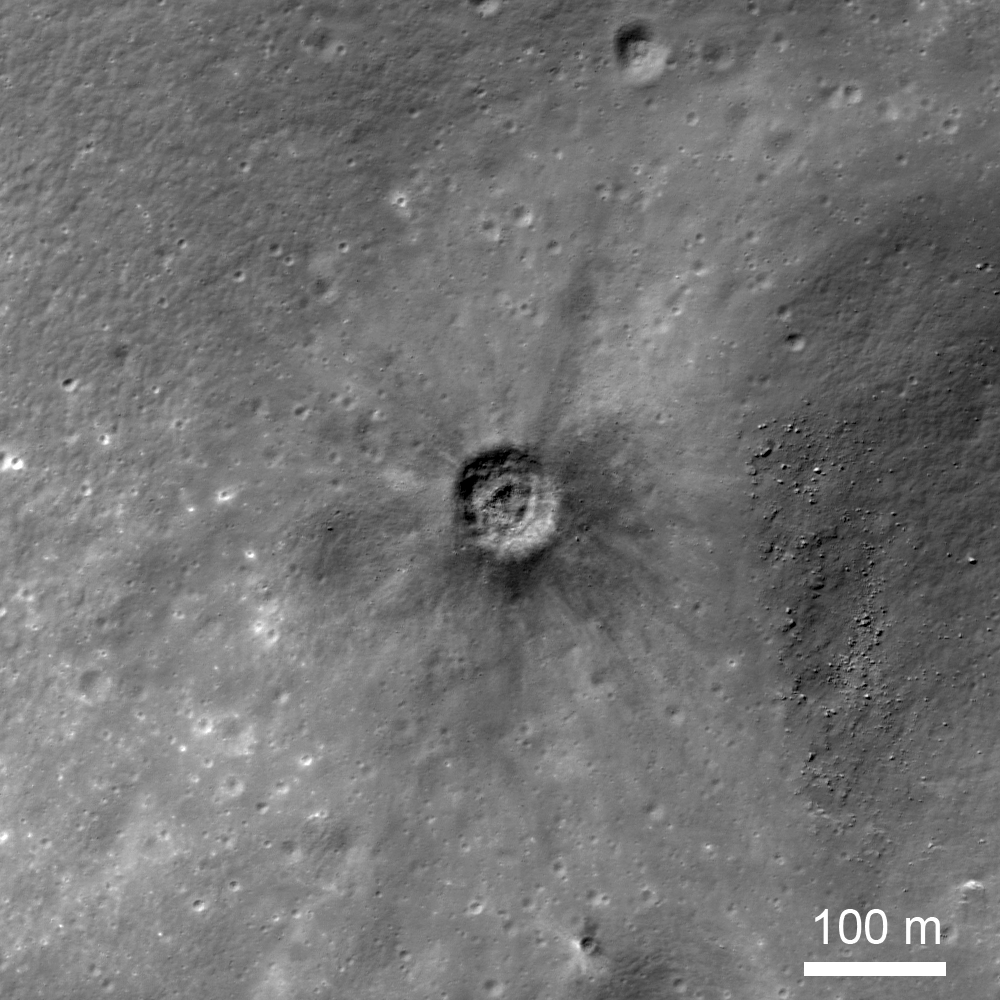
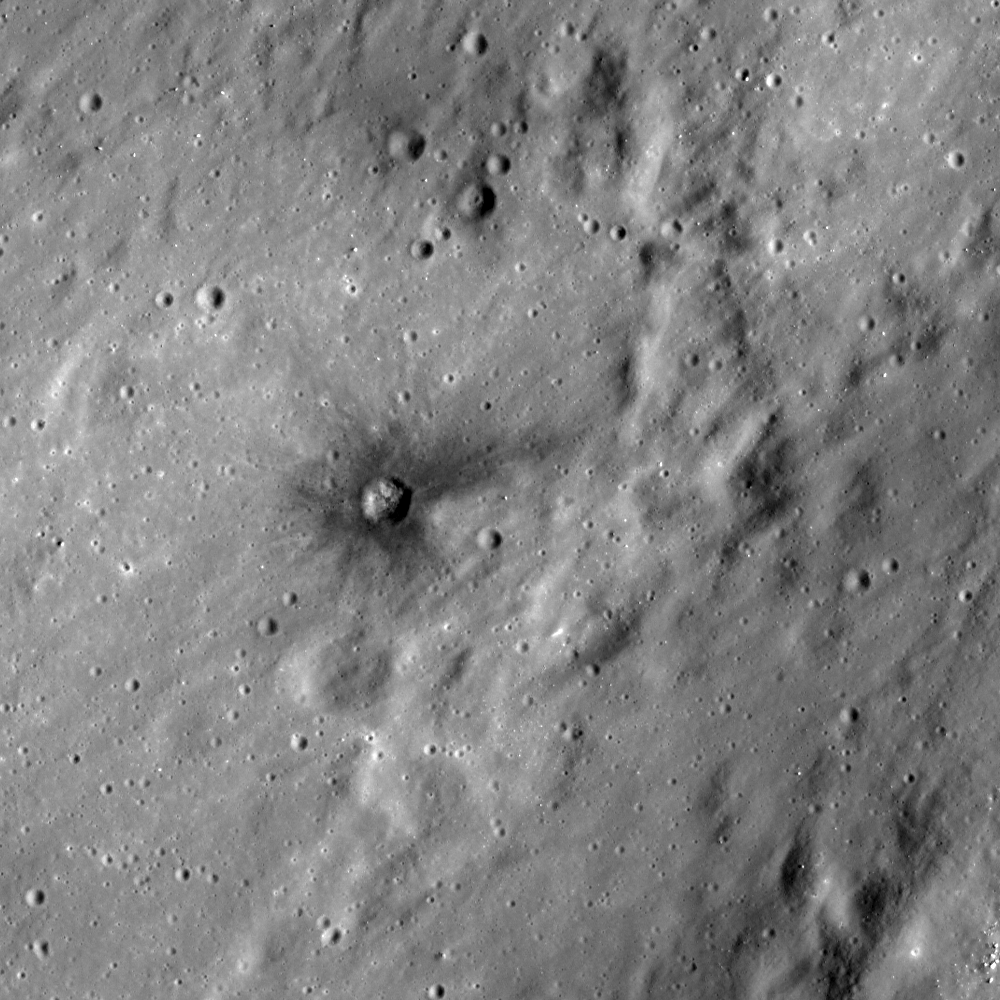
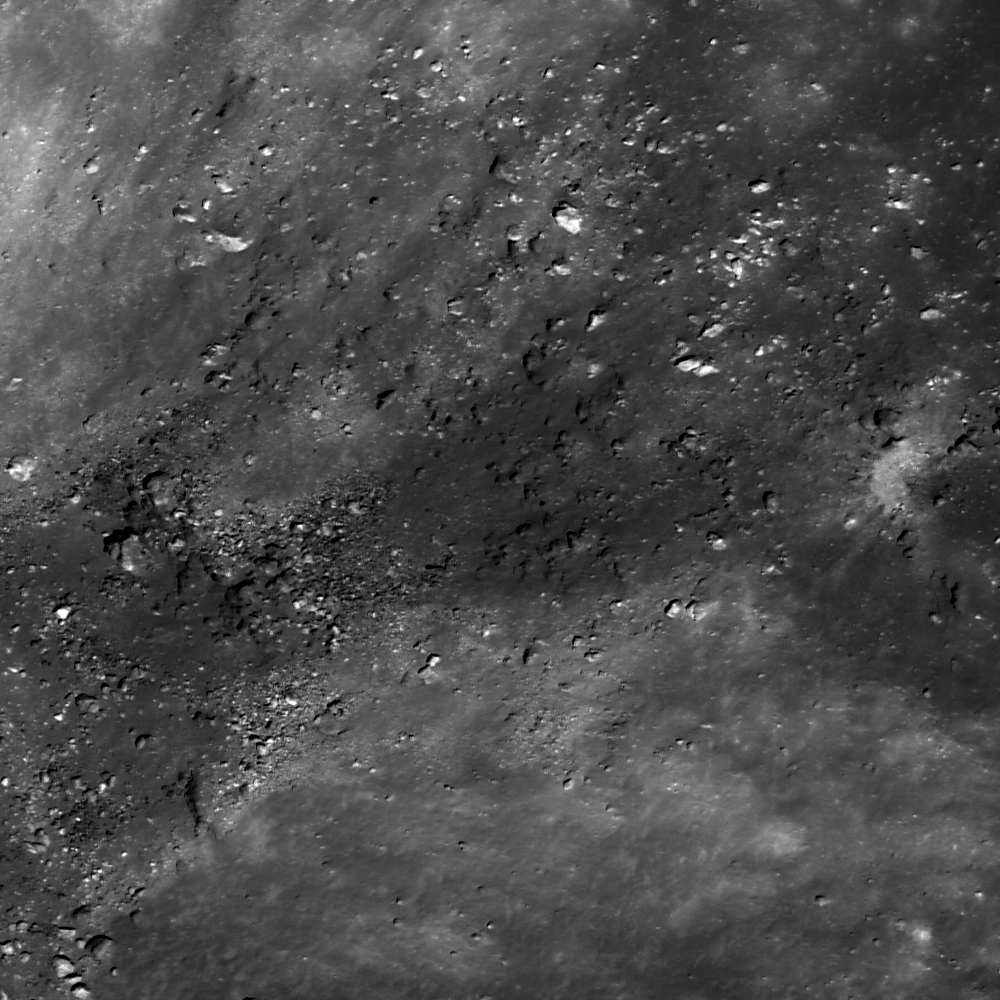
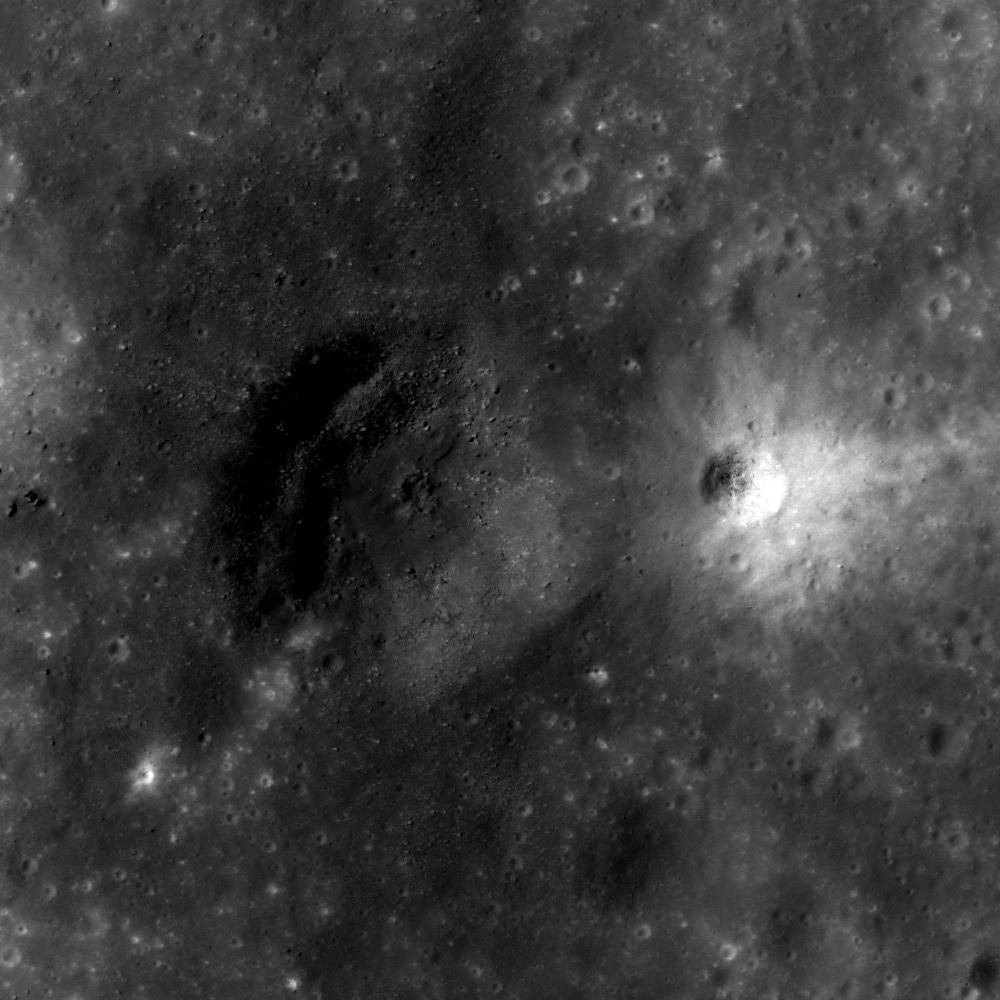
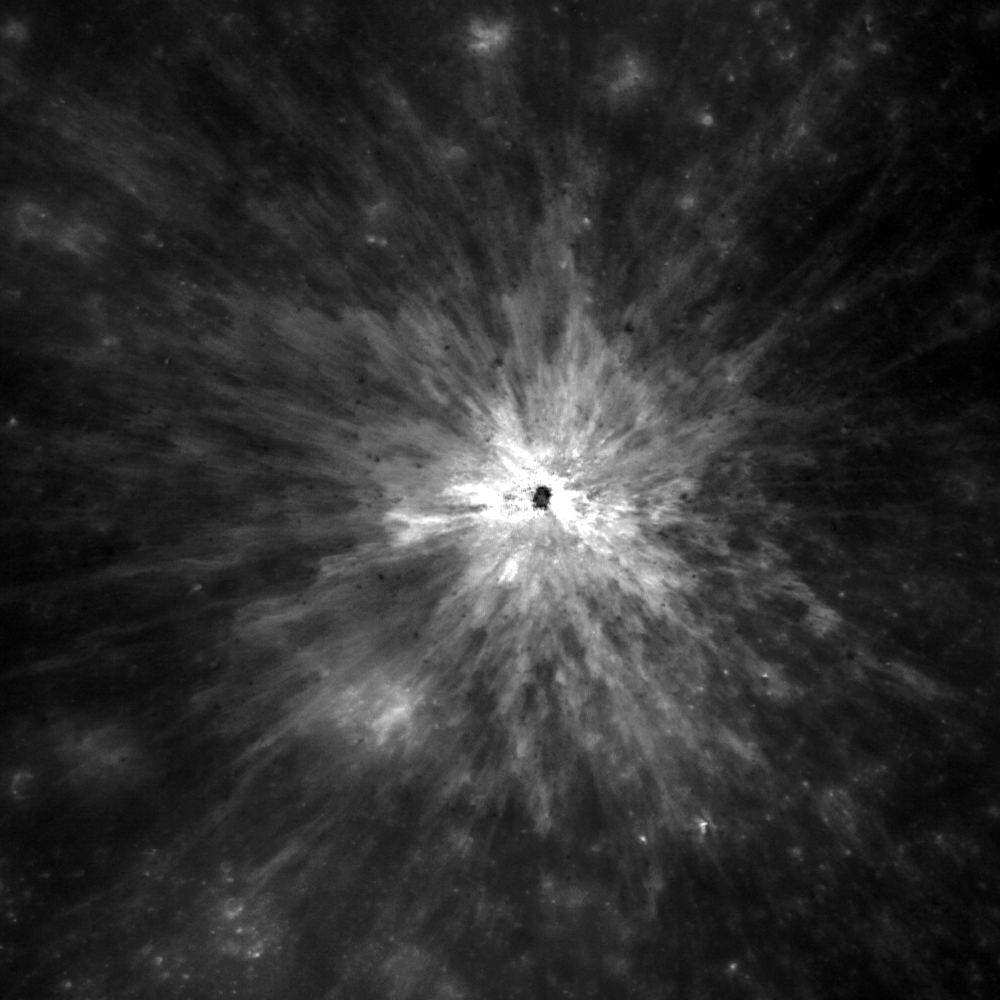
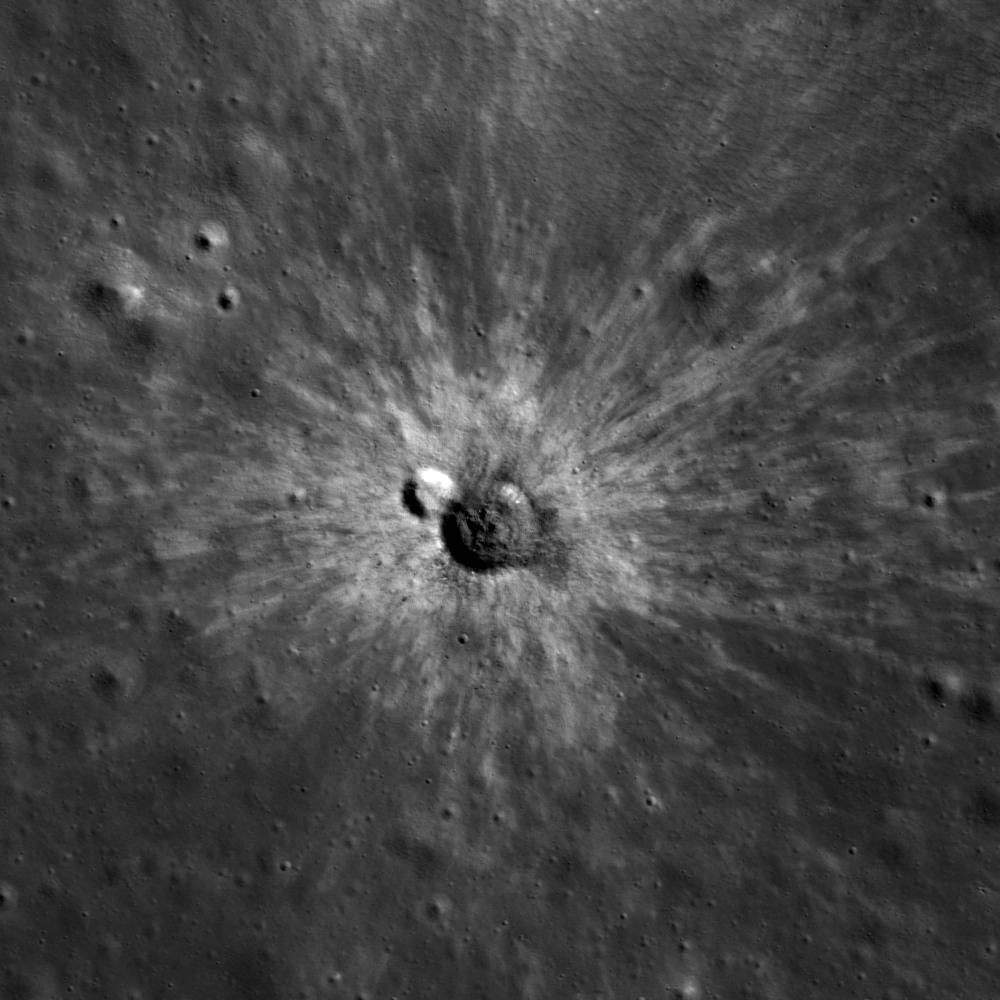
A 78 meter diameter crater with distinct dark ejecta surrounding its rim, in the farside southern  highlands (31.131°S, 147.536°E) north of Jules Verne. LROC Narrow Angle Camera (NAC) frame M1115555142L, LRO orbit 16629, February 16, 2013; 40.36° angle of incidence, 74 cm per pixel resolution from 71.92 km [NASA/GSFC/Arizona State University].
Jeffrey Plescia
LROC News System

Impact crater ejecta is typically brighter than the surrounding material because it is fine-grained and immature (unweathered); even on the dark mare, fresh craters usually have bright ejecta. Craters with distinctly dark ejecta do occur, but they are rare (e.g., Shorty Crater at the Apollo 17 landing site). When craters have dark ejecta, the interpretation is that a layer of low reflectance rock or soil at depth was excavated and distributed around the margin of the crater. In the case of Shorty Crater, the conclusion is that a layer of dark pyroclastics was hidden just beneath the surface; in other cases, dark halo craters are interpreted to indicate mare material at depth (cryptomare). Several of the craters formed by the impact of spacecraft hardware, such as the Apollo 13 S-IVB, into the surface also have dark ejecta rays, and this observation is not yet well understood.

Details of the crater morphology can be seen in this expanded view from LROC NAC M1115555142L [NASA/GSFC/Arizona State University].
Our dark halo crater (31.131°S, 147.536°E) has a diameter of about 78 m, although it is slightly elongate in the north-south direction. Rays of dark ejecta extend for almost 200 m from the crater rim. Morphologically, the crater is not the normal simple bowl shape for a crater of this size. Rather, a depression on the crater floor in the center is surrounded by a low ridge about 33 m in diameter; beyond that annular ridge to the crater wall the floor appears to be flat. Boulders are scattered on the crater floor and on the ejecta to the east; the largest boulders on the east side are as large as 6 m across.
dark_ejecta_reg_sm
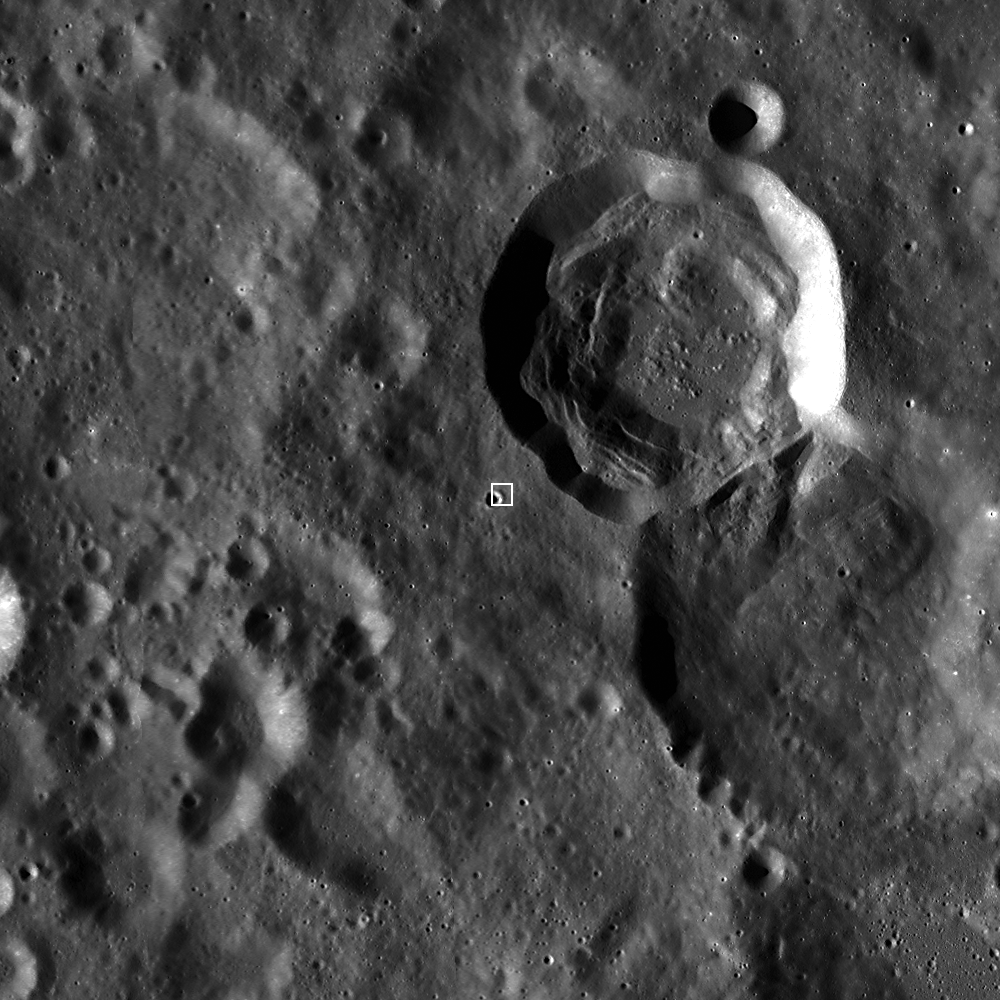
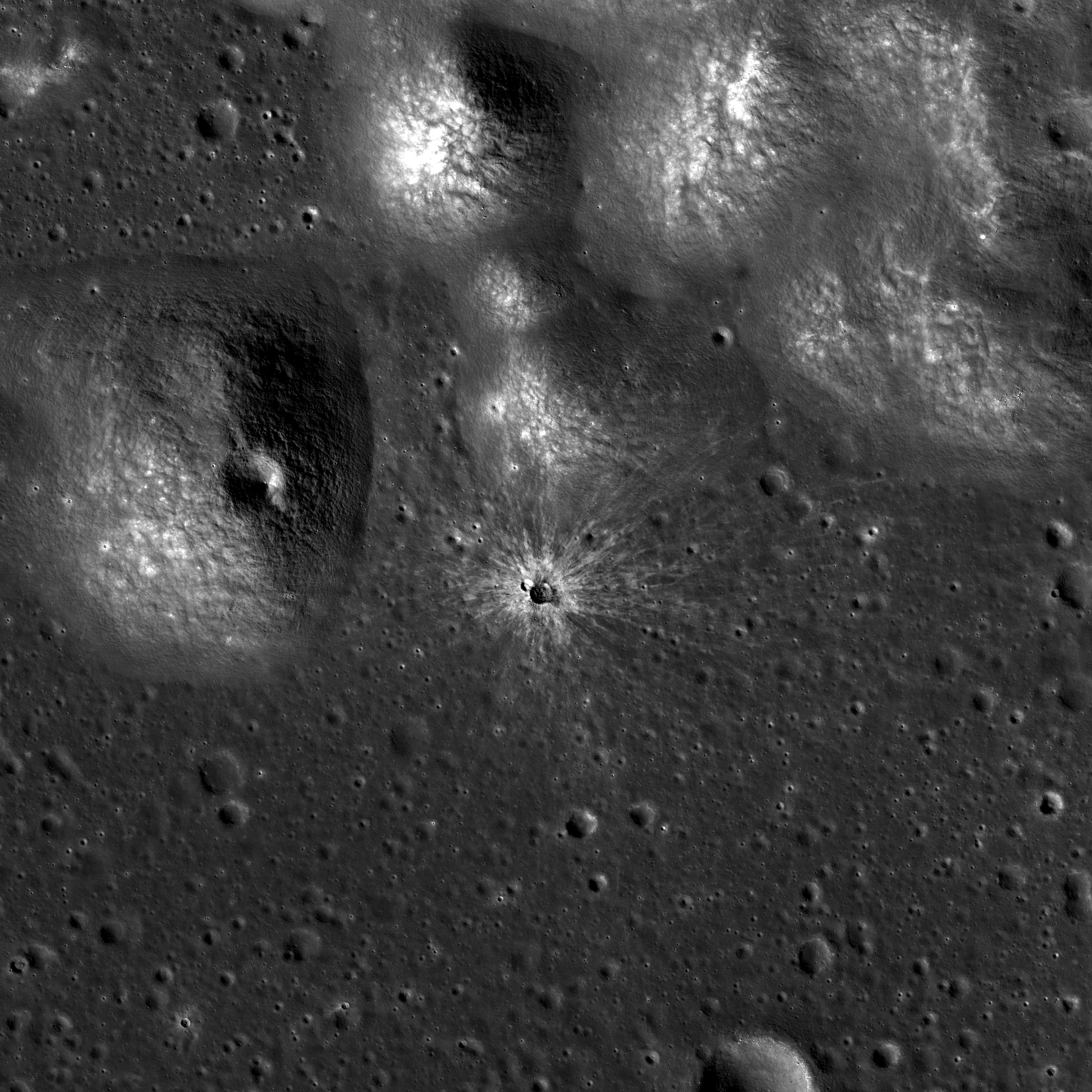
Regional view of the dark ejecta crater. Note the crater formed on the western flank of an older, larger crater. Relatively low albedo, smooth plains spread out immediately to the south. These plains (see next image) may be mare material and may underlie the area of the small impact. LRO NAC frame M167241339R (spacecraft orbit 9780, August 6, 2011; 55.96° angle of incidence, 65 cm per pixel resolution from 62.95 km)  [NASA/GSFC/Arizona State University].
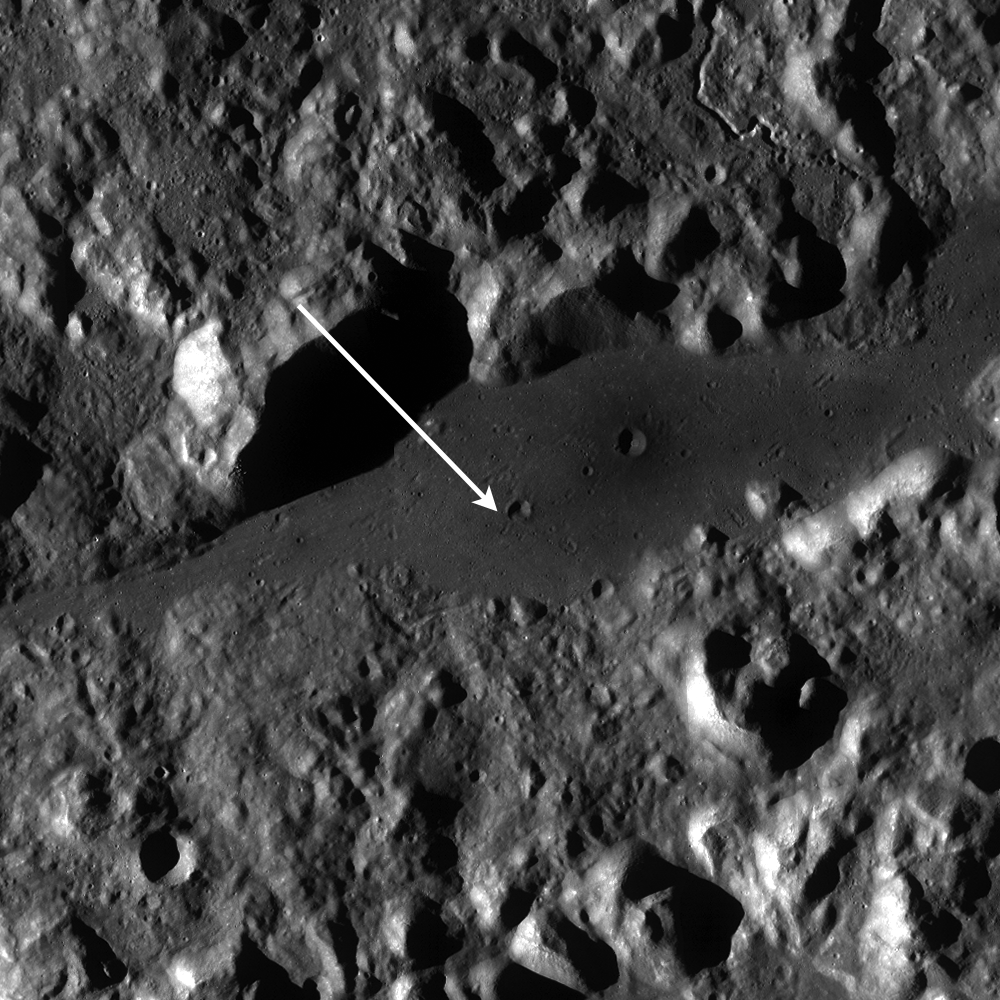
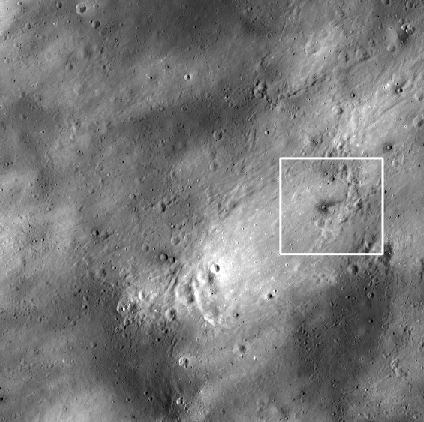
LROC Wide Angle Camera (GLD100) context, at 64 meters per pixel resolution, shows the location of the crater of interest in relation to the arc of exposed mare material to the south and west [NASA/GSFC/Arizona State University].
This crater formed on the outer flank of a larger older, degraded 635 m crater. Highlands ejecta (higher reflectance than mare) from this larger crater buried the mare. Later the impact that formed the younger dark halo crater punched through the bright highland ejecta and brought up mare from 10 meters or more depth.

Explore this region of the Moon in the full NAC image, HERE.

Related Posts:
Bright and Dark Ejecta (September 11, 2013)
Excavating Dark Deposits (September 3, 2013)
Dark haloed crater in Mare Humorum (June 7, 2011)
Dark Halo Crater in Orientale (March 4, 2011)
Dark craters on a bright ejecta blanket (November 17, 2009)

Tuesday, September 3, 2013

Excavating Dark Deposits

M185955372RE_thumb-580
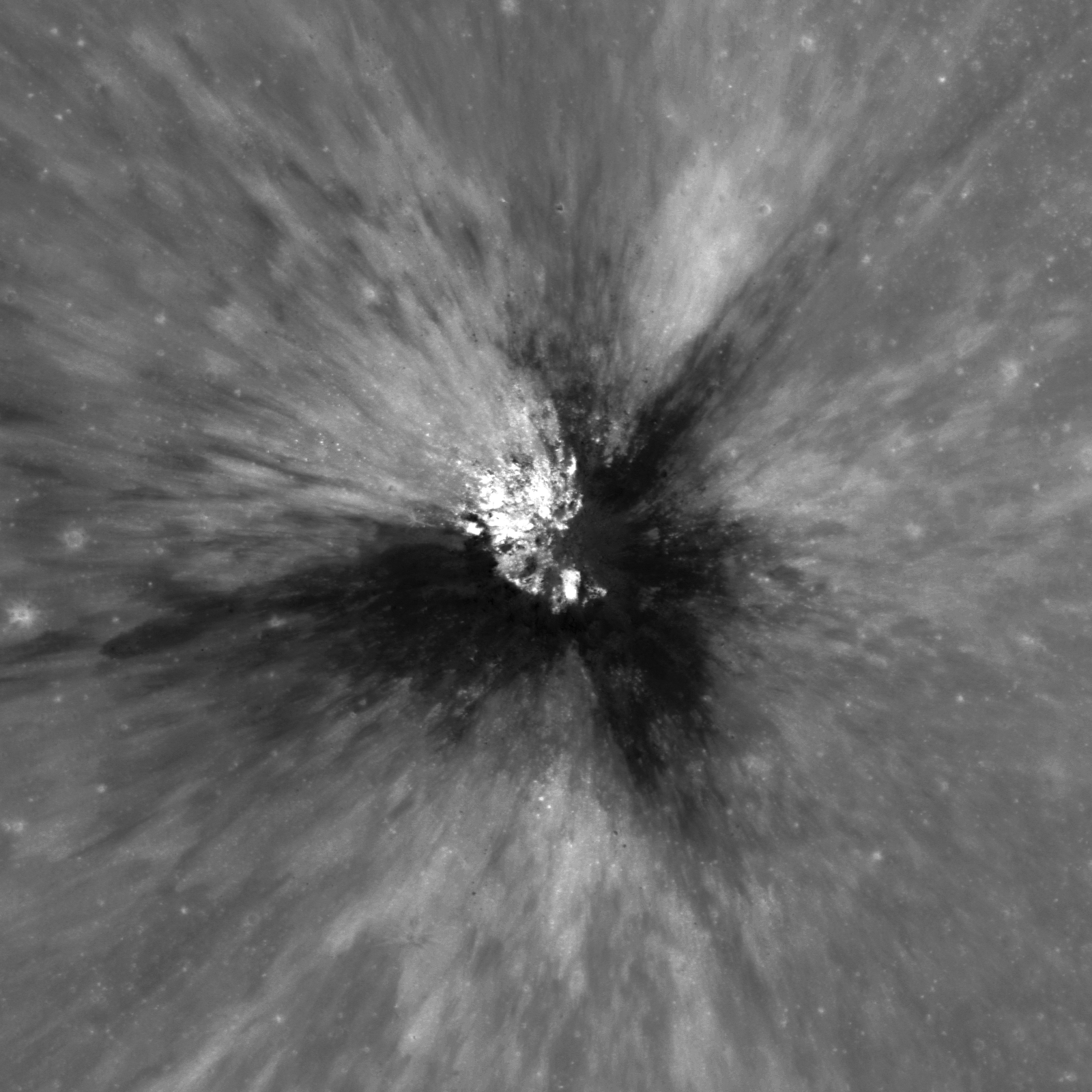
An approximately 250 meter crater has excavated low reflectance material from beneath the lunar surface, west of Sommering P crater, southeast of Copernicus. LROC Narrow Angle Camera (NAC) frame M185955372R; LRO orbit 12483, March 9, 2012; 9.56° angle of incidence, native resolution 1.11 meters per pixel, from 110.79 km over 1.53°N, 249.3°E, field of view 1.8 kilometers [NASA/GSFC/Arizona State University].
Sarah Braden
LROC News System

Amazing ejecta patterns from small, young craters are always something to look at on the lunar surface. Today's Featured Image displays compositional diversity in fresh ejecta. The broad, low-reflectance streaks of material are likely excavated pyroclastic materials. This approximately 250 m diameter crater is located at 2.162°N, 349.401°E, west of the crater Sommering P.

This low-reflectance material is part of a larger area called a Dark Mantle Deposit (DMD). Dark mantle deposits have lower reflectance compared to surrounding mare basalt areas and are also spectrally distinct from mare basalt. In this case, the dark mantle deposit was likely covered by a thin layer of crater ejecta.

Context with Sommering P
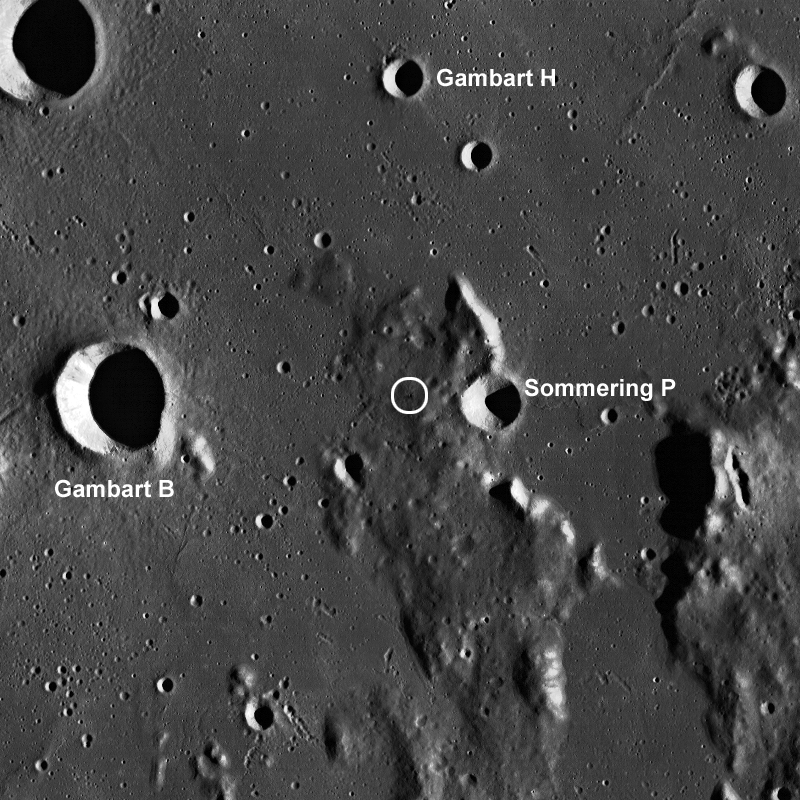
The small crater's location marked with a white circle in an LROC Wide Angle Camera (WAC) context image of a field of view 80 km across [NASA/GSFC/Arizona State University].
The opening image has a low incidence angle of 10° which means the Sun is high in the sky (near local noon). High-sun images are good for revealing differences in the reflectance properties of the surface. Low-sun (large incidence angle) images are better at emphasizing morphology due to topographic shading and shadowing. Incidence angle is the angle between the vector of sunlight and the vector normal to the surface. The WAC context image above has a large incidence angle (taken in early morning) which makes visible the topographic high where the crater was formed. This topographic high is a remnant of highland terrain (kipuka) surrounded by younger mare basalt deposits (smooth, flat areas). There are many other craters on the topographic high that excavate low-reflectance material, which suggests that the whole area is different from the surrounding mare basalt deposits. The high-sun WAC mosaic (below) of the same area shows the locations where the dark mantle deposit is visible. You can learn more about dark mantle deposits here!

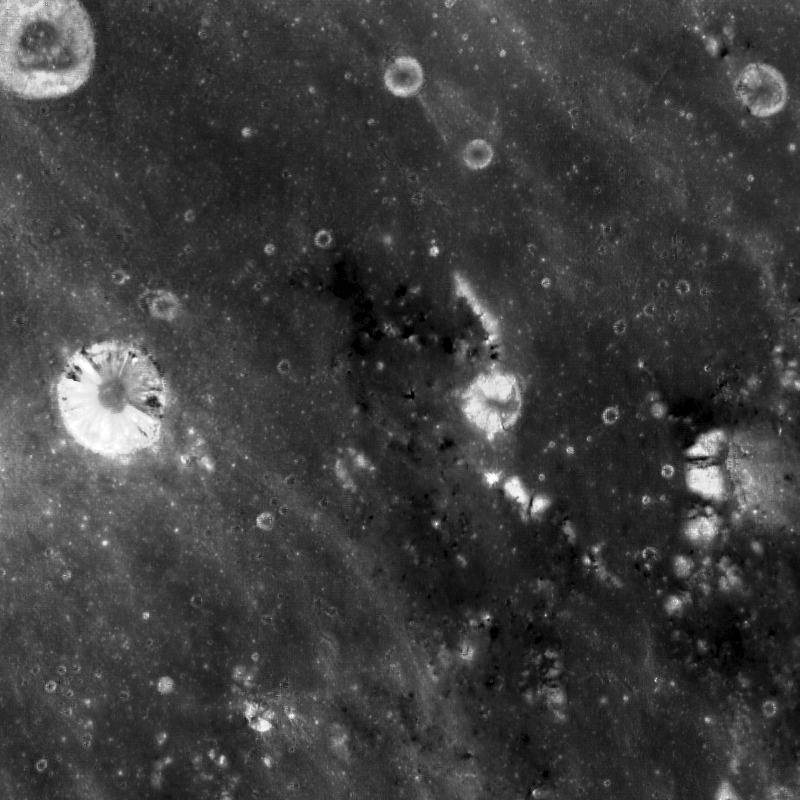
643nm high sun, high-reflectance WAC context
LROC WAC monochrome (643 nm) high sun, high reflectance view of the same area as seen in the WAC mosaic immediately above, resolution roughly 100 meters per pixel. Note darker material around the area of the topographic high place [NASA/GSFC/Arizona State University].
Explore the full NAC image HERE to see the other craters excavating low-reflectance material.

Related Images:
Hyginus Crater and Pyroclastics
Dark Wisps in Copernicus
Polka-Dot Ejecta
Pyroclastic Excavation

Tuesday, September 25, 2012

A cluster of dark-haloed secondary craters

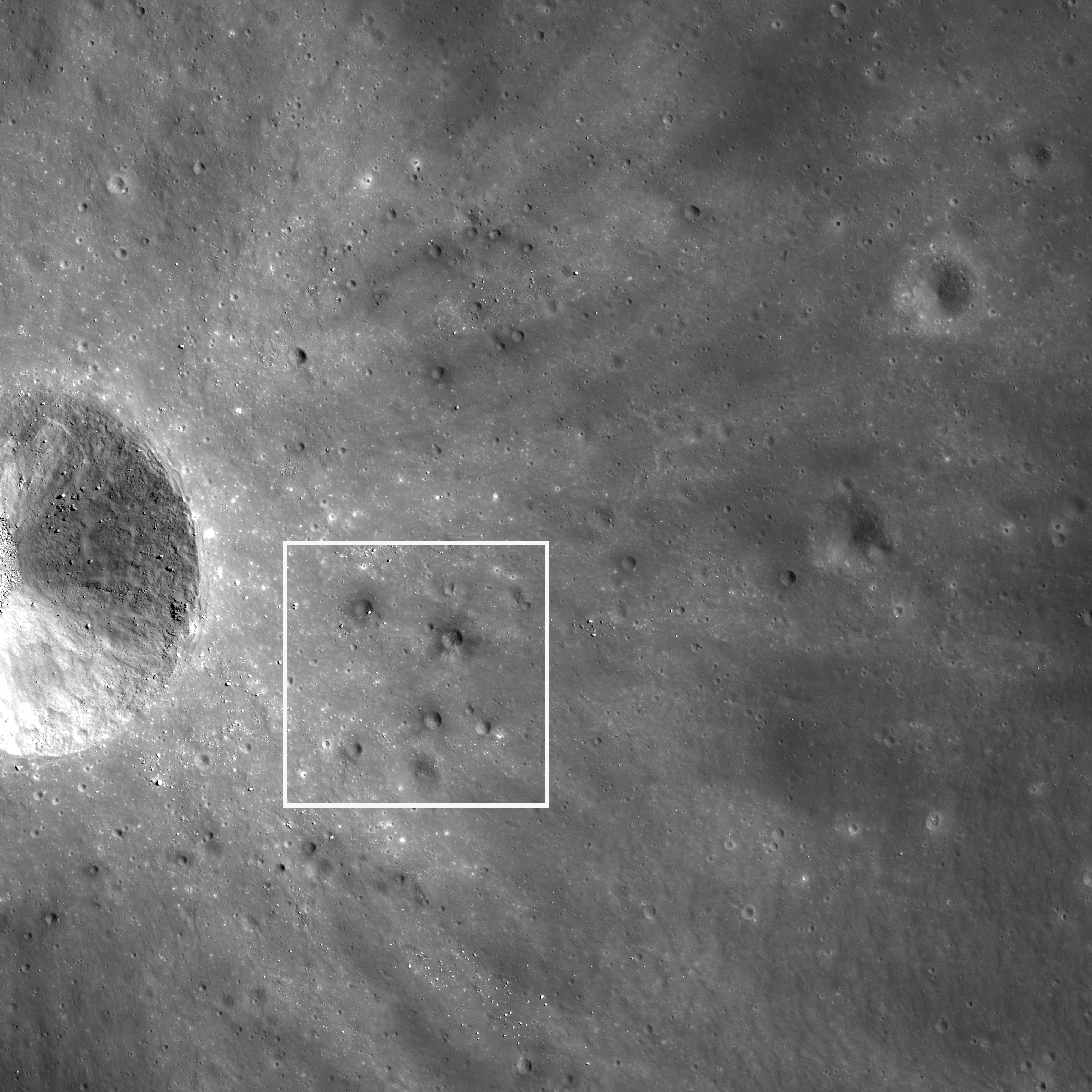
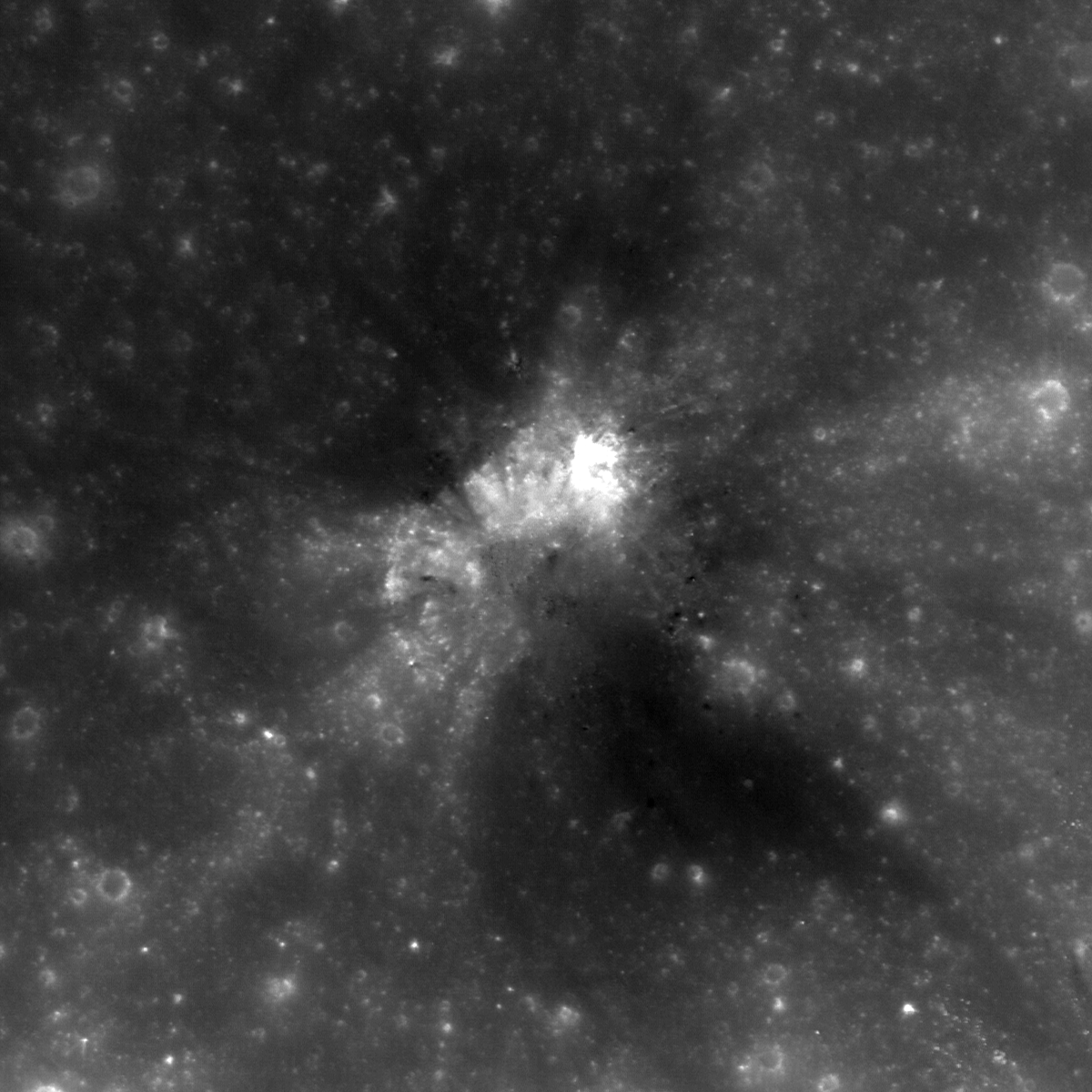
A collection of dark-haloed craters lines a sloping crater rim southwest of Sklodowska crater (19.21°S; 93.56°E). North is up; illumination is from the west-southwest, field of view image is about 625 meters. From LROC Narrow Angle Camera (NAC) observation M174665969R LRO orbit 10974, October 31, 2011; full resolution 0.65 meters from 63.53 km [NASA/GSFC/Arizona State University].
James Ashley
LROC News System

The explanation for the origin of dark-haloed craters on the Moon is usually straightforward: Low-reflectivity material (rock or regolith) is overlain by more reflective and more recent deposits (usually ejecta from a relatively fresh impact), and then the underlying deposit is exhumed by even more recent impacts.

This stratigraphy tends to present the darker material as ejecta overlying the lighter material in high contrast. Such is the case for the dark-haloed craters in today's Featured Image.Zooming out to the context frame below reveals their relationship to the crater responsible for the light ejecta.

But why do we see such a high number of these features here, and why do they seem to be grouped close to the rim of this small, unnamed crater located outside Sklodowska crater?

The wider NAC frame around the field of view selected for the LROC Featured Image (white square) in broader context. Field of view ~2.7 km [NASA/GSFC/Arizona State University].
The similarity in ejecta albedo suggests that the time between individual crater impacts was not great, and they are therefore likely to be secondary craters having a single larger impact as their source. The main question is whether the bolides that formed this group of craters arrived from an impact some distance away, or whether they are examples of so-called "self-secondaries." In the latter case, the blocks that created these features would have been ejected almost vertically during excavation of the large crater in the context image. They would have remained aloft long enough for the main ejecta blanket to be emplaced before returning to the surface and creating the pattern we see. Some recent studies are suggesting that more self-secondary craters are to be found closer to the main crater rim. This new finding can explain why there appear to be more of these dark-halo craters closer to the main crater rim, if they are indeed self-secondaries.

If, however, these secondary impacts originate with another, more-distant impact, then the clustering we think we see may be illusory. Perhaps this apparent grouping depends more on the location of the low-reflectance deposits than on the locations of the impacts. In that case many other craters in the region might also be related by formation time to these dark-haloed craters, but do not show dark haloes because they missed those deposits.

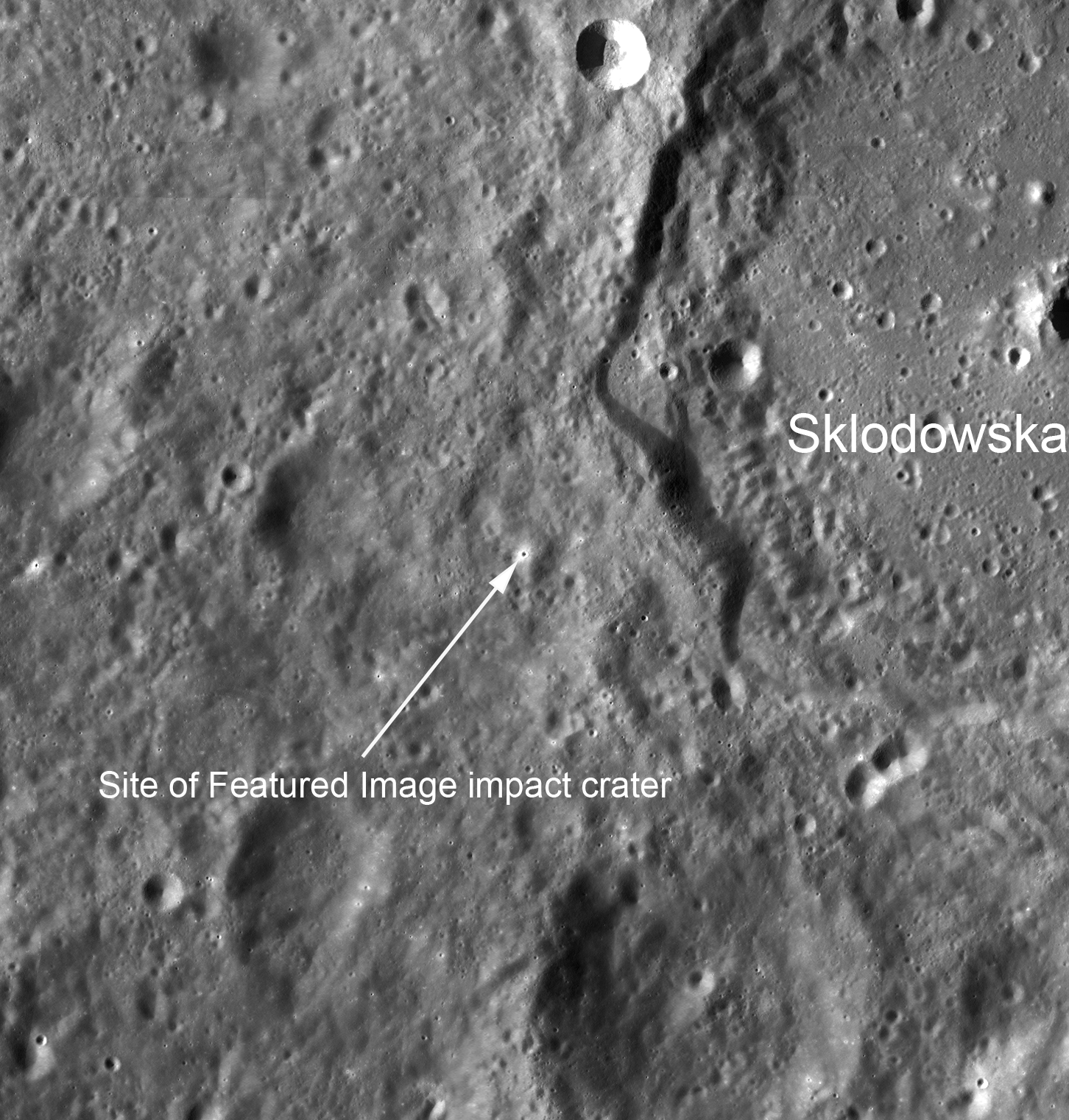
A wider view of the full LROC NAC frame with the local elevation, derived from LROC Wide Angle Camera (WAC) interferometry, puts the bright crater in context with the wide ejecta blanket outside Sklodowska, from 222 meters above to 132 meters below global mean elevation  [NASA/DLR/GSFC/Arizona State University].
The WAC mosaic context image shows few bright-rayed craters in the region; field of view 144 km, north is up [NASA/GSFC/Arizona State University].
The WAC mosaic reveals the broader context of the Featured location. What other craters can you find in this area that might be responsible for the secondary impacts? Why or why not? Which theory seems to have the most validity? Can you think of other scenarios that could account for today's Featured Image?

Click HERE to review the full NAC image. Additional examples of secondary features can be found in The Rays of Messier A, the Chain of Secondaries in Mare Orientale, and in Scouring Secondary Ejecta.

Simulated orbital view of the vicinity of southwest Sklodowska crater, from 37 km over a point 70 km from the bright unnamed crater (below center) outside the older crater rim. NASA ILIADS application, LMMP [NASA/GSFC/LMMP/Arizona State University].

Tuesday, September 4, 2012

LROC: Dark Ejecta

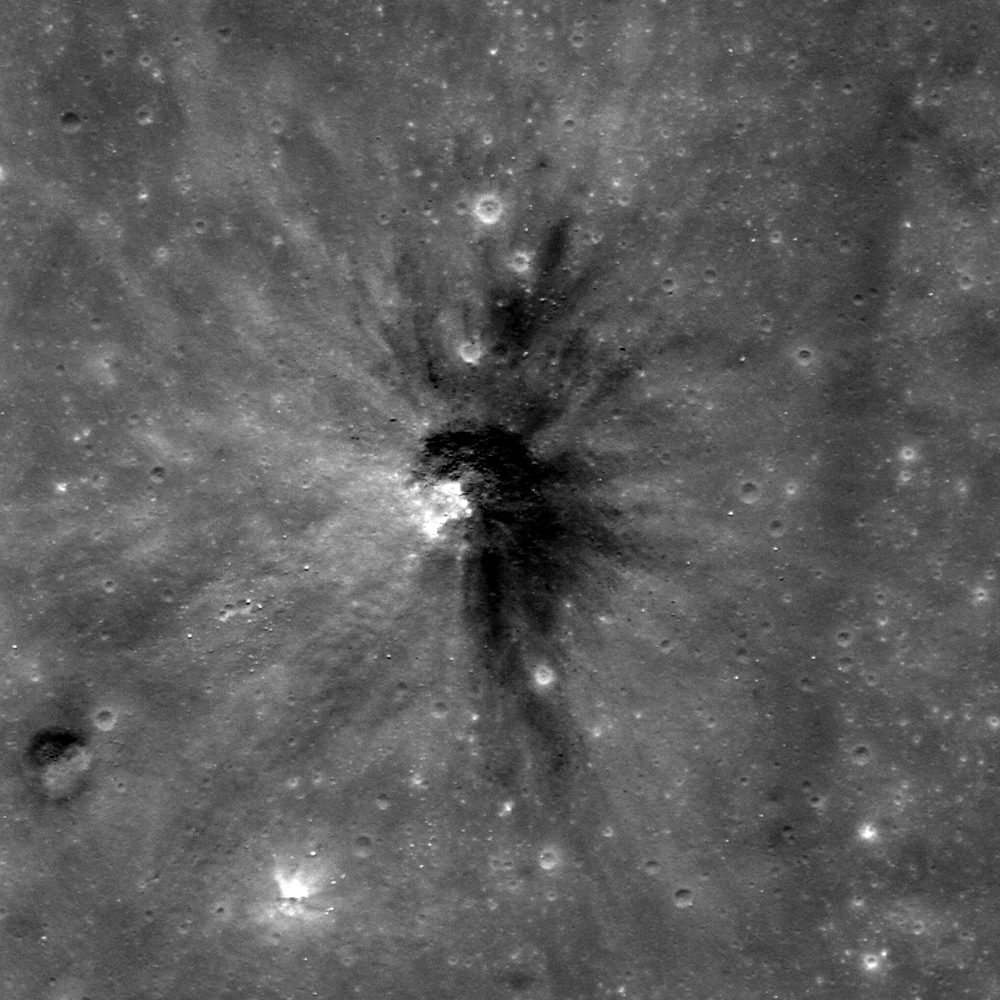
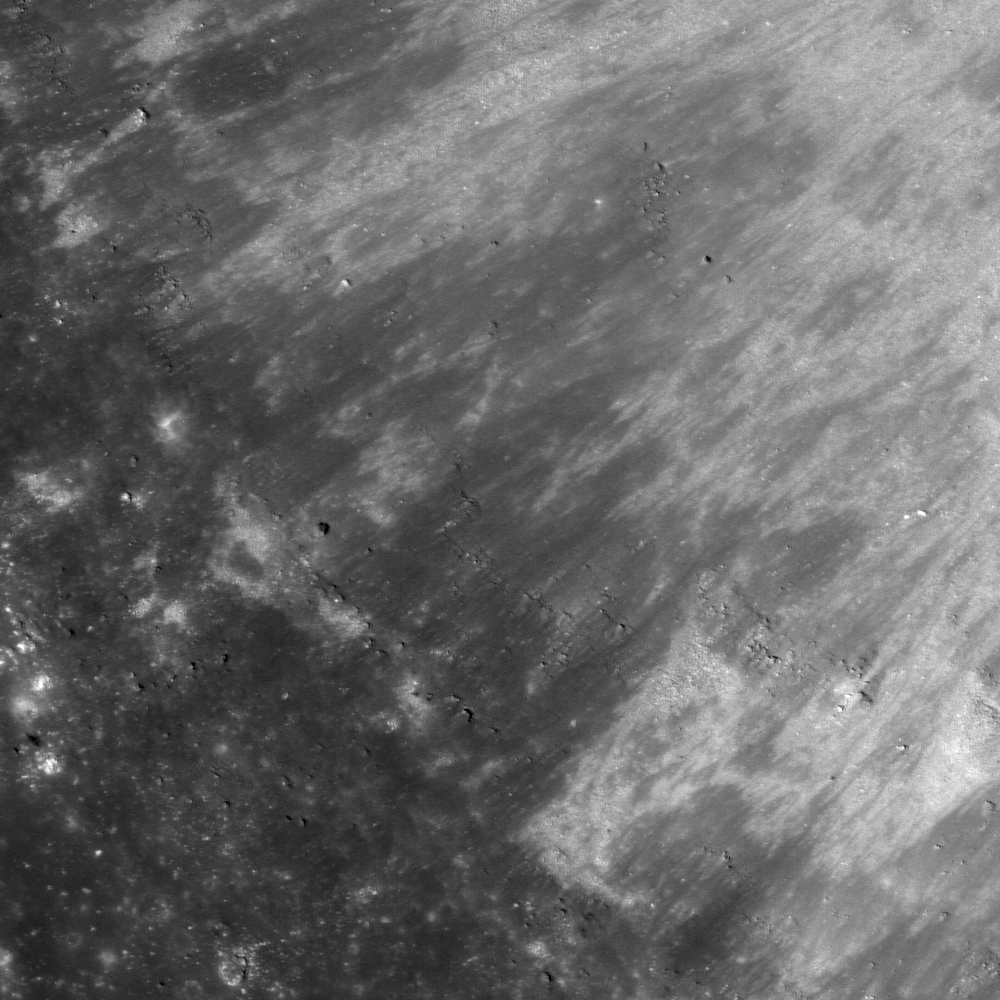
Southwestern rim of crater Copernicus H (6.88°N, 341.68°E). A 930 meter-wide field of view from LROC Narrow Angle Camera observation NAC M186005514L, spacecraft orbit 12940, March 10, 2010; incidence angle is 10° at 0.93 meters per pixel resolution. View the 1000 px original LROC Featured Image HERE [NASA/GSFC/Arizona State University].
Hiroyuki Sato
LROC News System

Copernicus H (about 4.4 km in diameter, latitude 6.88°N, longitude 341.71°E) , a satellite crater of Copernicus crater, is located 56 km southeast of Copernicus (93 km diameter crater located in eastern Oceanus Procellarum). The opening image highlights a part of the Copernicus H crater rim (see blue square in the next image). The upper right portion of the image with bright/dark streaks corresponds to the crater wall, and the bottom left low reflectance part is the surrounding flat area. The low reflectance materials extend from the rim down the slope into the crater. What is the origin of these dark materials? Is the material mature soil? Impact melts? Pyroclastic deposits?

Zoomed out view of NAC M186005514L. Field of view about 5.7 km. Blue box indicates the location of today's Featured Image [NASA/GSFC/Arizona State University].
As seen in the subsampled NAC image (above) and WAC context image (below), the ejecta blanket of Copernicus H shows relatively lower reflectance than the surrounding area. Normally crater ejecta has a higher reflectance because the newly-exposed material is "immature" in a space-weathered sense. Notice that the crater floor is largely filled by lower reflectance impact melt, and the high reflectance materials extend radially from the floor to the crater rim. These brighter materials are the debris on the slope of the crater wall that are mass-wasting gravitationally toward the crater center.

Looking at the WAC context image below, it is likely that Copernicus H excavated some low reflectance materials underlying the ejecta of Copernicus. Several craters located at least 45 km away from the Copernicus rim also show similar dark ejecta. Therefore, the underlying dark material must be widely distributed. What might these materials be? Pyroclastic deposits at Southern Sinus Aestuum are located at about 90 km southeast of Copernicus H, and are underlying the Copernicus ejecta. If this layer is extensively distributed under the Copernicus ejecta, subsequent impacts with sufficient energy could have excavated the dark materials.

To unravel these complicated stratigraphic relations from orbit, accurate spectral data and an understanding of the effects of space weathering are necessary. New measurements from LRO, SELENE-1 (Kaguya), and Chandrayaan-1 are providing lunar scientists with the needed information!

Copernicus H and surrounding area in WAC monochrome mosaic (100 m/pix). Image center is 6.88°N, 341.73°E. The blue box indicates the footprint of full NAC frame [NASA/GSFC/Arizona State University].

Explore this dark ejecta in full LROC NAC image yourself, HERE.

Related Posts:
Dark Craters on a Bright Ejecta Blanket
Dark halo crater
Just Another Crater?
Dark Impact Melt Sheet
A Beautiful Impact
Pyroclastic Excavation

NASA ILIADS (LMMP) simulated mid-day point of view 40 km over the lunar surface southeast of Copernicus. Copernicus H and it's floor are at upper center in this compilation from LROC Global 100 meter resolution WAC mosaic with LOLA altimetry at 128 meters per pixel. The darker surface further southeast from Copernicus past Copernicus H is identified as a radioactive hotspot, with signatures of thorium and uranium in Lunar Prospector, SELENE and other surveys [NASA/GSFC/LMMP/Arizona State University].

Thursday, June 14, 2012

LROC: Hyginus and Pyroclastics

A 145 meter crater on the north rim of Hyginus Crater uncovered dark, most likely pyroclastic material. A 504 meter-wide field of view under a relatively high sun (angle of incidence = )from LROC Narrow Angle Camera (NAC) observation M155193272R, LRO orbit 8005, March 19, 2011; resolution 0.48 meters from 40.33 kilometers. View the larger, original LROC Featured Image HERE [NASA/GSFC/Arizona State University].
Sarah Braden
LROC News Center

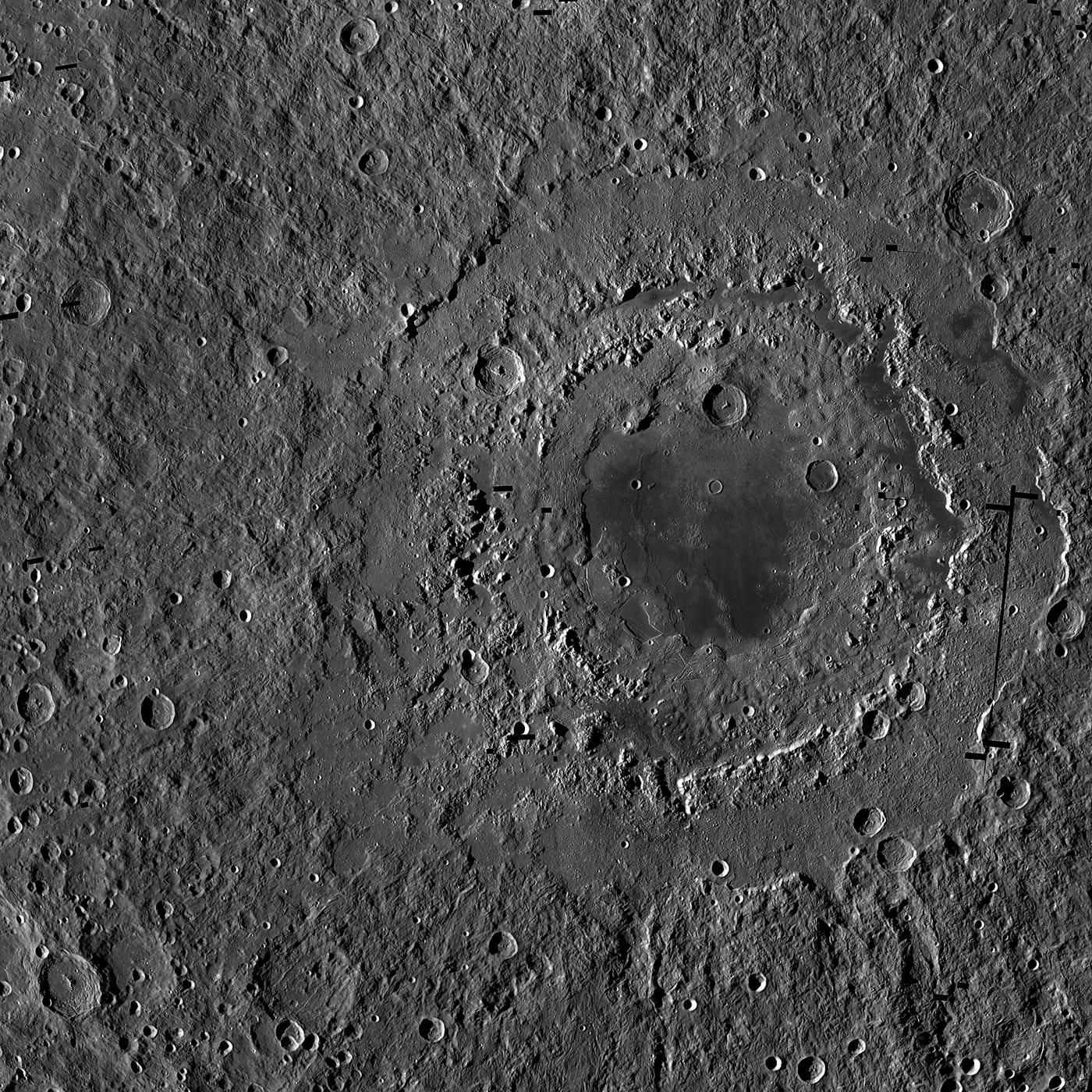
A crater on the northern rim of Hyginus crater (exact location: 7.896°N, 6.229°E, diameter of 145 meters) excavated low reflectance material.

Deposits of pyroclastics are located around Hyginus Crater, so the low reflectance material is most likely from a layer of pyroclastics buried beneath the lunar surface. 

The same eruption that emplaced the pyroclastics also likely created an empty cavity beneath the surface, which then collapsed, forming Hyginus Crater!

A 1.38 kilometer-wide field of view from the LROC NAC frame stepped back to 2 meter resolution shows the subject of the Featured Image emplaced on the north rim 600 meters over the caldera interior. Dark material excavated by the impact appears to have streamed over the rim and down the wall [NASA/GSFC/Arizona State University].
A small, fresh crater on the southern exterior of Hyginus has high reflectance, optically immature ejecta rays instead of dark rays caused by uncovering pyroclastic material.  LROC NAC M155193272R. View a larger version of this 420 meter-wide field of view HERE [NASA/GSFC/Arizona State University].
Another crater in the image above (located at 7.608°N, 6.221°E) found on the southern rim of Hyginus is a perfect contrast to the crater in the Featured Image. The rim of the crater is hard to see in this image, but the diameter is ~20 m. This crater is smaller, so it excavated material from a shallower depth compared to the Featured Image crater, and therefore did not sample the buried pyroclastic deposit. The rays from the crater on the southern rim are high reflectance, which is typical of immaturity rays made of fresh material, in comparison to rays made from material compositionally different from the surrounding area.

In this LROC Wide Angle Camera (WAC) context image the yellow arrow marks the location of the crater in the Featured Image and the white marks the location of the fresh rayed crater. LROC WAC observation M177596018C, LRO orbit 11308, December 3, 2011; angle of incidence 70.31° at 52.82 meters resolution from 38.98 kilometers  [NASA/GSFC/Arizona State University].
Explosive eruptions of basaltic magma form lunar pyroclastic deposits, which are associated with the eruption of the mare deposits on the near side of the Moon. In remote sensing data pyroclastic deposits appear smooth and low in reflectance. Pyroclastic deposits are valuable since measurements of pyroclastic beads returned from the Apollo missions show that the material is enriched in volatile elements such as sulfur, lead, fluorine, and zinc (compared to other more common lunar materials such as mare basalt and highland anorthosite). On the Earth all of these materials are relatively common. However, if you were living on the Moon, pyroclastic deposits are the best place to find these materials! Pyroclastics are also typically high in iron oxides and some contain titanium oxides.

Explore more of the Hyginus caldera inside and out with the full LROC NAC image, HERE.

Related Images:

Thursday, November 24, 2011

LROC: Polka-dot ejecta

A small fresh impact crater, among a number of others equally juvenile (yellow arrow) has saved future explorers a lot of expensive excavation work among some far older heavy-hitters in the west farside lunar highlands, just south of the equator and north of the vast 4 billion year-old South Pole-Aitken (SPA) basin. Notional oblique view courtesy of the LMMP and LROC Wide Angle Camera 100 meter Global Mosaic [NASA/GSFC/LMMP/Arizona State University].
LROC QuickMap NAC and WAC mosaic (reproduced from 16 meter per pixel resolution level) shows a distinctive low optical maturity characteristic of youthful craters [NASA/GSFC/Arizona State University].
A blanket of fresh ejecta from a relatively new crater (9.083°S, 161.337°E) on the floor of farside landmark Keeler, dotted with smaller low albedo craters. LROC Narrow Angle Camera (NAC) observation M123513537R, LRO orbit 3335, March 18, 2010; incidence angle 15.16° on a field of view 560 meters wide, resolution 56 cm per pixel from 54.87 kilometers. See the full size original LROC Featured Image HERE [NASA/GSFC/Arizona State University].
Drew Enns
LROC News System

Impact crater ejecta is usually distributed semi-uniformly around an impact crater. Immature ejecta from a fresh crater has a higher albedo than the mature material on the surrounding surface, and so fresh craters easily stand out against the mature background.

So why do the smaller craters in today's Featured Image have a lower albedo? On the Moon this is often due to a cryptomare located underneath the bright ejecta blanket. 

Taking a step back and looking at this area in the WAC context image gives us a better idea of how to interpret this scene.

LROC Wide Angle Camera context for their Featured Image, November 23, 2011, of ejecta from a fresh impact crater located within much larger Keeler crater (8.75°S, 161.37°E). The subject crater is two pixels left of direct center of the above 50 km-wide field of view at the full 87.86 meter per pixel resolution of LROC WAC observation M134130438C (604 nm), LRO orbit 4900, July 18, 2010 [NASA/GSFC/Arizona State University].

This fresh crater is actually located in the much larger 160 km diameter Keeler crater. Keeler crater is located in the highlands and instead of having a mare flooded floor, Keeler's floor is covered in impact melt. It is possible that the small craters are exposing buried impact melt under the immature ejecta. However, it is more likely that the small craters expose the mature regolith that is only thinly covered by the bright ejecta. The end result is a polka-dot laden ejecta blanket.

How many low albedo craters are there in the full NAC frame?

Related Posts:
Dark Craters on a Bright Ejecta Blanket
Dark halo crater
Intricate young ejecta blanket in ancient Murchison Crater

Thursday, September 22, 2011

On the shore of the Bay of Rainbows


A pair of small craters show different albedos within a spectacular ejecta display along the shore of Sinus Iridum (47.9°N, 31.7°W). LROC Narrow Angle Camera (NAC) observation M104726204L, LRO orbit 591, August 12, 2009; incidence angle 65°, Sun is from the southwest, resolution 1.71 meters per pixel (Field of view < 1 km). View the full size LROC Featured Image HERE [NASA/GSFC/Arizona State University].

James Ashley
LROC News System

In addition to being a spectacular example of a recent impact feature, this pair of small craters was chosen with the small backyard telescope in mind. You won't be able to see this impact feature in your eyepiece, but you should be able to locate the region fairly easily. By the 11th day following a new Moon (during the waxing gibbous phase), Sinus Iridum (the Bay of Rainbows) is ideally illuminated and visible through even a modest-sized instrument, or even a large pair of binoculars! Look for the large, crescent-shaped arc of mountains on the northwest "shore" (44.1°N, 328.5°E) of Mare Imbrium. You will find the partial remains of an ancient crater (236 km diameter), flooded long ago by Mare Imbrium basalts. The range of peaks is known as the Jura Mountains. With a good eye, you might even see the crater Bianchini, nestled within the range along its northwestern edge. You can use Bianchini with the images below to pinpoint the Featured Image location.


This wider view from M104726204L shows foothills high, mountainous rim of Sinus Iridum, immediately to the north, more than 2 km higher in elevation than the wide bay floor to the south. Note how the ejecta rays were forced to curve as the flying debris encountered the topography just northeast of the larger and more recent impact (field of view ~8.3 km across, downsampled to 2.8 meter/per pixel). See the spectacular full size LROC context image HERE [NASA/GSFC/Arizona State University].

Notice how one of the featured craters has a low-reflectance interior while the other appears more reflective. The low-reflectance crater is roughly twice the size of the light-floored crater, and therefore excavated to a greater depth. Could this have resulted in the exposure of darker, buried materials that were missed by the less-energetic impact? There are many questions that we could ask about this interesting pair: Which impact happened first? Is there ejecta from one crater on the floor of the other? Why or why not? 

What other clues would you look for in the full NAC frame?


The 39 km-wide crater to the upper left of the Featured Image location (yellow arrow) is Bianchini in this LROC Wide Angle Camera (WAC) mosaic showing a roughly 300 km field of view. See the richer, original LROC WAC context image HERE [NASA/GSFC/Arizona State University].

Related posts include:
Dark-haloed crater in Mare Humorum
Dark-haloed crater near Censorinus A
Sinus Iridum - Next Destination?

Thursday, July 28, 2011

Dark-haloed crater on ejecta blanket


A small dark halo crater on the ejecta of Censorinus A. Image scale is 50 centimeters per pixel, image field of view is 200 meters, solar illumination incidence 45°, from the east. LROC Narrow Angle Camera (NAC) observation M144409490L, LRO orbit 6415, November 14, 2010. See the full-size LROC Featured Image release HERE [NASA/GSFC/Arizona State University].

Hiroyuki Sato
LROC News System

Fresh impact crater ejecta is generally brighter than the surroundings because it is "immature". As material rests on the surface of the Moon it is slowly altered by solar wind sputtering and micrometeorite bombardment that results in a general darkening and shift in color.

This change in reflectance properties is known as space weathering, or maturation. Impacts excavate materials from beneath the mature surface resulting high reflectance rays. If you are very patient, and waited around for 500 million years you could observe rays slowing fade as they mature. But the small crater (25 meter diameter) in today's Featured Image displays dark ejecta deposits, so what is happening here?


Ejecta blanket at north of the rim (lower left) of Censorinus A. field of view 2.3 km, nearly the full width of LROC NAC M1144409490L. The white rectangle indicates the area of within the LROC Featured Image, July 28, 2011. [NASA/GSFC/Arizona State University].

This tiny crater is located near near Mare Tranquillitatis, 3 km north of the rim of Censorinus A crater. The surrounding area is covered by ejecta coming from Censorinus, which is about 12 km distant (the surface streaks point back to the crater). The dark and bright areas are intermixed (see middle image), and the tiny dark ejecta crater is located on the brighter portion of the ejecta. The brighter ray materials are likely on the top of darker materials, which are perhaps simply mature soils or maybe impact melt from the earlier Censorinus impact event. So when the small crater was formed, it excavated dark material from beneath a bright ray.


Censorinus (lower left) and Censorinus A (lower right) in a simulated oblique image stitched from two LROC Wide Angle Camera (WAC) monochrome (643nm) observations swept up in consecutive orbital passes (orbits 2763 & 64) on February 1, 2010 [NASA/GSFC/Arizona State University].

Explore dark ejecta deposits and surrounding areas in the full NAC frame!

Related posts:
Dark-haloed crater in Mare Humorum
Action Shot
Splendors of Mare Smythii
Rima Bode: Constellation ROI
Dark Craters on a Bright Ejecta Blanket

Tuesday, June 7, 2011

Dark-haloed crater in Mare Humorum


Dark- and light-toned lunar regolith contrasts sharply in this striking image of a dark-haloed crater in Mare Humorum (24.8°S, 315.0°E).LROC Narrow Angle Camera (NAC) observation M140203430R; solar incidence angle 24° LRO orbit 5795, September 27, 2010; field of view is around 180 meters across. See the full-size LROC Featured Image HERE [NASA/GSFC/Arizona State University].

James Ashley
LROC News System

Features such as this "dark-haloed" crater are not common on the Moon, but where found there tend to be occurrences of both mature volcanic deposits, and fresher (more recent) impact ejecta deposits. This circumstance provides clues for solving the light/dark mystery in a straightforward manner. For example, this crater is located to the north of Liebig J, a relatively young, bright-rayed crater in Mare Humorum.

The Featured Image impact clearly occurred within the Liebig J ejecta blanket, which is less mature and therefore of higher albedo than the surrounding dark mare rock. When the small impact took place, it penetrated the Liebig J ejecta and excavated the darker material from beneath.

Note that some of the material within the crater wall is actually brighter than surrounding material. This is not too unusual with fresh craters. But why was the dark ejecta not distributed in a perfectly even and symmetrical way? It would probably require the collection of samples and field mapping on the ground to answer this completely. But part of the story may be due to textural heterogeneity (clumpiness) of the Liebig J ejecta deposit in this area. When the dark-halo impact occurred, such clumpiness may have caused the impact energy to disperse in an uneven way. Note also that more recent, smaller craters have punctured through the dark ray pattern to re-expose the brighter deposits beneath. The end result is a complex local stratigraphy, but one which can be unraveled through a careful study of the effects of impacts, their energies, and locations. The context image below shows the albedo difference between the Liebig J ejecta deposits and the surrounding mare deposits.


A portion of the global WAC mosaic showing the Liebig J crater region of western Mare Humorum and its bright ejecta [NASA/GSFC/Arizona State University].

Explore the full NAC image HERE; notice the ejecta of the prominent Liebig J crater. How many similar dark-haloed features can you find?

Thursday, May 19, 2011

Dark landslide near van Gent


A landslide within a small crater near 43 kilometer, far side crater van Gent (15.4°N, 160.4 °E). The crater rim is at the and the crater floor is at bottom left. The landslide has exposed many boulder within the crater wall. LROC Narrow Angle Camera (NAC) observation M156550640RE, LRO orbit 8205, April 4, 2011; image field of view is 600 meters. See the full-size LROC Featured Image HERE [NASA/GSFC/Arizona State University].

Drew Enns
LROC News System

Landslides are a common form of mass wasting on both the Moon and on Earth. This process exposes fresh material, and results in high albedo features in planetary images. Impact craters perform a similar process, with fresh craters creating high albedo features on planets.

This landslide is lower albedo than the crater walls of the crater it occurs in, implying the landslide is more mature than the crater. How can this be? It is probably that the landslide surface is not exposing fresh material, but is instead mature highlands material that has fallen back into the crater.


Crop of the LROC Wide Angle Camera monochrome mosaic context image for the LROC Featured Image, May 18, 2011, situated in the white box. Field of view is 40 kilometers. See the full context image HERE [NASA/GSFC/Arizona State University].

Look for more landslides in the entire LROC NAC!

Related Posts:
Post impact modification of Klute W
Landslides in Marius Crater
Dark streaks in Diophantus

Friday, March 4, 2011

Dark Halo Crater in Orientale


Bright crater on the flank of a larger dark halo crater, with illumination from the west. LROC Narrow Angle Camera (NAC) observation M138188186 (centered near 10.2°S, 262.7°E), LRO orbit 5498, September 3, 2010; field of view 550 meters. View the full-sized Featured Image HERE [NASA/GSFC/Arizona State University].

Drew Enns
LROC News System

These two craters, located in Orientale basin, show a sharp contrast in albedo. Why are they so different? The likely culprit is the material that each crater is excavating. In this northern section of the Orientale basin, the original dark mare surface has been hidden by brighter highlands material. Because the dark halo crater is larger, it excavates material from greater depth. This allowed the dark crater to excavate the darker mare material while the bright crater only excavated highlands shallower material. In fact it appears that this smaller crater may have excavated darker material on its western side. Using relationships such as these, scientists can estimate how thick the highlands material is on the mare!


LROC Wide Angle Camera (WAC) context mosaic showing the location of the NAC frame, above. The Outer Rook Mountains are to the south and the Cordillera Mountains border the mare to the north; field of view = 100 kilometers. View the full-sized WAC context mosaic HERE [NASA/GSFC/Arizona State University].


Further context for the context image above, in a full-scale view of the mountainous inner rings and interior of Mare Orientale, from the LROC Wide Angle Camera mosaic released June 17, 2010 [NASA/GSFC/Arizona State University].

Discover more dark halo craters in the NAC frame!

Related Posts:
Dark Craters on a Bright Ejecta Blanket
Two-toned Impact Crater in Balmer Basin:
A Reflection of the Target?

Monday, February 7, 2011

New dark-halo craters in Alphonsus

Over the coming weeks, in anticipation of the 42nd Lunar & Planetary Science Conference, we are again this year highlighting some of the announced presentations related to lunar science:


Familiar nearside landmark 121km Alphonsus, near 13.4°S, 357.2°E. LROC Wide Angle monochrome (643nm) mosaic composed from images swept up by the LROC Wide Angle Camera in four successive orbital flyovers on February 4, 2010. Most of what is known of small pyroclastic vents and their association with the dark mantling material surrounding them comes from study of this crater, well-placed for study from Earth on the Moon's central meridian. Recently analysis of recent high-resolution data has uncovered at least two previously unrecognized vents in the floor of Alphonsus [NASA/GSFC/Arizona State University].

ALPHONSUS DARK-HALO CRATERS: IDENTIFICATION OF ADDITIONAL VOLCANIC VENTS, #2691.

Gaddis, et al. Astrogeology Science Center, U. S. Geological Survey; Northern Arizona University; Cornell University; University of Hawaii;
Intergraph Corporation

Overview: Dark-halo craters located along fractures in the floor of Alphonsus crater (108 km dia.; ~13ºS/357ºE) are considered type localities of small lunar pyroclastic deposits based on association of dark mantling material with likely cone-shaped source vents. Much of our understanding of the physical processes involved in smaller pyroclastic eruptions on the Moon comes from morphometric analyses of deposit volumes in Alphonsus crater performed by Head and Wilson [1]. These authors used high-resolution photographs and topographic maps to map the distribution and measure volumes of materials in the pyroclastic cones. They identified juvenile materials in all but one of the “dark halo” crater deposits. This study presents evidence for at least two previously unrecognized vents in the floor of Alphonsus crater. Results suggest that many such features and associated pyroclastic deposits are likely to be identified with the wealth of new lunar remote sensing data [e.g., 2, 3, 4].

Geologic Setting: Alphonsus is a Lower Imbrian-age crater located in the highlands east of the Upper Imbrian-age Mare Nubium [5]. The crater has a ~flat, cratered floor, a central peak, and a broad rim (Figure 1). Numerous linear rilles dissect the crater floor and dark-halo craters are located along and adjacent to the rilles, suggesting that the fractures provided preferential pathways for dike emplacement, volatile accumulation and subsequent pyroclastic eruption. Eleven dark-halo craters were mapped previously within Alphonsus [1]; ten of these are located within 25 km of the basin rim. These dark halo craters are characterized by non-circular rims.


LPSC XLII (2011) 2691 Figure 1. Alphonsus crater and the locations of major floor fractures (green), Eleven dark-halo craters identified previously by Hawk & Wilson (1979) and two newly identified vents. Kaguya Terrain Camera evening mosaic [JAXA/SELENE].

Analysis: Because of their iron-rich compositions, the volcanic deposits within the floor of Alphonsus crater are highlighted as bright in FeO maps derived from Clementine UVVIS data [10]. Examination of these data (Figure 2) reveals obvious iron-rich materials in association with the 11 previously recognized vents, but at least two additional sites are also highlighted (arrows). To examine these sites in more detail, we used data from the Lunar Reconnaissance Orbiter (LROC) Narrow Angle Cameras (NAC) [2; ~0.5 m/p] and the JAXA SELENE/Kaguya Terrain Camera [3; ~10 m/p].


LPSC XLII (2011) 2691 Figure 2. Alphonsus crater viewed by Kaguya Terrain Camera evening mosaic with superimposed false-color Clementine derived iron-oxide (Lucey, et al., 2000). Yellow tones show enhanced iron content, arrows mark the sites of two possible newly identified pyroclastic deposits [JAXA/SELENE/NASA/DOD/USGS].
The northeastern feature is centered on a group of irregular depressions (Figure 3a) located along a rille NW of Ravi cone [1], a previously recognized pyroclastic deposit. The northeastern deposit has a moderate albedo, extends ~4 km across, and has occasional darker portions that drape and mantle the margins of the host depressions (Figure 4). The east-central deposit (Figure 3b) is centered on a small depression west of deposit 6 of [1], has an even higher albedo, and extends ~2 km across. Both possible vent depressions straddle linear rilles. These characteristics resemble those of other nearby deposits and support a pyroclastic origin for these features.

Summary: Two possible newly identified pyroclastic deposits have been recognized in the floor of Alphonsus crater. The moderate albedo of these deposits and their small size likely precluded earlier identification. New high-resolution image data [2, 3] allow more detailed analysis of the lunar surface and will likely support identification of many such features [e.g., 4]. These results suggest that pyroclastic deposits are likely to be even more widespread than previously recognized [e.g., 8, 9].


LPSC XVII (2011) 2691 Figure 3. Possible newly identified "dark halo" deposits (blue) in (a.) northeastern and (b.) eastern floor of Alphonsus crater. Both are near previously recognized deposits (yellow). Box in (a.) marks location of Figure 4 view. Views from the Kaguya Terrain Camera evening mosaic at same scale; north is up [JAXA/SELENE].


LPSC XLII (2011) Figure 4. From LROC NAC frame M111613281L, 0.54 m/p, 30 degree inc., showing dark, drapey deposits along the margin of an irregular depression associated with the possible newly identified "dark halo" deposits in the northeastern floor of Alphonsus crater. North is up, view is ~20 meters across [NASA/GSFC/Arizona State University].
References: [1] Head and Wilson (1979) PLPSC 10th, 2861. [2] Robinson et al., 2010, Space Sci. Rev, 150, 81-124. [3] Haruyama et al., 2008, Adv. Sp. Res. 42, 310-316. [4] Gustafson et al., 2011, this volume. [5] Hawke et al., 1989, PLPSC 19th, 255. [6] Head and Wilson, 1989, JVGR 37, 261-271. [7] Coombs et al., 1990. PLPSC. 20th, 339. [8] Gaddis et al., 2000, JGR, 105, 4245. [9] Gaddis et al., 2003, Icarus 161, 262. [10] Lucey et al., 2000, JGR 105, 20,297.
- 42nd Lunar and Planetary Science Conference (2011)