Showing posts with label DMDs. Show all posts

Monday, August 25, 2014

Striped pyroclastic vent in Sinus Aestuum

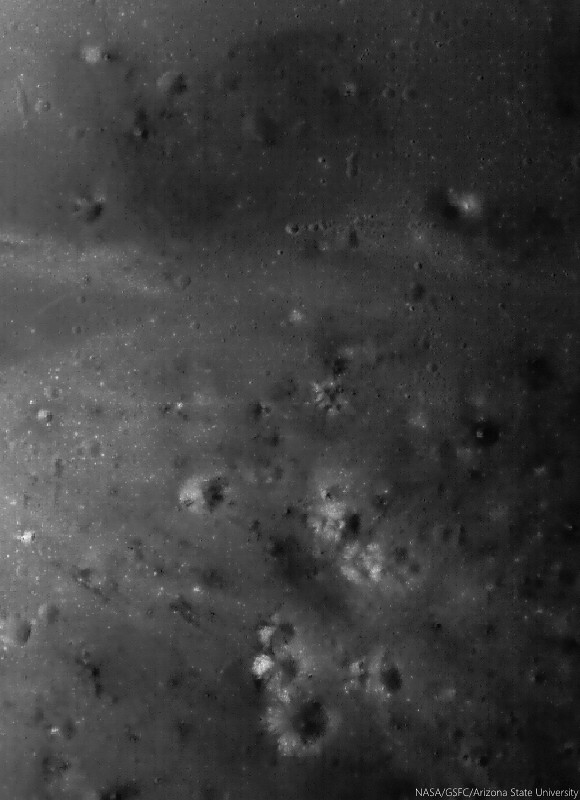
Dark mantle deposits decorate a crater wall. Slowly pulled downhill by gravity, the volcanic glasses that compose these stripes where formed during explosive volcanic eruptions on the Moon. 1130 meter-wide field of view from LROC NAC observation M1101259688L, LRO orbit 14524, September 2, 2012; low incidence 17.83° angle, 97 cm resolution from 117.17 km over 8.26°N 352.18°E [NASA/GSFC/Arizona State University].
Aaron Boyd
LROC News System

Today's Featured Image location is in southern Sinus Aestuum.

Low reflectance pyroclastic material flowed downslope (NE) due to mass wasting in this crater, and high reflectance fresh ray material from small young craters dot the streaks.

The high reflectance material from small craters on top of the pyroclastics indicate that the pyroclastic deposit is relatively thin, because the excavated material is from a maximum of about 0.2 crater radii below the surface.
Striped slides of pyroclastic-sourced granular flow, darker material eroding back into its likely source, a "striped crater," a vent north of Schroter T in Sinus Aestuum, east of Copernicus. A 4675 meter-wide-wide field of view from LROC NAC observation M1101259688L, LRO orbit 14524, September 2, 2012; low incidence 17.83° angle, 97 cm resolution from 117.17 km over 8.26°N 352.18°E [NASA/GSFC/Arizona State University].
In addition to the thickness of the deposit, scientists can also tell that this deposit is most likely discontinuous by observing the streaks in the larger crater. If there was a continuous blanket of material on the surface, the dark mantle material would not form streaks, but a sheet of dark material as it is eroded away.

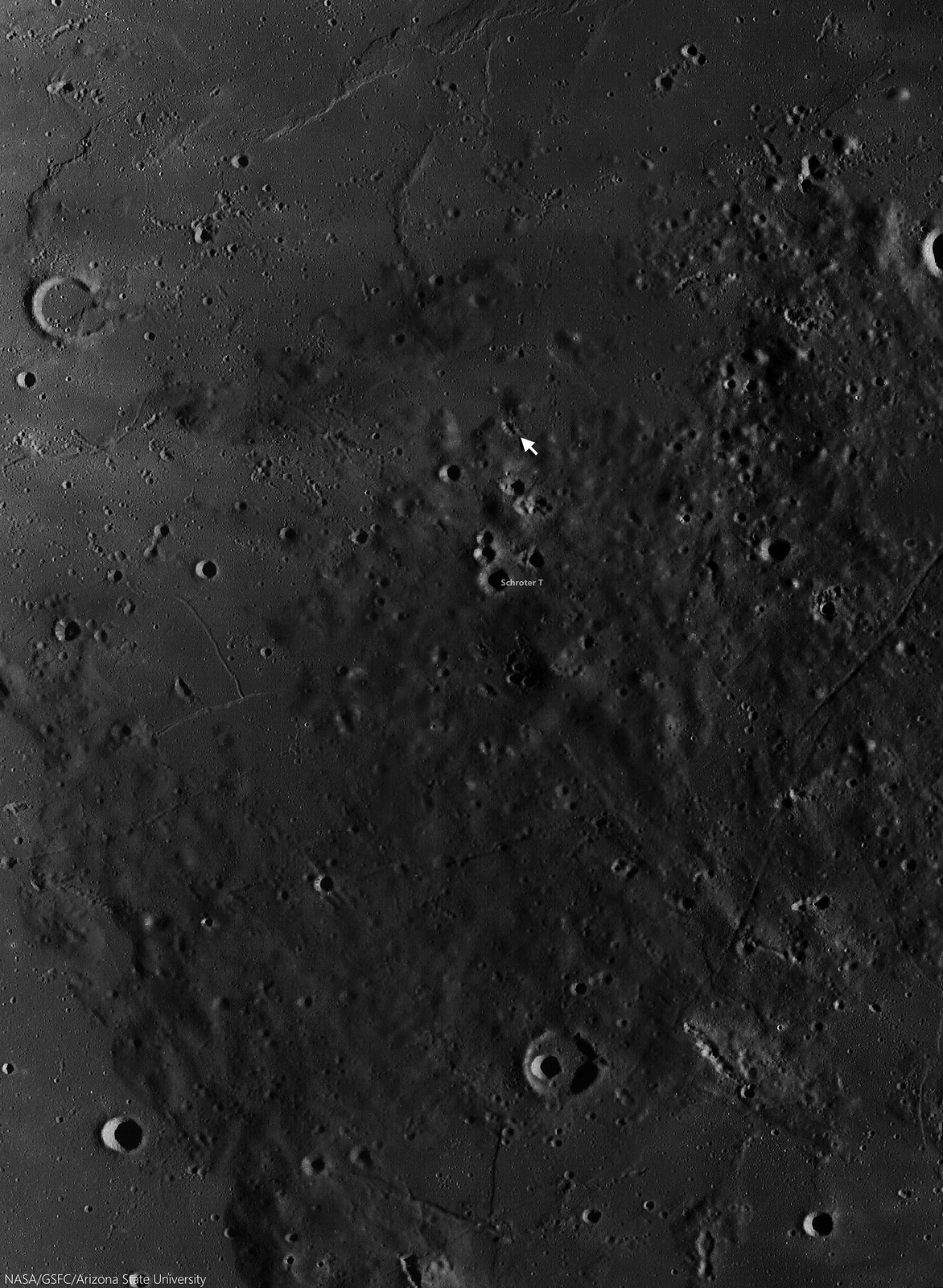
Schroter T (3.96 km; 7.03°N, 352°E) is the largest of the triplet craters in a "snowman" formation at lower center in this 37 km field of view centered near 7.72°N, 352°E. The energetic creation of Copernicus nearby left its mark on the pyroclastic material, Some high places seem to have been sheered off, leaving dark chevrons pointing away from that direction.  LROC Wide Angle Camera (WAC) monochrome (604 nm) observation M160003304CE, LRO orbit 9713, May 14, 2011; 48.97° incidence, 54.53 meters resolution from 38.89 km [NASA/GSFC/Arizona State University].
Dark mantle deposits (DMDs) on the Moon are composed of red, green, orange, and black glasses and crystals that were formed during strombolian or vulcanian eruptions. Sinus Aestuum is littered with dark mantle deposits, showing there were many different vents that were sending magma aloft.

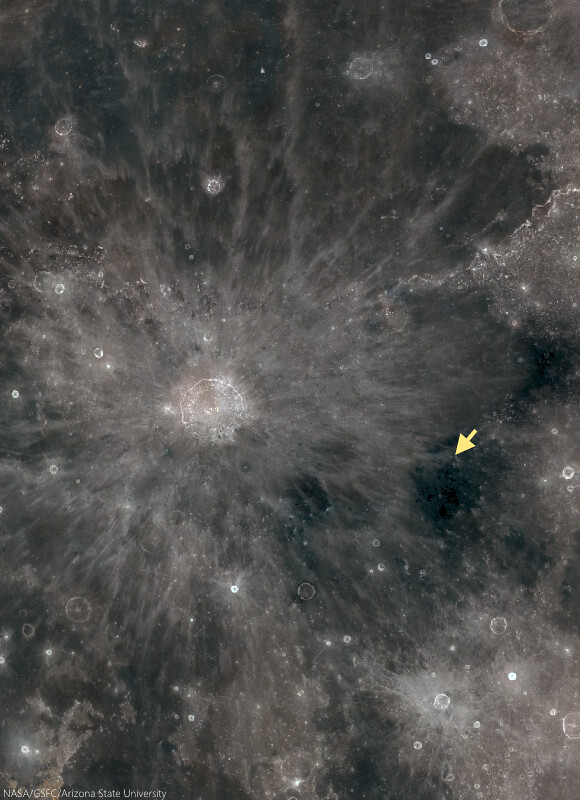
The striped walls of the pyroclastic vent (arrow, 7.716°N, 352.062°E), in the dark terrains east-southeast of Copernicus, disappear into the long shadows of a complex topography, in the light of sunrise. A roughly 120 km-wide field of view from a distilled LROC WAC mosaic of sequential monochrome  (643 nm) observations swept up December 15, 2010; 77° incidence, resolution 63.3 meters from 45 km [NASA/GSFC/Arizona State University]. 
The crater in which we see the dark streaks in the Featured Image could have been the source for the streaks; a piece of evidence for the crater being a vent is its irregular shape, but without further surface investigation (perhaps by humans one day) that question can not be answered for certain.

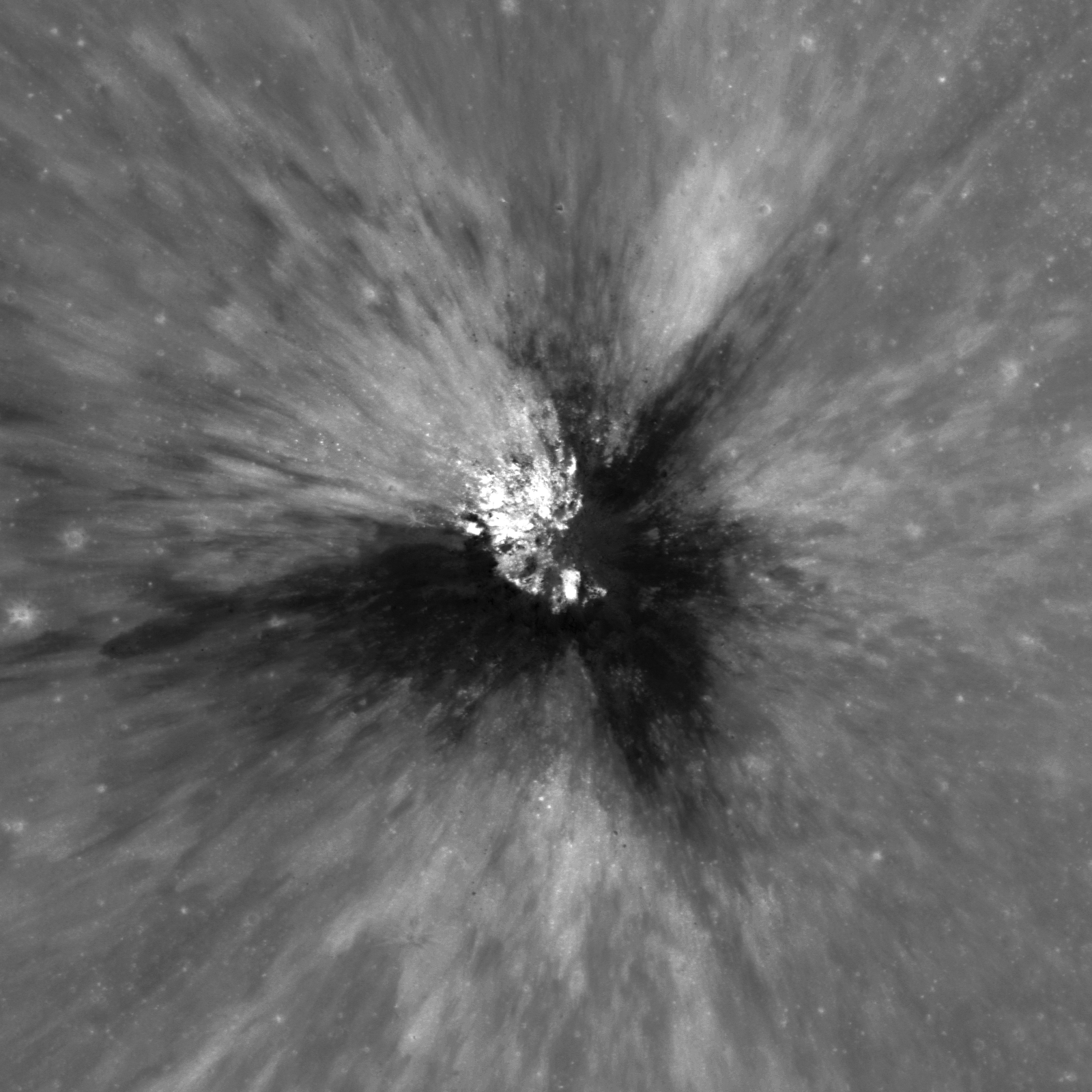
The small vent in Sinus Aestuum (arrow), 370 km east-southeast of the central peaks of Copernicus, is part of the pyroclastic fields highly visible even in modest binoculars, because of their relative low reflectivity. The area more to the southeast bear Gambart is the site of the Moon's highest concentration of radioactive isotopes, of thorium and less common uranium for example. A roughly 900 km-wide view from the LROC Lunaserv web-mapping program, Test RGB overlay (See "Resolved Hapke Parameter Maps") LROC WAC global mosaic [NASA/GSFC/Arizona State University].
See how many dark mantle deposits you can find in the full NAC frame HERE.

Related Posts:

Tuesday, September 3, 2013

Excavating Dark Deposits

M185955372RE_thumb-580
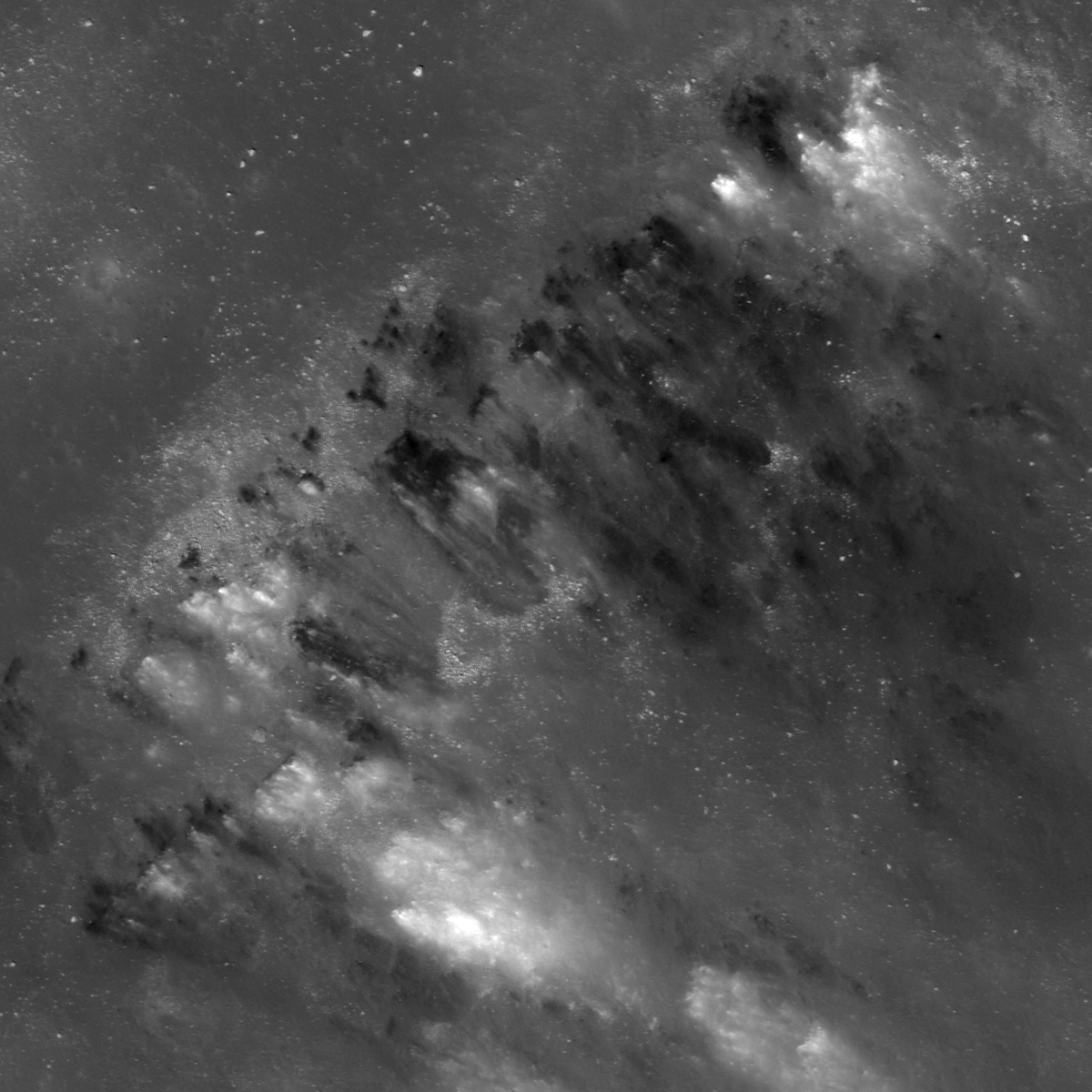
An approximately 250 meter crater has excavated low reflectance material from beneath the lunar surface, west of Sommering P crater, southeast of Copernicus. LROC Narrow Angle Camera (NAC) frame M185955372R; LRO orbit 12483, March 9, 2012; 9.56° angle of incidence, native resolution 1.11 meters per pixel, from 110.79 km over 1.53°N, 249.3°E, field of view 1.8 kilometers [NASA/GSFC/Arizona State University].
Sarah Braden
LROC News System

Amazing ejecta patterns from small, young craters are always something to look at on the lunar surface. Today's Featured Image displays compositional diversity in fresh ejecta. The broad, low-reflectance streaks of material are likely excavated pyroclastic materials. This approximately 250 m diameter crater is located at 2.162°N, 349.401°E, west of the crater Sommering P.

This low-reflectance material is part of a larger area called a Dark Mantle Deposit (DMD). Dark mantle deposits have lower reflectance compared to surrounding mare basalt areas and are also spectrally distinct from mare basalt. In this case, the dark mantle deposit was likely covered by a thin layer of crater ejecta.

Context with Sommering P
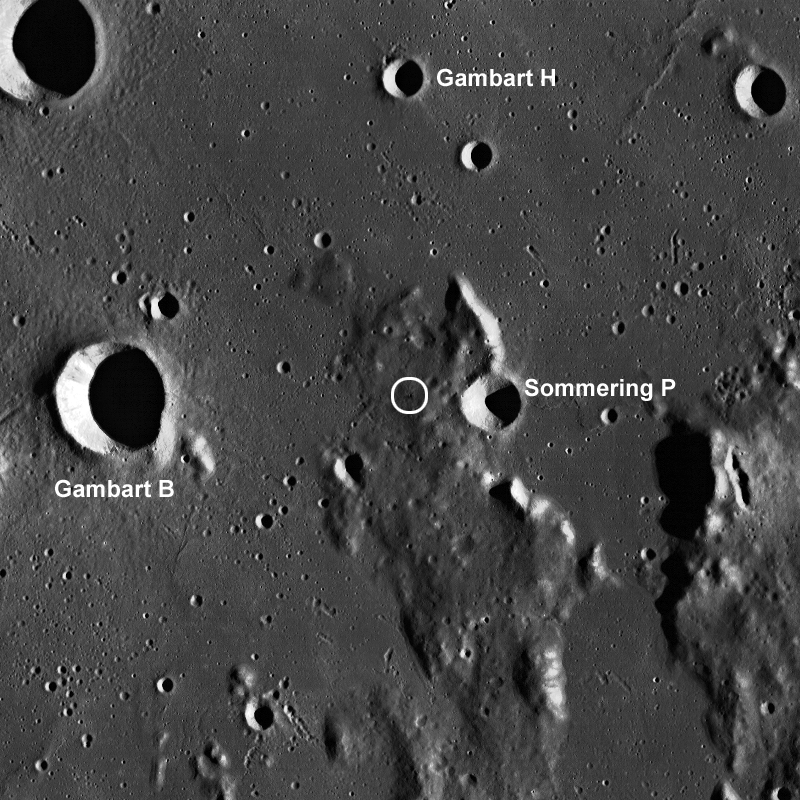
The small crater's location marked with a white circle in an LROC Wide Angle Camera (WAC) context image of a field of view 80 km across [NASA/GSFC/Arizona State University].
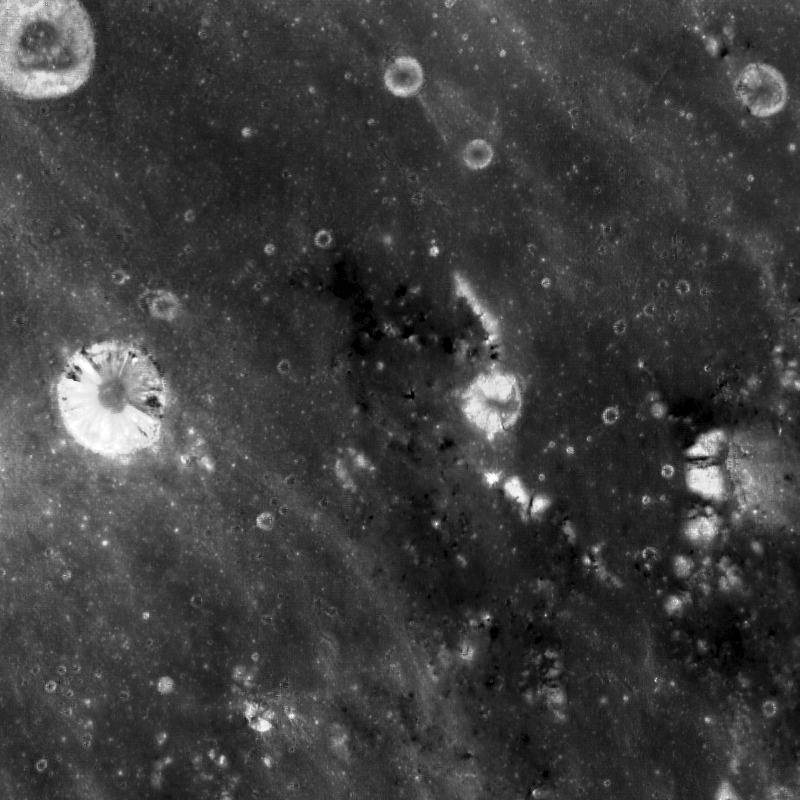
The opening image has a low incidence angle of 10° which means the Sun is high in the sky (near local noon). High-sun images are good for revealing differences in the reflectance properties of the surface. Low-sun (large incidence angle) images are better at emphasizing morphology due to topographic shading and shadowing. Incidence angle is the angle between the vector of sunlight and the vector normal to the surface. The WAC context image above has a large incidence angle (taken in early morning) which makes visible the topographic high where the crater was formed. This topographic high is a remnant of highland terrain (kipuka) surrounded by younger mare basalt deposits (smooth, flat areas). There are many other craters on the topographic high that excavate low-reflectance material, which suggests that the whole area is different from the surrounding mare basalt deposits. The high-sun WAC mosaic (below) of the same area shows the locations where the dark mantle deposit is visible. You can learn more about dark mantle deposits here!

643nm high sun, high-reflectance WAC context
LROC WAC monochrome (643 nm) high sun, high reflectance view of the same area as seen in the WAC mosaic immediately above, resolution roughly 100 meters per pixel. Note darker material around the area of the topographic high place [NASA/GSFC/Arizona State University].
Explore the full NAC image HERE to see the other craters excavating low-reflectance material.

Related Images:
Hyginus Crater and Pyroclastics
Dark Wisps in Copernicus
Polka-Dot Ejecta
Pyroclastic Excavation

Wednesday, June 12, 2013

Layer of Pyroclastics in Sinus Aestuum

Northeastern wall of Bode C crater. LROC NAC M139938121L, a 600 meter field of view centered on 12.276°N 355.165°E; LRO orbit 5756, 0.50 meters resolution from 46.26 km. Downslope toward bottom right, north at top [NASA/GSFC/Arizona State University].
Hiroyuki Sato
LROC News System

Today's Featured Image highlights the slope of the northeastern crater wall inside Bode C.

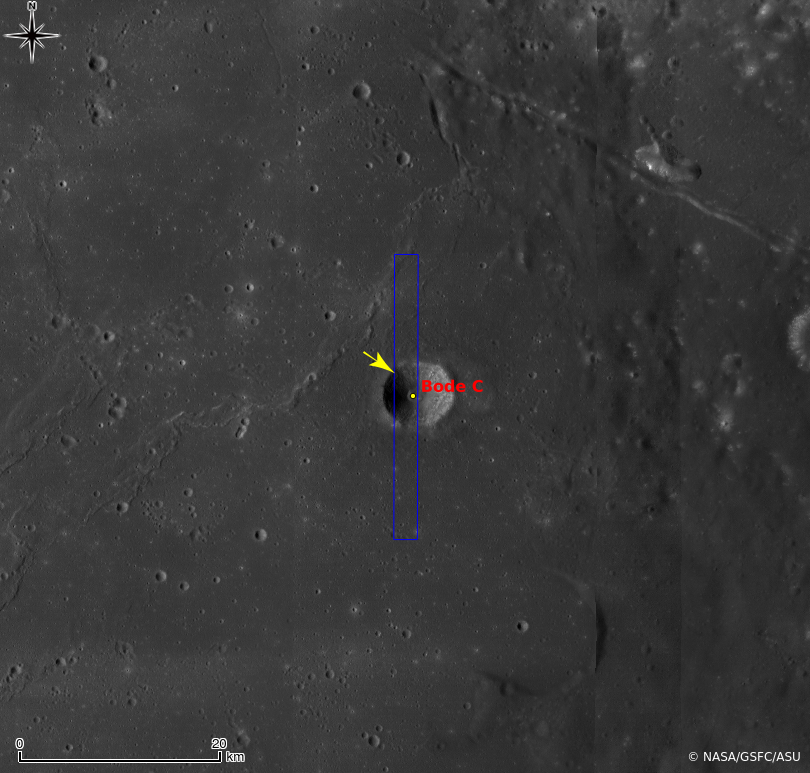
The Bode C crater is 7 km in diameter, and located at eastern edge of Mare Insularum.

Low reflectance material flowed down the middle of the wall, possibly indicating a subsurface layered structure of low reflectance materials along this elevation.

M139938121R-NSJ-0306-58bx-5800x8000
High sun (15.07° angle of incidence) over Bode C, in context of a full width mosaic of both the left and right frames of LROC NAC M139938121LR [NASA/GSFC/Arizona State University].
Dark streaks are found along an almost constant elevation throughout the whole crater. Thus the spatial extent of this layer is likely more than the crater diameter.

Bode C in relation to the Rima Bode pyroclastics of Sinus Aestuum, from the Chang'e-1 global medium resolution mosaic [CNSA/CLEP].
Rima Bode, one of many Dark Mantle Deposits (DMD), is located about 20 km east from this crater. DMDs are thought to be formed as fire fountaining eruptions spread ash around a vent. The size of Rima Bode is about 70 by 80 km, with a crescent shape extending northwest and southwest direction. If this DMD distributed ash to the west, Bode C could have excavated this layer of Rima Bode's pyroclastics, thus explaining the dark streaks on its crater wall. High resolution images of impact craters give scientists a lot of information about the crater itself, but also tell about the surrounding geologic structures and history. 

LROC WAC monochrome mosaic (100 m/pix), centered on 6.14°N, 177.60°E. The NAC footprint (blue box) and location of opening image field of view (yellow arrow) are indicated [NASA/GSFC/Arizona State University].
Explore the streaks of low reflectance materials inside Bode C in full NAC frame, HERE.

Related Posts:
Rima Bode: Constellation Region of Interest
Pyroclastic Trails
Hyginus Crater and Pyroclastics
Dark Wisps in Copernicus
Dark streaks in Diophantus crater
Low Reflectance Deposits on the Lassell Massif
DMD Excavations
Pyroclastic Excavation

Thursday, April 4, 2013

Downhill creep or flow on the floor of Vitello?

Southern slope of a fracture developed in the floor of Vitello crater, on the south side of Mare Humorum. Downward slope is toward upper left in a 640 meter wide field of view centered on 30.214°S, 322.352°E, LROC NAC M1101460425L, LRO orbit 14652, September 5, 2012; angle of incidence 31.65° over 0.64 meters resolution, from 61.86 km  [NASA/GSFC/Arizona State University].
Hiroyuki Sato
LROC News System

Vitello crater is a floor-fractured crater (42.5 km in diameter), located at the south edge of Mare Humorum.

As seen in the LROC Wide Angle Camera (WAC) context view further down, there is a circular network of fractures, with numerous branches, throughout the crater floor.

The opening images (above and immediately below) highlights a portion of north facing slopes inside one of these fractures (yellow box and arrow).

Full with of LROC NAC M1101460425L, from the corrected exploration link at the bottom of this post. The yellow square encompasses the area within the LROC Featured Image, released April 4, 2013 [NASA/GSFC/Arizona State University].
The dark materials on the floor of the crater partially cover the upper part of this fracture. The dark materials extend from the bottom right to upper left and are detoured around of a large boulder (30 by 20 meters) at the center of opening image, indicating that these materials flowed down the slope. With occasional events of slope failures or meteorite impacts, they might have flowed at once or little by little over a long period of time. But of what is this dark material composed?

The origin of floor-fractured craters on the Moon is still under discussion, but volcanic intrusions are suspected, and some of the fractures are associated with Dark Mantle Deposits (DMD), that are likely pyroclastic in origin. In Vitello crater, no clear DMD have been documented. But since the circular cracks are well developed in this crater, pyroclastics or any low reflectance materials of volcanic origin might have covered the fractured floor surface, supplying the dark materials flowing into the open cracks as seen in the opening image. 

Vitello crater and surrounding areas in LROC WAC monochrome (604nm) mosaic (70 meters per pixel) centered on 30.393°S, 322.43°E, stitched from three LROC WAC observations, from three sequential orbital passes, February 6, 2010, from just above 50 km altitude. The locations of area  in the LROC Featured Image (yellow arrow) is indicated once again [NASA/GSFC/Arizona State University].
Explore the slopes of the floor-fractured crater on the Moon in full NAC frame yourself, HERE.

Related Posts:
Rimae Posidonius
DMD Excavations
Pyroclastics and Vent
Pyroclastic Excavation
Pattern of dark deposits
Alphonsus crater mantled floor fracture
Low Reflectance Deposits on the Lassell Massif

Tuesday, March 12, 2013

Not your average crater

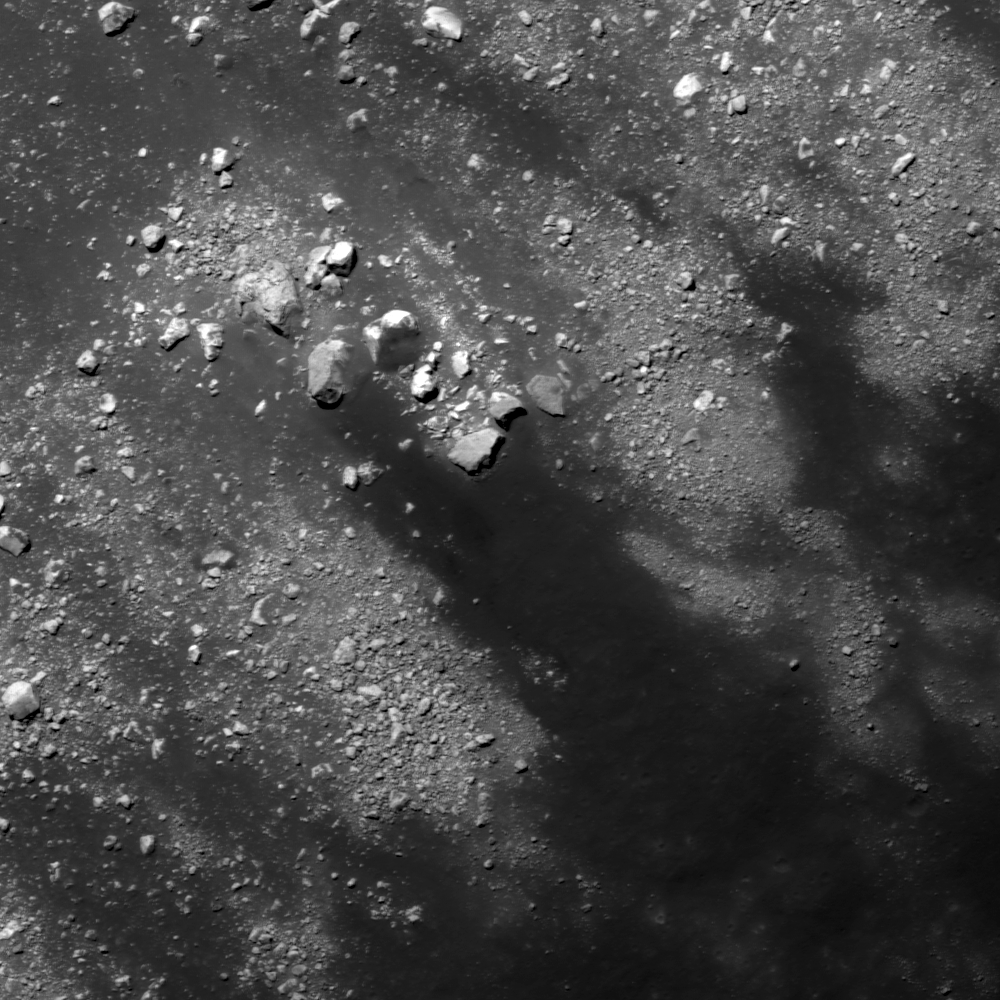
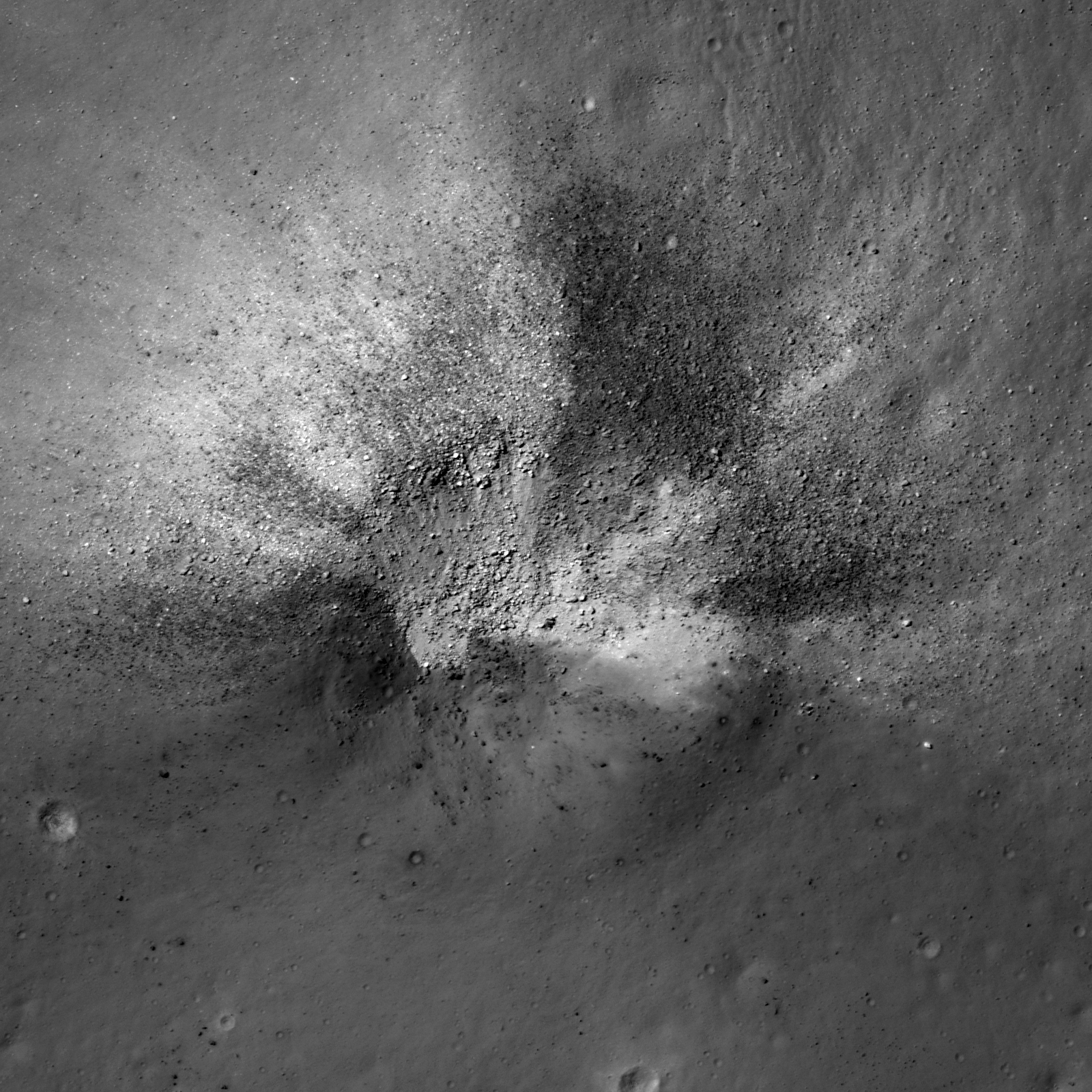
An asymmetric impact crater (14.349°S, 350.977°E) on the Lassell Massif revealing low reflectance material. NAC frame M152939732L, LRO orbit 7672, February 21, 2011; incidence angle 17.58° from the northwest, resolution 0.49 meters per pixel over a field of view approximately 820 meters across, from 39.65 km [NASA/GSFC/Arizona State University].
James Ashley
LROC News System

This week's Featured Images focus collectively on a region of the Moon known to present a ruddy discoloration through the eyepiece of ground-based telescopes (and also directly to the eyes of Apollo Command Module pilots). Known colloquially as "lunar red spots," such areas include the Gruithuisen Domes, Mons Hansteen, and the Helmet region. The red spot under observation this week is the Lassell Massif. This fascinating feature is a highstanding region of the Lassell Complex, located within the Alphonsus A basin in northeastern Mare Nubium, and consists of a rugged (though somewhat muted), hilly terrain, and several large, steep-walled depressions.

Today's Featured Image shows a striking impact crater in the northern hills of the massif. The crater exhibits an asymmetrical ejecta pattern, suggesting it to be the result of an oblique impact. The crater outline and ejecta distribution may also have been influenced by the uneven local topography. More geologically intriguing than this crater's shape, however, are the intermixed high and low reflectance materials excavated by the impact.

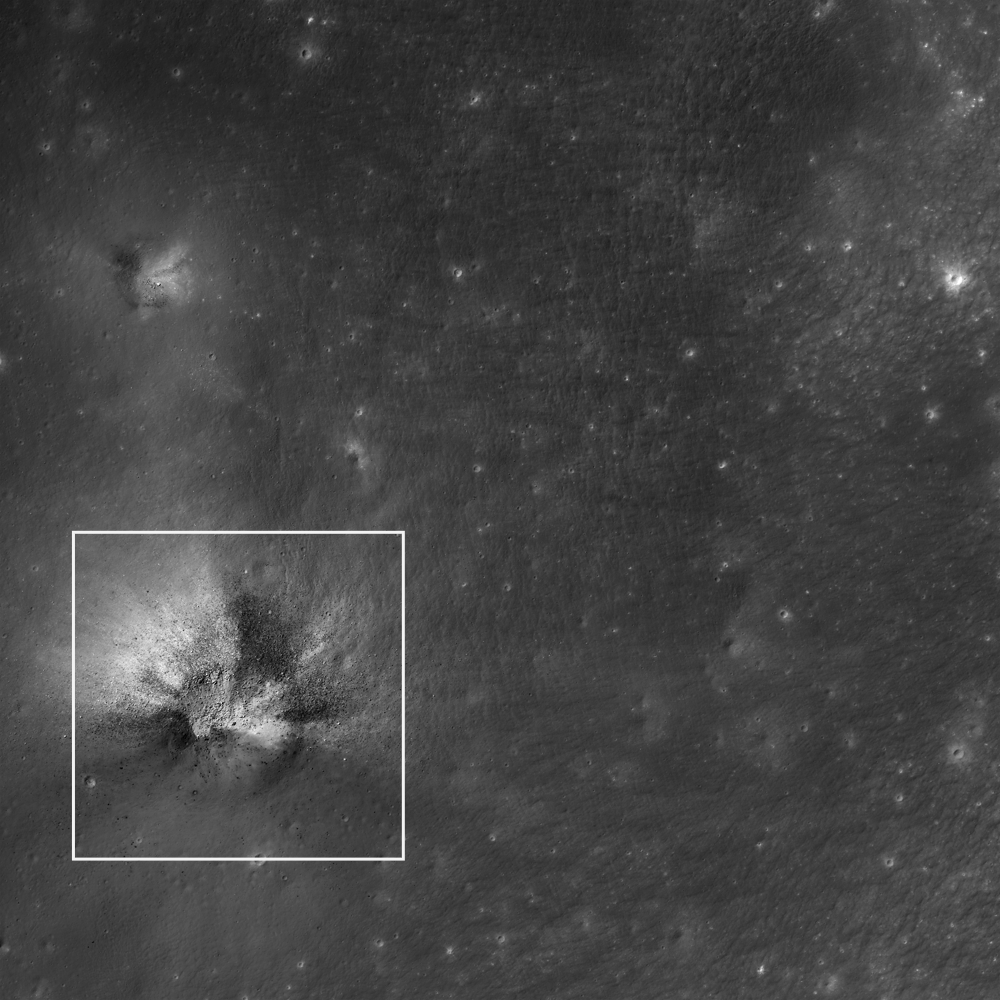
This wider field image from the same NAC frame shows an adjacent impact (northwest quadrant) to have excavated similar dark materials in the region; white square is the Featured Image location. Image is ~2.2 km wide [NASA/GSFC/Arizona State University].
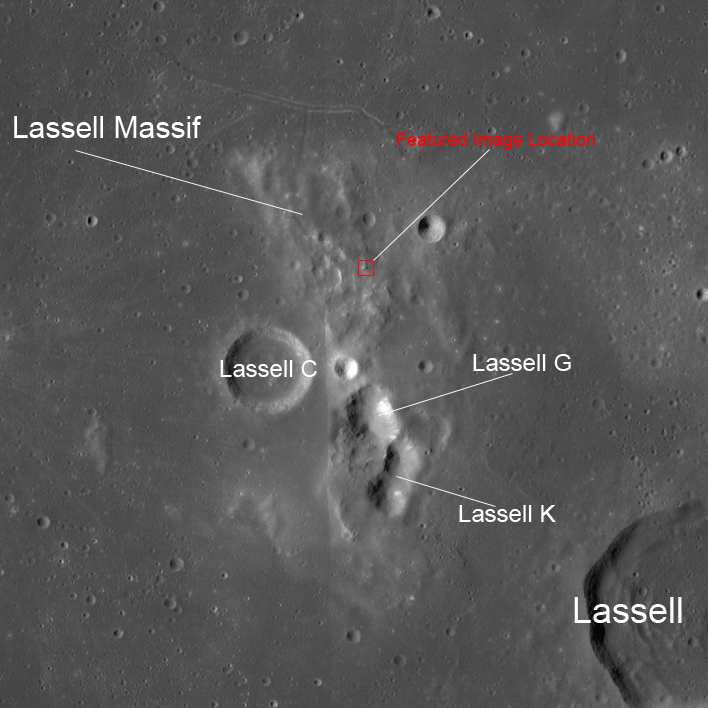
The low reflectance materials (here seen as blocky) are suspected to be pyroclastic in origin, which speaks to the volcanic history of the Moon. Lassell crater itself (lower right in context image above) was described as being a source of pyroclastic materials since telescopic mapping efforts of the 1960s and '70s. The Lassell Massif is arguably close enough to this (and potentially other mare sources) to have received a share of these materials on the summits of its hills. Alternatively the central depressions on the massif may themselves be volcanic vents.

WAC mosaic context image. The white box outlines the area shown in the second image following above, field of view roughly 67 kilometers across [NASA/GSFC/Arizona State University].
While most lunar volcanism produced basaltic rocks, recent evidence is suggesting that Lassell Massif and other red spot areas are silica-rich, iron-poor volcanic deposits -- perhaps similar to the kind of volcanism we see with the Long Valley Caldera on Earth. While darker deposits tend to indicate an iron-rich material, their presence among silica-rich materials (which might seem like a geologic contradiction) may actually be suggestive of complex volcanism, where a variety of volcanic deposits are possible, and for which the Long Valley volcanics remain a good example.

What are the high reflectance materials seen distributed outward from the crater? Likely we are seeing ancient highland anorthositic material excavated from beneath an overlying volcanic deposit(s). What a fascinating spot for a future explorer!

From a 2010 demonstration, animation of separate LROC WAC observations of the geologically interesting Lassell Massif and crater group east of Lassell D, showing the latter's fresh ray system intruding from the west. This is more easily discerned under a high Sun while topography is easier to view under a mid-morning Sun in the east-northeast. The bright, widespread ejecta streamers from Lassell D alternates with a visible chevron affect by the Lassell D pressure front [NASA/GSFC/Arizona State University].
The next two Featured Image posts will include a brief discussion of this type of volcanism on the Moon, and explore some of the clues scientists are using to probe the Lassell Massif area. See the full NAC frame HERE. Other examples of pyroclastic deposits include DMD Excavations, Pyroclastic Trails, and Pyroclastic Excavation.

Wednesday, February 20, 2013

Dark Mantle Deposit (DMD) Excavations

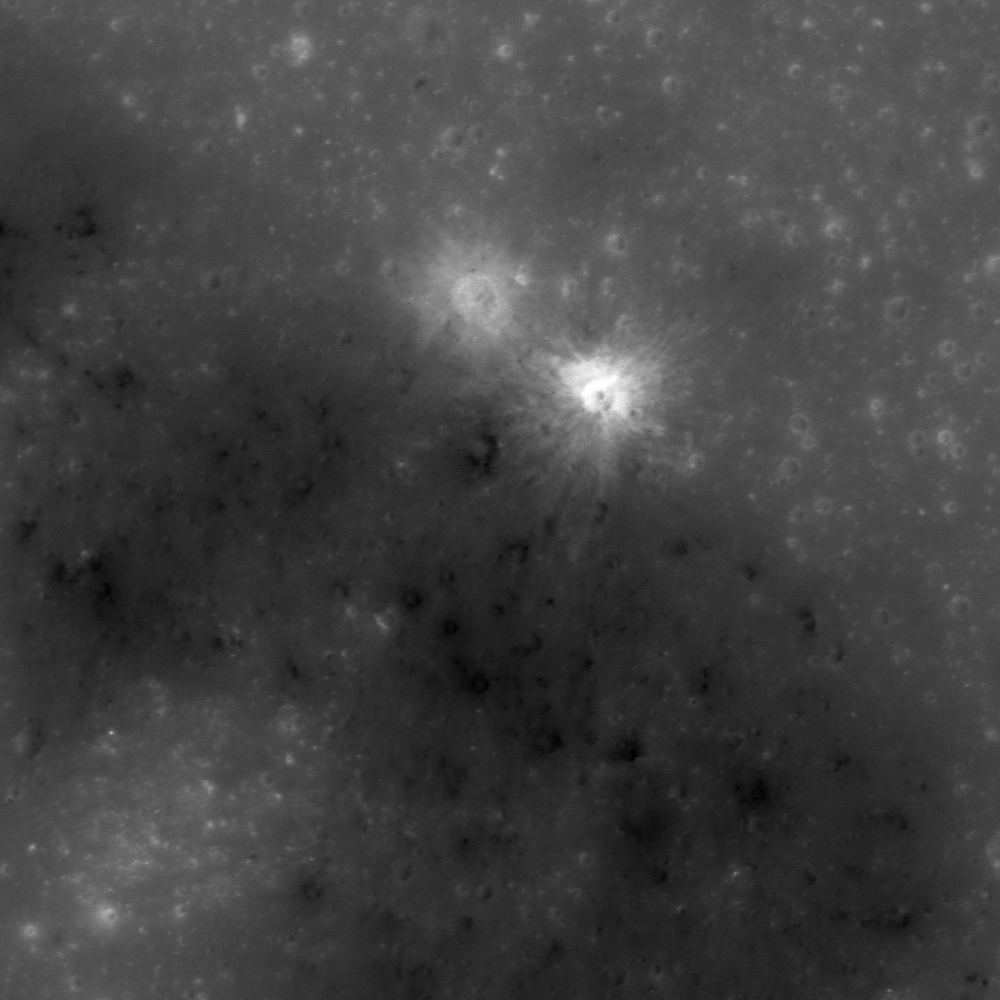
Thin Skin? A patch of Dark Mantle Deposits, prominent albedo features of west and east Sinus Aestuum (southeast of Copernicus) have been over-turned by relatively recent impact, uncovering much brighter material not far below the surface. From LROC Narrow Angle Camera (NAC) observation M1103666930R, orbit 14961, September 30, 2012; resolution 94 cm per pixel. LROC Featured Image center 4.591°N, 344.348°E, field of view above is 545 meters across [NASA/GSFC/Arizona State University].
Hiroyuki Sato
LROC News System

Dark Mantle Deposits (DMDs) are diffuse deposits with a very low albedo, which are the remnants of pyroclastic eruptions. Sinus Aestuum is a DMD near Copernicus crater.

Today's Featured Image (covers) a portion of one of the lowest-reflectance areas in this DMD (see next WAC context images below), about 150 km southeast from Copernicus.

In the opening image, the lowest-reflectance materials are located at the rims and the ejecta of the multiple small craters (less than 20 meters in diameter), indicating that these dark materials are in the shallow subsurface.

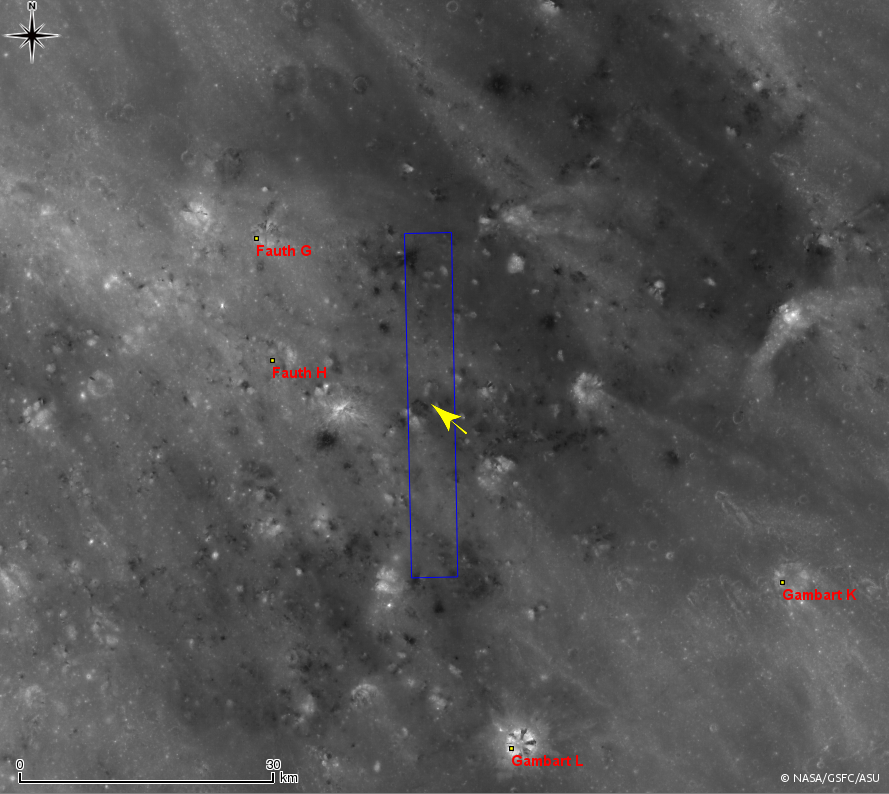
Context view of western Sinus Aestuum and surrounding areas in a LROC Wide Angle Camera (WAC) monochrome mosaic centered on 4.60°N, 344.38°E. The NAC footprint (blue box) and the location of opening image field of view (yellow arrow) are indicated [NASA/GSFC/Arizona State University].
On the other hand, the two craters near the middle of this image display relatively high reflectance materials and do not expose any dark deposits from beneath the surface. That means that the lateral extent of these low-reflectance pyroclastic materials is somewhat discontinuous.  Looking at the ejecta blankets of craters within lunar DMDs is one of the best ways to estimate the extent and thickness of lunar pyroclastic deposits.  In the case of regional DMDs like Sinus Aestuum, the pyroclastic glasses that comprise these deposits represent one of the most accessible lunar resources that could be used by future human explorers to enable extended lunar surface operations.

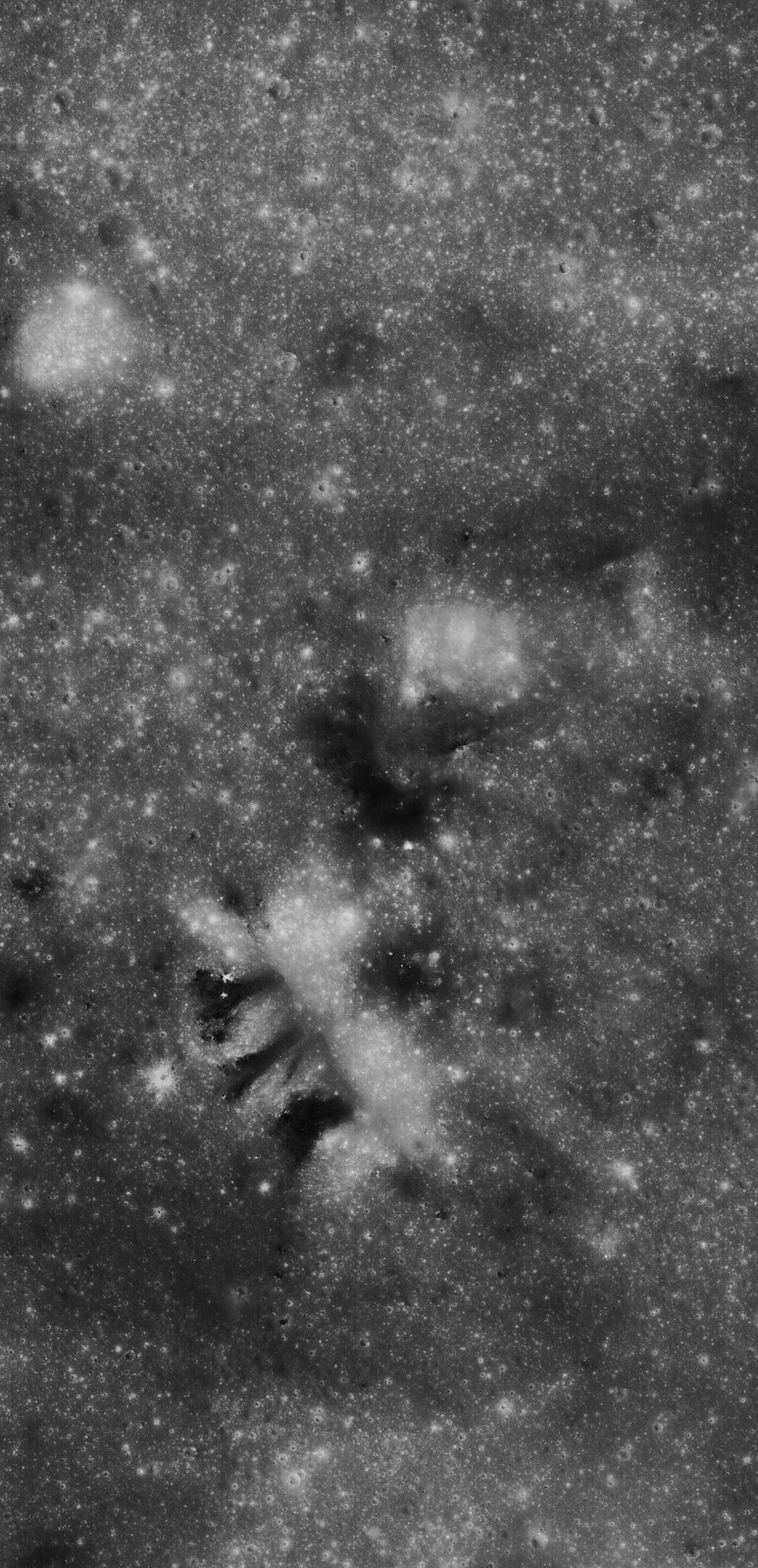
A higher (sunrise) illumination angle normally emphasizes terrain relief over albedo, and vice versa, though in this full resolution crop from the LROC WAC mosaic (below) the contrast in local albedo are still quite evident [NASA/GSFC/Arizona State University].
The full WAC mosaic covers the western dark mantle deposit field of western Sinus Aestuum, an approximately 150 kilometers wide field of view captured over four sequential orbital passes in December 2011 [NASA/GSFC/Arizona State University].
Explore the DMDs at Sinus Aestuum in full NAC frame yourself, HERE.

Related Posts:
Pyroclastic Trails
Pyroclastics and Vent
Hyginus Crater and Pyroclastics
Pyroclastic Excavation
Rima Bode: Constellation Region of Interest

Unrelated visually, both Lunar Prospector (1998-99) and Japan's SELENE-1 (Kaguya) detected perhaps the highest rates of radioactivity stretching from Fra Mauro to west of Copernicus, represented above in a signature of Thorium. Remote sensing shows a similar, only slightly less prominent detection of Uranium, also.