Showing posts with label KSC. Show all posts

Thursday, January 22, 2015

Moon Express strains at its Kennedy tether

Google Lunar X-Prize competitor Moon Express test article MTV-1X takes its maiden tethered flight and new facilities recently opened at Kennedy Space Center's historic Space Launch Complex 36, where the early Atlas ICBM was developed and Surveyor was launched a half century ago. The 80 acre site, procured with the aid of Space Florida, includes a vintage concrete blockhouse the team has christened "Moon Mountain" [CBS News/C|NET].
"Latest in a series of reports by CNET Editor at Large Tim Stevens, traveling the world to track the progress of teams competing for the Google Lunar X-Prize.

"If all goes according to plan.. the Mountain View, California-based Moon Express team's.. lander will make a soft, controlled landing on the moon, look around in high-definition, then lift off again. The lander will touch down a second time at a location at least 500 meters away from the first...

"To see whether Moon Express can pull it off, Stevens traveled to Florida's Kennedy Space Center where Moon Express is testing its MTV-1X -- that is, its "Moon Express Test Vehicle 1 - XPrize Version." Or, more colloquially, the "flying donut," thanks to its toroidal shape. This is effectively a prototype for the final landing vehicle, the MX-1. The MX-1 will be launched into orbit atop a rather large rocket, fly itself across the approximately 240,000 miles to the moon and then orbit there a few times before touching down.
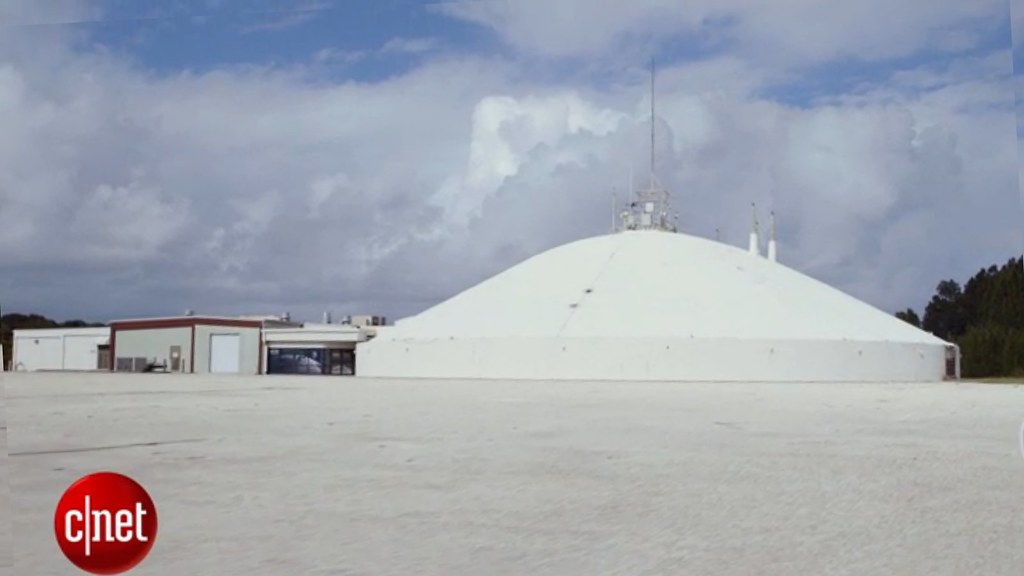
"Moon Mountain." the blockhouse trench and bunker of KSC SLC 36, focus of 80 acre proving ground in site of the iconic VAB at Cape Canaveral [CBS News/C|NET].
Sources:
Moon Express' unorthodox approach to the prize
- CBS News
Private moon firm to sign deal for test flights at Cape
- WTSP/ Tampa Bay, Sarasota
Moon Express to develop SLC-36 for MX-1 lunar lander
- Spaceflight Insider
Blasting off with Moon Express at KSC
- C|NET

Wednesday, June 13, 2012

Bound for Hawai'i - NASA KSC shows off latest rover concept, ISRU and lunar analog study platform

The Regolith and Environment Science and Oxygen and Lunar Volatile Extraction, or RESOLVE, consists of a lunar rover and drill to support a NASA payload that is designed to prospect for water, ice and other lunar resources.  Kennedy Space Center "media photo opportunity," Tuesday, June 12, 2012.
Kennedy Space Center - Central Florida News 13 (Orlando) NASA is undertaking a possible rover mission which will hunt for large quantities of water on the lunar surface. Tuesday at the Kennedy Space Center, a lunar rover and drill were unveiled, designed to prospect for water and ice on the moon.

Much of the proposed mission springboard off a recent moon mapping mission which detected thick pockets of water ice in areas which are never exposed to the sun.

Water is essential to produce oxygen to breathe and cool spacecraft and equipment.

"Seventy-five percent or more of the vehicle is propellant. And if I didn't have to take all of that with me, I can save an awful lot on launch costs. Not having to carry the mass of the water with you everywhere you get is really important. It would reduce the mass and size of our launch vehicles, and thereby drop the cost of the missions," explained NASA project manager William Larson.

The Regolith and Environment Science and Oxygen and Lunar Volatile Extraction, or RESOLVE (pdf), consists of a lunar rover and drill provided by the Canadian Space Agency to support a NASA payload that is designed to prospect for water, ice and other lunar resources. RESOLVE also will demonstrate how future explorers can take advantage of resources at potential landing sites by manufacturing oxygen from soil.

Tuesday, May 1, 2012

PANTERA: Lunar Mining Excavator

The 2012 NASA Lunabotics Competition is an international competition that challenges students against different universities in order to create a lunar excavator, called a Lunabot, which can mine and deposit a minimum of 10 kilograms of lunar simulant within 10 minutes. NASA will directly benefit from the competition by encouraging the development of innovative lunar excavators, which may result in clever ideas and solutions that could be applied to an actual lunar excavation or payload. Complexities of the challenge include the abrasive characteristic of the BP-1 simulant, weight and size limitations and the ability to tele-robotically control the robot from a remote mission control center. In order to overcome these complexities, information was gathered, analyzed and innovative drive, collection and dumping systems were introduced. With the combination of these systems in place, the FIU Lunabotics robot, Pantera, was born.
2012 Florida Conference on Recent Advances in Robotics

Narine Kelvin Harrylall, Ramon Garo, Janet F. Reyes
Dr. Sabri Tosunoglu
Florida International University
Department of Mechanical and Materials Engineering

This paper presents the design and development of a lunar mining excavator. After extensive research, the evolution of conceptual designs and finite element analysis simulations, the model was then fabricated. Several past, current and future technologies that could be used as an application for lunar excavators were examined. These included surface mining technologies, the design of previous lunar simulant excavators and robotic rovers that successfully operated on the Moon and Mars.

Based on the knowledge gained from this research, ideas were formed and 3D models were created on SolidWorks. Stress, strain and maximum displacements of different sections of the robot were then created and analyzed to ensure a sturdy, reliable and efficient robot.

The paper is organized as follows: An outline of the robot is demonstrated in Section 2. Conceptual models and the final design are presented in Section 3. The development and fabrication of the different sections of the robot are described in Section 4. In Section 5, the results of the stress, strain and displacement studies are shown and analyzed. Finally, Section 6 summarizes conclusions and outlines plans for future work.

The design of Pantera primarily focused on three different systems. These systems included: • Mobility system • Dumping system • Collection system.

The team set out to build a robot that was compact and efficient. With that in mind, the maximum dimensions of the robot were limited to 1.5 m in length, 0.75 m in width and 0.75 m in height. The weight limit created was 80 kg (~176lbs), which was found by comparing the weights of different prototype lunar mining excavators. The robot also needed to have a rapid collection and dumping rate. Based on research undertaken, a collection and dumping rate of 15.8 kg of simulant per minute was set out to be achieved.

Review the research (PDF) HERE.

The Florida Space Grant Consortium is supporting five teams from Florida universities competing in the Third Annual Lunabotics Mining Competition to be held at the Visitor Complex, Kennedy Space Center, May 21-26, 2012.

Friday, August 26, 2011

GRAIL set for early September lift-off

Using a precision formation-flying technique, beginning in January 2012, the twin GRAIL spacecraft will map the moon's gravity field.

The twin GRAIL lunar probes are set to launch aboard a United Launch Alliance (ULA) Delta II, from Cape Canaveral Air Force Station (CCAFS), September 8. That date offers two instantaneous launch windows, at 12:37:06 and and 13:16:12 UT, beginning an optimal launch period (last for a Delta II at the Cape) extending through October 19 when launch windows open approximately four minutes earlier each consecutive day.

The twin GRAIL, developed at JPL originally as a "precursor mission" in support of goals for the defunct Constellation program, are designed to more precisely determine the Moon's interior composition, "from crust to core," and to advance understanding of the Moon's thermal evolution.

A prelaunch news conference is scheduled at the Kennedy Space Center's Press Site, Tuesday, September 6, at 1700 UT. Scheduled to participate in the briefing are Ed Weiler, Science Mission Directorate, NASA HQ; Tim Dunn, KSC launch director; Vernon Thorp, NASA Missions program manager, United Launch Alliance; David Lehman, GRAIL project manager, Jet Propulsion Laboratory (JPL) in Pasadena; John Henk, GRAIL program manager for Lockheed Martin and Joel Tumbiolo, launch weather officer, 45th Weather Squadron, CCAFS

A GRAIL mission science briefing at the KSC Press Site is scheduled Wednesday, September 7, at 1400 UT, Participating in that briefing are Robert Fogel, GRAIL program scientist, NASA Washington; Maria Zuber, GRAIL principal investigator, Massachusetts Institute of Technology; Sami Asmar, GRAIL deputy project scientist, JPL and Sally Ride, president and CEO of Sally Ride Science of San Diego


Thursday, July 28, 2011

40 Anniversary of Apollo 15 celebrated at KSC


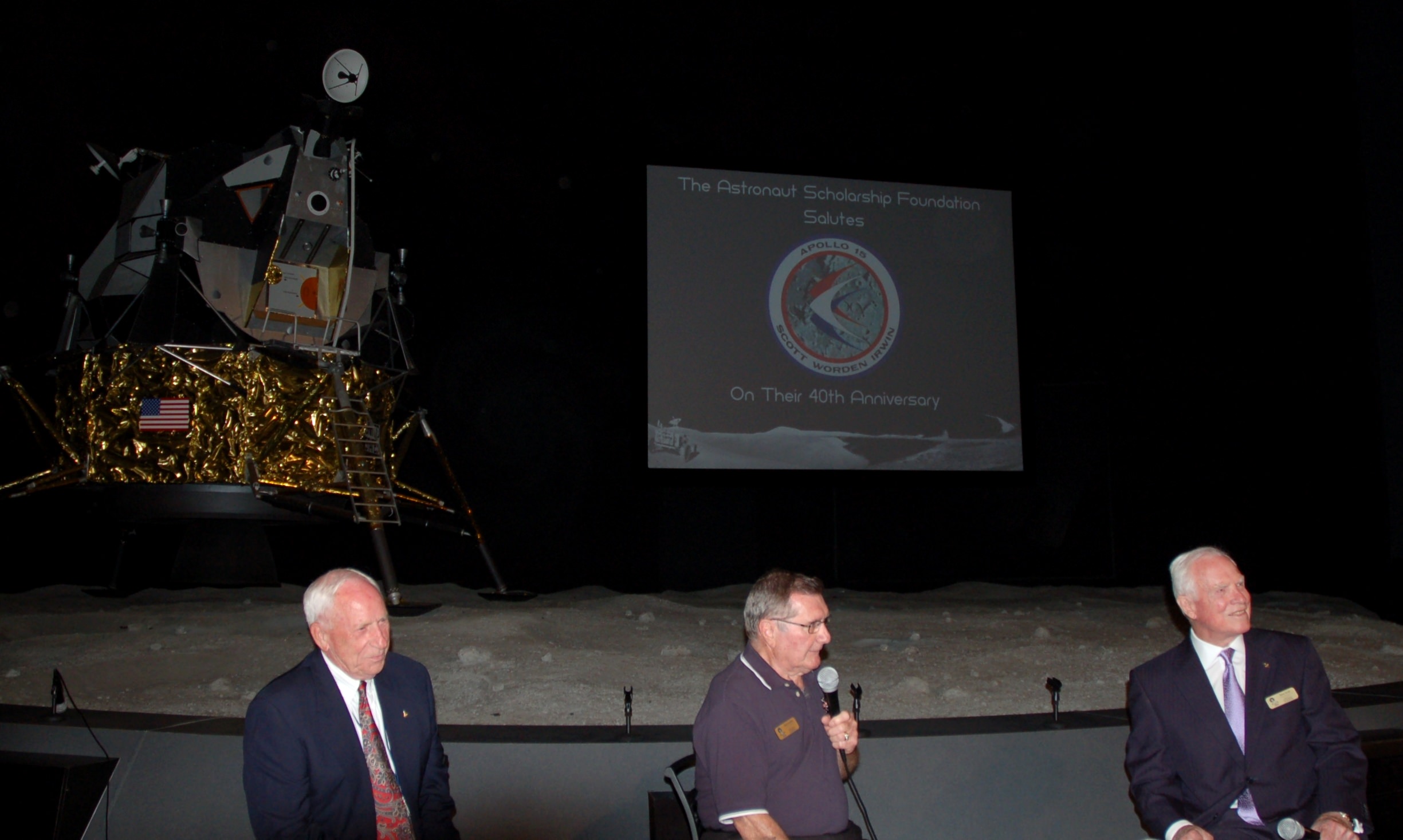
From left to right: Apollo 15 Command Module Pilot Al Worden, Apollo 12 Command Module Pilot Dick Gordon and Apollo 15 Commander Dave Scott at the Apollo 15 - 40th Anniversary Panel Discussion hosted at the Kennedy Space Center Visitor Complex [Jason Rhian/Universe Today].

Jason Rhian
Universe Today

Cape Canaveral – Apollo 15 was the first manned lunar mission to use a lunar rover, the first of the “J” missions that would stay on the lunar surface longer and be focused on conducting science. Apollo 15 marked its 40th anniversary on Sunday. Most of the crew as well as other Apollo-era astronauts were present at the Kennedy Space Center Visitor Complex to mark the occasion.

Read the full story HERE.


Detail from the panoramic view as captured by mission commander Dave Scott during the second EVA of the Apollo 15 science expedition to the Hadley Rille Valley (MET: 144:50:48), August 1, 1971. According to the Apollo 15 Surface Journal, "twenty years after the mission, this 500-mm photograph" was still Scott's favorite. View the high-resolution image HERE [ASJ/NASA].


Hadley Station, landing site of Apollo 15, 39 years, 4 months and 13 days later, as viewed from 43.33 kilometers overhead, in LROC Narrow Angle Camera (NAC) observation M146959973L, swept up December 14, 2010. The LM descent stage is at the center of this sample with a path leading left (eastward) to the first lunar rover of the Apollo program, where Scott & Irwin parked it 40 years ago. Their trail to the ALSEP experiments and laser reflector array can be seen on the opposite side. Lighting conditions at local sunrise were similar to those the crew experienced during their landing in 1971 [NASA/GSFC/Arizona State University].

Tuesday, December 28, 2010

Rollback


From NASA/KSC high-definition video taken during the Winter Solstice lunar eclipse, December 21, as seen over Launch Pad 39A at the Kennedy Space Center in Florida, as Discovery was being prepared for rollback to the Vehicle Assembly Building. Technical issues have forced a postponement of its scheduled final mission until at least March 2011. Justin Ray of SpaceflightNow "took some frame grabs from that video to create" a photo gallery. [HT: RLV and Space Transport News]

Monday, October 11, 2010

Offloading operations using a Heavy-Lift LSMS


Chariot, LSMS-H, and ESA lunar lander offloading operations.

Sharon A. Jefferies, William R. Doggett
John T. Dorsey, Thomas C. Jones &
Michael E. Haddad
NASA Langley & KSC

Jonathan Chrone, Scott Angster
David A. Helton & Darrell L. Caldwell, Jr.
Analytical Mechanics Associates

This study investigates the feasibility of using a heavy-lift variant of the Lunar Surface Manipulator System (LSMS-H) to lift and handle a 12 metric ton payload. Design challenges and requirements particular to handling heavy cargo were examined. Differences between the previously developed first-generation LSMS and the heavy-lift version are highlighted. An in-depth evaluation of the tip-over risk during LSMS-H operations has been conducted using the Synergistic Engineering Environment and potential methods to mitigate that risk are identified. The study investigated three specific offloading scenarios pertinent to current Lunar Campaign studies. The first involved offloading a large element, such as a habitat or logistics module, onto a mobility chassis with a lander-mounted LSMS-H and offloading that payload from the chassis onto the lunar surface with a surface-mounted LSMS-H. The second scenario involved offloading small pressurized rovers with a lander-mounted LSMS-H. The third scenario involved offloading cargo from a third-party lander, such as the proposed ESA cargo lander, with a chassis-mounted LSMS-H. In all cases, the analyses show that the LSMS-H can perform the required operations safely. However, Chariot-mounted operations require the addition of stabilizing outriggers, and when operating from the Lunar surface, LSMS-H functionality is enhanced by adding a simple ground anchoring system.


Lunar Surface Manipulator System (LSMS) naming conventions.

As we consider returning humans to the Moon with a view towards building an outpost to enable a permanent human presence, it is important to consider the means by which lunar surface system elements and other cargo will be offloaded from the lunar lander as well as handled on the surface. In particular, methods to offload heavy cargos, such as surface habitats, from lunar landers and to manipulate that cargo on the surface of the Moon need to be investigated. Previous studies have focused on using a Lunar Surface Manipulator System1 to offload cargo up to ~ 6 metric tons and the All-Terrain Hex-Legged Extra-Terrestrial Explorer (ATHLETE) for offloading cargos up to the maximum lander capacity. In this study, we investigated the use of a Lunar Surface Manipulator System (LSMS) that has been modified to handle a 12 metric ton payload, which is consistent with the estimated mass of the largest payloads currently used in NASA’s Lunar Campaign Analysis.

This study focused on two key areas: a) identifying necessary design modifications to enable the LSMS to handle the heavier cargo mass and to ensure the LSMS could reach all potential cargos from lander, chassis, and surface mounted locations, and b) analyzing payload handling operations with the Heavy-lift LSMS (LSMS-H) to ensure the operations could safely be performed while avoiding a potential tip over situation. As part of the analysis, preliminary calculations were made to identify the safe operation envelope, or tip over boundaries, for several cargo handling scenarios. These initial calculations helped to identify necessary design modifications to expand the safe-operating zone and reduce the likelihood of tip over. The results were then fed into the Synergistic Engineering Environment (SEE). The SEE was used to simulate each offloading scenario, dynamically calculating the system center of gravity (CG) (assuming a constant gravity field) and comparing the CG location to the tip over boundary.

In addition to the operational focus areas described above, this study also sought to understand the correlation between lunar cargo handling equipment and procedures using their terrestrial equivalents, particularly those that may facilitate remote offloading operations without the presence of crew on the lunar surface. As several of the payload handling operations will potentially occur in preparation for crewed missions, it is essential that payload acquisition and release be as simple and safe as possible to reduce risk to lunar equipment. Several benefits are identified that may be realized by incorporating commonality into the development of lunar and terrestrial flight handling hardware and procedures.

Devices for lifting, translating and precisely placing payloads are critical for efficient Earth-based construction operations. Recent and past studies have demonstrated that devices with similar functionality will be needed to support lunar outpost operations.

Download (PDF) the Study, HERE.
American Institute of Aeronautics and Astronautics

Monday, July 5, 2010

DesertRaTS testing Electrodynamic Dust Shield


Figure 1. shows an example of a lunar architecture that is being evaluated at DesertRaTS.

Calle & Immer, et.al.
Electrostatics and Surface Physics Laboratory
ASRC Aerospace
Florida Institute of Technology
Oklahoma Baptist University


NASA is developing a Habitat Demonstration Unit (HDU) to investigate the feasibility of lunar surface technologies and lunar ground operations. The HDU will define and validate lunar scenario architecture through field analog testing. It will contain a four-port vertical habitat module with docking demonstration capabilities. The Electrodynamic Dust Shield (EDS) is being incorporated into the HDU to demonstrate dust removal from a view-port and from a door prior to docking procedures. In this paper, we will describe our efforts to scale up the EDS to protect a viewport 20 cm in diameter. We will also describe the devel-opment of several 20 cm × 25 cm EDS patches to demonstrate dust removal from one of the HDU doors.

NASA has designed and built a Pressurized Excursion Module (PEM) for a Lunar Habi-tat Demonstration Unit (HDU), a full scale lunar habitat prototype, to perform analog testing of the lunar environment in desert locations. The Desert Research and Technolo-gy Study (RaTS), a series of analog tests that NASA has held at several different desert locations for several years, allows the Agency to run through potential “day in the life” scenarios at a lunar outpost with prototype equipment. These analog tests provide engi-neers and scientists with insights into the utilization of the different systems so that the exploration architecture and the operation concepts can be refined. The HDU will be operated during a 14- to 21-day mission at the 2010 DesertRaTS event planned for Black Point Lava Flow in Arizona.

The PEM has four doors with docking demonstration capabilities. Each door contains a 21-cm diameter viewport. During docking activities with the Lunar Electric Rover (LER), which contains a similar door, the two doors open inward. Any dust accumulating on the surface of these doors must be removed prior to docking.

The Electrodynamic Dust Shield (EDS) technology that NASA has been developing as an active dust removal system during the past several years is being used to demonstrate dust removal from the PEM door. A transparent EDS system has also been installed on one of the viewports to maintain it dust-free during the DesertRaTS activities.


Figure 6. Photographs of the 20-cm diameter transparent EDS for the PEM viewport during laboratory tests. JSC-1A stimulant dust was deposited in a relatively uniform fashion, as shown at the top. The photograph below it shows the EDS after activation. Dust has been removed to the region outside the electrode grid. These tests were performed with the EDS sitting horizontally in a glove box.

In this paper, we describe the development of the different EDS systems installed on the PEM and the demonstration tests planned for DesertRaTS. We also describe scale up plans for future HDU demonstrations.

Review the research (PDF), HERE
Proceedings ESA Annual Meeting on Electrostatics 2010

Monday, January 25, 2010

Forty years after Apollo 13 at KSC


Having barely survived the aftermath of the tank explosion resulting in the only aborted manned lunar landing, after swinging around the Moon and using their lunar module's descent rocket to accelerate their lifeboat configuration into a proper return trajectory, before encountering Earth's atmosphere at 40,000 kilometers per hour, the crew first undocked from the LM and then jettisoned the Service Module. Only then were they able to see how close their ordeal came to ending at the very start. The explosion had ripped away entire panels on the SM and warped the fragile superstructure. As they re-entered Earth's atmosphere it still remained to be seen whether the Command Module's heat-shield had been damaged. Though the scene above was described by the exhausted crew to anxious Houston, nearly a week passed after the crew of Apollo 13 was safe on the ground before the above picture was available to the world [NASA/Apollo 13].

Jason Rhian
Examiner

It was called NASA’s “successful failure” and it marked one of the most trying points in the space agency’s history. Apollo 13 tested the resolve of NASA’s young engineers and astronauts as never before the heroic efforts of these space pioneers would go down to write NASA’s finest hour. Now, on the fortieth anniversary of the near-loss of the Apollo 13 crew, the Astronaut Scholarship Foundation is celebrating the safe return of the crew at Kennedy Space Center in Florida.

The Apollo 13 saga began with the liftoff of the mighty Saturn V rocket at 13:13 p.m. (EDT) on April 11, 1970. Two days after launch, a command was given to stir the oxygen tanks and what followed was one of the most dramatic moments in manned spaceflight history. An explosion occurred and the crew and mission managers on the ground had to scramble to ensure the safe return of the crew. Through seat-of-the-pants flying and ingenious technical innovations, the crew was brought home safe and sound. To show how great an impact this mission had, to date it is the only Apollo mission to have a big-budget Hollywood movie made about it.

Not even Apollo 11 can make that claim.

Read the article HERE.

Wednesday, October 21, 2009

Ares I-X takes its place on the Big Stage

Not an Artist Conception, Ares I-X completed its 4.2-mile journey to the pad and the test rocket is now sitting, secured down to the pedestals, on a mobile launcher. The launch director called “hard down” at 9:17 am EDT.

Dan Kanigan, NASA Blogs
Pad 39-A has a new resident

Tuesday, September 29, 2009

Florida's Space Coast organizes letter-writing effort supporting NASA

The Write Stuff
Orlando Sentinel


Worried about the future of the space program? Concerned about the pending los of thousands of jobs at Kennedy Space Center when the space shuttle is retired? Eager to hold President Barack Obama to his campaign promise to fund an "ambitious" space program and to protect workers at KSC?

Write a letter.

Brevard County Commissioner Robin Fisher, along with a host of space-related groups, is launching a website called SaveSpace.US with letter templates, a copy of Obama's August 2008 speech in Titusville, a map of the counties affected by the space program and a list of participating organizations. The website will allow Floridians to letters to Obama reminding him of his words, and encouraging him to consider the recommendations of the Augustine Commission to provide $3 billion a year in additional manned-space funding for NASA.

Read the Write Stuff post, HERE.

Monday, August 17, 2009

Ares I-X Complete


Standing tall at its fully assembled height of 327 feet, the Ares I-X is one of the largest rockets ever processed in the Vehicle Assembly Building's High Bay 3, Super Stack 5 at the Kennedy Space Center. Ares I-X rivals the height of the Apollo Program's 364-foot-tall Saturn V. Five super stacks make up the rocket's upper stage that is integrated with the four-segment solid rocket booster first stage. Ares I-X is the test vehicle for the Ares I, which is part of the Constellation Program to return humans to the moon and beyond. The Ares I-X flight test currently is targeted for Oct. 31. (NASA/Dimitri Gerondidakis)

Friday, August 14, 2009

Stacked and packed, Ares 1-x

From Lunar Pioneer 3
Long anticipated, with millions of miles of uncertainty still ahead, the report came by way of Twitter, this afternoon, from @NASA_Ares_I_X, proudly presenting this picture, fully available HERE and from which the above was cropped.

"For the first time in more than a quarter-century, a new space vehicle stands ready in the (Vehicle Assembly Building,)" at Kennedy Space Center in Florida, the proud building built to stack the legendary Saturn Vs eventually carrying nine crews to the Moon between December 1968 and December 1972.

The final segments of the Ares I-X were stacked on Aug. 13, completing the 327-foot launch vehicle and providing the first look at the finished rocket’s distinctive shape. The Ares I-X flight test is targeted for Oct. 31.

“More than three years of hard work with the NASA and contractor team has brought us to this historic moment,” said Bob Ess, Ares I-X mission manager. “This flight test is a critical step in continuing our design process for the Ares vehicle and the first flight for the Constellation Program.”

The Ares I-X is wired with more than 700 sensors to gather data during the two-and-a-half minute flight test. The launch will provide NASA an early opportunity to test and prove hardware, facilities and ground operations associated with the Ares I crew launch vehicle. The data collected during the launch will allow NASA to gather critical data during ascent of the integrated Orion spacecraft and the Ares I rocket.

Now that the Ares I-X is assembled, numerous evaluations will be run on all the rocket systems, including complex instruments that will constantly measure the vehicle’s movements as it launches and the first stage separates. The evaluations include a process called “modal testing,” which will shake the stack slightly to test stiffness of the rocket, including the pinned and bolted joints.

Wednesday, April 1, 2009

As expected, LRO-LCROSS launch slips to June

SpaceflightNOW relays news the launch of the Atlas-Centaur that will carry the long-awaited Lunar Reconnaissance Orbiter (LRO) and the Lunar Crater Observation and Sensing Satellite (LCROSS)on their joint mission to the Moon has been put off, by NASA mission managers, until at least June.

The Story HERE.

Friday, March 6, 2009

Florida Space Industry anxiety rises

Orlando Sentinel Staff Writers

Huntsville's U.S. Space and Rocket Center Ranks #1
Number 1 tourist attraction that charges admission in Alabama
WAAY-TV Huntsville

Sobering Space Day in Florida capital
Jim Ash The News-Press, Fort Myers
TALLAHASSEE - Space Day in the Florida Legislature couldn't come at a more difficult time, with lawmakers facing a budget crisis and leaders in both chambers critical of the state's efforts to retain and attract the industry.

Space Day in Florida beset with bad news
Robert Block, The Write Stuff, Orlando Sentinel

Thursday, February 19, 2009

Bill Moore - New Chief at KSC Visitors Center

New chief pushes space center's 'real stuff ' (And 700 Employees!)

William Moore began his new duties as chief operating officer of the Kennedy Space Center Visitor Complex this month.

The 57-year-old Atlanta native replaced Dan LeBlanc, who resigned in October after more than 12 years at the complex, the last six as COO. LeBlanc's strong marketing and guidance is credited with pushing the facility to the forefront of Central Florida destinations.

The 42-year-old attraction, built as a means for NASA astronauts' and employees' families to view space center operations, draws more than 1.5 visitors annually.

Moore comes from the Independence Visitor Center in Philadelphia, which displays the historic Liberty Bell. He will now oversee some 700 employees at the visitor center.

In an interview Wednesday, Moore talked about the future challenges and current pleasures of his new job.

QUESTION: What are the visitor center's strengths in the poor economy, and how will you build on them?

ANSWER: This is an absolutely fascinating place and a wonderful resource, and it can tell the NASA story really, really well to people around the world.

Our strengths are that we have real history. This is the history of America's space program.

Read the Interview in FLORIDA TODAY

Saturday, January 31, 2009

Aerospace Giants targeting competition through Florida Legislature?

Democrats did not take over state government in Florida. Republicans retain a super majority in both the state House and Senate, 75-44 and 26-14 respectively, maintaining GOP control of the legislature and the Governor's Mansion.

The reported problems legislative-appointed auditors are having with Space Florida, a 2006 creation of the legislature, cannot immediately be traced to any Party vendetta or witch hunt. Whether some intra-party changeover in Tallahassee is involved, a change in legislative committee chairmanships or staff is not immediately clear on first glance.

Nevertheless, politicians in Tallahassee may be going after Space Florida at the bidding of industry giants with deep pockets who may or may not have legitimate problems with launch facility design at KSC but whose real problem may be with having SpaceX and Orbital Sciences Corporation and competitors for NASA plums.

Instead a report in preparation by Tom Roth of the Florida Legislature's Office of Program Policy Analysis and Government Accountability, the "Florida Monitor," is listed as having as a project underway, "an analysis of Space Florida's performance the requirements of the Space Florida Act of 2006."

From SmartBrief we read, "State auditors are urging Florida lawmakers to freeze funding for Space Florida until the agency can show it has a clear mission and master plan. After completing only one-quarter of its economic development agenda since 2006, Space Florida's "efforts to promote Florida's space industry are hindered by its failure to develop a comprehensive master plan," according to the Legislature's Office of Program Policy Analysis and Government Accountability." Lawmakers appropriated $14.5 million to rebuild Launch Complex 36 at the Cape Canaveral Air Force Station, but no commercial companies have yet signed on to use the facility. Orlando Sentinel (Fla.) (01/30)

Space Florida president Steve Kohler seems to have read a different report a day earlier, releasing a statement on the Space Florida website

Space Florida president Steve Kohler released a statement one day earlier saying he was "satisfied" with the "Government Accountability Review."

"We were happy to support this requested review of how Space Florida is tracking in its responsibilities with the numerous statutory requirements," Kohler wrote. "Space Florida concurs with OPPAGA's findings as it supports the actions and decisions we have pursued. We thank the OPAGGA team for their very thorough and professional review of Space Florida's operations and processes. From the beginning, Space Florida's goals and strategic activities have been designed around creating and establishing the competitive edge for the State of Florida and Space Florida."

"As part of our statutory requirements, Space Florida completed Phase I of the Spaceport Master Plan update. At that time, Space Florida did not have the LC-36 assignment, and Spaceport planning was being undertaken by he 45th Space Wing for the Eastern Range, and separately by NASA/KSC. It made sense to suspend further development of a Spaceport Master Plan update in isolation of the work being done by the other entities involved in civil, military and commercial launch."

"Space Florida does not see these recommendations affecting its current timeline for the construction of Launch Complex 36. The architectural and design and associated environmental studies are underway and no construction can begin until those are completed," Space Florida reports. "In the meantime, the Spaceport Master Plan updates will be integrated into the Space Florida Spaceport Master Plan and Space Florida's strategic business plan and all will be published upon completion."

From the January 30 report in the Orlando Sentinel "several legislators saw the report as damning -- and an indication that the $14.5 million they appropriated to rebuild Launch Complex 36 at the Cape Canaveral Air Force Station was in danger of being wasted."

"It's essential that we get to the bottom of this," said Sen. Mike Haridopolos, R-Indialantic, a budget writer who is in line to be Senate president in 2010. "If they can't improve it, we need to figure out some way to do it better."

"Money for a rebuilt launchpad, intended to lure commercial ventures, has failed to attract a company willing to launch there. And the study found "there is some disagreement over the feasibility" of plans to have one pad serve different rockets."

"For example, United Launch Alliance, jointly owned by Lockheed Martin Corp. and Boeing Co., uses four pads at Cape Canaveral Air Force Station for its three types of rockets that launch military, NASA and commercial satellites. Its Delta II-class rockets use separate pads because one is bigger and heavier than the other."

"Rocket-company executives also worry about potential conflicts with other users of a shared pad. That's one reason that Space X, the largest new commercial spaceflight company launching in Florida, uses a pad it leases directly from the Air Force."

"And Orbital Sciences Corp., which is developing a rocket to resupply the international space station, last year chose to launch from Virginia instead of the Cape."

"But Space Florida defended its plan last week, writing to the Legislature's analysis and accountability office that the multiuse pad "not only can be done, it has been done." And Space Florida spokeswoman Deborah Spicer said Thursday her agency has "a number of potential customers" interested in launching rockets as well as putting payloads on any spacecraft that take off from Launch Complex 36.

In (his) statement, Space Florida President Steve Kohler said the agency has begun work on a more detailed master plan. The agency wrote to the analysis and accountability office last week that it might even enlist the help of visiting Yale University architecture students "to assist us in our on-going planning needs, particularly during these very difficult financial cutbacks." The agency said it planned to have the plan finalized by December.

Thursday, January 15, 2009

General Edward Bolton Outlines Changes

Patrick Peterson
FLORIDA TODAY.com

Change will come to the space industry in the form of more launches, an increased commercial emphasis and new rocket systems, Brig. Gen. Edward Bolton, commander of the 45th Space Wing, said Tuesday.

Last year, only seven rockets launched from Cape Canaveral Air Force Station and Kennedy Space Center. Including Wednesday evening's scheduled launch, nine rockets and shuttles are scheduled to blast off by May."That' the first thing to change," said Bolton, who was the keynote speaker at the National Space Club's monthly meeting in Cocoa Beach.

Other changes include the retirement of the space shuttle and the Air Force's retirement of the Delta II, and the introduction of SpaceX's Falcon 9. (United Launce Alliance will continue to offer the Delta II to other customers.)

"We have more systems coming onto the range and going off the range than at any time in my memory," said Bolton, whose career in the space industry spans 25 years.

SpaceX last week erected the first new rocket design in many years at Launch Complex 40. The Falcon 9 is scheduled for a summer launch, and the low-cost launch, if successful, could lure commercial satellite launches back to the U.S. from Asia and Russia."

We've got SpaceX coming as close to a purely commercial venture for a main system as has ever been done in this country," said Bolton. "With the changing mission, the changing requirements, we also have a changing infrastructure."
Read more HERE.

Tuesday, September 2, 2008

Lunar robotic tests on the 'Big Island'

Alyson Kakugawa University of Hawai'i - Hilo: Teams from the Kennedy and Johnson Space Centers, Jet Propulsion Laboratory and Carnegie Mellon University will visit the Big Island this fall to test robotic instruments that will be used in upcoming missions to the Moon. The Pacific International Space Center for Exploration Systems (PISCES), based in the Department of Physics and Astronomy at the University of Hawaii at Hilo, will host the two-week event on the lower slopes of Mauna Loa and Mauna Kea.

Scientists and engineers, assisted by PISCES staff and UH Hilo students will conduct a full mission simulation featuring three NASA developed robotics, including the Selectively Compliant Articulated Robot Arm Rover (SCARAB). The tests are designed to provide participants hands-on experience with specific technical challenges to be anticipated when humans return to the moon by 2020, explore the lunar surface and set up outposts.

“It’s one thing to test an instrument in the laboratory. But that really doesn’t tell you how it will perform during a lunar mission,” said PISCES Research Operations Manager John Hamilton. “Our challenge is to replicate those conditions as closely as possible to ensure that the test results will be a true reflection of how these instruments will perform on the Moon.”

Equipment to be tested includes a new rover wheel called a Tweel. Developed by Michelin, the Tweel’s experimental design utilizes polyurethane spokes, which prevents flats, eliminates the need for shock absorbers and provides improved traction. Scientists will also test a Sample Capture Device (SCaD) and auger unit developed by the Northern Centre for Advanced Technology (NORCAT), in conjunction with the Canadian Space Agency. The NORCAT drill can acquire subsurface samples without the use of down-the-hole electric components.

In addition to testing the equipment, scientists will be looking for ways to maximize the surrounding environment to meet their needs – a concept known as In Situ Resource Utilization (ISRU).

“Astronauts have to work with limited resources on the moon, since it is extremely barren,” said Field Operations Assistant Christian Andersen. “Even basic needs like water and oxygen, which we take for granted, will have to be created from rocks and other material. So you essentially have to find ways to do more with less.”

That effort includes crops that can grow in a similar environment, which are currently being developed by the College of Agriculture, Forestry and Natural Resource Management.

PISCES Co-Director Dr. Robert Fox said as a UH Hilo based program, PISCES is blessed with a wide variety of resources.

“We really bring a lot to the table when you think about it,” Fox said. “We have the physical environment necessary for simulating lunar conditions, an ideal location in the middle of the Pacific, plus a thriving scientific infrastructure and community where research is actively encouraged.”

UH Hilo has already cultivated strong ties with the National Aeronautics and Space Administration (NASA), through its undergraduate program in Astronomy, collection of world class telescopes atop Mauna Kea and the `Imiloa Astronomy Center of Hawai`i. Fox noted this latest initiative provides an opportunity to develop important new partnerships.

“Just look at the names,” Fox said. “Carnegie Mellon University, the Canadian Space Agency, Michelin and Lockheed-Martin are all major players. This puts us in some pretty impressive company.”

This test will be the first utilizing PISCES’ mobile field operations center. Future plans call for development of a base facility to be housed in the University Park of Science and Technology and a simulated lunar outpost located on the Saddle Road between Mauna Loa and Mauna Kea.

The robots will be demonstrated on campus for selected groups of K-12 students as the culminating event. Hamilton, who observed a similar field test in Washington state with Andersen this summer, described the experience as “awesome.” He’s confident the students will have a similar reaction, and hopes the experience will spark an interest in scientific study.

“When all is said and done, the name of the game is educating our children,” Hamilton said. “Through initiatives like this we hope to inspire them to study robotics, and sharpen their stem skills like math and science, which are the keys to obtaining good paying jobs.”