Showing posts with label Luna 24. Show all posts

Saturday, November 1, 2014

Lunar exploration will reduce shortage of rare earths

The store of our knowledge of the Moon grew exponentially in the wake of America's brief but still lingering commitment to the Vision for Space Exploration (2004-2009), without which the LCROSS, LRO, LADEE and GRAIL missions would not have been funded.
A planned Russian return to the lunar
surface may benefit from a post-
Fobos-Grunt shakeout.
Aram Ter-Ghazaryan
Special to Russia Beyond the Headlines

As part of the Federal Space Program, Moon exploration operations will be launched in 2016. In 2018 the first spacecraft will be sent to the Moon to deliver comet material back to Earth. 

A manned flight is scheduled for 2030-2031. Future plans include the mining of rare earth metals required for the development of high-tech industries.

Scientists from the Russian Academy of Sciences, the Moscow State University Sternberg Astronomical Institute and the Russian Federal Space Agency are participating in this Moon exploration project.

The first spacecraft to be sent to the Moon will be relatively simple. According to Vladislav Shevchenko, the Sternberg Institute’s Head of the Department of Lunar and Planetary Research, this is because the Russian space program has not carried out a Moon landing for over 40 years.

“The last Luna-24 launch was carried out in 1976. The current spacecraft, Luna-25, is a lot lighter than its predecessor, as its main mission is to bring back ice from the lunar south pole,” Shevchenko said. According to him, the south pole was chosen because according to satellite data, it houses the largest reserves of frozen volatile gases found in comets.

Read the full article at Russia Beyond the Headlines, HERE.

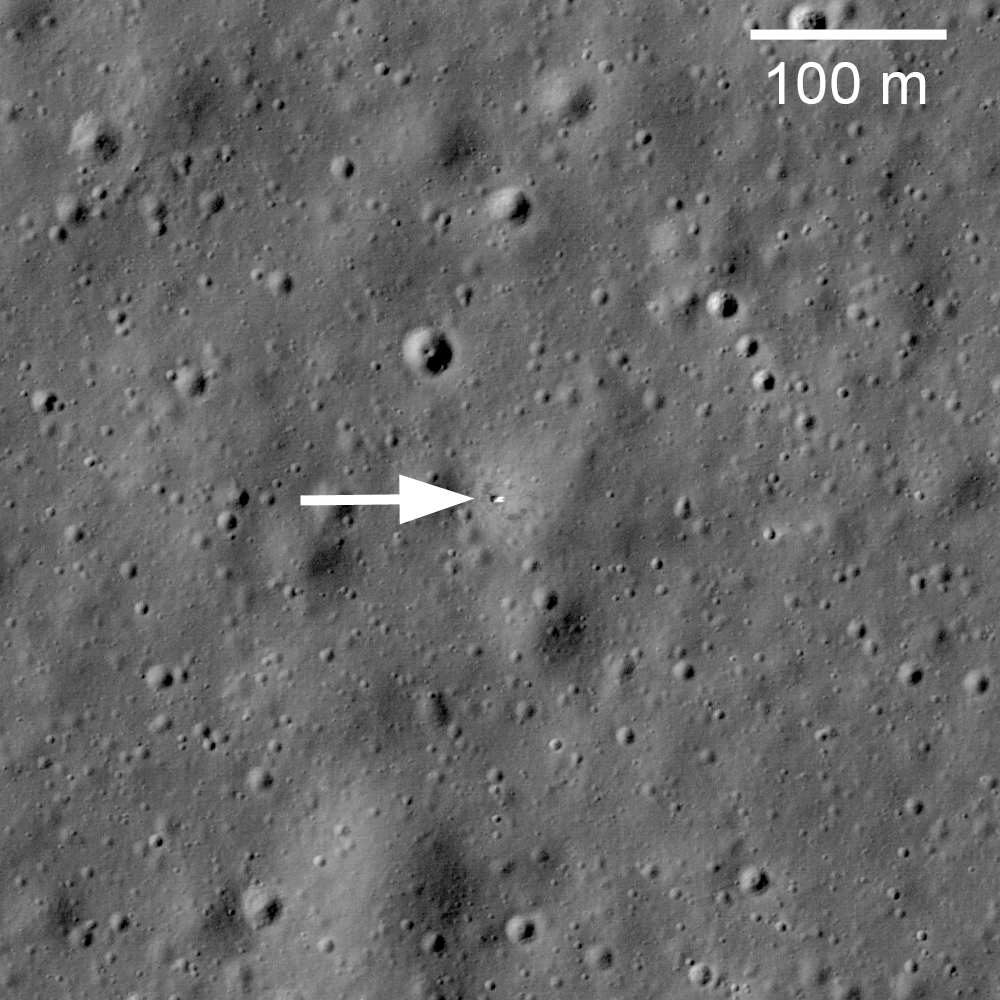
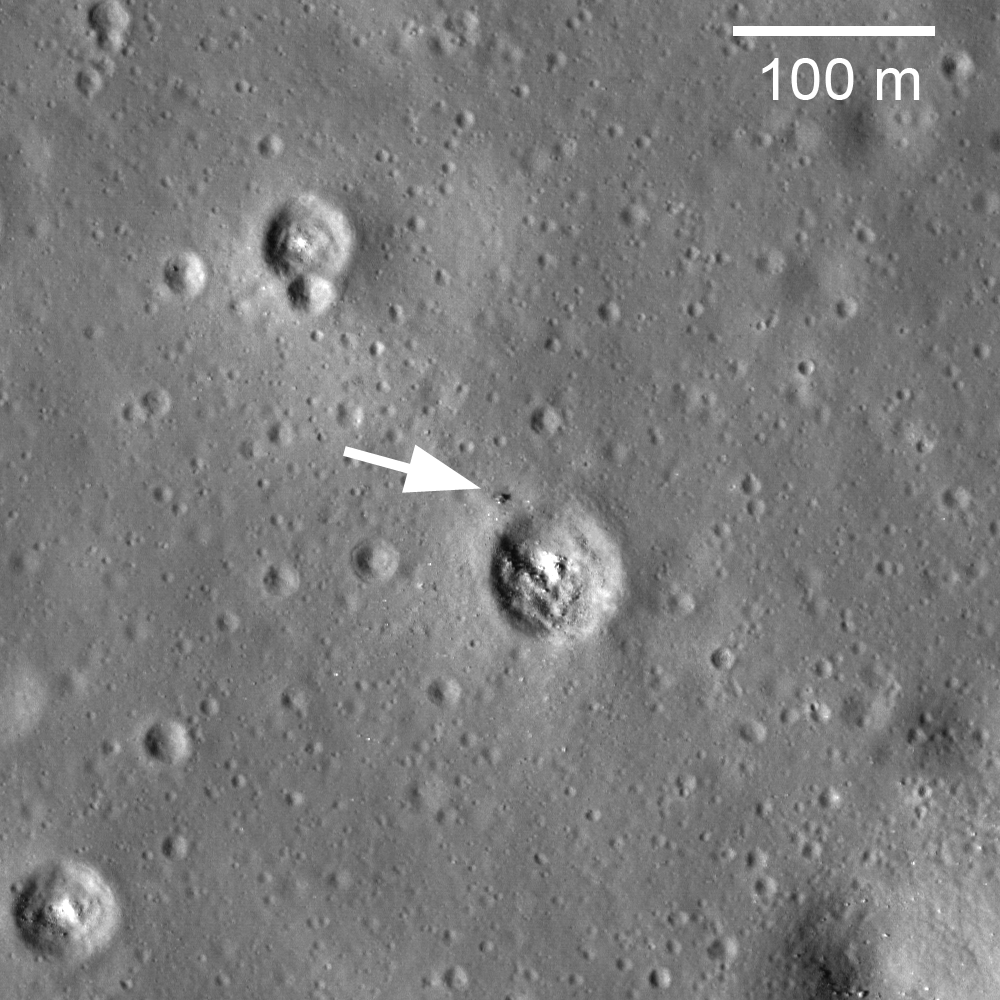
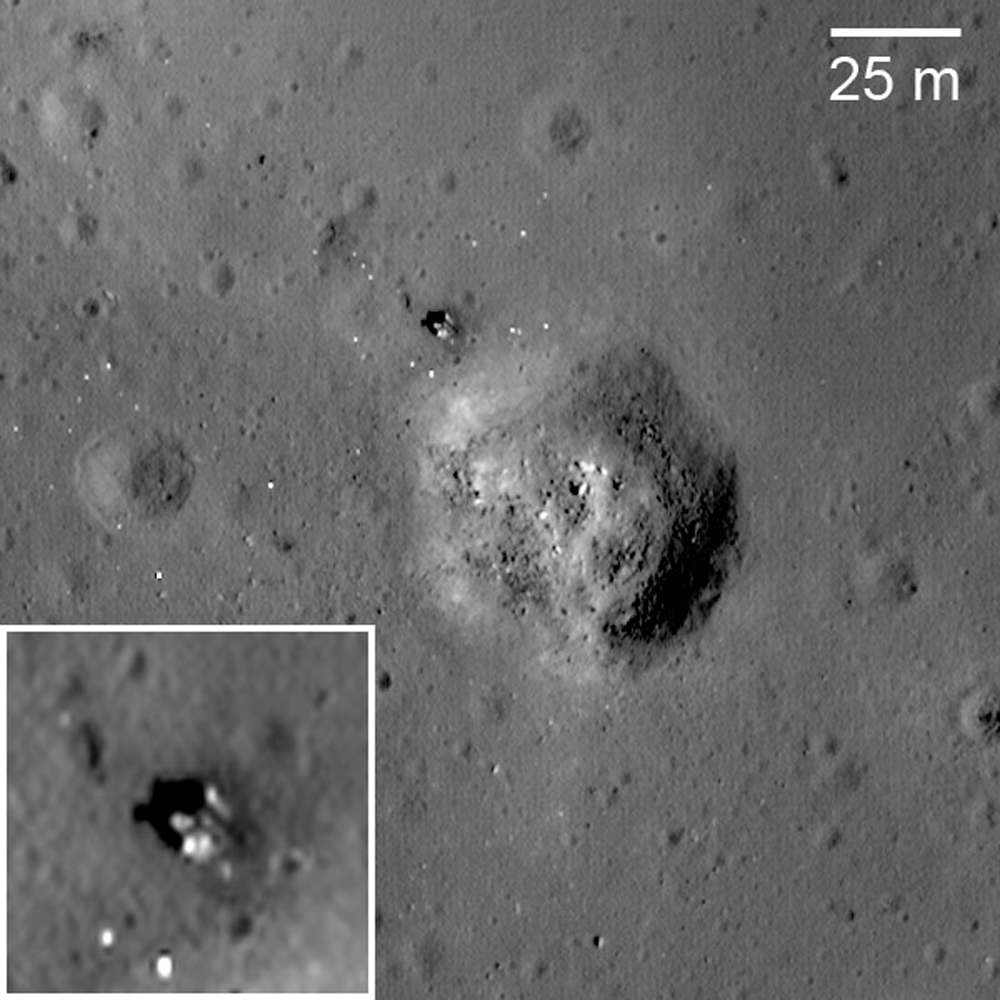
The last direct sample of the Moon returned to Earth was retrieved by the Soviet Union's Luna 24 robotic lander on August 18, 1976 (in total darkness). The vehicle landed on the rim of this 64 meter-wide crater on the southeastern plains of Mare Crisium (12.717°N, 62.222°E) and the Lunar Reconnaissance Orbiter (LRO) LROC Narrow Angle Cameras (NAC) imaged the lander's descent stage (lower left) on November 2, 2011, from only 25.57 km overhead. LROC NAC M174868307L, LRO orbit 10904, resolution 43 cm per pixel [NASA/GSFC/Arizona State University].

Thursday, October 31, 2013

Chang'e 3 & LADEE: The Role of Serendipity

The Chang’E 3 spacecraft sets down on the Moon, and exhaust gas from its descent rockets change the lunar exosphere [NASA/CNSA].
Paul D. Spudis
The Once and Future Moon
Smithsonian Air & Space

The Lunar Atmosphere and Dust Environment Explorer (LADEE) spacecraft is currently circling the Moon.  With the spacecraft safely settled into its observation orbit, the mission science team is busy testing and calibrating its instruments.  This U.S. mission was designed to characterize the lunar “atmosphere” – the extremely tenuous zone of gases that vary in time in the space above the Moon.  Technically called an exosphere, this region contains extremely low concentrations of a variety of elements and compounds, of varied origins and a largely unknown life cycle.  LADEE is designed to monitor and characterize these species, with the goal of identifying the process and sources of the gases and how they vary with time.

Initially a precursor to human lunar return, LADEE was selected for development early in 2008, as we wanted to understand the lunar exosphere before the lunar environment was contaminated by humans.  The LADEE spacecraft is designed to observe the Moon in its natural, pristine state.  However, the very act of going to the Moon inadvertently (though briefly) modifies the lunar atmosphere.  When a spacecraft arrives at the Moon, it uses its on-board rocket engines to brake into lunar orbit or to descend to the surface.  These rockets spew large quantities of exhaust gas into space and as the vehicles get captured into the Moon’s gravity field, so too does this exhaust product.

From estimates drawn on the Apollo landings, the rocket exhaust expended from each Lunar Module temporarily doubled the total mass of the natural lunar atmosphere.  This artificial addition of gases eventually dissipates, driven off by solar interactions and other complex effects.  In time, the Moon resumes its normal state of near-vacuum.  The creation of a temporary artificial atmosphere created by rocket effluent and its subsequent dissipation is imperfectly understood, except to the extent that we know that it happens.  The one-month “commissioning phase” that the LADEE mission is currently experiencing was largely designed to ensure that the exhaust from the orbital braking burn of the spacecraft (and subsequent low-rate out-gassing from the spacecraft) is largely complete.  We want to measure the Moon’s environment, not the products of the craft that brought us there.

But the U.S. will not be the only one conducting a mission at the Moon for the next few months.  The long-planned Chinese robotic mission Chang’E 3 is scheduled for launch to the Moon in early December.  Their lander mission will place a fairly large (1200 kg) spacecraft on Sinus Iridum in the northwestern quadrant of the near side, deliver a small roving vehicle and examine and measure the properties of the lunar surface over the course of several months.  But before it begins its surface mission, the Chang’E 3 spacecraft will burn roughly 2600 kg of rocket fuel in the vicinity of the Moon’s exosphere.  I have not seen any documentation on the fuel this spacecraft will use, but it is highly likely that it will be the chemicals unsymmetrical dimethylhydrazine (UDMH; H2NN(CH3)2) and nitrogen tetroxide (N2O4).  These propellants are widely used in spacecraft because they are liquid at room temperature and can be easily stored in tanks for long periods of time (a requirement for long-duration spaceflight to destinations beyond low Earth orbit).

When UDMH and nitrogen tetroxide are burned in a rocket engine, they produce a variety of exhaust gases; the dominant combustion products are water (H2O), nitrogen (N2), carbon monoxide (CO), carbon dioxide (CO2), and a few trace species, including hydrogen (H2) and hydroxyl (OH).  Expelled by a rocket nozzle, these gases rapidly expand in all directions in the vacuum of space.  Because most of the burn occurs after the spacecraft has been “captured” by the gravity of the Moon, this rocket exhaust is also captured by the Moon.  Thus, exhaust from an orbital or a landing vehicle becomes (temporarily) part of the lunar atmosphere.

If you’re thinking that this “rude” addition of alien gases will mess up the very delicate phenomena that LADEE was designed to map and measure, you’re correct – it does.  You might even expect the scientists of the LADEE team would be very upset at this disruption of their carefully planned measurement strategy.  But you would be wrong.  This problem is actually an opportunity.

If successful, Chang'e 3 will perform the first soft-landing on the
Moon since Luna 24 in1976 and deploy the first lunar rover
 since Lunokhod 2 in 1973 [NASA/CNSA].
The coincidence of Chang’E 3 arriving at the Moon after LADEE has begun observations has developed into a serendipitous occurrence for lunar science.  Because we don’t understand very well how exospheric gases are added to and removed from the Moon, what has landed in our laps is an unplanned (but controlled) experiment.  A known quantity of gases – of known composition – will be added to the lunar atmosphere at a precisely known time, in a precisely known place.  One could have not designed a better experiment to measure how this addition of material is distributed, how its distribution evolves over time, and how these expelled gases dissipate into cislunar space.  Even better, LADEE will have almost a full month to monitor and characterize the lunar atmosphere before Chang’E arrives, thus allowing us to first observe the “natural” Moon and then the “contaminated” Moon and how the lunar atmosphere recovers from its defilement.

None of this was prearranged – the Chinese schedule their missions on the basis of their own time-table and programmatic needs (just as NASA’s lunar goals have changed over the last 5 years).  But because of a fortuitous alignment of schedules, we have a unique opportunity to observe in real time how the Moon works.  Hopefully, the Chinese will provide us with detailed mass numbers of their spacecraft and exactly what variety of fuel it carries, but even if they don’t, physics dictates a certain mass and volume of the exhaust gas and its composition will be measured by LADEE (allowing us to know the type of fuel used).  China’s December lander mission to the Moon will provide our U.S. mission with a welcome bit of  “traffic exhaust,” giving scientists the opportunity to learn more from LADEE than we’d originally envisioned.

Serendipity indeed.

Originally published October 30, 2013 at his Smithsonian Air & Space blog The Once and Future Moon, Dr. Spudis is a senior staff scientist at the Lunar and Planetary Institute. The opinions expressed are those of the author but are better informed than average

Wednesday, February 13, 2013

Geological sampling and planetary exploration

Representation of Luna 24, lifting off from Mare Crisium after collecting a drill sample for return to Earth. For many years to come, this will be the only way certain kinds of critical testing can be done [RussianSpaceWeb/Anatoly Zak].
Paul D. Spudis
The Once & Future Moon
Smithsonian Air & Space

Samples are currently making news for NASA’s planetary exploration program.  Last August, the rover Curiosity, equipped with a package of laboratory instruments, landed on Mars.  On February 9th the rover’s robotic arm drilled its first hole in a rock selected by scientists.  In their attempt to gain more information about Mars, scientists will use the rover’s science package to remotely analyze these samples on the martian surface.  The results will give them some fairly detailed knowledge on the chemical and mineral make up of these rocks.  But what else can we possibly learn from samples?

Geologists in general and planetary scientists in particular often emphasize that “such and such” cannot be known for certain “until we obtain samples” of some planetary surface or outcrop.  What is this obsession with samples?  Why do (some) scientists value them so highly and exactly what do they tell us?  Answers to this question (for there is not a single, simple one) are more involved than you might think.

With today’s technology providing us with only the most rudimentary information, sample analyses made remotely on a distant planetary surface is limited.  Some of the things we want to know, such as the formation age of rocks, can only be discovered with high precision, careful laboratory work.  That’s a tall order for remote systems.  For example, one of the most common techniques used to “date” a rock’s age requires the separation of individual minerals that make up the rock.  Next, the ratio of minute trace elements and their isotopes in each grain must be determined.  Assuming that the rock has not been disturbed by heating or a crater shock event, this information can be used to infer an age of formation.  If we can convince ourselves that the rock being studied is representative of some larger unit of regional significance, we can use this information to reconstruct the geological history of the region and eventually, the entire alien world.  So sample analysis is an important aspect of geological exploration.

As I have written previously, we used images to geologically map the entire Moon, noting its crater, basin and mare deposits, and their relative sequence of formation.  When the first landing missions were sent to the Moon, great emphasis was placed on obtaining representative samples of each landing site.  It was thought that such samples could be studied in detail in Earth laboratories and then extrapolated to the larger regional units shown on the geologic maps.  With few exceptions, this approach worked pretty well.  As we moved from the landing sites on the maria (ancient lava flows) into the complex highlands, the “context” of the samples – their relation to observed regional landforms or events – became more obscure.  A lunar highland rock is typically a complex mixture of earlier rocks, sometimes showing evidence for several generations of mixture, re-fragmentation, and re-assembly.  Loose samples lying on the surface were collected from the highlands, none of them were sampled “in place” (i.e., from bedrock).  Although this is also true of the rocks from the maria, we observed bedrock “in place” at most of the mare sites and may have actually collected at least one sample from lava bedrock at the edge of Hadley Rille near the Apollo 15 site.

None of the highland samples possess the same degree of contextual certainty as the mare samples.  This fact, coupled with their individual complexity, sometimes leads to consternation over exactly what the samples are telling us.  It doesn’t help that the Moon’s early history was itself very complex, with magmas solidifying, lavas erupting, volcanic ash hurled into space and laid down in bedded deposits.  On top of all those processes were cratering events that mixed and reassembled everything into a complex geologic puzzle, a virtual stew of processes and compositions that hold clues to billions of years of the Moon’s (and Earth’s) history.  Nonetheless, we can still perceive most of the story of the Moon’s history, enough at this point to tell us that without those lunar samples in hand, we would be well and truly ignorant of even its most important events and basic processes.  The fixation with sample return stems from the science community’s belief that with just a few more carefully selected samples from some key units, all that is now dark will be made light.

There may be severe consequences to the science community’s insistence on the primacy of sample return.  The most recent “decadal survey,” the ten-year community study that gives NASA our wish lists for missions and exploration, made a sample return from Mars the centerpiece and sine qua non of future robotic missions.  The NRC report was so emphatic in its insistence that it might be paraphrased as saying, in effect, “Give us a Mars sample or give us death!” (with apologies to Patrick Henry).  Alas, that formulation may be more apt than anyone desired, as proposed out year budgets for the next five years of NASA funding cuts planetary exploration by almost 30% – a landscape of shifting priorities that raises questions and uncertainty for the future.

Robotic sample return missions to large bodies like the Moon or Mars are expensive because they consist of multiple spacecraft – a lander, which softly places the spacecraft on the surface, a device (such as a rover) to collect and store the samples and an ascent vehicle to bring the sample back to Earth.  While none of these functions individually are exceedingly difficult to achieve, all of them (done correctly and in proper sequence) add up to a substantially difficult, complex mission profile.

Among the more recent artist's representation of the high-priority MoonRise mission, ascending from South-Pole Aitken basin [NASA/JPL].
In the space business (as with most endeavors), more difficult and complex means that more money is required.  Moonrise, a proposed robotic mission to return about a kilogram of sample from the far side of the Moon, was projected to cost around one billion dollars.  A Mars sample return mission consisted of three separate missions: one to land, collect and store the samples, another one to retrieve those samples and place them into orbit around Mars, and a final mission to return the samples to Earth.  With each step costing up to several billion dollars, such a technically challenging Mars sample return mission would be unaffordable.

Although samples have many advantages over remote measurements, those benefits must be weighed against the cost and difficulty of obtaining them.  Perhaps the complete extent of what can be accomplished remotely has yet to be fully explored.  As mentioned above, absolute ages are key information that we get from samples.  Several dating techniques could be adapted to a remote instrument; these methods may not be the most precise imaginable, but they might be of adequate precision to answer the most critical questions.  On the Moon, we do not know the absolute age of the youngest lava flows in the maria; age estimates range from as old as ~ 3 billion years to as young as less than 1 billion years.  In such a case, a measurement with 10-20% precision is  adequate to resolve the first-order question:  When did lunar volcanism cease?  In addition, such a result would enable us to calibrate the cratering curve for this part of lunar history, a function that is widely used to infer absolute ages throughout the Solar System.  A solid result obtained from a robotic lander – even such a relatively imprecise one – would have important implications for lunar volcanic processes, thermal history, impact flux, and bulk composition.

Complex robotic operations in space are always dicey, especially when attempting something for the first time.  Samples are a key part of a planetary scientist’s toolbox but their acquisition is difficult, time-consuming and expensive.  Samples from robotic missions are more likely to have ambiguous context, thus rendering less scientific value.  Scientifically useful sample collection may remain problematic until people can physically go to exotic places in space and fully use their complex cognitive skills.  This trade-off between cost and capability must be carefully considered when weighing future exploration alternatives and desired outcomes.

Previous Relevant Posts:
Humans and field work
Lunar robotic sample return
Mars sample return
The Last Sampler: Failure, then Success
India hopes to join JPL Moonrise mission to SPA
Moonrise SPA sample-return mission and Washington University

Just publishedThe Clementine Atlas of the Moon, Revised Edition, an updated atlas and reference guide to lunar features, by Ben Bussey and yours truly.

Originally published at his Smithsonian Air & Space Magazine blog "The Once and Future Moon," Dr. Spudis is a senior staff scientist at the Lunar and Planetary Institute. The opinions expressed are those of the author and are better informed than average.

Wrinkle Ridge in Mare Crisium

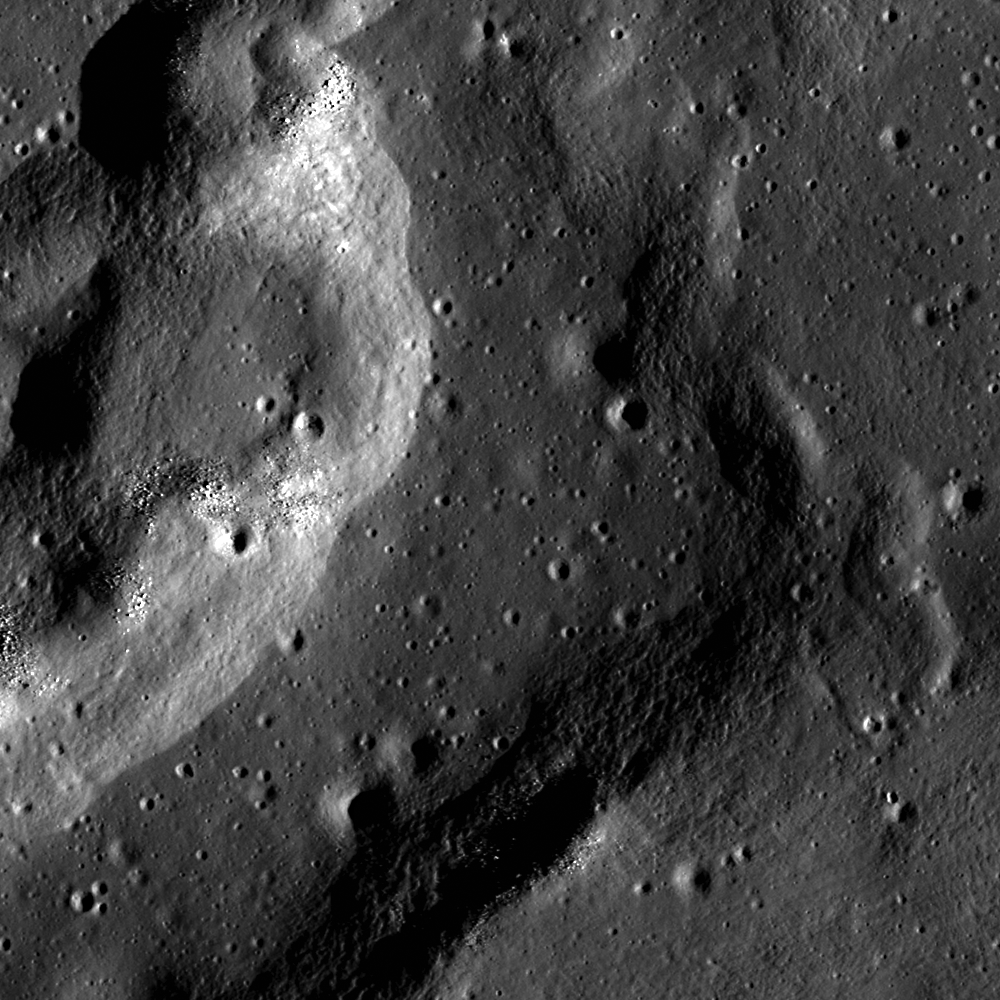
A complex wrinkle ridge in Mare Crisium at low Sun (angle of incidence 72.8° from the east). Boulders occupy the tops of mounds on the west ridge, and the central depression is more heavily cratered than the ridge. LROC Narrow Angle Camera (NAC) M146573730RE, LRO orbit 6734, December 9, 2010; field of view 700 meters at 89 cm resolution from 43.27 km [NASA/GSFC/Arizona State University].
Drew Enns
LROC News System

Wrinkle ridges are complex structural features that tend to develop in contracting regions of the Moon. Unlike lobate scarps (also contractional structural features), wrinkle ridges are thought to result from a mix of folding and faulting.

A buried thrust fault cuts through the mare, but not completely. Instead of breaking the surface, the fault pushes material upwards and causes the mare to fold over the fault.

This folding leads to a wide variety of wrinkle ridge morphologies. Despite this variation, all wrinkle ridges are made up of a larger ridge with a smaller superposed ridge.

A reproduction from the full 2.3 km-wide field of view, including the area at full resolution in the LROC Featured Image released February 13, 2013. LROC NAC M146573730R [NASA/GSFC/Arizona State University].
LROC Wide Angle Camera context image for the LROC Featured Image, highlighting the anatomy of the wrinkle ridge at 16.09°N, 61.68°E. Several other wrinkle ridges are nearby, each with a distinctive form. There are hints also of ghost craters and the kind of volcanic vent structures characteristic of the Marius Hills [NASA/GSFC/Arizona State University].
So when did all of these wrinkle ridges form?

The law of superposition argues that they must be younger than the mare basalt they deform. The basalts in Mare Crisium range in age from 2.5 to 3.3 billion years old!

These dates come from measuring the radioactive isotopic systems of samples returned by the Soviet Luna 24 mission. If these dates are correct and representative of the surface, the wrinkle ridges here formed after the basalts were deposited. Did the ridges start forming after 2.5 billion years? Probably not. Several mare flows also 'pond' behind wrinkle ridges, so the wrinkles must predate at least some mare material and potentially formed over the same time period. One billion years is a long time to go without tectonic deformation after all. One thing is probable, the wrinkle ridges continued developing after mare volcanism shut off in the area.

Explore more of the wrinkle ridge in the full LROC NAC, HERE.

Related Posts:
Bulging Wrinkle
Tectonics in Mare Frigoris
Relative Age Relationships

Friday, June 1, 2012

Who discovered water on the Moon?

Wishing well? The last direct lunar sample was retrieved by the Soviet Luna 24 robotic lander, August 18, 1976. In total darkness, the descent stage landed on rim of this 64 meter crater, on the southeastern volcanic plains of Mare Crisium (12.717°N, 62.222°E), where it was imaged by the LROC Narrow Angle Camera last fall. Enlargement of lander at lower left, LROC NAC observation M174868307L, LRO orbit 10904, November 2, 2011; resolution 43 cm per pixel from 25.57 kilometers [NASA/GSFC/Arizona State University].
Paul D. Spudis
The Once and Future Moon
Smithsonian Air & Space
< /br>
A recent article tells how Soviet scientists studying regolith samples returned from the Moon in 1976 by the unmanned Luna 24 mission first discovered lunar water.  This assertion is based on a paper published in the Russian journal Geokhimiia (vol. 285, p. 285-288, February 1978).  The measurement used infrared absorption spectroscopy to look for the “water band” centered around 2.8 microns, the same technique used recently by several groups to map the water band on the lunar surface regionally from flyby (Cassini and EPOXI) and orbital (Chandrayaan-1) spacecraft.  The Soviet paper claimed to detect water at a level of about 0.1 weight percent.  This high concentration level of water raised my antennae.

The discovery of significant amounts of water would tell us about lunar processes and history as well as provide evidence that water might be manufactured on the Moon to support future exploration.  The first lunar samples returned to Earth in 1969 by the Apollo 11 mission were intensely scrutinized for water content.  Besides being exceedingly dry, the chemistry of the Apollo samples suggested they were created in a completely anhydrous, reducing environment.  Samples from subsequent missions confirmed and extended this initial impression to the point where talk of water on the Moon was mostly dismissed.

A rock returned in 1972 by the Apollo 16 mission displayed visible brownish splotches which turned out to be “rust” in the form of the mineral akaganeite, an iron-hydroxyl phase, with minor amounts of chlorine.  This mineral could have formed by the aqueous alteration of the iron-chlorine mineral lawrencite found in some meteorites.  However a source of water is still needed to create the “rust,” so for several years the source of the water and the nature of the alteration were debated.  Did water come from the inside of the Moon or from an impacting comet?  Did the oxidation occur on the Moon or was it caused by the exposure of the highly reduced lunar sample to humid air (from inside the returning Apollo command module or the Houston summer humidity)?  Different workers had a variety of opinions but with no resolution, interest faded.

But a few inquisitive types didn’t forget it.  Jim Arnold, a chemist from UC-San Diego, resurrected an old idea about permanent cold and dark areas near the lunar poles.  He concluded that over the course of history these areas were cold enough and old enough to have accumulated significant amounts of water from meteorites and comets.  Groups studying the regolith from the Apollo missions measured variable amounts of hydrogen on dust grains; when heated, hydrogen in that dust reacted with metal oxides in the soil producing native metal (iron) and water vapor.  Although done in the laboratory, it was shown that the process could occur naturally on the Moon during the impact of a micrometeorite, whose energy is mostly dissipated as heat.  This heat and the hydrogen on dust grains could “reduce” the material, creating measurable water release.

During the lunar “wilderness years” (i.e., 1976-1994, when no one was going to the Moon) all we could do was speculate and analyze existing samples.  In 1982 a meteorite from the Moon was discovered in Antarctica.  Lunar meteorites provided a new source of samples but even though all had significant exposure to the terrestrial hydrosphere, none of them showed evidence for water-bearing phases.  Attempts were made to map the poles of the Moon from Earth using optical and radar telescopes but poor viewing geometry led to uncertain conclusions.

Two events re-ignited the water debate.  The 1994 Clementine spacecraft probed the south pole of the Moon and found evidence for coherent backscatter near the dark areas.  The team interpreted this as indicating the presence of water ice.  Following Clementine, the Lunar Prospector (1998-1999) neutron detector found elevated amounts of hydrogen near both poles of the Moon, resulting in new interest about the possibilities for water on the Moon.  In recent years, a variety of robotic missions, carrying instruments designed to address the lunar water question one way or another, found large amounts of water in a variety of different forms, locations and concentrations.  We are just beginning to decipher the origins, cycles, and eventual fate of this water.

So what can we say about the Soviet results published in 1978?  No other scientist or group has repeated this measurement on the Luna 24 samples to confirm its validity.  Under a reciprocal exchange agreement with the Soviet Union in the late 1970s, others studied the Luna 24 samples but none reported any traces of water in their samples.  No one in Russia has studied the Luna 24 samples in years (at least to my knowledge), although they still exist and presumably are available for analysis.  The spectral detection of water in the Luna 24 sample should be repeated and then followed up with analyses by other techniques to confirm the water’s presence and to cross-check the amounts claimed.  The published value of 0.1 weight percent (1000 part per million) water seems very high for lunar regolith from equatorial and mid-latitudes; typically, such material contains 10-50 ppm hydrogen, almost two orders of magnitude less than the 1978 reported result.  Finally, even if the old analysis is confirmed, questions about its source are still pertinent; we are still arguing about the origin of the water that made the rust in “Rusty Rock.”

If you’ve stayed with me this far, I hope that if nothing else, this brief history of a lunar controversy has shown that it is difficult (I would say impossible) to assign “credit” to any one paper or worker or group for the discovery of water on the Moon.  In science we always proceed from the knowledge gained by previous work.  Sir Isaac Newton put it well when he famously said that he saw more clearly because he stood on the shoulders of giants.  A lunar scientist’s goal is to study, document and explain, thereby contributing to and advancing our knowledge and understanding of the Moon.

Originally published at his Smithsonian Air & Space blog The Once and Future Moon, Dr. Spudis is a senior staff scientist at the Lunar and Planetary Institute. The opinions expressed are those of the author and are better informed than average.

Saturday, March 17, 2012

The Last Sampler: Failure, then Success

The last direct lunar sample was retrieved by the unmanned Soviet Luna 24 mission, after landing on the northwestern rim of a 64 meter crater on the volcanic plains of southeastern Mare Crisium (12.717°N, 62.222°E), August 18, 1976. Enlargement of lander at lower left (view the LROC Featured Image HERE). LROC Narrow Angle Camera (NAC) observation M174868307L, orbit 10904, during the second recent series of low altitude surveys, November 2, 2011; 43 cm per pixel resolution from 25.57 kilometers altitude [NASA/GSFC/Arizona State University].
Jeff Plescia
LROC News System

Three Soviet missions (Luna 16, Luna 20, and Luna 24) successfully collected and returned pieces of the lunar surface. Before the successful Luna 24 sample return mission in August 1976, Luna 23 was sent two years earlier (November 1974) to nearly the same location in Mare Crisium, but was unsuccessful.

Luna 24 landed in Mare Crisium on 18 August 1976 to complete the unfinished mission of Luna 23. Remarkably, the landing sites of Luna 23 and 24 are only 2.3 kilometers apart.

The region of Mare Crisium where they landed is a typical smooth mare surface with little relief in the immediate vicinity. There are numerous secondary craters scattered across the region, and Luna 24 landed on the edge of one of these. The secondary craters are the result of an impact to the northeast of the landing site, perhaps from the crater Giordano Bruno.

Luna 23 24 regionThe Luna 23 and Luna 24 landing sites. Distance between two landers is 2.3 km. Mosaic of overlapping LROC Nominal Mission NAC frames M119449091L and M119449091R, orbit 2737, January 30, 2010, resolution a half meter per pixel, with the LRO spacecraft slewed 11° at an altitude of 42.91 kilometers  [NASA/GSFC/Arizona State University].
An international mix and match of models made
possible using Google Earth allows this highly
simulated view of Luna 24 today.
Because the precise locations of the various Soviet robotic landing sites were previously unknown to scientists and engineers, finding the spacecraft in LROC NAC images is a high priority. By locating the spacecraft, we gain an understanding of the geologic context of the rock fragments and soils returned by Lunas 16, 20, and 24. Geologic context allows scientists to place the rock fragments and soils into the "bigger picture" within our current understanding of lunar geology, geochemistry, and geologic history. Many of the robotic spacecraft from various nations have been found already in LROC images, but there are a few remaining spacecraft with unknown locations including the early Soviet landers, Luna 9 and 13.

The Luna sample return spacecraft consisted of three flight elements: descent stage, ascent stage, and Earth-return capsule. The entire suite was landed on the surface, and the sample was acquired and placed in the Earth-return capsule. Then, the ascent stage, carrying the Earth-return capsule, was launched to return to Earth. The descent stage of the Luna spacecraft was left on the surface, which is observed in the LROC NAC images of the Luna 16, 20, and 24 landing sites. In the case of Luna 23, the entire spacecraft is still on the surface because it was damaged during landing and was unable to successfully operate and return a regolith sample to Earth.

Stylized rendering of the lift-off of the Luna 24 ascent stage, August 19, 1976. The entire mission took place in the middle of a two-week long lunar night [NPO Lavochkin/RussianSpaceWeb.com/Anatoly Zak].
Unfortunately, Luna 23 experienced a malfunction and hit the surface at a very high velocity. Contact was maintained between Earth and the spacecraft after landing, but a sample could not be acquired. At the time, the cause of the failure was not known, but it seemed probable that the whole spacecraft tipped over upon landing at an unexpectedly high velocity. Indeed, the high resolution LROC NAC image (below) shows the spacecraft lying on its side!
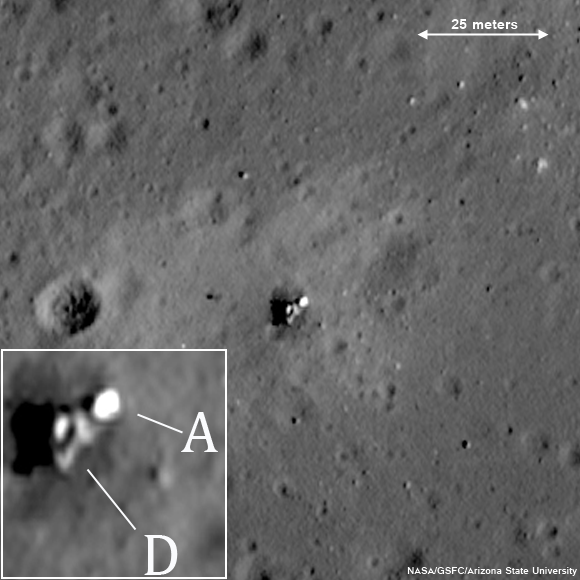
The entire Luna 23 vehicle (descent stage, ascent stage and Earth-return capsule) landed at an unexpected speed and fell on its side. Enlargement of vehicle in lower left inset; D: descent stage, A: ascent stage. (Attendant LROC NAC frame M174868307R) [NASA/GSFC/Arizona State University].

Luna 24 landed on Mare Crisium on August 18, 1976. The launch occurred several days earlier, on August 9, from Baikonur Cosmodrome using a four-stage Proton rocket. The vehicle arrived at the Moon on August 13 and spent five days in orbit before descending to the surface. 

After less than 24 hours, the ascent stage fired, sending the sample back toward the Earth. The spacecraft returned a total of 170 grams (0.375 pounds) of regolith to western Siberia, August 22. 

It is hard not to notice all the bright spots around the Luna 24 descent stage. Are they boulders? Most likely, the small (pixel sized) bright dots are pieces of insulation blankets blown off the descent stage when the ascent stage blasted off to send the sample on its way to Earth. If you look closely you can find this type of debris up to a kilometer away from Luna 24! These bright spots are not present around Luna 23 because there was no blast effect from the ascent stage.

The returned Luna 24 sample surprised scientists as it had unexpected characteristics based on the understanding of Mare Crisium geology at the time. Most importantly, the titanium content and the maturity (or the amount of time the sample was exposed to the space environment) of the sample material were different than anticipated. But how could this be? Based on the geologic context of the lander, the reason for the difference may now be understood. With the precise location of the landing site now known, the LROC images show that the mission sampled impact ejecta from a nearby 64-meter diameter crater. That crater has excavated below the surface bringing up material from deeper lava flows that had not been previously exposed to the space environment. Thus, the Luna 24 sample may not represent nearby Mare Crisium surface materials observed using remote sensing techniques, but rather the subsurface which was only exposed to the space environment for the relatively short time. It’s amazing what geologic context can tell you!

Explore the surroundings near the Luna 24 spacecraft, HERE.

Review earlier LROC Featured Images highlighting Luna 16Luna 20 and Luna 24, and the two Soviet rovers Lunokhod 1 and Lunokhod 2.

Wednesday, March 17, 2010

LROC: Lunokhod I & Lunokhod II


Soviet robotic lander Luna 17 still sitting on Mare Imbrium where it delivered the Lunokhod 1 Rover in November 1970, LROC NAC Image M114185541RE [NASA/GSFC/Arizona State University].

Mark Robinson
LROC News System

An amazing spacecraft gently settled to the lunar surface on 17 November 1970. It carried the first successful robotic lunar rover -- Lunokhod 1. For the next ten months the rover was driven by operators in the Soviet Union, with the total distance traveled exceeding 10 km. For comparison, in six years of operation the Mars Exploration Rover Opportunity has traveled about 12 km.

The Lunokhod rovers are approximately 2.3 meters long and 1.5 meters tall.

After landing, the rover drove down a ramp onto the lunar surface and tested its eight wheels. The rover was driven by solar power during the day; at night it parked and relied on thermal energy from a polonium-210 radioisotope heater to survive the cold (-150°C).


Lunokhod 1 Rover in its final parking spot, LROC NAC Image M114185541RE [NASA/GSFC/Arizona State University].

The intrepid rover sent back valuable data concerning the composition of the regolith (soil), close up views of the local topography, and important engineering measurements of the regolith. Examine the full NAC image and trace out the path of Lunokhod 1.

Two years later (January 1973) Luna 21 landed in Le Monnier crater, delivering an upgraded Lunokhod 2. It sported higher resolution cameras and an improved scientific payload. Like its predecessor, it was driven by engineers on Earth during the day, and parked at night. Lunokhod 2 explored the Moon for about four months. Unfortunately, the mission was brought to an early end due to overheating, perhaps when soil got on the rover and covered key components.


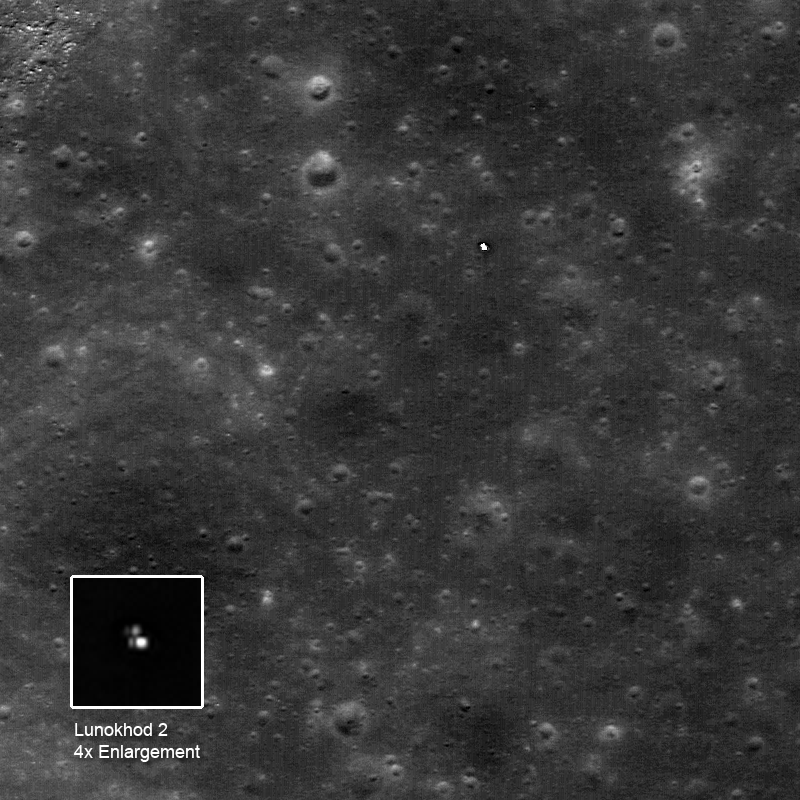
Lunokhod 2 rover, note its tracks tracing its route southward. The enlargement is specially stretched to show the form of the rover, the brightest area may be the open clam shell lid; NAC Image M109039075LE [NASA/GSFC/Arizona State University].

The two Lunokhods showed the value of robotic explorers on the surface of another world. It would be another 24 years before the next robotic rover, Sojourner, drove on another world - this time Mars. The next lunar rover, 40 years later, is scheduled for 2013, a joint venture between India and Russia.

Old friends receive a visitor

Recently the LROC Science Operations Center received an unexpected visitor - Ruslan Kuzmin. He was one of the scientists who had actually participated in the Lunokhod missions! We were able to show him LROC pictures of the hardware on the surface and he was gracious enough to write down some of thoughts upon seeing his "old friends".

"Thank you very much for showing me the excellent LROC images of the Lander platform from “Luna-21”, as well as the robotic lunar rover “Lunokhod-2” in its last and eternal parking place after a 37-km, 4 month journey of research.

"To see the images with Lunokhod-2 and its tracks on the lunar surface is a very special feeling for me. In the time of the Lunokhod-2 operation, I was a young planetologist who was participating in the mission, and I analyzed the images received by the rover’s TV- cameras. In actual fact, this was the first successful mission in which I was involved. It was 37 years ago (in the last century!) when the Lunokhod-2 traveled for four months within the crater Le Monnier at the eastern edge of the Mare Serenitatis."

"While looking at LROC images of the Lunokhod-2 rover, I felt a deep interior excitement due to the welled up memories of the earliest “pages” of my science career. It is very exciting that the Lunokhod-2, as well as many other American and Soviet Union Landers, which operated many tens of years ago, now might be imaged by LROC so clearly, and viewed by millions of people around the world. The LRO camera is without any doubt a really fantastic instrument that simultaneously brings our eyes close to the lunar surface, while reminding us of pioneering results from historical missions.

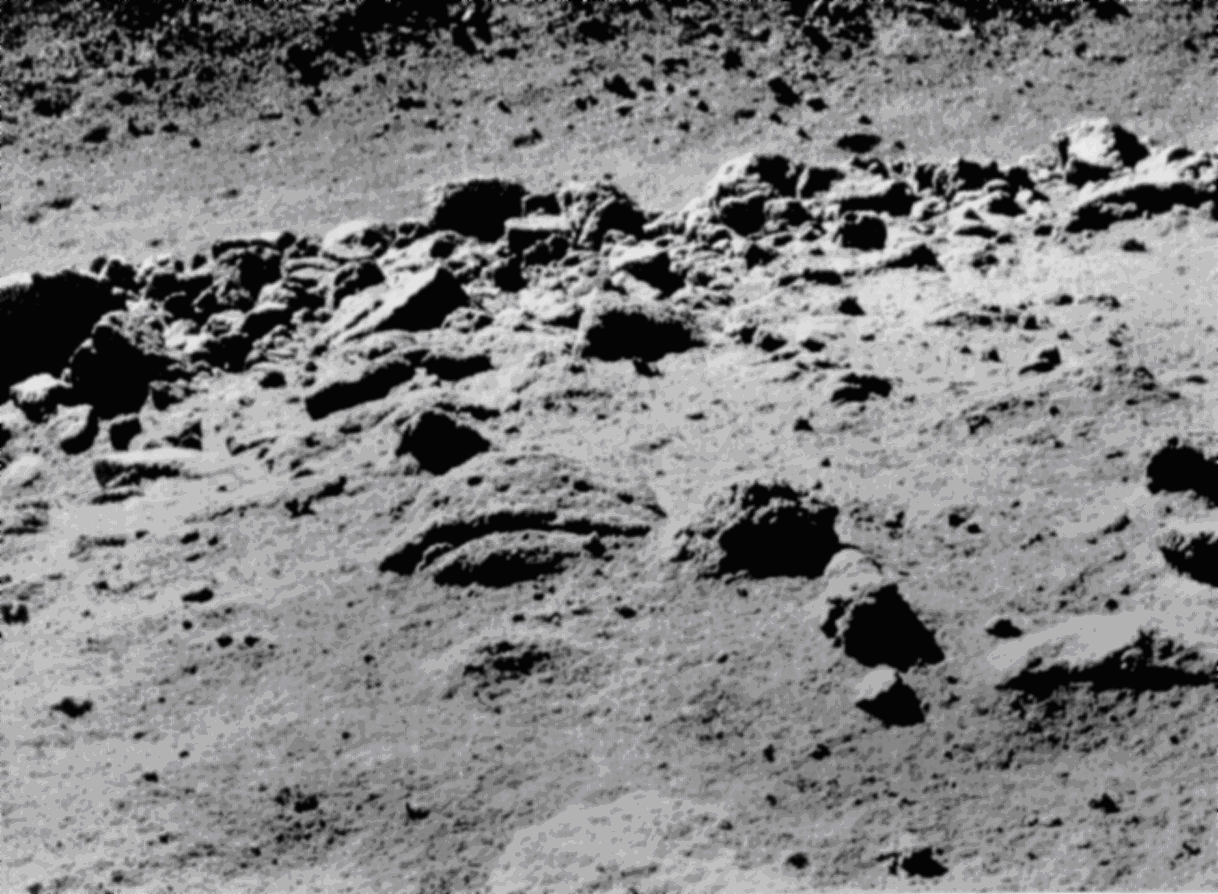
"P.S. In attachment I sent the fragment of the Lunokhod-2 panoramic image of the Fossa Recta - the last object of its research."


Fragment of last Lunokhod 2 panorama, image courtesy of Ruslan Kasmin.

Find the Lunokhod 2 and its tracks in the full resolution NAC image.

Tuesday, March 16, 2010

LROC: The Soviet lunar sampling missions


On February 21, 1972, Luna 20 soft landed in the rugged highlands between Mare Fecunditatis and Mare Crisium. The next day a sample return capsule blasted off carrying 55 grams of lunar soil. The Luna 20 descent stage is clearly visible in LROC Narrow-Angle Camera image M119482862RE [NASA/GSFC/Arizona State University].

Mark Robinson
LROC News System

The Soviet Union successfully executed three robotic sample return missions as part of the Cold War competition with the United States. The first mission, Luna 16, returned a small sample (101 grams) from Mare Fecunditatis in September of 1970, a time between the US Apollo 12 and 14 manned landings. A year and half later (February 1972) Luna 20 returned 55 grams of soil from the Apollonius highlands region. Explore the Luna 20 landing site.

Luna 16 and 20 were very similar in design and sampling method. A drill at the end of the sampling arm collected soil from a few tens of cm below the surface. The arm then placed the sample into the return capsule on top of the vehicle. The distinctive shadow seen in the LROC image of Luna 20 is most likely that of the sampling arm. The Luna 20 sample contained minerals similar to those sampled by the US Apollo 16 astronauts two months later from the Cayley plains (8°58"S, 15°30"E).

In October of 1974 Luna 23 set down on Mare Crisium, however technical difficulties prevented it from successfully acquiring a sample. Undeterred, the Soviets tried again in August of 1976, this time with much better luck. Luna 24 was designed to auger over 2 meters into the lunar soil thus collecting a better section and a larger sample, 170 grams. The positions of Luna 23 and 24 were not well constrained and are reported as within several hundred meters of each other. From the new NAC images we can accurately measure the distance between the two landers to be about 2400 meters. However the absolute position of the landers is only know to about 500 meters accuracy. As the LRO mission ephemeris improves, the Luna absolute positions should be known to better than 100 meters. Scroll around in a mosaic of two NAC high Sun images (M111185087L,R) and find Luna 23 and Luna 24. Look for a few very bright pixels near Luna 24; they may be small pieces of material blown off the descent stage as the ascent staged blasted off towards Earth.

The successful Soviet Luna sample return missions returned small, but important, samples from three locations on the Moon. In this new era of lunar exploration several countries plan to soft land on the Moon in the near future, the first soft-landed spacecraft since Luna 24. India and Russia plan to launch a lander and rover called Chandrayaan 2 in 2013. The Chinese Chang'e lunar exploration program also plans a soft landing in 2013. Though NASA currently has no firm plans for a future lunar landing (robotic or crewed), it is considering a sample return mission from the lunar far side as a part of its New Frontiers program.

Thursday, September 24, 2009

The why and where of water on the Moon

Arlin P.S. Crotts
Department of Astronomy, Columbia University
Columbia Astrophysics Laboratory,
Informal to the Lunar-L Group
I am not sure why so few investigators have paid attention to these results, but if you would like to see an analysis of the situation regarding lunar water that takes these and the rest of the evidence into fair consideration, please refer to my paper (originally submitted June 2007, resubmitted September 2, 2009)

"Lunar Outgassing, Transient Phenomena & the Return to the Moon II: Predictions and Tests for Outgassing/Regolith Interactions," Crotts & Hummels (2009), Astrophysical Journal, submitted http://lanl.arxiv.org/abs/0909.3832

If you look at the current evidence, it indicates that the water content is higher at greater depths, and may not be fundamentally a surface effect. (Please refer to the Akhmanova et al. 1978 paper: "Water in the regolith of Mare Crisium Luna-24," Akhmanova, Dement'yev & Markov (1978) Geokhimiya, 2, 285).

IR diffuse reflection and IR transmission studies of lunar soil samples obtained by Luna-24 are described. Approximately 0.1 wt% water was detected in samples from a depth of 143 cm, and the amount of water seemed to increase with depth, although the extent of change was almost at the limit of technique sensitivity. The possibility of sample contamination by water is considered.

Water was not detected in samples obtained during earlier moon missions when a similar procedure was applied, but in the earlier studies the lower limit of detection was approximately 0.2 wt% water. The significance of the detection of water for theories of lunar development is indicated.

There are a number of ways to approach this problem, and I have papers coming out based on further data, but I will not tip my hand about these at this time.