|
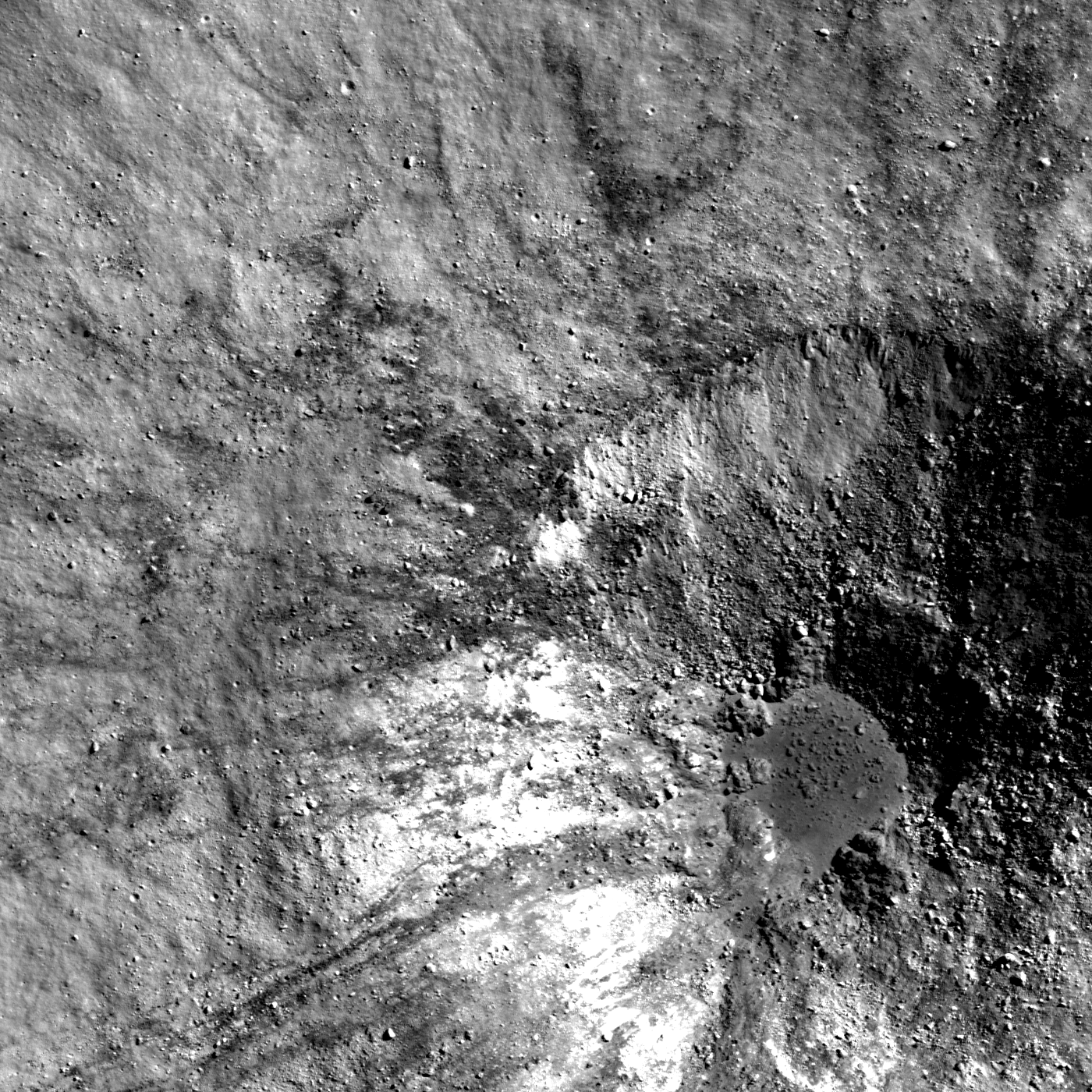
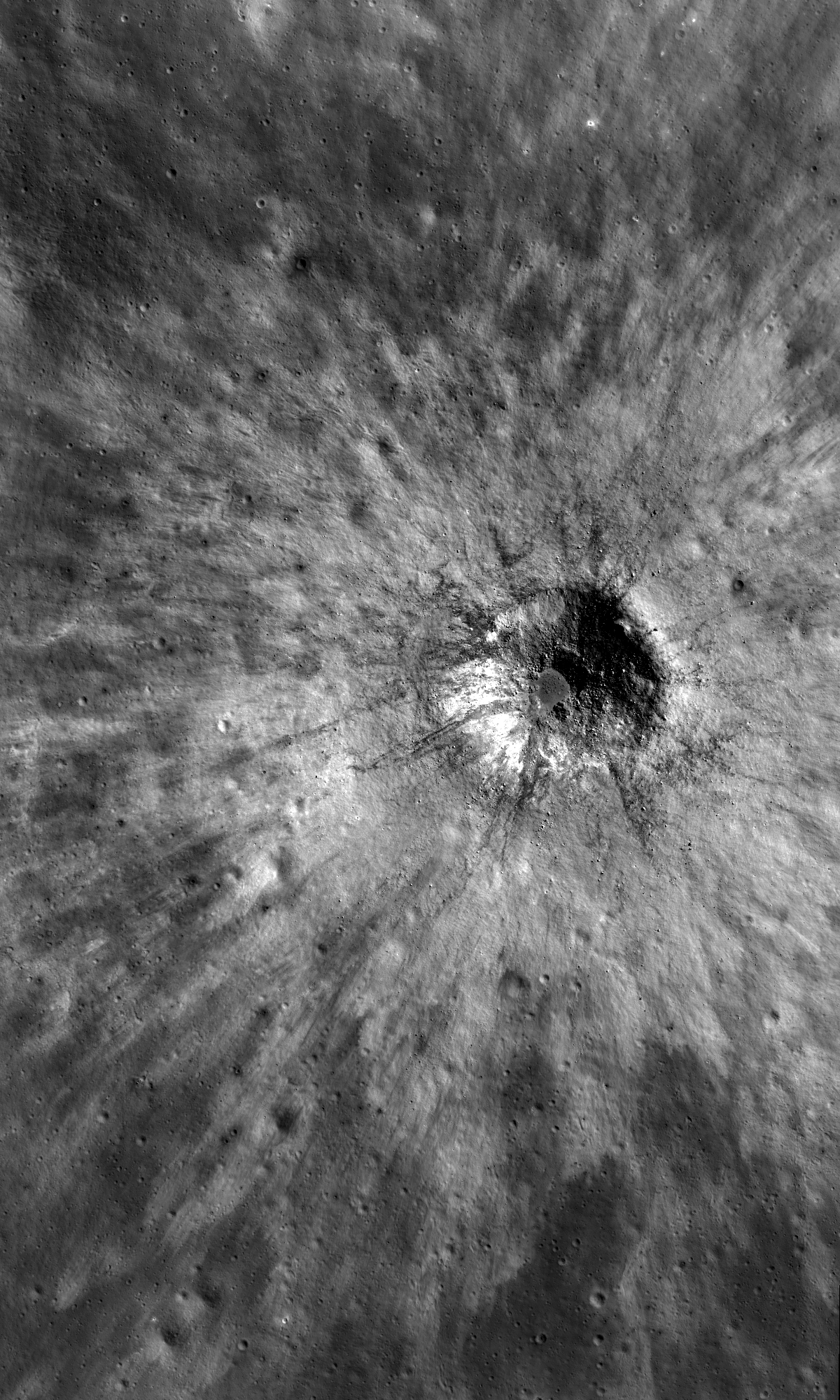
| Central peaks of Copernicus - covered by fairy dust? -- From oblique LROC Narrow Angle Camera (NAC) mosaic M193025138LR, LRO orbit 13472, May 30, 2012; field of view is a 1350 pixel section from a spectacular LROC mosaic revealing the 90 km-wide interior of the landmark lunar crater, HERE [NASA/GSFC/Arizona State University]. |
The Once and Future Moon
Smithsonian Air & Space
Accuracy in scientific reporting (and thus the education of the public) is wholly dependent on a reporter’s understanding of the material they’re covering. Making a reporter’s job even more challenging is the fact that some research results themselves can be misleading.
A variant of my post title above appeared recently over a story reporting the results of a paper published in the journal Nature Geoscience. That study used computer modeling to simulate the effects of a low velocity impact on the Moon. Computer models of natural phenomena are made in an attempt to understand complex processes that we could otherwise not be able to address.
To briefly set the stage on this new work, we believe that the vast majority of craters on the Moon and planets are formed by the collision of solid objects with these bodies. These impacts occur at very high speeds; on the Moon, the average velocity of impact is about 20,000 meters per second. At such speeds, geological materials will vaporize and the mechanics of the formation of a crater are complex. These results have been painstakingly described through laboratory and field studies of both natural and artificial impact craters of a wide range of sizes.
Because we needed to fully understand the mechanics of impact cratering to understand the record in the Apollo lunar samples, much work was conducted toward characterizing the physical and chemical effects of impact on typical rocks. Because impact velocities are typically high, there is little preservation of the projectile in impact craters. Most of the impactor is vaporized and this super-hot silicate vapor is partly lost to space and partly incorporated into the shock melted rocks of the crater interior.
The soils returned from the Apollo missions contained a recognizable fraction of material that must have been added by the impacting objects that created its craters. In most soils, this fraction is on the order of a few weight percent. Interestingly, this “meteoritic component” tends to be defined chemically and actual fragments of meteorite in the lunar soil are extremely rare. This observation would seem to support the notion that most of the impacting debris is vaporized at impact and does not occur as fragments on the surface.
However, the speed of impacting projectiles cited above is an average speed, meaning that while some impacts occur at higher velocities, others must occur at lower speeds. As the encounter velocity decreases, there is an increasing likelihood that some portions of the impacting fragments might be preserved on the surface. It is this last possibility that the new paper considers. The authors modeled the effects of the impact of a relatively slow-moving body with the Moon and found that more fragments of the object are preserved than in high velocity impacts. Moreover, by tracing the paths of impactor particles during cratering flow, they find that much of this preserved material ends up on or near the central peak of the resulting crater.
That last finding is interesting because in remote sensing studies of the lunar surface, it is in the central peaks where we find “unusual” compositions, in the sense that those compositions are different from the average upper lunar surface. The traditional explanation for this relation is that because central peaks are derived from well below the impact target, they are exposing deep-seated compositions (lower levels of the crust of the Moon contain different rock types than occur on the surface). The study’s new interpretation suggests instead that the central peaks are covered in debris from the impacting projectile.
One problem with this interpretation is that the “debris covering” of central peaks should occur in a distinct minority of craters (i.e., those created by low velocity impacts). But the exposure of unusual compositions within central peaks of lunar craters is quite common and occurs globally. Moreover, there are as many impacts at higher velocity as at lower velocity. Yet slow impacts would produce less total volume of impact melt and most of the central peak craters on the Moon have abundant melt deposits.
The most serious flaw in the new study is the assumption that the “unusual minerals,” olivine and spinel (found in many central peaks), are rare on the Moon. They are not rare; although spinel is somewhat sparse on the lunar surface (requiring high pressure for its formation), it has been described as present in lunar rocks from the first sample return and more recently has been found in remote sensing data of impact basin deposits.
Olivine is a very abundant mineral on the Moon and typically makes up a significant fraction of the dark mare basalts (including some lavas that consist only of olivine and glass.) Olivine is also not uncommon in highland rocks, usually occurring within the rock type troctolite, a 50-50 mixture of olivine and plagioclase. The presence of olivine does not indicate either “deep” origins or “lunar mantle” provenance; virtually all olivine in lunar samples has high calcium content, indicating a relatively shallow origin (probably in magmas that crystallized within a few kilometers of the surface).
In short, there is no compelling reason to believe that the central peaks of many lunar craters are dusted with exotic minerals from asteroids, although such a possibility is certainly not excluded. The minerals that we see in central peaks are all indigenous to the Moon and in some cases, abundant in the lunar crust.
Computer modeling in science has both value and pitfalls. An impact event is extremely messy and complicated. Simultaneously, gigantic shock pressures and temperatures occur, putting billions of particles in motion. Computers are good at keeping track of these particles and the codes developed to model complex, multi-variable phenomena have been shown to at least partly describe the behavior of crater formation on Earth. However, the results of computer models must be interpreted cautiously; small changes in input variables or the conditions of the simulation sometimes result in drastic changes in the output of the model. In addition, there is a tendency in science to believe in numbers, regardless of their provenance. Because a model holds together does not mean that it describes reality.
In science, it is dangerous to embrace a model because it “works” (i.e., comes to closure). Much of the current fracas over human-induced climate change comes from those who contend that the results of computer models constitute “settled science” (whatever that is). Because the computer models say that it may happen, people assume (and some journalists report) that it is happening. In actual fact, we have no direct observational evidence that human-caused emissions of carbon dioxide are causing the climate to change. That conclusion comes from computer models that “show” (project) that humanity’s introduction of “excess” carbon dioxide into the atmosphere by industrialization will increase the magnitude of the greenhouse effect and raise the mean global temperature. But climate (like impact) is a complex, chaotic phenomenon and we still do not fully understand how the Earth’s atmosphere interacts with itself and the cosmos.
In questions of complex natural processes, beware of accepting the results of computer modeling too easily. Computer models are useful tools, but the old software adage of “garbage in, garbage out” still applies. Be familiar with whom and from where the information comes, understand how it is processed and then carefully consider the likelihood of reported accounts.
To briefly set the stage on this new work, we believe that the vast majority of craters on the Moon and planets are formed by the collision of solid objects with these bodies. These impacts occur at very high speeds; on the Moon, the average velocity of impact is about 20,000 meters per second. At such speeds, geological materials will vaporize and the mechanics of the formation of a crater are complex. These results have been painstakingly described through laboratory and field studies of both natural and artificial impact craters of a wide range of sizes.
Because we needed to fully understand the mechanics of impact cratering to understand the record in the Apollo lunar samples, much work was conducted toward characterizing the physical and chemical effects of impact on typical rocks. Because impact velocities are typically high, there is little preservation of the projectile in impact craters. Most of the impactor is vaporized and this super-hot silicate vapor is partly lost to space and partly incorporated into the shock melted rocks of the crater interior.
"For every problem there is a solution that is simple, elegant and wrong." - Mencken
The soils returned from the Apollo missions contained a recognizable fraction of material that must have been added by the impacting objects that created its craters. In most soils, this fraction is on the order of a few weight percent. Interestingly, this “meteoritic component” tends to be defined chemically and actual fragments of meteorite in the lunar soil are extremely rare. This observation would seem to support the notion that most of the impacting debris is vaporized at impact and does not occur as fragments on the surface.
However, the speed of impacting projectiles cited above is an average speed, meaning that while some impacts occur at higher velocities, others must occur at lower speeds. As the encounter velocity decreases, there is an increasing likelihood that some portions of the impacting fragments might be preserved on the surface. It is this last possibility that the new paper considers. The authors modeled the effects of the impact of a relatively slow-moving body with the Moon and found that more fragments of the object are preserved than in high velocity impacts. Moreover, by tracing the paths of impactor particles during cratering flow, they find that much of this preserved material ends up on or near the central peak of the resulting crater.
That last finding is interesting because in remote sensing studies of the lunar surface, it is in the central peaks where we find “unusual” compositions, in the sense that those compositions are different from the average upper lunar surface. The traditional explanation for this relation is that because central peaks are derived from well below the impact target, they are exposing deep-seated compositions (lower levels of the crust of the Moon contain different rock types than occur on the surface). The study’s new interpretation suggests instead that the central peaks are covered in debris from the impacting projectile.
One problem with this interpretation is that the “debris covering” of central peaks should occur in a distinct minority of craters (i.e., those created by low velocity impacts). But the exposure of unusual compositions within central peaks of lunar craters is quite common and occurs globally. Moreover, there are as many impacts at higher velocity as at lower velocity. Yet slow impacts would produce less total volume of impact melt and most of the central peak craters on the Moon have abundant melt deposits.
 |
| Central peaks of the farside landmark crater Tsiolkovskiy, from over 200 km to the west of the highest promontory. The large, mare-inundated impact crater was very unlikely to have been formed by a "low-velocity" collision. A highly reduced in scale crop from a LROC NAC mosaic, M1098059280, orbit 14176, July 27, 2012; resolution between 4.6 and 5.3 (background) meters, from 87.66 km over 20.44°S, 121.42°E. Enlargement, HERE [NASA/GSFC/Arizona State University]. |
The most serious flaw in the new study is the assumption that the “unusual minerals,” olivine and spinel (found in many central peaks), are rare on the Moon. They are not rare; although spinel is somewhat sparse on the lunar surface (requiring high pressure for its formation), it has been described as present in lunar rocks from the first sample return and more recently has been found in remote sensing data of impact basin deposits.
Olivine is a very abundant mineral on the Moon and typically makes up a significant fraction of the dark mare basalts (including some lavas that consist only of olivine and glass.) Olivine is also not uncommon in highland rocks, usually occurring within the rock type troctolite, a 50-50 mixture of olivine and plagioclase. The presence of olivine does not indicate either “deep” origins or “lunar mantle” provenance; virtually all olivine in lunar samples has high calcium content, indicating a relatively shallow origin (probably in magmas that crystallized within a few kilometers of the surface).
In short, there is no compelling reason to believe that the central peaks of many lunar craters are dusted with exotic minerals from asteroids, although such a possibility is certainly not excluded. The minerals that we see in central peaks are all indigenous to the Moon and in some cases, abundant in the lunar crust.
Computer modeling in science has both value and pitfalls. An impact event is extremely messy and complicated. Simultaneously, gigantic shock pressures and temperatures occur, putting billions of particles in motion. Computers are good at keeping track of these particles and the codes developed to model complex, multi-variable phenomena have been shown to at least partly describe the behavior of crater formation on Earth. However, the results of computer models must be interpreted cautiously; small changes in input variables or the conditions of the simulation sometimes result in drastic changes in the output of the model. In addition, there is a tendency in science to believe in numbers, regardless of their provenance. Because a model holds together does not mean that it describes reality.
In science, it is dangerous to embrace a model because it “works” (i.e., comes to closure). Much of the current fracas over human-induced climate change comes from those who contend that the results of computer models constitute “settled science” (whatever that is). Because the computer models say that it may happen, people assume (and some journalists report) that it is happening. In actual fact, we have no direct observational evidence that human-caused emissions of carbon dioxide are causing the climate to change. That conclusion comes from computer models that “show” (project) that humanity’s introduction of “excess” carbon dioxide into the atmosphere by industrialization will increase the magnitude of the greenhouse effect and raise the mean global temperature. But climate (like impact) is a complex, chaotic phenomenon and we still do not fully understand how the Earth’s atmosphere interacts with itself and the cosmos.
In questions of complex natural processes, beware of accepting the results of computer modeling too easily. Computer models are useful tools, but the old software adage of “garbage in, garbage out” still applies. Be familiar with whom and from where the information comes, understand how it is processed and then carefully consider the likelihood of reported accounts.
Originally published May 29, 2013 at his Smithsonian Air & Space blog The Once and Future Moon, Dr. Spudis is a senior staff scientist at the Lunar and Planetary Institute. The opinions expressed are those of the author but are better informed than average.