Showing posts with label Mare Australe. Show all posts

Friday, May 23, 2014

Punching through Abel C

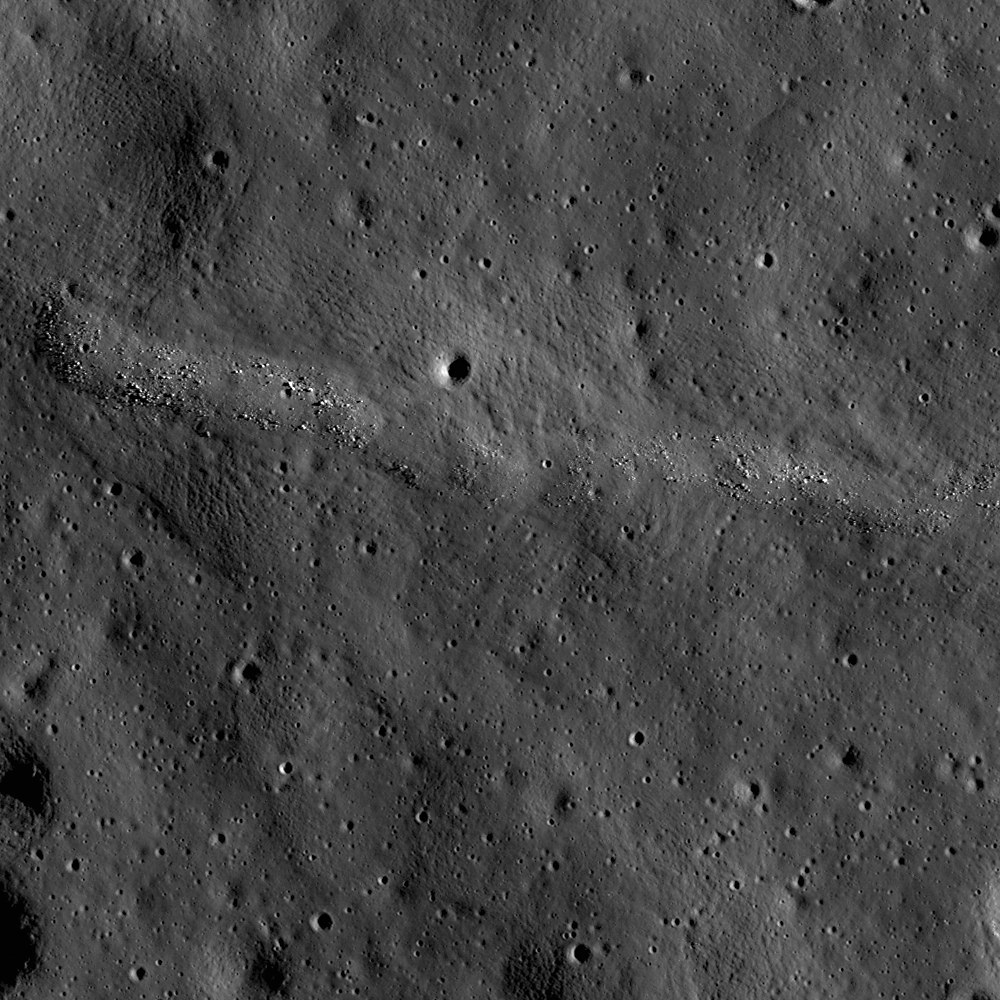
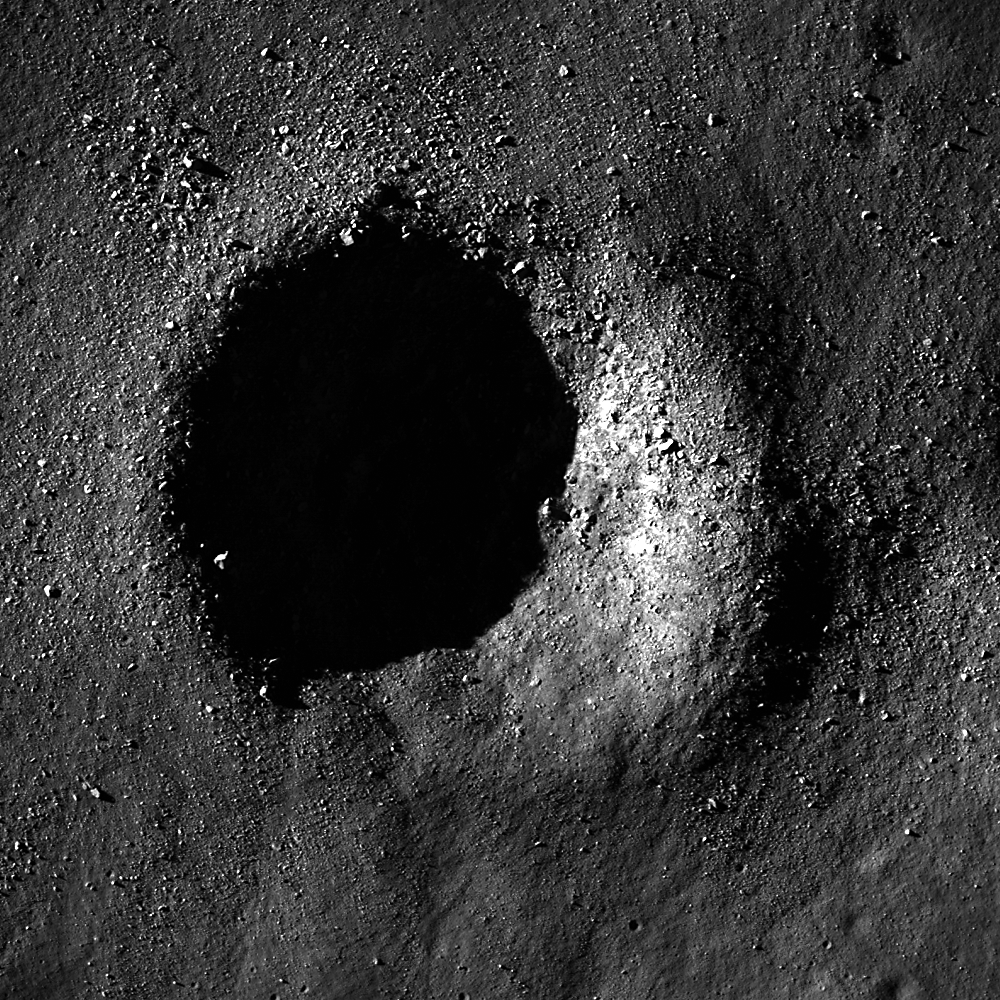
Excavation on the floor of Abel C. A bench crater in the pyroclastic deposit mantling the floor of Abel C. The impactor appears to have punched through multiple layers, giving the 100 meter crater an irregular, stepped appearance. LROC NAC observation M1153673248R, LRO orbit 21990, May 2, 2014; 68.8° incidence angle, resolution 75 cm from 72.53 km [NASA/GSFC/Arizona State University].
H. Meyer
LROC News System

Lunar craters less than between approximately 15-20 km in size are usually bowl-shaped, so the crater above, excavating the floor of Abel C (41.5 km; 36.72°S, 82.5°E) has a somewhat irregular morphology relative to most craters of its size (about 100 meters).

This crater is characterized by its block-strewn, hummocky floor and low-relief rim. The step-like or benched appearance most evident in the northeastern portion of the wall is due to a strength discontinuity. Such discontinuity indicates that the impact penetrated through two materials of different strengths. Lab experiments have shown that the bench crater morphology forms when the surface layer is composed of thin and poorly consolidated regolith and the subsurface is composed of harder, more coherent material.

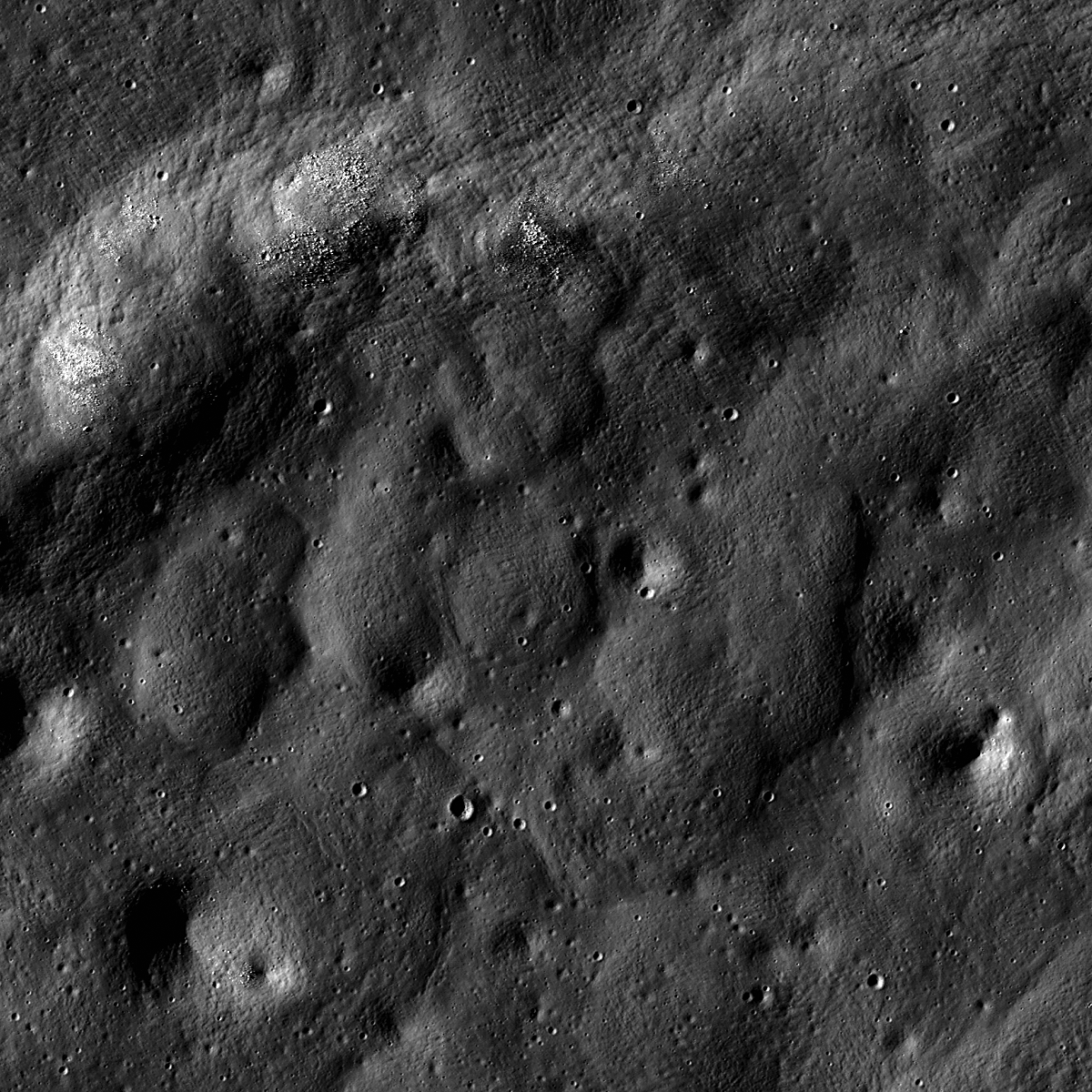
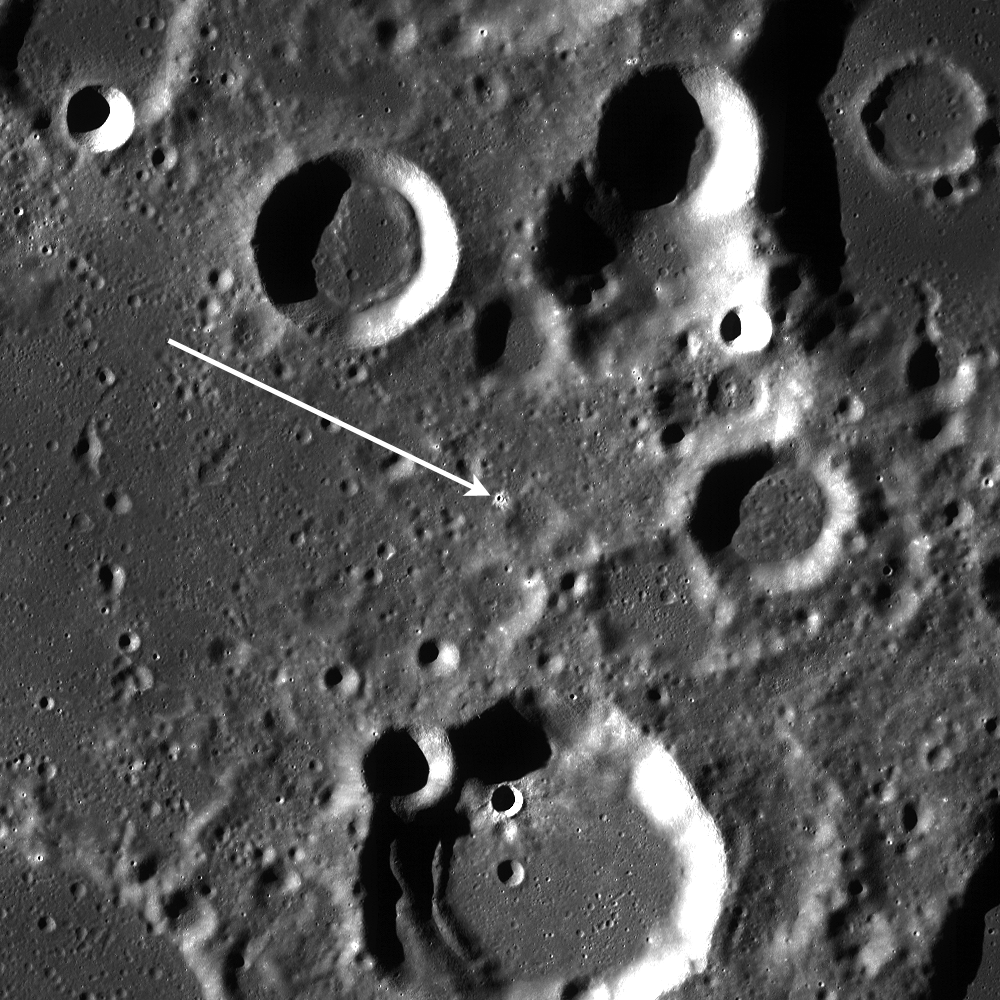
Small relatively fresh excavation, the 100 meter crater right of center shown in context of the full, 3.6 km-wide field of view swept up in LROC NAC observation M1153673248R, May 2, 2014 [NASA/GSFC/Arizona State University].
In some cases, the underlying material is bedrock, evidenced by an abundance of boulders. So, what did the impactor punch through at the surface? Usually regolith is the culprit, but further investigation of the floor of Abel C suggests that it may not be regolith alone.
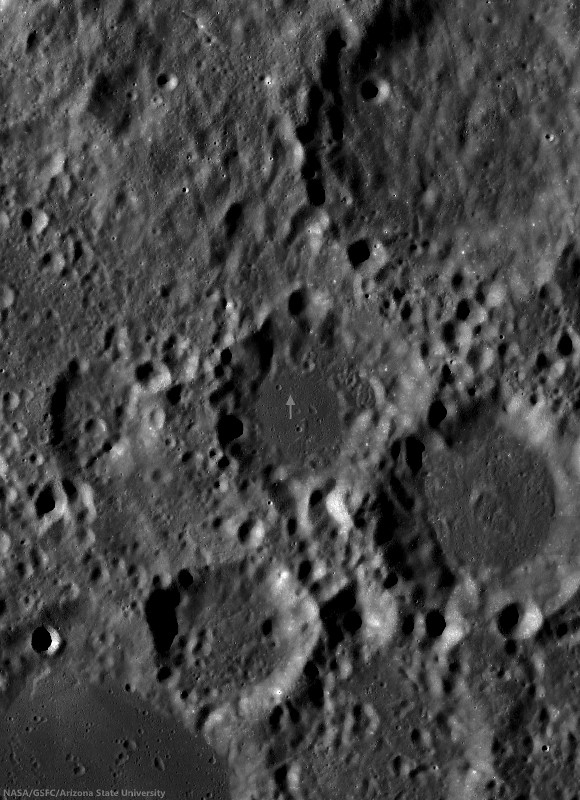
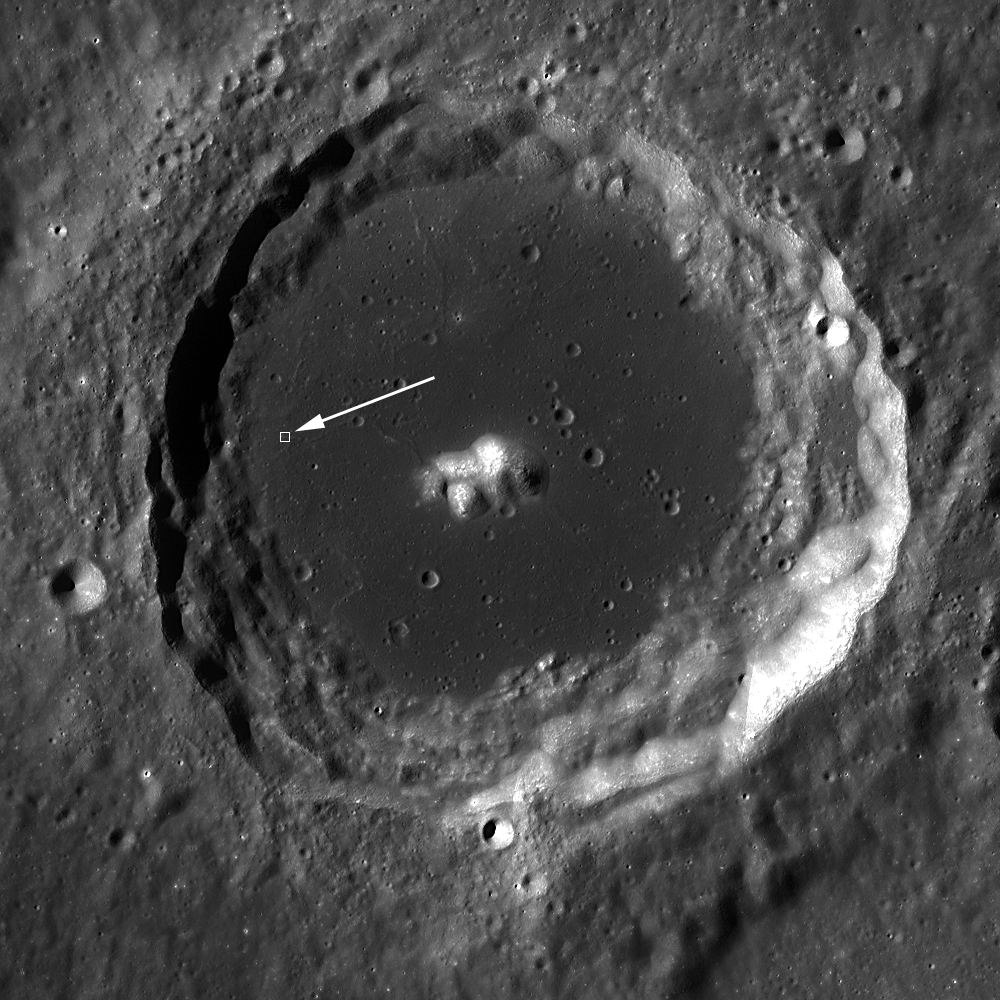
Ancient Abel C (41.5 km; 36.72°S, 82.5°E), on the northwest frontier of Mare Australe, has a smooth floor of relatively low reflectance, compared with it's equally eroded neighbors. Arrow marks the location of the 100 meter crater presented at high resolution above. LROC 100 meter Wide Angle Camera (WAC) global mosaic [NASA/GSFC/Arizona State University].
Abel C is a 36 km diameter crater on the southeastern limb of the Moon, just off the northwest edge of Mare Australe, a large region dominated by volcanic activity. Clementine (1994) color ratio images are extremely useful in identifying nonmare deposits since non basaltic compositions tend to stick out when Clementine images are placed in the proper color space. Three bands (415 nm, 750 nm, and 1000 nm) from the Clementine UVVIS camera were used to create the false-color image below.

Clementine (1994) false color image of the Mare Australe region with Abel C off the western edge. The floor of Abel C appears more red than the surrounding highlands, along with a clear indication of similar pyroclastic exposure like the multiple indications within Mare Australe   [NASA/GSFC/Arizona State University].
The three bands were ratioed to control the colors of the false-color image. The 750/415 ratio controls the red component, which is an indication of low titanium or high glass content as found in mature lunar regolith and to a greater degree pyroclastic deposits. The 750/1000 ratio controls the green component and is an indicator of the amount of iron on the surface. The 415/750 ratio controls the blue component and indicates high titanium or bright slopes and albedos. In the Clementine false-color image, Abel C stands out  from the highlands and more closely resembles the nearby mare. The strong red component, combined with the low-reflectance, mantled floor seen in Abel C is indicative of a pyroclastic deposit.
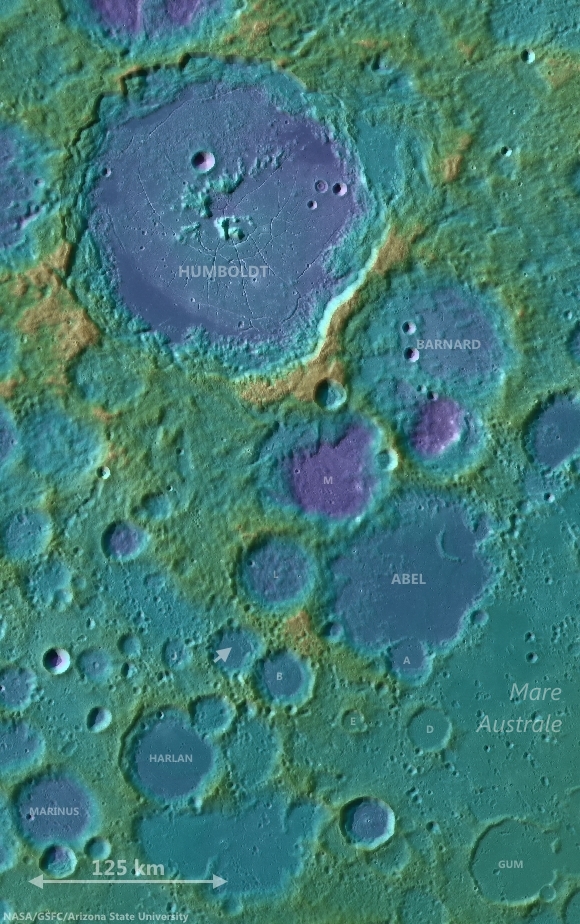
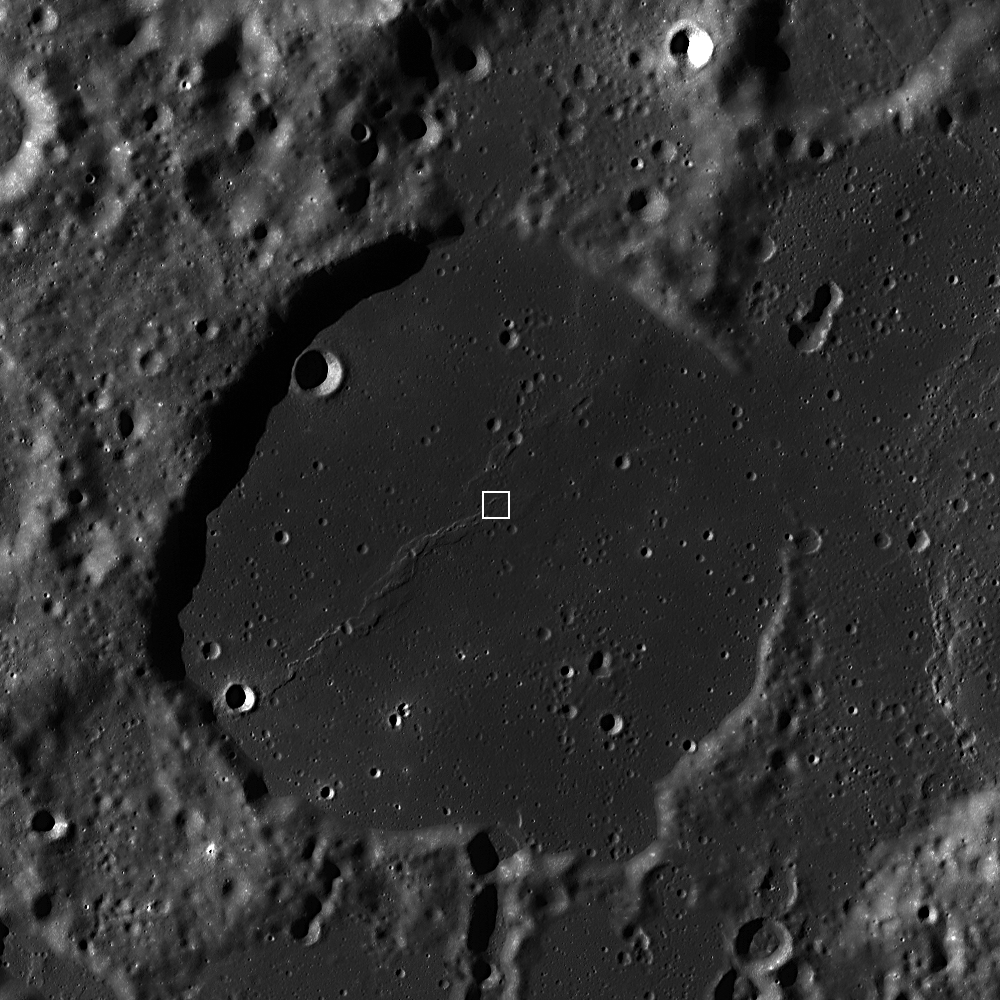
Abel C is shown in relation to the terrain of the Moon's southeastern limb, between Humboldt crater and Mare Australe. LROC WAC-derived digital elevation model and 100 meter global mosaic data [NASA/GSFC/Arizona State University].
This pyroclastic deposit encompasses approximately 190 km2 and has been identified in studies of pyroclastic deposits across the Moon (Compositional analyses of lunar pyroclastic deposits by Gaddis et al. 2003). Because pyroclastic deposits have a mantled appearance,  they must be relatively thin. It's possible that the thin upper layer the impactor penetrated was partially composed of pyroclastics.

Related Posts:

Wednesday, June 19, 2013

Complicated Crater

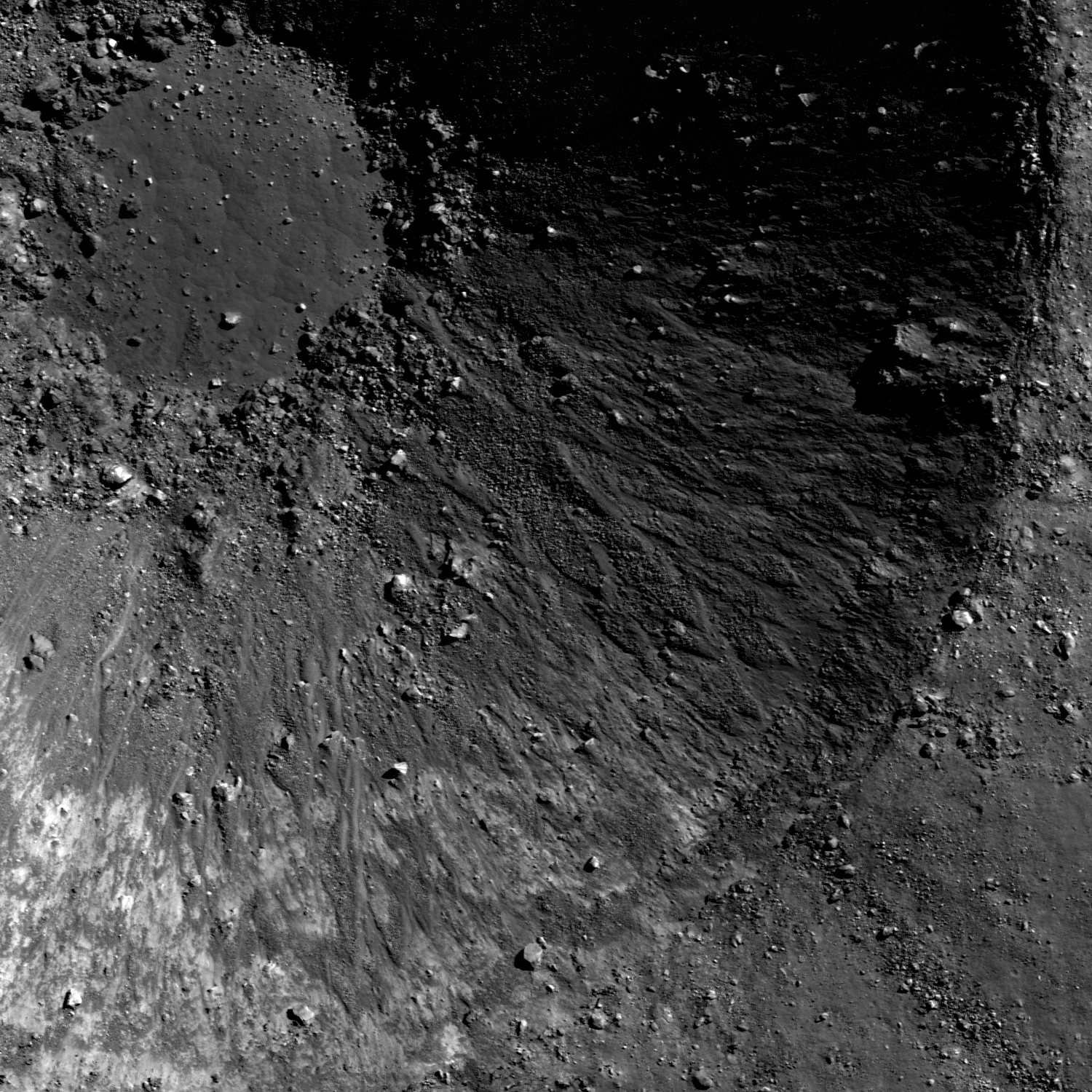
Impact melt, boulders, and mass wasting - oh my! Close-up on the interior of a "complicated," relatively fresh small crater on the floor of Mare Australe. LROC Narrow Angle Camera (NAC) observation M190007628LR, field of view 1 km, resolution 67 cm per pixel from 64.11 km [NASA/GSFC/Arizona State University].
Lillian Ostrach
LROC News System

Relatively fresh, undegraded craters are visually stunning. Today's Featured Image of the interior of a 1.7 km diameter crater (38.728°S, 88.697°E) exhibits just how geologically complicated craters can be! The crater rim is well-formed and relatively distinct, with ejected blocks nearby (some blocks might even fall inside the crater).

Portions of the upper crater walls have jagged, fractured material that may serve as the source for some of the mass-wasting observed lower on the crater walls. There is an approximately 350 meter diameter impact melt deposit on the crater floor. This smooth deposit exhibits polygonal cracks, possibly due to contraction as the melt cooled and hardened. Surrounding the impact melt pond are jumbled piles of blocks, some of which show evidence of impact melt veneer while other boulders landed after the impact melt pond cooled (but "how much later?" is a question we cannot answer easily).

M154649439LR
Slightly closer viewing opportunity. LROC NAC mosaic M154649439LR, orbit 7964, 41.98° angle of incidence, 52 cm per pixel resolution, from 49.26 km. View the very large full resolution crop HERE [NASA/GSFC/Arizona State University].

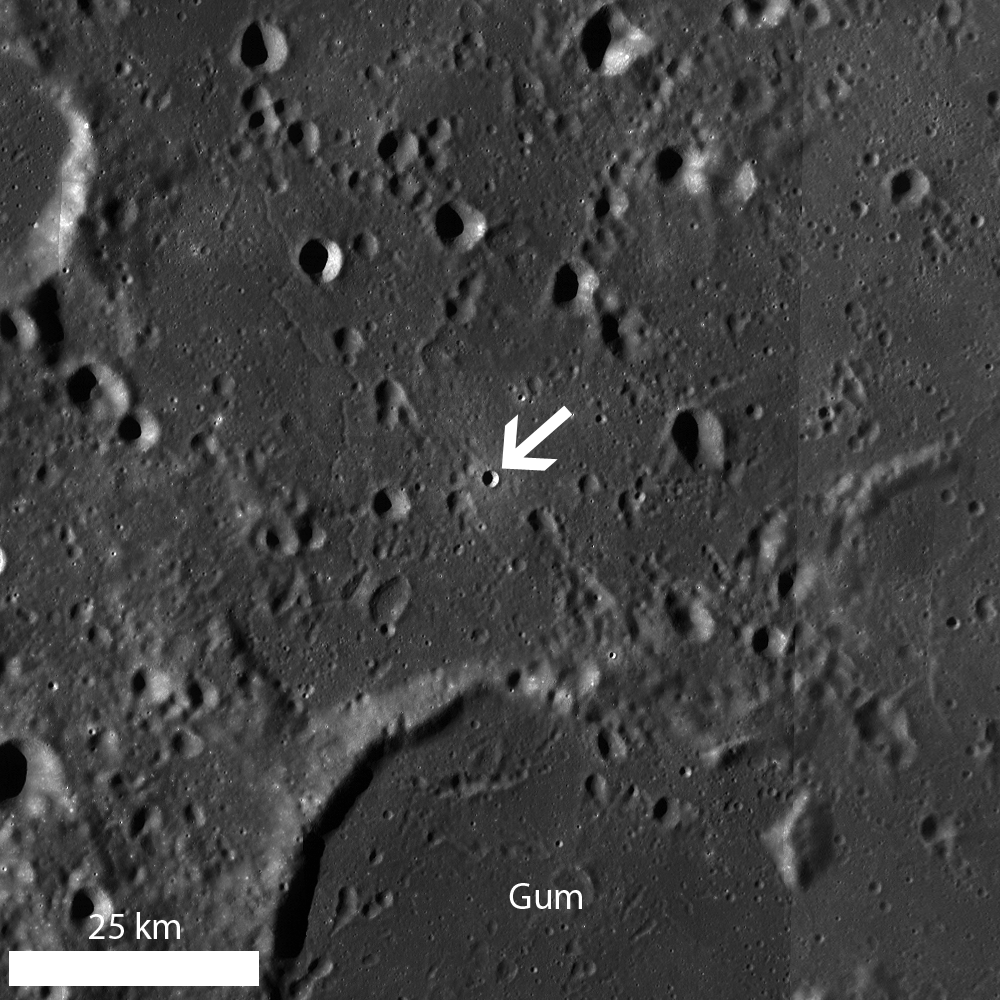
The wide range and contrast of the small crater's fan of ejecta, against the ancient floor of Mare Australe, may be easier to see in this medium resolution crop from the Global Mosaic stitched together from observations swept up by China's Chang'E-2 orbiter. The coloring reflects data collected by the Clementine orbiter in 1994.
LROC WAC monochrome mosaic of the fresh crater north, north of Gum (arrow) [NASA/GSFC/Arizona State University].
Although there are no deep gullies in the upper crater walls, the inter-weaved channels running down the crater walls suggest a complex relationship between impact melt and dry debris flows. The finger-like flow morphology, especially close to the floor melt pond, is similar to impact melt flows elsewhere. However, observations of dry debris flows in other lunar craters are sometimes difficult to distinguish from impact melt. Careful study of stratigraphic relationships is required in cases such as this one to distinguish which material may be melt or dry debris.

Observe the crater wall complexities for yourself in the full LROC NAC image, HERE.

Related Posts:
Farside impact!
Crater in 3D!
Symmetric Ejecta

Thursday, May 9, 2013

Messy Crater in Mare Australe

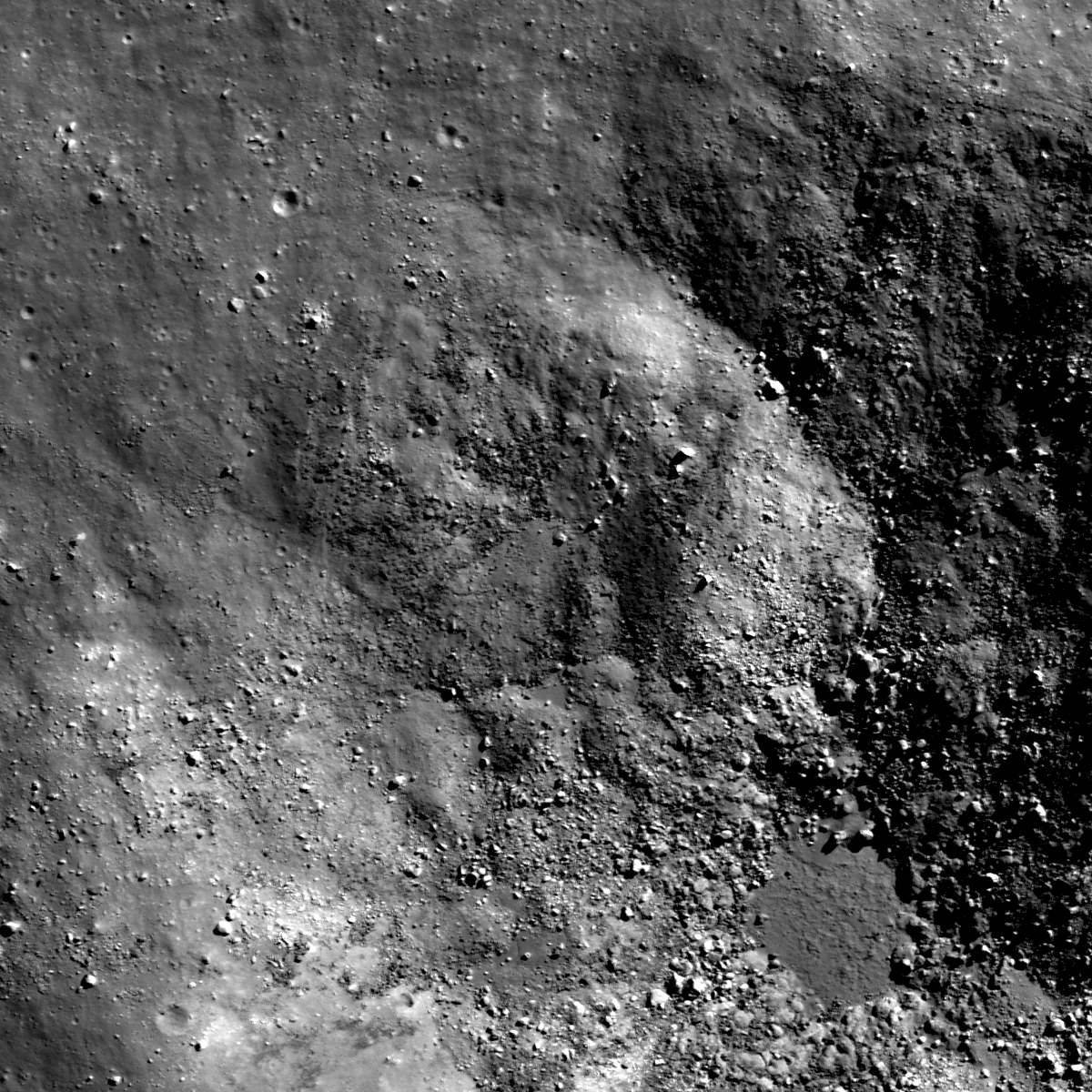
Fresh impact crater morphology can be messy! Deep interior of relatively small, unnamed fresh impact crater in Mare Australe. 708 meter wide field of view cropped from LROC Narrow Angle Camera (NAC) mosaic M189978900LR, LRO orbit 13045, April 25, 2012; resolution 60 cm per pixel, angle of incidence 57.76° from 58 km [NASA/GSFC/Arizona State University].
Lillian Ostrach
LROC News System

Cartoons illustrating the three stages of impact cratering (contact/compression, excavation, and post-impact modification) usually show the formation of a beautiful, bowl-shaped simple crater.

LROC NAC images reveal that while there are many bowl-shaped craters, there are also many craters that are not bowl-shaped or even very circular.

Today's Featured Image is an approximately 1 kilometer in diameter crater (45.661°S, 93.016°E) with a very irregular interior morphology. This crater exhibits a defined rim for all but a small portion of the crater (shown in the opening image). In this region, the crater wall is a jumbled mass of material that looks more similar to wall collapse than crater cavity excavation. The surrounding crater walls are covered with jagged blocks and impact melt veneer, and a 100 m wide melt pond with polygonal fracturing is located on the crater floor.

Near same width view of the 7.8 km wide LROC NAC mosaic M189978900LR [NASA/GSFC/Arizona State University].
Irregular crater morphology can be attributed to several factors. The impact process involves vast amounts of kinetic energy that may not be uniformly distributed throughout the target during impact. For example, a non-uniform energy distribution may be the result of an oblique impact, a steeply sloped target surface, or perhaps a low velocity secondary impact. Similarly, target properties, such as re-existing weakness or strength variations in the target rocks, may influence crater shape. Because the impact process is complex, it is often difficult to determine which factors dominate when studying craters with irregular morphologies. However, for today's crater, it is likely that some of the crater morphology irregularity is associated with the target slope; the impact occurred on the outer wall/rim slope of a degraded crater.


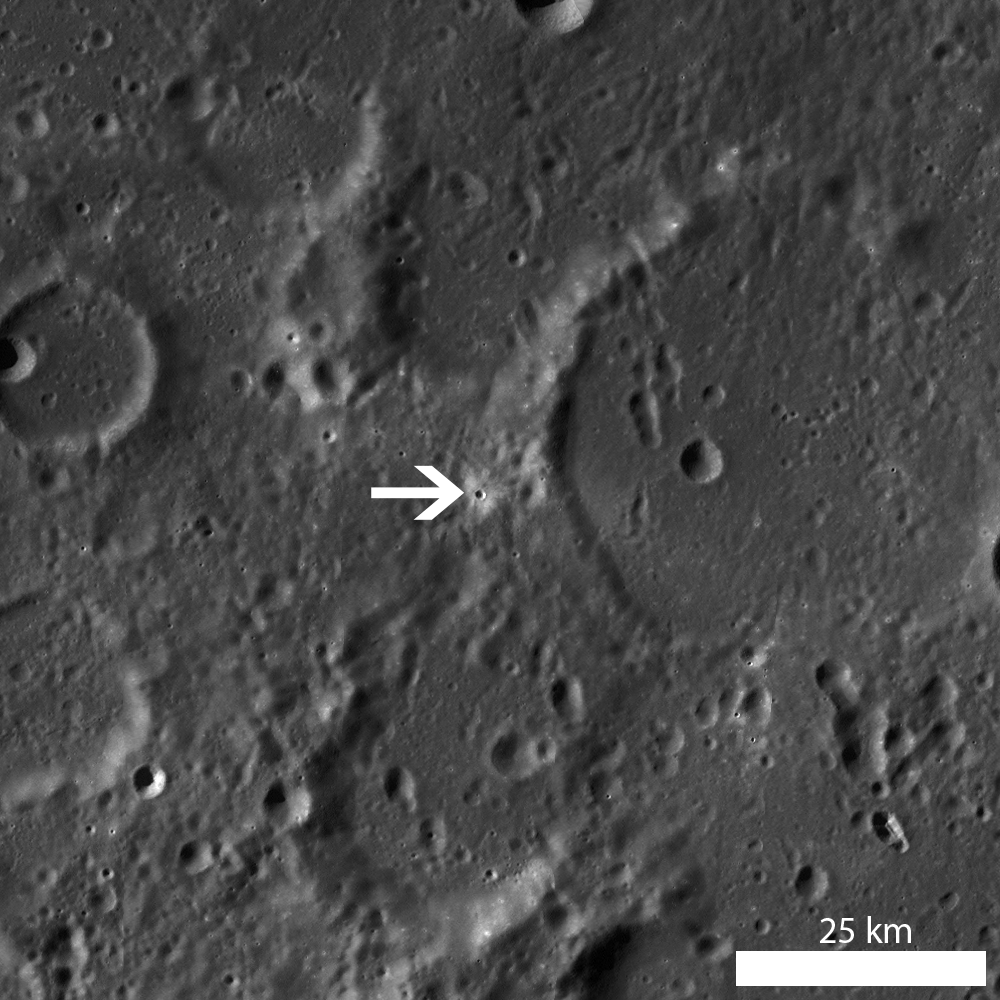
LROC Wide Angle Camera monochrome mosaic centered on the recent impact highlighted in the opening image [NASA/GSFC/Arizona State University].
Take a look at the full LROC NAC image, HERE, and explore the morphology of the young crater for yourself.

Related Posts:
Ejecta Starburst
Farside impact!
Komarov

Hemispheric view over the southern east limb of the Moon, centered on the location of the small impact crater on the 93rd meridian east. LROC WAC 100 meter Global Mosaic, LROC PDS image search tool [NASA/GSFC/Arizona State University].

Wednesday, June 22, 2011

Nascent wrinkle ridge in Jenner


A nascent 15 km wrinkle ridge in Jenner crater. Wrinkle ridges help lunar scientists understand the stresses affecting a region. LROC Narrow Angle Camera (NAC) observation M115693540LE, LRO orbit 2183, December 17, 2009; image field of view 1350 meters. View the full-sized LROC Featured Image HERE [NASA/GSFC/Arizona State University].

Drew Enns
LROC News System

Jenner is a 75 km crater located in Mare Australe at 42°S, 96°E.

This small ridge is a one of several wrinkle ridges within Jenner crater.

Wrinkle ridges often form in mare units due to compressional stress. The floor of Jenner crater was completely covered by lava, and the weight of the lava may have resulted in a slight sinking of the crater floor, resulting in compression and buckling of the mare deposit. The mare was thick enough that only its central peak and a few terraces remain unburied! But how are scientists sure that this crater is filled with lava and not impact melt?


Context image of Jenner crater. The field of view of the LROC Featured Image close-up, released June 21, 2011, is located in the white box. LROC Wide Angle Camera (WAC) contextual field of view above is 100 km. View the full-size WAC image HERE [NASA/GSFC/Arizona State University].

Our first clue are the wrinkle ridges that commonly form in mare, but this is not enough evidence. Other useful observations are the volume and texture of the crater floor. Tycho crater (86 km diameter) is an example of a crater with impact melt covering most of its floor. However, Tycho's floor has a rougher, more chaotic texture than Jenner.

Jenner's floor is smooth, much more similar to a mare surface than to the impact melt deposits within Tycho. The smoking gun comes from mineralogical data. Clementine multispectral data of Jenner shows a mafic signature, indicative of a mare unit. Looking at these variables, Jenner is more similar to other mare flooded craters, such as Archimedes crater, than to Tycho crater.

Look at the crater floor in more detail in the full NAC, HERE.


Just beyond the 90th Meridian east, Jenner (at upper center) is a challenge for Earth-bound observers, who's seeing is limited to a grand total of only fifty-nine percent of the Moon's surface, and then only during the most favorable of conditions, like the lower elevation ponds of Mare Australe that surround it. In the LROC WAC mosaic of the Moon's eastern hemisphere, released late last year, it's an easy find in south-southeast [NASA/GSFC/Arizona State University].

Related Posts:
Chaotic crater floor in Tycho
The Floor of Tycho - Constellation ROI
Archimedes - Mare Flooded Crater

Saturday, April 16, 2011

Brisbane Z's Australean wrinkle ridge


Straddling both the Moon's near and far sides (on the young Crescent Moon, visible at a high line-of-sight angle through modest binoculars about two days after a New Moon) is Pre-Nectarian (approximately 4.55 billion years old), 515 kilometer-wide Mare Australe. Aeons older than the more familiar basins clustered on the Moon's nearside, this is one of the Moon's features that quietly archives the earliest formative history of the Solar System (and Earth).

Drew Enns
and Arizona State University's Lunar Reconnaissance Orbiter Camera (LROC) team, focus this week on two far younger features of this very ancient impact. Above is take from the LROC Web Map Server Image Map, now layered with LROC Wide Angle Camera mosaic images and centered near 60 degrees south and 70 degrees east of the Moon's central meridian. At lower right is the more "recent" "borderline basin" Schrödinger, carved into the east southern polar regions but outside the vast interior of South Pole-Aitken (SPA) basin [NASA/GSFC/Arizona State University].


A beautiful wrinkle ridge within Brisbane Z crater in Mare Australe. Image width is 500 m and illumination is from the left; LROC Narrow Angle Camera observation M134714924L, LRO orbit 4986, July 25, 2010. See the full-sized LROC Featured Image HERE [NASA/GSFC/Arizona State University].

Drew Enns

LROC News System

This wrinkle ridge is located within the crater Brisbane Z (52.72°S, 73.13°E), a mare-flooded crater within Mare Australe. Wrinkle ridges are one of several styles of tectonic deformation present on the Moon, and occur primarily in the maria. Wrinkle ridges are the result of contractional forces, and in the maria, these forces are believed to be from the weight of the basalts extruded onto the surface. The same reasoning explains why wrinkle ridges are sometimes found in mare-flooded craters, where similar contractional forces are present at a smaller scale.


LROC Wide Angle Camera (WAC) monochrome context of Brisbane Z. View the full-sized WAC context image, HERE. LROC's Featured Image is framed by the marked box; image field of view is 100 kilometers [NASA/GSFC/Arizona State University].

The dramatic wrinkles and folds of this ridge give a sense of the strong forces that shaped this area, disrupting the once-smooth mare surface. In the context image above you can see that this is just the tail of a wrinkle ridge that spans tens of kilometers, crossing over half of Brisbane Z's floor.

Check out more of the wrinkle ridge in the full NAC image!

Related Posts:
Wrinkle ridge in Oceanus Procellarum
Wrinkle ridges of northwest Mare Imbrium
Bright ridge near Mons Hansteen

Bouldery crater near Mare Australe


Drew Enns of the Lunar Reconnaissance Orbiter Camera (LROC) team at Arizona State University presented twin postings, this past week, discussing features in the vicinity of Mare Australe, a less well-known ancient impact basin on the nearside's eastern limb and almost beyond line of sight view from Earth. LRO, closing in on completing its second year in polar orbit (8,370 by April 15, 2011), has, of course, not been confined to any one plane in relation to the Moon and continues filling in the gaps and furthering our understanding of the entire lunar surface. Here, utilizing an ever-more resource-rich web-based map index of LROC's already massive library of available images, is a "lower" resolution context view showing the locations of both of this week's LROC Featured Images. (The mare-filled crater Brisbane Z is approximately 70 kilometers wide) [NASA/GSFC/Arizona State University].


Low Sun image of a fresh crater in the lunar highlands near Mare Australe. Boulders are scattered in and around the 550 meter-wide impact crater, image field of view is 950 meter; LROC Narrow Angle Camera (NAC) observation M150062296R, LRO orbit 7248, January 19, 2011. See the full-sized Featured Image HERE [NASA/GSFC/Arizona State University].

Drew Enns
LROC News System

Small craters on the Moon come in a variety of morphologies, and knowing how they differ is key to understanding their formation. This crater (51.42°S, 68.73°E) is surrounded with a high density of boulders. Was this crater formed by a primary or secondary impact? When a bolide (anything that impacts a planet, usually an asteroid or comet) impacts a more coherent material (solid rock for example), the ejecta contains a high percentage of boulders. So the boulders seen above could indicate a stronger subsurface.

While primary bolides typically impact the Moon at speeds of 15-20 km/s, secondary impacts occur at much slower speeds. Any ejecta traveling faster than the escape velocity (2.38 km/s) will not impact the Moon. Because of the lower speed, ejecta impacts the Moon with less energy, which could lead to a smaller and more bouldery crater if the ejecta itself was a large piece of solid rock that shattered upon impact. In either case, these boulders would make excellent targets for sample return so that scientists can better understand how to definitively tell the difference between primary and secondary craters.


Backing away nearly to the full ~ 4.8 kilometer width of LROC NAC observation M150062296, January 19, 2011), the extent of the brighter and less weathered crater's ray material can be better appreciated [NASA/GSFC/Arizona State University].


LROC Wide Angle Camera (WAC) monochrome mosaic of the region surrounding LROC's Featured Image, an illustration of early lunar crater morphology, a fresh and rough, less space-weathered (and thus brighter) crater standing out from a nominal lunar scene characterized by "crater saturation." The image is cropped from the original. The arrow points to the location of the high-resolution Featured Image [NASA/GSFC/Arizona State University].

Search for more bouldery craters in the full NAC image!

Related Posts:
Scouring secondary ejecta
Small crater in Oceanus Procellarum
Chain of secondaries in Mare Orientale