Showing posts with label Alan Shepherd. Show all posts

Saturday, February 6, 2016

Edgar Mitchell (1930-2016)

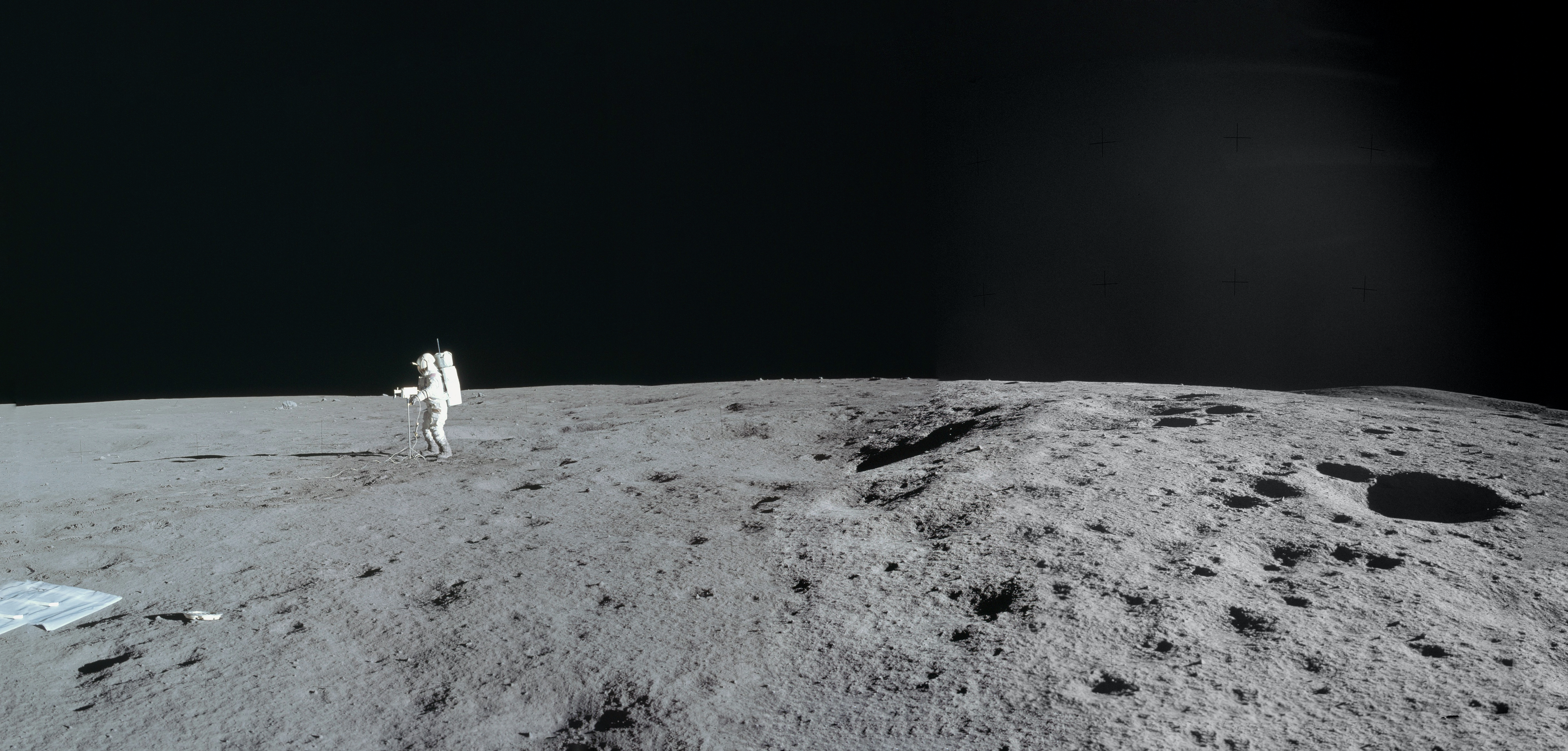
Edgar Mitchell, sixth human to visit the lunar surface, takes a live panorama of the close horizon using the first color television camera successfully operated on the Moon; at Fra Mauro, south of Copernicus, February 1971. Photograph by Apollo 14 commander Alan Shepard [NASA/JSC].
Astronaut Edgar Mitchell, lunar module pilot on Apollo 14, passed away Thursday in West Palm Beach, Florida,  and on the eve of the 45th anniversary of his lunar expedition in 1971.

Mitchell joined Apollo 14 commander Alan Shephard, Jr., the first American in space, in the lunar module Antares, which touched down February 5, 1971, in the Fra Mauro highlands. Shepard and Mitchell were assigned to traverse the lunar surface to deploy scientific instruments and perform a communications test on the surface, as well as photograph the lunar surface and any deep space phenomena. It was Mitchell’s only spaceflight.

Mitchell and Shephard set mission records for the time of the longest distance traversed on the lunar surface; the largest payload returned from lunar surface; and the longest lunar stay time (33 hours). They were also the first to transmit color TV from the lunar surface. Mitchell helped collect 94 pounds of lunar rock and soil samples that were distributed across 187 scientific teams in the United States and 14 other countries for analysis.

Read the full NASA release HERE.

Thursday, April 5, 2012

Space Exploration: A Job for Humans

Admiral Alan B. Shepard, Jr. (1923-1998),  U.S. Navy aviator by profession and cattle farmer by avocation, a few weeks shy of 10 years after becoming the first American in Space. On the afternoon of January 31, 1971 he suits up for only his second space flight, as commander of Apollo 14 and destined to become only the fifth person to explore the surface of the Moon [NASA].
Jared Keller
Atlantic

The conventional wisdom of space exploration suggests that robotic probes are both more scientifically efficient and cost effective. Not so, argues a professor of planetary science.

When the Space Shuttle Atlantis rolled to a stop in July 2011, NASA bid farewell to the nation's symbol of manned spaceflight. The Obama administration has scrapped NASA's plan to return humans to the Moon by 2020, which was behind schedule because of technical and budgetary problems. As financial constraints threaten the possibility of future ventures into outer space, many in the astronomical community are advocating for the increased use of unmanned robotic space, arguing that they will serve as more efficient explorers of planetary surfaces than astronauts. The next giant leap, then, will be taken with robotic feet.

Dr. Ian A. Crawford thinks it should be otherwise. A professor of planetary sciences at Birkbeck College, London, Crawford makes the case for human space exploration in a new paper entitled Dispelling the myth of robotic efficiency: why human space exploration will tell us more about the Solar System than will robotic exploration alone, published recently in the journal Astronomy and Geophysics. If the goal of space travel is to expand our knowledge of the universe, argues Dr. Crawford, exploration will be most effective when carried out by astronauts rather than robots on the surface of a planet.

Read the feature article HERE.

Thursday, September 8, 2011

On the rim!

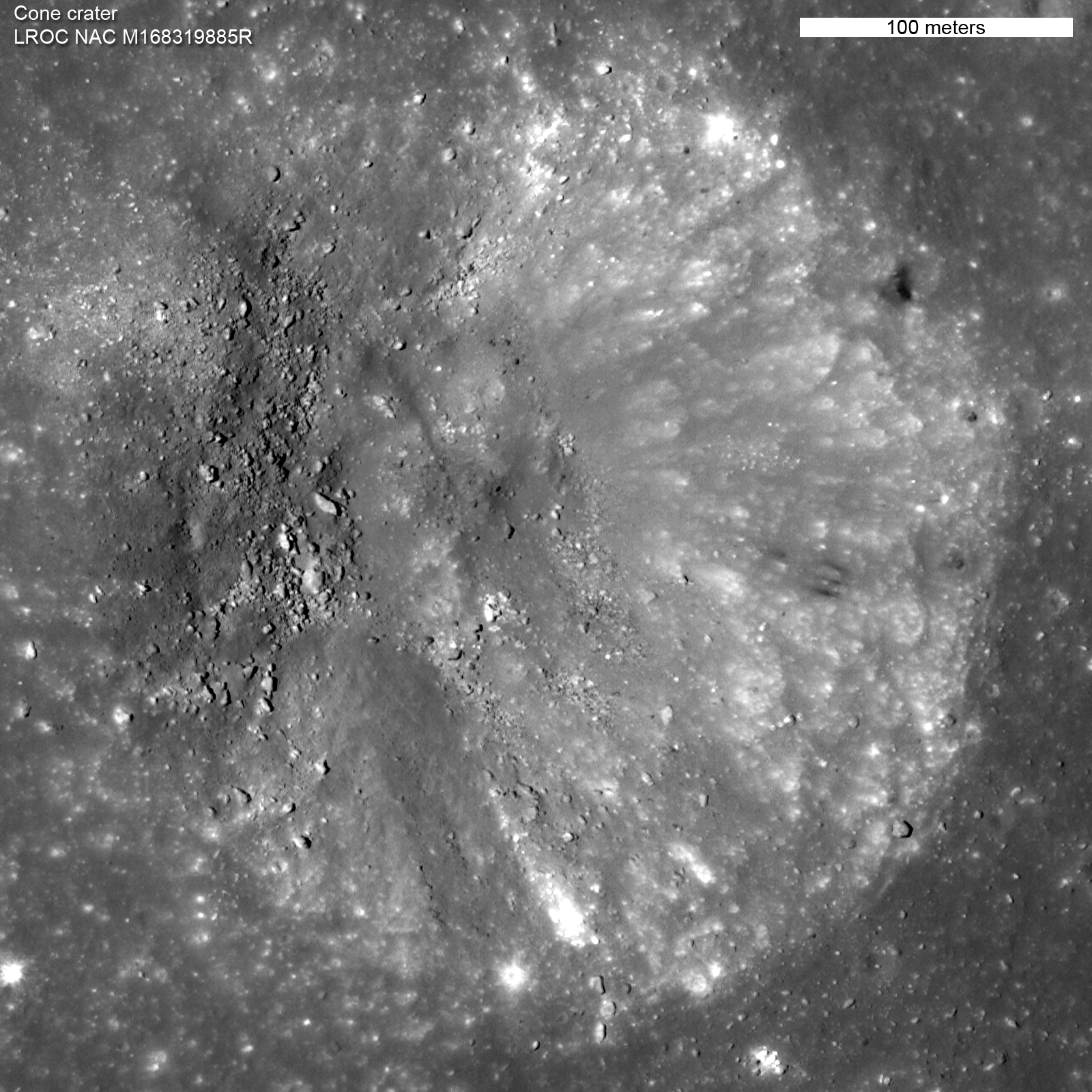
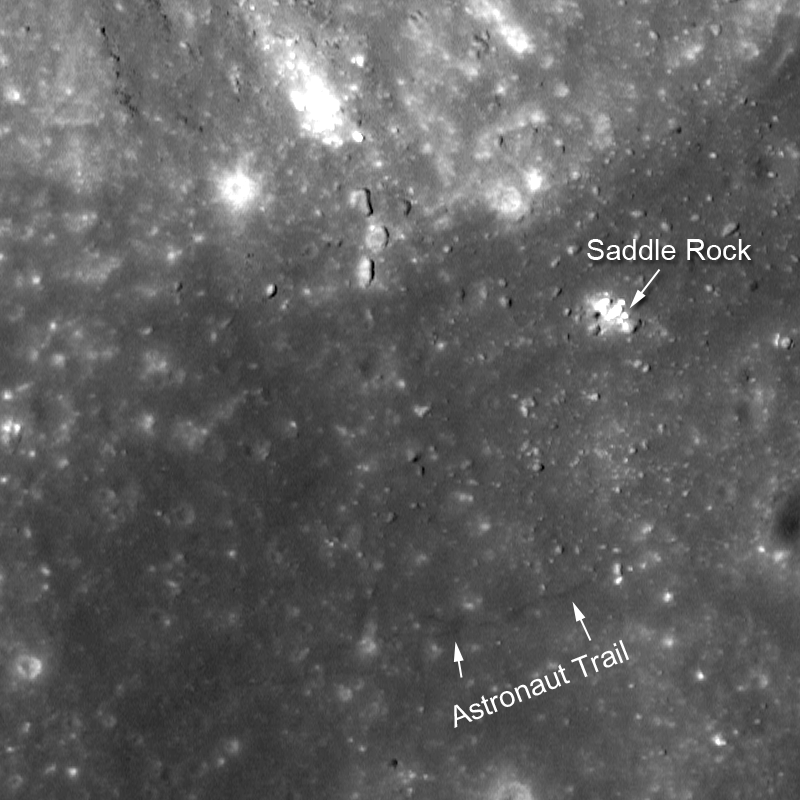
Saddle rock, so close! Apollo 14 astronauts hiked up the flanks of Cone crater and got as far as Saddle rock before they had to turn back. A few tens of meters and what a view! LROC image 25 cm pixel scale, image 200 meters wide, LROC Narrow Angle Camera observations M168319885, LRO orbit 9939, September 4, 2011; north is up. View the full size LROC Featured Image HERE [NASA/GSFC/Arizona State University].

Mark Robinson
Principal Investigator
Lunar Reconnaissance Orbiter Camera
Arizona State University

   
The 6 September 2011 LROC Featured Image described the special low orbit month that allowed LROC to snap its highest resolution images of the Apollo 12, 14 and 17 landing sites. That post featured the Apollo 17 site, while today's Featured Image looks in detail at the Apollo 14 image.


In February 1971 Edgar Mitchell examines the map, looking for landmarks, as he and Alan Shepard work to find the rim of their goal, Cone crater. It would later be determined (and LROC would confirm) that the Apollo 14 astronauts were very close.

What can we see better at the Apollo 14 site compared to previous images (9 August 2009, 4 February 2011)? The increased resolution allows indentification of the astronaut backpacks (PLSS), the small two wheeled cart (Modularized Equipment Transporter or MET) that the astronauts used to transport tools and samples, and the high gain antenna (HGEA). You can also make out one of the LM legs at the  7 o'clock position on the descent stage. The pixel size of the NAC image is not high enough that all these objects can be resolved, but rather we can detect that they are there. Only through comparison with surface photography can we definitively identify the smaller objects left by the astronauts. With the smaller pixel size we can begin to resolve the descent stage, we can see its shape, brightness differences on the deck, and footpads.


New LROC low orbit image of the Apollo 14 Lunar Module descent stage. (See a comparable view as seen by the astronauts HERE.) Upper two panels show new image but with different contrast stretches, and the lower image is an enlarged version. Each scene is 75 meters wide, north is up, Sun is from the west (left). [NASA/GSFC/Arizona State University].

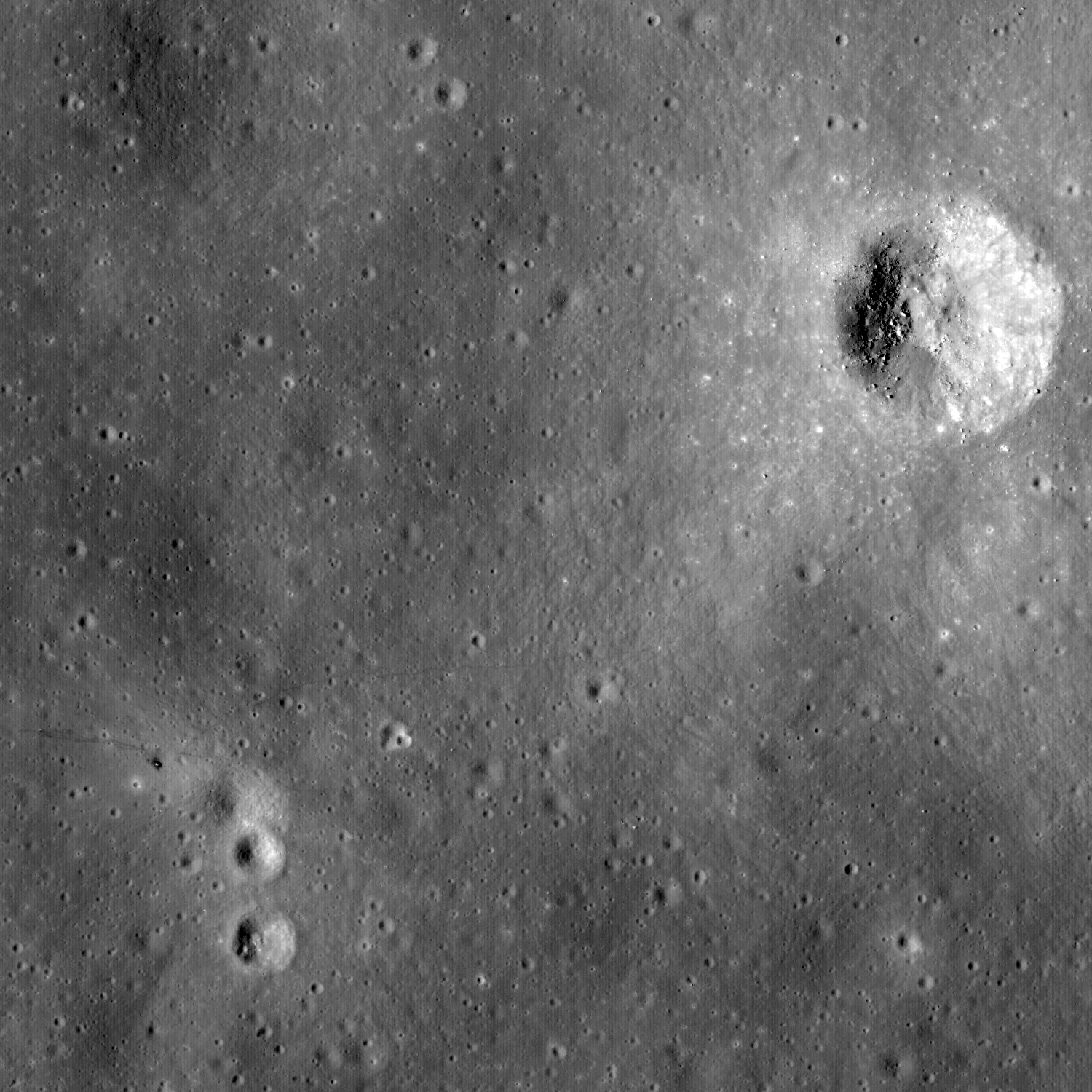
The traverse up Cone crater was the main science goal for Al Shepard and Ed Mitchell. Impact craters spread out ejecta in a very predictable manner. The outer edges of the ejecta are mostly composed of material from or near the surface where the bolide (asteroid or comet) impacted, while the ejecta at the rim of the crater comes from deepest regions within the crater. So it is a "simple" matter of walking towards the crater and collecting samples to reconstruct an accurate picture of the original subsurface. Well simple in principle.


LROC NAC low orbit image of Cone crater, near the Apollo 14 landing site. Image is 400 meters wide, north is up, Sun is from the west (left). View the full-size image HERE [NASA/GSFC/Arizona State University].
Imagine hiking up the flanks of Cone crater with no compass (the Moon does not have a magnetic field so a compass is useless), only a very general map, carrying a heavy backpack, dragging a small wheeled cart loaded with tools, restricted vision from inside a helmet, and very strict time constraints! Al and Ed made it as close as  Saddle rock, which is only about 20 or 30 meters from the rim! However, the astronauts did not know they were that close. During the traverse they were temporarily bewildered as to their exact location. As it turns out, while they met 100% of the geologic sampling goals, they just missed out on the spectacular view into Cone crater.

The astronaut trails are not so distinct near Cone crater. Here the astronauts were out of the area that was scoured by the descent stage engine upon landing. The scouring produced a distinct bright halo at all the landing sites, most likely due to the finest particles being blown away from the spot just below the engine in the final seconds of landing. These bright particles were dispersed more or less evenly around the Lunar Module creating the halo effect. As astronauts walked around they kicked upper darker soil from beneath the halo creating distinct trails. Outside of the halo the soil kicked up may not have had as much contrast and is thus harder to spot.

Be sure to watch our movie describing the landing site!

Explore Cone crater in our Browse Gallery.
See Cone Crater!

Friday, August 19, 2011

LROC: Ray of boulders


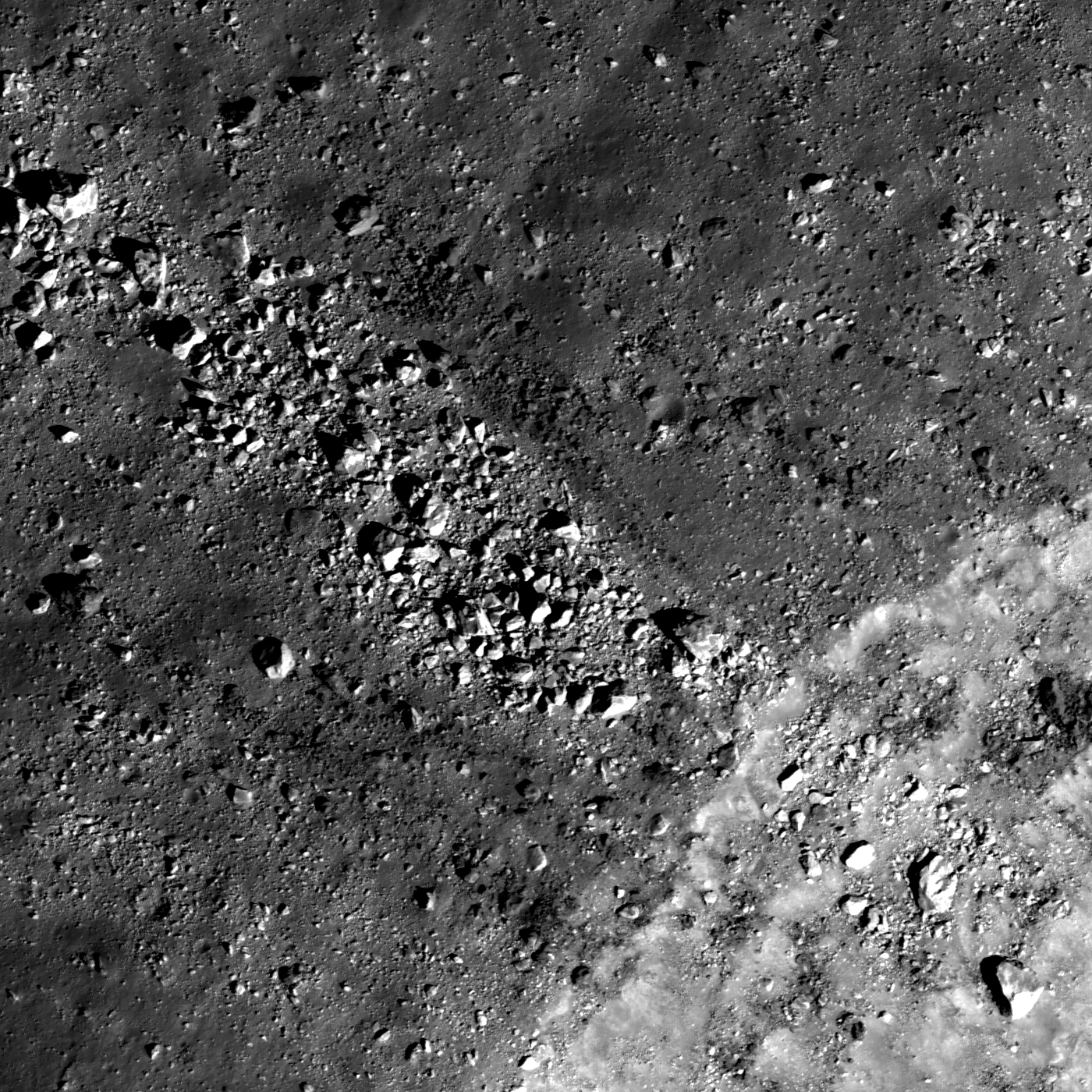
Dozens of boulders, ranging from 10 to more than 30 meter in diameter, are distributed within an ejecta ray close to a crater rim (lower right) located inside the Mare Moscoviense basin (32.52°N, 143.625E°). These boulders represent the deepest material excavated during the crater's formation. From a montage of LROC Narrow Angle Camera (NAC) observations M159013302L & R, field of view is roughly 850 meters; LRO orbit 8568, May 2, 2011. View the full-size LROC Featured Image HERE [NASA/GSFC/Arizona State University].

Lillian Ostrach
LROC News System

Northeast of Mare Moscoviense, an unnamed Copernican-aged crater has an extensive ejecta blanket (32.56°N, 143.53°E, diameter ~6 km). The ejecta blankets of impact craters provide a useful tool toward relative age dating and the formation of a geologic story for a region when using remotely sensed image data. The presence of a rayed, continuous ejecta blanket surrounding an impact crater indicates that the crater formed relatively recently in lunar geologic time. The distribution of ejecta around the crater can help predict whether the bolide impacted obliquely and from which direction it came. Moreover, if there are reflectance variations in the ejecta blanket, the impact may have exposed material of multiple compositions, and how bouldery or smooth an ejecta blanket appears may help scientists hypothesize the physical properties of the target material (e.g., solid rock, granular regolith, or a combination of both).


LROC Wide Angle Camera (WAC) monochrome mosaic context image of the unnamed crater, northwest of Mare Moscoviense. Asterisk designates the area of LROC Featured Image, released August 18, 2011. See the full-sized version HERE [NASA/GSFC/Arizona State University].


Another WAC image, a 604 nm band mosaic from September 12, 2010, when the local sun was higher and when relief gives way to finer albedo subtleties, demonstrates why this small crater is relatively easy to pick out in small-scale farside imagery. The north shore of "the Sea of Moscow" itself, the floor of the larger impact basin, is just beyond the hills etched by the impact, to the south [NASA/GSFC/Arizona State University].

Ejecta blankets can also provide human explorers an easy means to sample lunar material from depth. Because impact events displace material in a ballistic trajectory from the point of impact, the vertical stratigraphy of the rocks and regolith are exposed within the ejecta blanket in a horizontal manner. Does this make sense? Think about it: when a bolide impacts the surface, the surface regolith is the first material ejected and will travel the farthest. As the energy from impact is dispersed, more material is ejected from the rapidly-forming impact crater, continuing to form the ejecta blanket. The last bit of material ejected will be from the deepest part of the crater and deposited near the crater rim - exactly like those boulders seen in the opening image. What a concept - the ability to create a vertical cross section of an area simply by moving through an ejecta blanket on the surface!


In this smaller-scale, 400 kilometer field of view of a WAC montage released in 2010, stitched from observations at local afternoon illumination, a good mix of relief and albedo features can be seen. The bright crater and its rays, shaped by the anatomy of the landscape where it formed, begin to blend together at this scale [NASA/GSFC/Arizona State University].


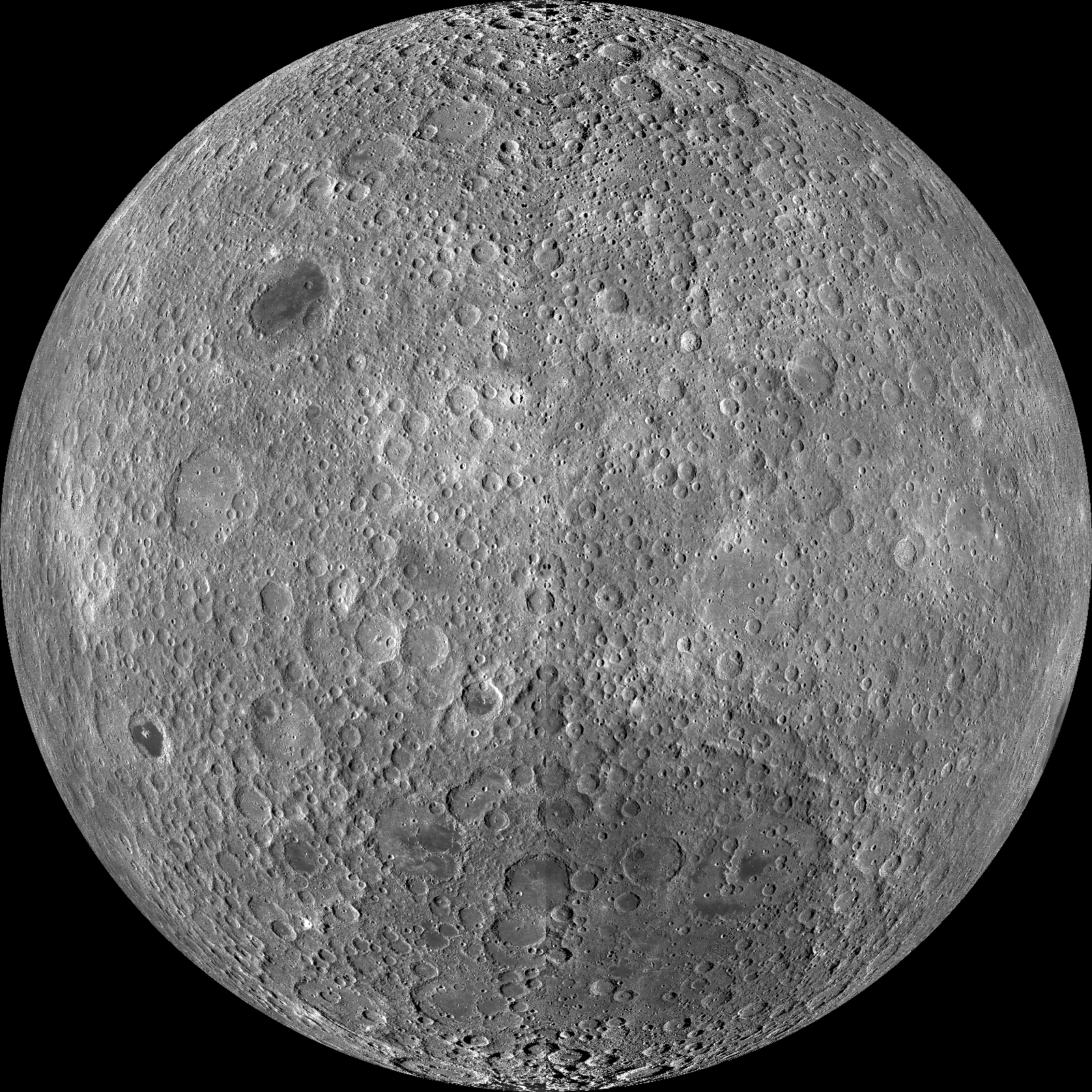
Even in this section taken from a full hemisphere-scale (1600 meter resolution) image of the Moon's farside the area affected by the bright crater's albedo stands out like a star, north of Mare Moscoviense. View the hemisphere-wide LROC WAC montage HERE [NASA/GSFC/Arizona State University].

This concept, using radial traverses of an ejecta blanket to sample vertical stratigraphy, was tested both in the laboratory during the 1960s and by Apollo 14 in 1971. Astronauts Alan Shephard and Edgar Mitchell attempted to reach the Cone crater rim and sampled the ejecta blanket at various locations during their traverse. Unfortunately for them, the gently undulating landscape around Cone crater obscured the crater rim from view and they were forced to return from their traverse without photographing the interior of the crater. However, later analysis of photography from the traverse, paired with orbital images, revealed that they had nearly reached the rim! The astronauts were closer than 30 meters from the crater rim, so their samples probably represent the deepest material excavated by the impact. This experience - and experiment - showed that a radial traverse of crater ejecta was an appropriate method to sample the vertical stratigraphy. The high-resolution LROC NAC images, coupled with derived DTM topography will ensure that future human lunar explorers make it to the crater rim when making a radial traverse of an ejecta blanket!

Take a peek at the full LROC NAC image - can you find reflectance variations within the ejecta blanket that may represent compositional differences from within the crater? Do you see any other bouldery ejecta rays around the rim?

Related Posts:
Ejecta Blanket Features
Scouring secondary ejecta
Dark haloed crater in Mare Humorum
Slice of Mare
Small crater in Oceanus Procellarum

Wednesday, April 27, 2011

Ambassador of Exploration Award award goes to Alan Shepard


Admiral Alan Shepard (1923-1998), the former Naval Aviator commands Apollo 14, his second spaceflight since becoming the first American in space during a 15 minute flight in 1961 [NASA/Apollo 14 Surface Journal].

Daniel Baxter
AvStop.com

NASA will posthumously honor Alan B. Shepard Jr., the first American astronaut in space and who later walked on the moon, with an Ambassador of Exploration Award for his contributions to the U.S. space program.

Shepard's family members will accept the award on his behalf during a ceremony at 5:30 p.m. EDT on Thursday, April 28, at the U.S. Naval Academy Museum, located at 74 Greenbury Point Road in Annapolis, Md.

His family will present the award to the museum for permanent display. NASA's Chief Historian Bill Barry will represent NASA at the event, which will include a video message from agency administrator Charles Bolden.

Shepard, a 1945 graduate of the Naval Academy, was one of NASA's original seven Mercury astronauts selected in April 1959. On May 5, 1961, he was launched from Cape Canaveral, Fla., aboard the Freedom 7 spacecraft on a suborbital flight that carried him to an altitude of 116 miles.

Shepard made his second spaceflight as the commander of Apollo 14 from Jan. 31 to Feb. 9, 1971. He was accompanied on the third lunar landing by astronauts Stuart Roosa and Edgar Mitchell.

Read the full story HERE.

Friday, February 4, 2011

New View of Apollo 14: 40th Anniversary


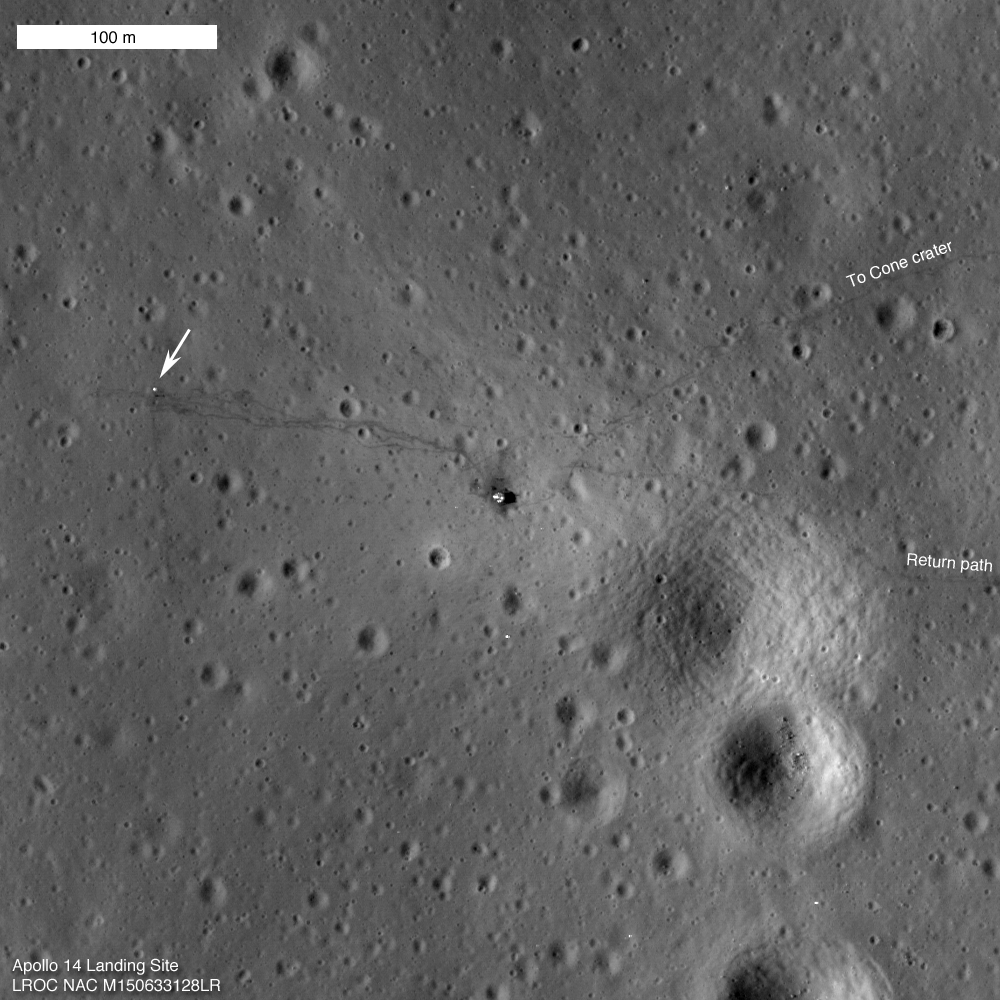
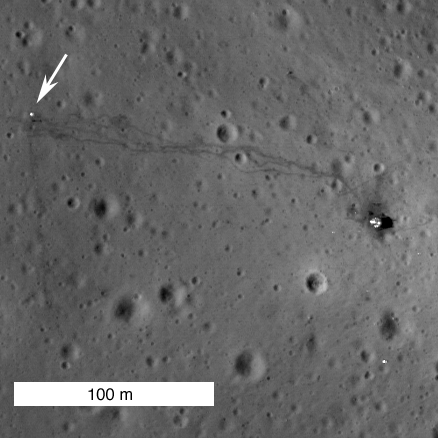
LROC Narrow Angle Camera (NAC) observation M150633128 of the Apollo 14 landing site acquired January 25, 2011 (LRO orbit 7334; resolution = 0.5m). The Descent Stage of the lunar module Antares is at center and the foot paths trailed by Shepard & Mitchell in February 1971 seem totally undisturbed since their departure forty years ago this weekend (field of view 500 meters). Experience the full-sized (1000x1000) LROC Featured Image released February 4, 2011 HERE [NASA/GSFC/Arizona State University].

Mark Robinson
Principal Investigator
Lunar Reconnaissance Orbiter Camera
Arizona State University


The LROC Narrow Angle Cameras continue to image the Apollo landing sites as the mission progresses. Every time LRO passes overhead the Sun is at a different position so each image gives a different perspective. Repeat imaging also serves LROC cartographic goals. Since the position of the lunar modules and other pieces of hardware are very accurately known the LROC team can check the accuracy of the mission-provided ephemeris.

Think of the Apollo sites as benchmarks put in place four decades ago for the LROC team!


Close-up showing the Apollo 14 Lunar Module's Descent Stage (right) and Apollo Lunar Surface Experiment Package (ALSEP - arrow) with tracks between the two landmarks by Shepard & Mitchell still fresh and distinctive almost precisely 40 years later. In that interval since their departure the foot prints and Apollo 14's deployed materials endured 534 lunar days and nights of relentless exposure, adding to their immeasurable value as sentinel recorders of the lunar environment [NASA/GSFC/Arizona State University].

The Apollo 14 astronauts explored the surface of the Moon on February 5th and 6th, 1971, 40 years ago this weekend. Much was learned during the Apollo missions, yet most of the history and geology of the Moon remains a mystery.

When will we return to the Moon?


Apollo 14 Post EVA view by Edgar Mitchell from inside Antares looking west toward the ALSEP station. LROC PI Mark Robinson suggests matching Edgar Mitchell & Alan Shepard's tracks in this photograph with those in the new LROC NAC view swept up from LRO orbit overhead on January 25, 2011 - forty years later. View the full-resolution high-defintion version of Mitchell's photograph HERE [AS14-66-9338 - NASA/Apollo Surface Journal].

From the Apollo Surface Journal, Apollo 14 Image Library (Magazine 66) "
Ed Mitchell took this splendid picture after he and Al Shepard jettisoned the PLSSs in preparation for launch. Of particular interest are the tracks made by the crew and the MET during the traverse to the ALSEP deployment site and during the return to the LM. Apollo 17 astronaut Jack Schmitt speculates that the descent plume sweeps away the fine particles of soil, leaving a surface dominated by small rock fragments that reflect sunlight from the down-Sun direction and make the surface look lighter in color than normal. In places where the surface is disturbed, the normal reflectivity of the surface is restored. Whatever the detailed explanation for this phenomenon, it is related to the fact that, from orbit, the area immediately surrounding a LM looks noticeably lighter in color. The ALSEP Central Station is about 180m from the LM. Note the excursions the crew made around the rimless crater in the foreground and the large depression in the middle distance that they traversed in both directions. Without the visual clues provided by the tracks, the depression is not easy to pick out in this down-Sun photo. Note that the flag is now pointing on an azimuth of about 335 and undoubtedly moved from it prior pointing of about 120 as a result of the cabin depressurization done for the jettison."

No one to ask for directions: Apollo 14 lunar module pilot Edgar Mitchell finds the "ground truth" of hiking on the Moon, that things can look very different on the surface than from Lunar Orbiter photography from orbit, and he surveys a map while looking for landmarks. Meanwhile Alan Shepard takes his picture near the end of their unsuccessful ascent up the gentle slope to Cone Crater, at Fra Mauro, February 1971. (It was the first time an Apollo expedition had journeyed beyond view of their spacecraft) [AS14-64-9089HR/NASA/ASJ].


A 'true-color' HDTV orbital view, from Japan's SELENE-1 (Kaguya), of the ancient Fra Mauro crater group and material spilled onto this area, south of Copernicus, from the epoch-marking basin-forming impact formimg Mare Imbrium to the northwest ~3.8 billion years ago. The landing site of Apollo 14 is located in the low hills north of the largest of these craters, at upper center. Click HERE for the full-sized original image release [JAXA/NHK/SELENE].

Monday, January 31, 2011

Forty years ago - America's 2nd Return to Space

America's 2nd "Return to Space," January 31, 1971
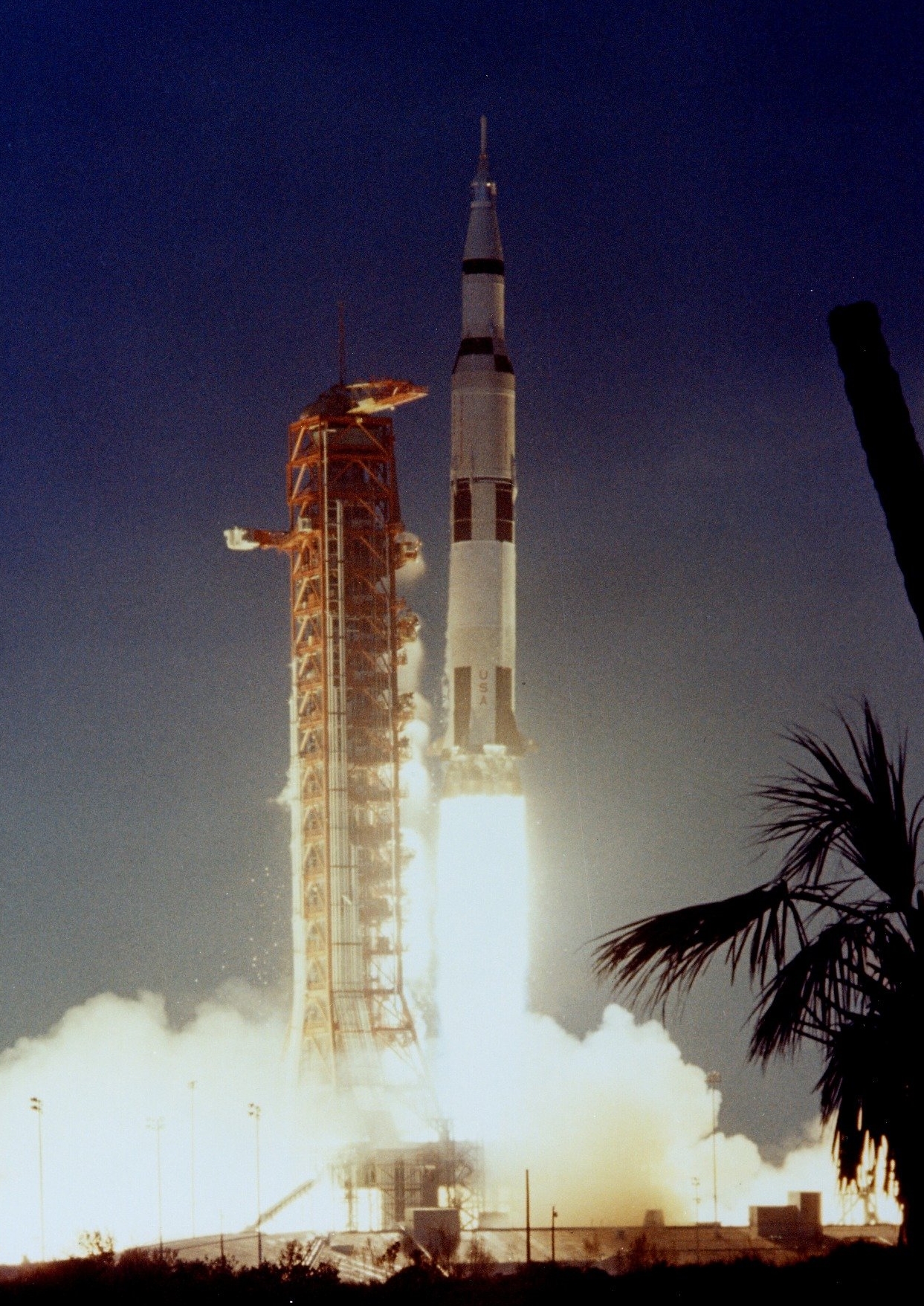
Apollo 14, with Alan Shepard, Edgar Mitchell & Stu Roosa onboard, departs Kennedy Space Center for the Moon  nine months after the nearly-disastrous Apollo 13 mission. For Admiral Shepard, America's first astronaut, it had been a longer wait. 10 years had passed since that first 15 minute suborbital flight of the Mercury program. After being grounded for an inner ear condition, now in command of only his second (and last) spaceflight, Apollo 14 would become the only flight to the Moon made by any of the "Original Seven." [NASA/ASJ].

Friday, August 21, 2009

Lasting boot prints from 1971

A better look, from a slightly higher solar phase angle: The moon-boot prints of the first American in Space, the late Admiral Alan Shepard and Apollo 14 lunar module pilot Edgar Mitchell appear unchanged since they climbed the slope, searching for the rim of Cone Crater on the Fra Mauro formation in February 1971. The tracks of the two men on their second of two EVA's, along with those of the wheeled Modular Equipment Transporter (MET) drug behind them, lead off to the upper right, as recommended in the full image.


"A month has already passed since LROC acquired its first images of the Apollo landing sites. In this time the Moon completed one rotation beneath LRO’s orbit, thus providing another set of overflights. Because LRO is not in synch with the lunar day we see the same ground with different lighting – this time the Sun is 24 degrees higher above the horizon providing a clearer view with fewer shadows. Albedo contrasts are greater, and more clearly show soil disturbances from landing, astronaut surface operations, and blast off."

"Apollo 14 Astronauts Alan Shepard and Edgar Mitchell explored the Fra Mauro highlands, which are composed of ejecta from the massive Imbrium impact..."

"During the second EVA, the astronauts performed what is known as a “radial traverse” across the ejecta field and up to the rim of Cone crater. When impact craters form, rocks excavated from the deepest parts of the crater fall near the rim; surface rocks end up away from the crater. Thus, as explorers move up a crater's ejecta blanket, they can sample a complete stratigraphic section of geologic materials providing priceless insights about the composition and nature of the lunar subsurface. Think of an impact crater as a natural roadcut exposing rocks from depth. In this LROC image, you can follow nearly the whole path walked by the two astronauts. The term “radial traverse” does not quite do the crew of Apollo 14 justice. Their journey sounds like a stroll in the park, however the reality is quite the contrary. The hike up Cone crater was quite challenging. For the first time, astronauts traveled out of the sight of their lunar module while hiking uphill over 1400 meters with only a poor map, dragging the tool cart (MET), and wearing their bulky spacesuits. It was an amazing feat that the two astronauts made it to the top of Cone ridge and acquired all their samples. They ended up about 30 meters shy of peering into Cone crater itself, surely a disappointment at the time, but absolutely no reflection on the success of the traverse and the scientific results gleaned after the mission."


Friday, July 17, 2009

Five Apollo landing sites photographed


The Lunar Reconnaissance Orbiter (LRO) has returned its first imagery of the Apollo moon landing sites. The pictures show Apollo lunar module descent stages from five of the six successful manned landing site resting on the moon's surface, as long shadows from a low sunset phase angle make the modules' locations distinct.

All six manned lunar landing missions took place at or soon after local lunar sunrise, so the long shadows fall away close to the direction from which they arrived.

The Apollo 12 site, around 100 meters from the earlier landing site of Surveyor 3, is expected to be photographed in coming weeks.

"The LROC team anxiously awaited each image," said LROC principal investigator Mark Robinson of Arizona State University. "We were very interested in getting our first peek at the lunar module descent stages just for the thrill -- and to see how well the cameras had come into focus. Indeed, the images are fantastic."

NASA Science News Release HERE.

Tuesday, March 3, 2009

New center honors New Hampshire's Christa McAuliffe and Admiral Shepard

The McAuliffe-Shepard Discovery Center Friday in Concord, New Hampshire, honoring star-crossed "Teacher in Space" Christa McAuliffe (1948-1986) and Admiral Alan Shepard (1923-1998), the first American in space and fifth man to walk on the Moon as commander of Apollo 14.

With its observatory dome and 92-foot full-scale mockup of the rocket and capsule that carried Shepard into space in 1961, the center dwarfs the original planetarium. Its programs do the same.

Director Jeanne Gerulskis says the expansion transforms the planetarium's operations. New programs build on the planetarium presentations, interactive space and science displays and teacher and student workshops.

McAuliffe's mother, Grace Corrigan, said McAuliffe would be proud to be linked with Shepard, whom she considered a hero.