Showing posts with label CRaTER. Show all posts

Saturday, February 21, 2015

CRaTER: Lunar Proton Albedo Anomalies

Figure 1. Top: Lunar albedo proton yield map (cylindrical projection) with anomalous yield regions labeled “A” through “E”. Regions A (Mare Serenitatis) and B (Oceanus Procellarum) are both centered near the boundaries of mare regions. Regions C, D and E are all in the highlands on the far side of the Moon. Bottom: Visible global composite image from the Lunar Reconnaissance Orbiter Camera (LROC).

LUNAR PROTON ALBEDO ANOMALIES:
SOIL, SURVEYORS, AND STATISTICS

J.K. Wilson, N. Schwadron and H. E. Spence, et al.
Space Science Center
University of New Hampshire, Durham

Introduction: Since the launch of the Lunar Reconnaissance Orbiter (LRO) in 2009, the Cosmic Ray Telescope for the Effects of Radiation (CRaTER) has been mapping albedo protons (~100 MeV) coming from the Moon [1,2].

These protons are produced by nuclear spallation, a consequence of galactic cosmic ray (GCR) bombardment of the lunar regolith. Just as spalled neutrons and gamma rays reveal elemental abundances in the lunar regolith [3-6], albedo protons may be a complimentary method for mapping compositional variations across the Moon’s surface.

Albedo Proton Yield: The CRaTER instrument simultaneously detects albedo protons from the Moon and GCRs arriving from the zenith direction. We divide the number of albedo protons observed over each point on the Moon by the number of GCRs detected over the same location to produce a map of the yield of albedo protons.

We presently find that the lunar maria have an average proton yield which is 0.9% ± 0.3% higher than the average yield in the highlands; this is consistent with some neutron data that shows a similar yield dichotomy due to differences in the average atomic weight between mare regolith and highland regolith [7].

Map Features: There are cases where two or more adjacent pixels (15° × 15°) in the map have significantly anomalous yields above or below the mean.

These include two high-yielding regions in the maria, and three low-yielding regions in the far-side highlands. Some of the regions could be artifacts of Poisson noise, but for completeness we consider possible effects from compositional anomalies in the lunar regolith, including pyroclastic flows, antipodes of fresh craters, and so-called "red spots" which are associated with volcanic domes. We also consider man-made landers and crash sites that may have brought elements not normally found in the lunar regolith.

References: [1] Wilson, J. K. et al. (2012) JGR, 117, E00H23. [2] Spence, H. E. et al. (2012) Space Weather, 11, 643-650. [3] Feldman W. C. et al. (1998) Science, 281, 1496-1500. [4] Gasnault, O. et al. (2001) GRL, 28, 3797-3800. [5] Maurice, S. et al. (2004) JGR, 109, E07S04. [6] Mitrofanov, I. G. et al. (2010) Science, 330, 483-486. [7] Litvak, M. L. et al. (2012) JGR, 117, E00H22.

Wednesday, February 4, 2015

Hydrogen retention on pole-facing slopes

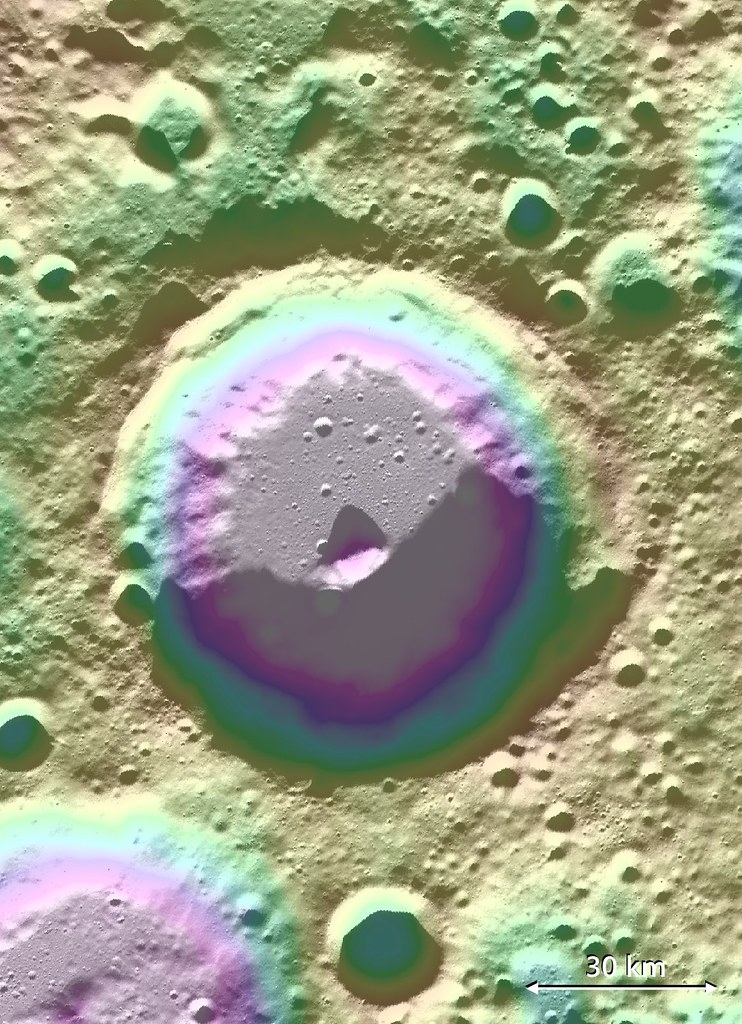
Lovelace (57.06 km; 82.08°N, 250.49°E) crater, of the Moon's far north, hosts a signature of volatiles within permanently shadowed regions (PSR) on the inside slope of its south wall. Long-term studies of the Moon's reserves of hydrogen and other volatiles, made possible by the extended science missions of the Lunar Reconnaissance Orbiter (LRO), show a diurnal cycle of hydrogen retention on pole-facing slopes, perhaps a result of neutral hydrogen from the Sun. [NASA/GSFC/ASU/LOLA/PDS].
Bill Steigerwald
Goddard Space Flight Center

Space travel is difficult and expensive – it would cost thousands of dollars to launch a bottle of water to the moon. The recent discovery of hydrogen-bearing molecules, possibly including water, on the Moon has explorers excited because these deposits could be mined if they are sufficiently abundant, sparing the considerable expense of bringing water from Earth.

Karnik
Lunar water could be used for drinking or its components – hydrogen and oxygen – could be used to manufacture important products on the surface that future visitors to the moon will need, like rocket fuel and breathable air.

Recent observations by NASA's Lunar Reconnaissance Orbiter (LRO) spacecraft indicate these deposits may be slightly more abundant on crater slopes in the southern hemisphere that face the lunar South Pole.

"There’s an average of about 23 parts-per-million-by-weight (ppmw) more hydrogen on Pole-Facing Slopes (PFS) than on Equator-Facing Slopes (EFS)," said Timothy McClanahan of NASA's Goddard Space Flight Center.

This is the first time a widespread geochemical difference in hydrogen abundance between PFS and EFS on the moon has been detected. It is equal to a one-percent difference in the neutron signal detected by LRO's Lunar Exploration Neutron Detector (LEND) instrument. McClanahan is lead author of a paper about this research published online October 19 in the journal Icarus.

The hydrogen-bearing material is volatile (easily vaporized), and may be in the form of water molecules (two hydrogen atoms bound to an oxygen atom) or hydroxyl molecules (an oxygen bound to a hydrogen) that are loosely bound to the lunar surface. The cause of the discrepancy between PFS and EFS may be similar to how the Sun mobilizes or redistributes frozen water from warmer to colder places on the surface of the Earth, according to McClanahan.

"Here in the northern hemisphere, if you go outside on a sunny day after a snowfall, you'll notice that there's more snow on north-facing slopes because they lose water at slower rates than the more sunlit south-facing slopes" said McClanahan. "We think a similar phenomenon is happening with the volatiles on the moon – PFS don't get as much sunlight as EFS, so this easily vaporized material stays longer and possibly accumulates to a greater extent on PFS."

The team observed the greater hydrogen abundance on PFS in the topography of the moon's southern hemisphere, beginning at between 50 and 60 degrees south latitude.

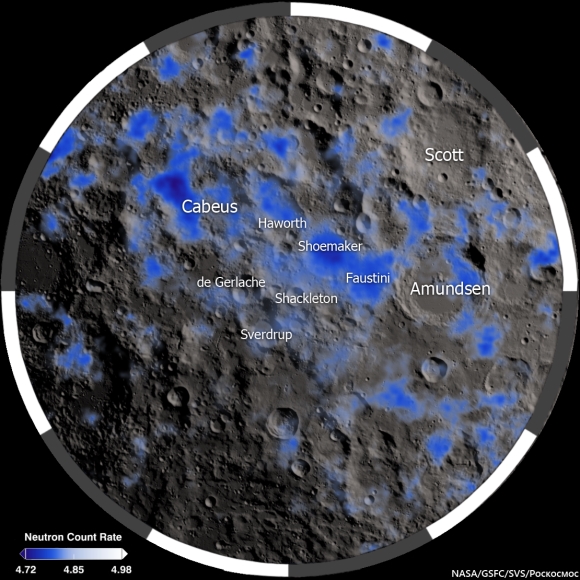
The Moon's polar south and its neutron suppression zpmes, indicative of the presence of hydrogen (inside and outside permanent shadow) mapped from data collected from the LRO LEND instrument over two and a half years [NASA/GSFC/SVS/Pockocmoc].
Slopes closer to the South Pole show a larger hydrogen concentration difference. Also, hydrogen was detected in greater concentrations on the larger PFS, about 45 ppmw near the poles. Spatially broader slopes provide more detectable signals than smaller slopes. The result indicates that PFS have greater hydrogen concentrations than their surrounding regions. Also, the LEND measurements over the larger EFS don't contrast with their surrounding regions, which indicates EFS have hydrogen concentrations that are equal to their surroundings, according to McClanahan. The team thinks more hydrogen may be found on PFS in northern hemisphere craters as well, but they are still gathering and analyzing LEND data for this region.

There are different possible sources for the hydrogen on the moon. Comets and some asteroids contain large amounts of water, and impacts by these objects may bring hydrogen to the moon. Hydrogen-bearing molecules could also be created on the lunar surface by interaction with the solar wind. The solar wind is a thin stream of gas that's constantly blown off the Sun. Most of it is hydrogen, and this hydrogen may interact with oxygen in silicate rock and dust on the moon to form hydroxyl and possibly water molecules. After these molecules arrive at the moon, it is thought they get energized by sunlight and then bounce across the lunar surface; and they get stuck, at least temporarily, in colder and more shadowy areas.

Since the 1960's scientists thought that only in permanently shadowed areas in craters near the lunar poles was it cold enough to accumulate this volatile material, but recent observations by a number of spacecraft, including LRO, suggest that hydrogen on the moon is more widespread.

It's uncertain if the hydrogen is abundant enough to economically mine. "The amounts we are detecting are still drier than the driest desert on Earth," said McClanahan. However, the resolution of the LEND instrument is greater than the size of most PFS, so smaller PFS slopes, perhaps approaching yards in size, may have significantly higher abundances, and indications are that the greatest hydrogen concentrations are within the permanently shaded regions, according to McClanahan.

The team made the observations using LRO's LEND instrument, which detects hydrogen by counting the number of subatomic particles called neutrons flying off the lunar surface. The neutrons are produced when the lunar surface gets bombarded by cosmic rays. Space is permeated by cosmic rays, which are high-speed particles produced by powerful events like flares on the Sun or exploding stars in deep space. Cosmic rays shatter atoms in material near the lunar surface, generating neutrons that bounce from atom to atom like a billiard ball. Some neutrons happen to bounce back into space where they can be counted by neutron detectors.

Neutrons from cosmic ray collisions have a wide range of speeds, and hydrogen atoms are most efficient at stopping neutrons in their medium speed range, called epithermal neutrons. Collisions with hydrogen atoms in the lunar regolith reduce the numbers of epithermal neutrons that fly into space. The more hydrogen present, the fewer epithermal neutrons the LEND detector will count.

Neutron suppression information in the Moon's polar north is, as yet, less granular than data mapped in greater detail over the far South. Here neutron suppression is overlaid on a LROC WAC mosaic with permanently shadowed regions (PSRs) outlined in black. Again, the occurrence of hydrogen is related to sunlight but not necessarily tied to its total absence.
The team interpreted a widespread decrease in the number of epithermal neutrons detected by LEND as a signal that hydrogen is present on PFS. They combined data from LEND with lunar topography and illumination maps derived from LRO's LOLA instrument (Lunar Orbiter Laser Altimeter), and temperature maps from LRO's Diviner instrument (Diviner Lunar Radiometer Experiment) to discover the greater hydrogen abundance and associated surface conditions on PFS.

In addition to seeing if the same pattern exists in the moon's northern hemisphere, the team wants to see if the hydrogen abundance changes with the transition from day to night. If so, it would substantiate existing evidence of a very active production and cycling of hydrogen on the lunar surface, according to McClanahan.

The research was funded by NASA's LRO mission. LEND was supplied by the Russian Federal Space Agency Roscosmos. Launched on June 18, 2009, LRO has collected a treasure trove of data with its seven powerful instruments, making an invaluable contribution to our knowledge about the moon. LRO is managed by NASA's Goddard Space Flight Center in Greenbelt, Maryland, for the Science Mission Directorate at NASA Headquarters in Washington.

Monday, February 2, 2015

LRO could remain in present orbit 7 or more years

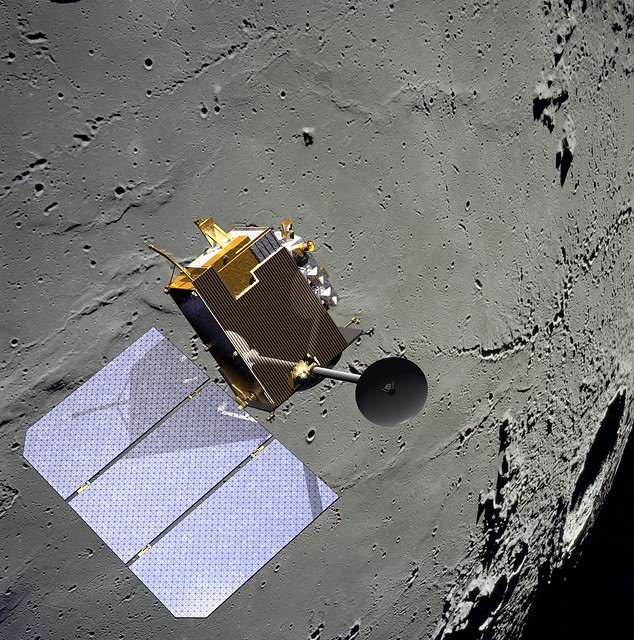
Because the Moon is lumpy and uneven, it's possible nothing has ever been in close-orbit around our companion planet as long as the Lunar Reconnaissance Orbiter. Certainly nothing built by humans. Few deep space missions have delivered as much return on their investment. The sheer volume of data returned by LRO exceeds all deep space missions ever launched combined, several times over [NASA/GSFC/SVS].


THE SECOND EXTENDED SCIENCE MISSION
FOR THE LUNAR RECONNAISSANCE ORBITER:
STATUS, SCIENCE GOALS, AND DATA DELIVERIES

Noah E. Petro and John W. Keller
NASA Goddard Space Flight Center
Solar System Exploration Division

The Lunar Reconnaissance Orbiter (LRO) has been orbiting the Moon for over five years. In that time, data from the seven instruments onboard the spacecraft have made significant advances in our understanding of the Moon and its environment. In September 2014 LRO completed its first Extended Science Mission (ESM) and began a second ESM (ESM2). 

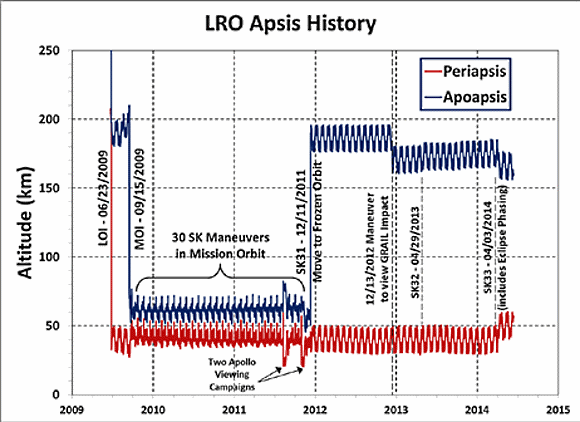
During the both ESM and ESM2, LRO has been in a quasi-stable, eccentric orbit of ~40 x 180 km with a periapse near the South Pole (Figure 1). This orbit enables high resolution measurements around the South Pole. 

The LRO Project is considering a maneuver in early 2015 to lower the periapse in order to further improve measurements over the South Pole, particularly by the LOLA instrument. Based on the current annual consumption of fuel, the spacecraft could remain in its current orbit for at least 7 more years.

FIGURE 1. Orbital history of LRO since arriving at the Moon in 2009. LRO now employs yearly station keeping (SK) maneuvers in order to maintain its orbit. There are also periodic momentum unload burns that use small quantities of fuel.
LRO Operations: As part of the approval for continued operations, LRO was directed by NASA HQ to terminate operations of the Mini-RF instrument. All of LRO’s remaining six instruments are operating nominally, and have experienced no significant degradation since beginning the ESM over two years ago.

During extended operations the LRO spacecraft has performed exceptionally well, with 98.4% uptime during the life of the mission. LRO retains sufficient fuel quantities so that its current orbit could be maintained for at least 8 years, if not longer.

LRO Science In ESM2: An overarching theme of ESM2 for LRO is that of change. A number of measurements have shown changes to the lunar surface and to its environment. LRO will focus on the five following themes that each build on prior observations from LRO, LADEE, GRAIL, and the Moon Mineralogy Mapper. Each theme has numerous questions that are address, an example few are given here.
  1. Transport of Volatiles. How are volatile elements and compounds distributed, transported, and sequestered?
  2. Contemporary Surface Change. What causes changes in the flux and intensities of meteoroid impacts onto terrestrial planets.
  3. Regolith Evolution. Characterize planetary surfaces to understand how they are modified by geologic processes.
  4. Probing the Interior from Observations of the Surface. Characterize planetary interiors to understand how they differentiate and evolve from their initial state
  5. Interactions with the Space Environment.  How is surface material modified exogenically? How do exospheres form, evolve, and interact with the space environment?
LRO Data: The LRO instrument teams will continue to deliver data to the PDS every three months. As of the beginning of 2015 over 575 Tb of data have been placed into the PDS [1]. This data volume contains a range of products, including higher level maps, mosaics, and derived products. The PDS has made available the Lunar Orbital Data Explorer [2], a mapbased tool to search for finding and downloading PDS science data of LRO as well as other recent lunar missions.

In addition to the PDS holdings, several of the LRO instrument teams have additional products and tools available on their websites (Table 1).

Several global map products have recently been added to the PDS, here we highlight a few that are new in the last year. The Mini-RF team has assembled a global mosaic of their monostatic measurements [3].

For the first time we have global radar data for the Moon, data that clearly shows variations in rock abundance and surface texture over both the near and farside (Figure 2).

FIGURE 2. Mini-RF global mosaic of the Circular Polarization Ratio (CPR), one of the number of Mini-RF mosaic products now available online.
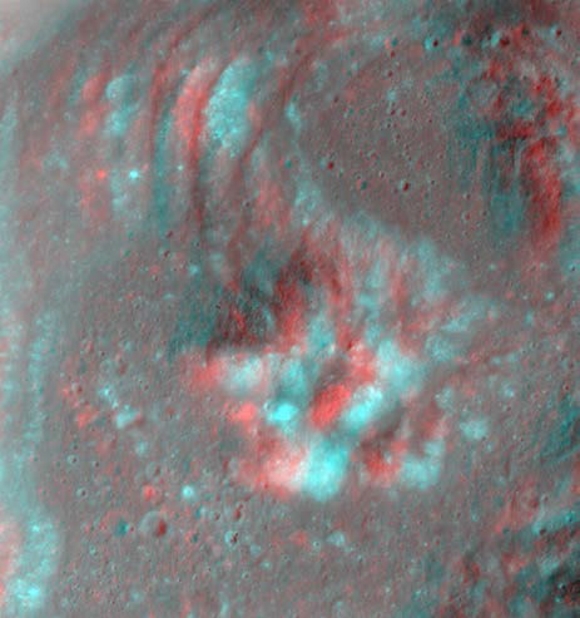
The LROC team regularly adds new products to the PDS via the team webpage (Table 1), including shapefiles, global mosaics, NAC-derived DEM’s, and NAC mosaics of selected targets. Recently the LROC team has made available a number of anaglyphs (Figure 3) showcasing the ability of the LRO spacecraft and the LROC team to precisely target the NACs.

FIGURE 3. Red-Blue anaglyph of the central peak of Euler crater.  The LROC team has made a number of anaglyphs available on their website (Table 1).
The LAMP team has a number of polar products available, including FUV ratio maps of both poles (Figure 4). These following maps are available at a resolution of 240 meters per pixel; Lyman-α (119.57–125.57 nm), Long (130–190 nm), On-band (130–155 nm), Off-band (155–190 nm), H2O Absorption Feature Depth Maps made by a Ratio map of on/off band.

FIGURE 4. LAMP Lyman-α map of the South Pole. LRO has focused on volatiles at the South Pole since arriving at the Moon 5+ years ago.
Table 1. LRO teams and their websites

LRO Project

Outreach

CRaTER

Diviner

LAMP

LEND

LOLA

LROC

Mini-RF

Use LRO Data!

The LRO Project has begun holding a series of data users workshops with the goal of helping the community work with the large volume of LRO data. Presentations given at the workshops are archived at the LRO website [4]. Questions regarding the access and use of LRO data can be directed to the authors of this abstract.

References:  [1] LRO PDS Archive, (http://pdsgeosciences.wustl.edu/missions/lro/).
[2] Lunar Orbital Data Explorer, (http://ode.rsl.wustl.edu/moon/).
[3] Cahill, J. T. S., et al., (2014) Icarus, 243, 173-190.
[4] LRO Data Resources, (http://lunar.gsfc.nasa.gov/resources.html).

Monday, August 25, 2014

Add 'sparking' in PSRs to the space weathering zoo

University of New Hampshire (UNH) scientists propose the addition of "sparking"  to cosmic rays and micrometeor bombardment as part of the relentless space weather gardening always underway within the Moon's permanently shadowed regions. This illustration shows a PSR undergoing subsurface sparking, to a depth of about 1mm, which ejects vaporized material [UNH/SVS].
Durham (NH) –- The Moon appears to be a tranquil place, but modeling done by University of New Hampshire and NASA scientists suggests that, over the eons, periodic storms of solar energetic particles may have significantly altered the properties of regolith in the Moon’s coldest craters through the process of "sparking" —a finding that could change our understanding of the evolution of planetary surfaces in the solar system.

The study, published recently in the Journal of Geophysical Research-Planets, proposes that high-energy particles from uncommon, large solar storms penetrate the Moon’s frigid, polar regions and electrically charges the regolith. The charging may create sparking, or an electrostatic breakdown, and this “breakdown weathering” process has possibly changed the nature of the Moon’s regolith within its permanently shadowed regions, or "PSR's," which may be more active than previously thought.

“Decoding the history recorded within these cold, dark craters requires understanding what processes affect their regolith,” says Andrew Jordan of the UNH Institute for the Study of Earth, Oceans, and Space, lead author of the paper. 

“To that end, we built a computer model to estimate how high-energy particles detected by the CRaTER (Cosmic Ray Telescope for the Effects of Radiation) instrument, on board LRO can create significant electric fields in the top layer of lunar regolith,” Jordan wrote.

The scientists also used data from the Electron, Proton, and Alpha Monitor (EPAM) on the Advanced Composition Explorer (ACE).

CRaTER, which is led by scientists from UNH, and EPAM both detect high-energy particles, including solar energetic particles (SEPs). SEPs, after being created by solar storms, stream through space and bombard the Moon. These particles can build up electric charges faster than the regolith can dissipate them and may cause sparking, particularly in the polar cold of permanently shadowed regions—unique lunar sites as cold as minus 240 degrees Celsius and known to contain water ice. 

The record cold at Hermite (108 km; 86.16°N, 266.68°E), straddling the 85 parallel and 270th meridian, host significant zones in permanent shadow, including permanently shadowed regions (PSRs) along it's southern wall and floor (left) the host the lowest temperatures yet recorded in the solar system, 24°K. LROC Quickmap, 250 meter resolution, orthographic projection of the Moon's north pole and vicinity [NASA/GSFC/Arizona State University].
Says Jordan, “Sparking is a process in which electrons, released from the regolith grains by strong electric fields, race through the material so quickly that they vaporize little channels.” Repeated sparking with each large solar storm could gradually grow these channels large enough to fragment the grains, disintegrating the regolith into smaller particles of distinct minerals, Jordan and colleagues hypothesize.

The next phase of this research will involve investigating whether other instruments aboard LRO could detect evidence for sparking in lunar regolith, as well as improving the model to better understand the process and its consequences.

“If breakdown weathering occurs on the moon, then it has important implications for our understanding of the evolution of planetary surfaces in the solar system, especially in extremely cold regions that are exposed to harsh radiation from space,” says coauthor Timothy Stubbs of the NASA Goddard Space Flight Center.

Tuesday, January 14, 2014

Live CRaTER data from LRO re-broadcast as music

CRaTER, now half way through its fifth year in lunar orbit onboard LRO, is providing a solid data set on the real health hazards and possible mitigation of high-energy radiation from deep space in Earth's vicinity and in low lunar orbit, where the Moon effectively shields half the sky. Using proven technologies cosmic - not solar - radiation is a significant block to long-term human spaceflight beyond the Moon [NASA/GSFC/UNH/SwRI].
Elizabeth Zubritsky
Goddard Space Flight Center

The latest tool for checking space weather is an internet radio station fed by data received from NASA's Lunar Reconnaissance Orbiter (LRO).

The radio station essentially operates in real time, receiving measurements of how much radiation the spacecraft is experiencing and converting into a constant stream of music. The radiation levels determine which instrument is featured, the musical key being used and pitches played.

"Our minds love music, so this offers a pleasurable way to interface with the data," said the leader of the music project, Marty Quinn of the University of New Hampshire, Durham. "It also provides accessibility for people with visual impairments."

The radiation levels are determined by LRO's Cosmic Ray Telescope for the Effects of Radiation (CRaTER). Equipped with six detectors, CRaTER monitors the energetic charged particles from galactic cosmic rays and solar events.

The instrument makes two kinds of crucial measurements. One type studies the interaction of radiation in space with a material that is like human tissue; this is helping scientists assess the effects that exposure would have on people and organisms. The other type looks at radiation hitting the moon and the products generated by that interaction, which provides a way to explore the composition of the regolith on the moon.

"CRaTER has discovered wide-ranging and fundamental aspects of such radiation," said Nathan Schwadron, the principal investigator for CRaTER. "For example, we have discovered that tissue-equivalent plastics and other lightweight materials can provide even more effective protection than standard shielding, such as aluminum."

Each detector on CRaTER reports the number of particles registered every second. These counts are relayed to CRaTER Live Radio, where software converts the numbers into pitches in a four-octave scale. Six pitches are played every second, one for each detector. Higher, tinkly pitches indicate less activity, whereas lower, somber-sounding pitches indicate more activity.

The software selects the primary instrument and a musical key based on recent activity. At the lowest radiation levels, the main instrument will be a piano, playing pitches from one of the major scales. But as the peak radiation level climbs, one of the minor scales will be selected instead, and the piano will be replaced by one of seven other instruments.

For example, when CRaTER picked up elevated radiation counts caused by the solar flare January 7, 2014, the primary instrument changed to a marimba, which is two instruments up from the piano. A steel drum or guitar instead of a marimba would mean the radiation level had ramped up more. A banjo would mean the peak had climbed to the top of the normal operating range.


If the counts climb beyond the top of the normal operating range – as might happen during a very big event – the software would switch into a second operating range. The piano would again represent the bottom of this range, and the banjo would represent the top. To indicate which range is current, a violin and a cello play sustained notes in the background. If those sustained notes are played at the highest pitches on the scale, the normal operating range is in effect; if those notes drop by even one pitch, the second range is being used.

The radio station is one of CRaTER's official data products and is available online and through an app. The data feed from LRO is live, with one caveat. Whenever the spacecraft moves behind the moon, it cannot line up with data-collecting antennas on Earth, so there is a blackout period of about an hour. During that time, the station reuses the previous hour's data. To indicate that the music is not live, the sound of the bongo drum in the background is changed, and the chiming of the triangle is muted.

The most familiar example of data sonification – conversion into sound – is a simple one: The Geiger counter produces a click every time it detects a radioactive particle.

In the past few decades, scientists in many fields have experimented with sonification, hoping to capitalize on humans' ability to hear small changes instantly, even against a noisy background. Music has the added advantage of making it easy to process many changes at once through variations in pitch, rhythm, tempo, scale, loudness and instrumentation.

"Music makes it easy for people to take in the data, and it seems to be a natural fit for space missions," said LRO's project scientist, John Keller of NASA's Goddard Space Flight Center, Greenbelt, Maryland.

Sonification has been used to present data from several NASA spacecraft, especially Voyagers 1 and 2 and the Kepler observatory. Quinn previously worked on sonification for other NASA missions, including Mars Odyssey, the Solar TErrestrial RElations Observatory, the Advanced Composition Explorer and the Interstellar Boundary Explorer.

Tuesday, November 19, 2013

More from CRaTER on radiation health hazards

CRaTER, in a fifth year in lunar orbit aboard LRO is providing a solid data set on the real health hazards, and possible mitigation, of high-energy radiation in deep space. Using proven technologies cosmic, not solar, radiation, is a significant block to long-term human spaceflight beyond the Moon [NASA/GSFC/UNH/SwRI].
David Sims
University of New Hampshire
Institute for the Sutdy of Earth, Oceans and Space


Scientists from the University of New Hampshire and colleagues have published comprehensive findings on space-based radiation as measured by a UNH-led detector aboard NASA's Lunar Reconnaissance Orbiter (LRO). The data provide critical information on the radiation hazards that will be faced by astronauts on extended missions to deep space such as those to Mars.

The papers in a special issue of the journal Space Weather document and quantify measurements made since 2009 by the Cosmic Ray Telescope for the Effects of Radiation (CRaTER) radiation detector.

"These data are a fundamental reference for the radiation hazards in near Earth 'geospace' out to Mars and other regions of our sun's vast heliosphere," says CRaTER principal investigator Nathan Schwadron of the UNH Institute for the Study of Earth, Oceans, and Space (EOS).

The space environment poses significant risks to both humans and satellites due to harmful radiation from galactic cosmic rays and solar energetic particles that can easily penetrate typical shielding and damage electronics. When this radiation impacts biological cells, it can cause an increased risk of cancer.

Standard spacecraft shielding, integrated into hull design,
is strong protection from most solar radiation, but defeats
this purpose with high-energy cosmic rays it simply
splits into deadly showers of secondary particles
[NAS].
Before CRaTER's long-term radiation measurements were derived using a material called "tissue-equivalent plastic" - a stand-in for human muscle capable of gauging radiation dosage - those hazards were not sufficiently well characterized to determine if long missions outside low-Earth orbit can be accomplished with acceptable risk.

CRaTER's seminal measurements now provide quantified, radiation hazard data from lunar orbit and can be used to calculate radiation dosage from deep space down to airline altitudes.

The data will be crucial in developing techniques for shielding against space-based radiation dosage. The measurements have also played a vital role in UNH space scientists' efforts to develop both the first Web-based tool for predicting and forecasting the radiation environment in near-Earth, lunar, and Martian space environments and a space radiation detector that possesses unprecedented performance capabilities.

The near real-time prediction/forecasting tool known as PREDICCS integrates for the first time numerical models of space radiation and a host of real-time measurements being made by satellites currently in space. It provides updates of the radiation environment on an hourly basis and archives the data weekly, monthly, and yearly - an historical record that provides a clear picture of when a safe radiation dose limit is reached for skin or blood-forming organs, for example.

CRaTER offers an opportunity to test the capability of PREDICCS to accurately describe the lunar radiation environment. The Space Weather special issue provides comparisons between dose rates produced by PREDICCS with those measured by CRaTER during three major solar energetic particle events that occurred in 2012.

The detector developed at UNH, known as DoSEN, short for Dose Spectra from Energetic Particles and Neutrons, measures and calculates the absorbed dose in matter and tissue resulting from the exposure to indirect and direct ionizing radiation, which can change cells at the atomic level and lead to irreparable damage. Schwadron is lead scientist for both the PREDICCS and the DoSEN project.

"DoSEN is an innovative concept that will lead to a new generation of radiation detectors, or dosimeters, to aid in understanding the hazards posed by the radiation environment of space," says Schwadron. "The ability to accurately understand these hazards will be critical to protect astronauts sent beyond low-Earth orbit on extended space missions."

DoSEN combines two advanced, complementary radiation detection concepts that present fundamental advantages over traditional dosimetry. The dosimeter measures both the energy and the charge distribution of energetic particles that affect human and robotic health in a way not presently possible with current technology. Protons, heavy ions, and neutrons all contribute significantly to the radiation hazard.

"Understanding how different particles such as neutrons and heavy ions pose hazards will be extremely important in completely characterizing the types of environments we will operate in," Schwadron says. "For example, on the Moon, there are additional hazards from neutrons that are created by high-energy radiation interacting in the lunar soil and radiating outward from the surface."

That 'backsplash" of protons, which was discovered by CRaTER and is known as the Moon's radiation "albedo," is caused by the partial reflection of galactic cosmic rays off the moon's surface. This creates a surprising one-two punch of deadly radiation and can also be used to peer below the lunar surface like a geological probe.

Says Harlan Spence, CRaTER deputy lead scientist and director of EOS, "Until now, people have not had the 'eyes' necessary to see this particular population of particles. With CRaTER, we just happen to have the right focus to make these discoveries."

UNH team members on the CRaTER instrument and co-authors on the Space Weather papers include Schwadron, Spence, Sonya Smith, Mike Golightly, Jody Wilson and Colin Joyce, Jason Legere, and Cary Zeitlin of the Southwest Research Institute Earth, Oceans, and Space Department at UNH. Coauthors from the UNH Space Science Center on the DoSEN project include James Ryan, Peter Bloser, and Chris Bancroft.
CRaTER-schematic
Figure 1. Wilson, et al, "First Albedo Proton Map of the Moon," Diagram of CRaTER instrument showing cross-sectional cutaway view of the stack of six detectors (D1–D6) and pieces of tissue equivalent plastic (TEP). Example particle trajectories are shown for a high-energy galactic cosmic ray from the zenith passing completely through the instrument (red line) and for an albedo proton (blue line) coming up from the lunar surface and passing through four detectors before being stopped in one of the blocks of TEP. (Adapted from Spence et al. [2010].)

Additional Background from NASA Goddard Space Flight Center:

Paul Gabrielsen
 
Radiation in deep space comes from cosmic rays, from the solar wind and from solar energetic particles emanated during a solar storm. Particles from these sources rocket through space. Many can pass right through matter, such as our bodies. So-called ionizing radiation knocks electrons off of atoms within our bodies, creating highly reactive ions. Within Earth's protective atmosphere and magnetic field, we receive low doses of background radiation every day. The radiation hazards astronauts face are serious, yet manageable thanks to research endeavors such as the CRaTER instrument.

CRaTER measures realistic human radiation doses at the moon using a unique material called tissue-equivalent plastic (TEP). Two pieces of this plastic, roughly 2 inches and 1 inch thick, respectively, are separated by silicon radiation detectors. The TEP-detector combo measures how much radiation may actually reach human organs, which may be less than the amount that reaches the spacecraft.

"Tissue-equivalent plastic gives us an idea of the self-shielding of the body," said Larry Townsend, of the University of Tennessee, Knoxville. "The radiation spectrum at the organs is not going to be the same as the radiation spectrum that's outside the spacecraft."

Townsend notes that CRaTER's observations have come at a time when solar activity, and hence the solar wind, has been unusually quiet. The solar wind disperses some galactic cosmic rays, but in the current solar lull, more of these rays are able to bombard the Earth and moon. CRaTER, which launched aboard LRO with six other instruments in 2009, has been able to monitor the lunar environment as solar activity has declined. Further mission extensions would allow additional detailed measurements as solar activity waxes and wanes.

"They're lower-level exposures," Townsend said, of galactic cosmic rays, "but they're damaging in the sense that the particles are highly charged and heavy, and they create a lot of damage when they're going through the body."

But lab tests suggested that materials rich in hydrogen, such as some plastics, may shield against these heavy particles, said Cary Zeitlin of the Southwest Research Institute, San Antonio, Texas. "The tissue-equivalent plastic in CRaTER has fairly high hydrogen content," he said, "so it lets us test this hypothesis using data from deep space. And it turns out that plastic really is a good shield against these particles, significantly better than aluminum."

LRO's unofficial motto states that "exploration enables science, and science enables exploration." The LRO spacecraft launched as an exploration mission, a forerunner for humanity's return to the moon. But after completing its primary mission in 2010, LRO has become a powerful instrument for lunar and planetary science. CRaTER is an active participant in this scientific study, discovering a previously unmeasured source of hazardous radiation emanating from the moon itself.

This radiation comes from the partial reflection, also called an albedo, of galactic cosmic rays off the moon's surface. Galactic cosmic ray protons penetrate as much as a meter (about 3.2 feet) into the lunar surface, bombarding the material within and creating a spray of secondary radiation and a mix of high-energy particles that flies back out into space. This galactic cosmic ray albedo, which may interact differently with various chemical structures, could provide another method to remotely map the minerals present at the moon's surface.

CRaTER directly measured the proton component of the moon's radiation albedo for the first time, said Harlan Spence, deputy principal investigator at the University of New Hampshire. The TEP radiation detector measures various components of radiation separately, which enables CRaTER to, in Spence's words, "unfold" the energy spectrum of the radiation albedo. This result, he said, illustrates the value of combining exploration and science in spaceflight. "If we had been on a different science-oriented mission, we probably would've developed a different instrument," Spence said. "In fact, we probably never would have flown TEP."

Looking toward future missions, Schwadron and his colleagues are developing a next-generation radiation dose detector, drawing on CRaTER's design. The detector, called Dose Spectra from Energetic particles and Neutrons (DoSEN) builds on CRaTER's ability to break radiation down into its components and assess the doses resulting from each part of the radiation spectrum. Human exploration will benefit, Schwadron said, from this "very specific information about the spectrum of radiation we need to shield against."

Spence, who served as the instrument's principal investigator through the primary mission said he's proud of his team's foresight to equip CRaTER with the capability to accomplish its mission and continue to pursue great science.

"We had hopes and aspirations," he said, "but we didn't think we would be able to reap as much from those data as we are. Exploration now is enabling science."

Related Posts:
Cosmic Ray threat to manned spaceflight tested on MSL (May 31, 2013)
The radiation environment and its effects on human spaceflight: A Lunar Mission (January 5, 2013)
Cosmic ray flux effects lunar ice (March 19, 2012)
"A Perfect Storm of Cosmic Rays" (September 29, 2009)
Cosmic rays and manned space travel (September 16, 2009)
Cosmic ray flux highest ever recorded (September 3, 2009)
Returning to the Moon (August 9, 2009)
Skeptical: LUNAR-TEX radiation blanket (May 11, 2009)
NASA cataract detection down to Earth (January 18, 2009)
NASA and Congress sacrifice radiation shielding flexibility
removing dry landing hardware
(May 17, 2008)

Managing Space Radiation Risk in the New Era of Space Exploration (2008)
Committee on the Evaluation of Radiation Shielding for Space Exploration
National Research Council

Wednesday, June 12, 2013

CRaTER on LRO shows lighter materials may better mitigate cosmic ray health risks

As CRaTER, flying with LRO, closes out a fourth year in lunar orbit, long duration exposure to cosmic rays while traveling within and beyond Earth's magnetic field shows materials lighter than traditional aluminum and titanium alloyed hulls may reduce the probability of Radiation Exposure Induced Death (REID) [NASA/GSFC/UHN/SwRI].
University of New Hampshire - Durham –- Space scientists from the University of New Hampshire (UNH) and the Southwest Research Institute (SwRI) report that data gathered by NASA’s Lunar Reconnaissance Orbiter (LRO) show lighter materials like plastics provide effective shielding against the radiation hazards faced by astronauts during extended space travel. The finding could help reduce health risks to humans on future missions into deep space.

Aluminum has always been the primary material in spacecraft construction, but it provides relatively little protection against high-energy cosmic rays and can add so much mass to spacecraft that they become cost-prohibitive to launch.

The scientists have published their findings online in the American Geophysical Union journal Space Weather. Titled “Measurements of Galactic Cosmic Ray Shielding with the CRaTER Instrument,” the work is based on observations made by the Cosmic Ray Telescope for the Effects of Radiation (CRaTER) on board the LRO spacecraft. Lead author of the paper is Cary Zeitlin (zeitlin@boulder.swri.edu) of the SwRI Earth, Oceans, and Space Department at UNH. Co-author Nathan Schwadron of the UNH Institute for the Study of Earth, Oceans, and Space is the principal investigator for CRaTER.

“This is the first study using observations from space to confirm what has been thought for some time—that plastics and other lightweight materials are pound-for-pound more effective for shielding against cosmic radiation than aluminum," Zeitlin said. "Shielding can’t entirely solve the radiation exposure problem in deep space, but there are clear differences in effectiveness of different materials.”

The plastic-aluminum comparison was made in earlier ground-based tests using beams of heavy particles to simulate cosmic rays. “The shielding effectiveness of the plastic in space is very much in line with what we discovered from the beam experiments, so we’ve gained a lot of confidence in the conclusions we drew from that work,” says Zeitlin. “Anything with high hydrogen content, including water, would work well.”

The space-based results were a product of CRaTER’s ability to accurately gauge the radiation dose of cosmic rays after passing through a material known as “tissue-equivalent plastic,” which simulates human muscle tissue. 

Prior to CRaTER and recent measurements by the Radiation Assessment Detector (RAD) on the Mars rover Curiosity, the effects of thick shielding on cosmic rays had only been simulated in computer models and in particle accelerators, with little observational data from deep space.

The CRaTER observations have validated the models and the ground-based measurements, meaning that lightweight shielding materials could safely be used for long missions, provided their structural properties can be made adequate to withstand the rigors of spaceflight.

Since LRO’s launch in June 2009, the CRaTER instrument has been measuring energetic charged particles— often very heavy and spectacularly energetic particles traveling at nearly the speed of light and cause detrimental health effects—from galactic cosmic rays and solar particle events (SPE's). 

Fortunately, Earth’s thick atmosphere and strong magnetic field provide adequate shielding against these dangerous high-energy particles.

To view the Space Weather article (behind academic pay wall), visit http://onlinelibrary.wiley.com/doi/10.1002/swe.20043/abstract

For more on the CRaTER instrument, visit http://crater.sr.unh.edu/ and for the LRO mission visit http://lunar.gsfc.nasa.gov/mission.html.

Related Posts:

Monday, March 19, 2012

Cosmic ray flux effects lunar ice

Space scientists from the University of New Hampshire and colleagues report they have quantified levels of radiation on the Moon's surface from galactic cosmic ray (GCR) bombardment that over time causes chemical changes in water ice and can create complex carbon chains similar to those that help form the foundations of life.

The radiation process causes the lunar regolith to optically mature (OMAT), or darken, over time; important in understanding the geologic history of the Moon.

Scientists present their findings online in the American Geophysical Union's Journal of Geophysical Research. "Lunar Radiation Environment and Space Weathering from the Cosmic Ray Telescope for the Effects of Radiation (CRaTER)," is based on measurements made by the CRaTER instrument on-board NASA's Lunar Reconnaissance Orbiter (LRO). 

The paper's lead author is Nathan Schwadron, an associate professor of physics at the UNH Space Science Center within the Institute for the Study of Earth, Oceans, and Space (EOS). Co-author Harlan Spence is the director of EOS and lead scientist for the CRaTER instrument.

The telescope provides the fundamental measurements needed to test our understanding of the lunar radiation environment and shows that "space weathering" of the lunar surface by energetic radiation is an important agent for chemical alteration. CRaTER measures material interactions of GCRs and solar energetic particles (SEPs), both of which present formidable hazards for human exploration and spacecraft operations. CRaTER characterizes the global lunar radiation environment and its biological impacts by measuring radiation behind a "human tissue-equivalent" plastic.

Serendipitously, the LRO mission made measurements during a period when GCR fluxes remained at the highest levels ever observed in the space age due to the Sun's abnormally extended quiet cycle. During this quiescent period, the diminished power, pressure, flux and magnetic flux of the solar wind allowed GCRs and SEPs to more readily interact with objects they encountered -- particularly bodies such as our Moon, which has no atmosphere to shield the blow.
The arrival of cosmic rays at Earth, far more of a threat to survival than solar radiation, more than doubles on average when the Sun is relatively quiet. The peak in neutron flux since 1958 (at right) occurred during the unusually long solar minima 2009-2010, "serendipitously" coincident to the beginning of LRO's mission and the CRaTER instrument on-board [Moscow Neutron Monitor].
"This has provided us with a unique opportunity because we've never made these types of measurements before over an extended period of time, which means we've never been able to validate our models," notes Schwadron. "Now we can put this whole modeling field on more solid footing and project GCR dose rates from the present period back through time when different interplanetary conditions prevailed." This projection will provide a clearer picture of the effects of GCRs on airless bodies through the history of the solar system.

Moreover, CRaTER's recent findings also provide further insight into radiation as a double-edge sword. That is, while cosmic radiation does pose risks to astronauts and even spacecraft, it may have been a fundamental agent of change on celestial bodies by irradiating water ice and causing chemical alterations. Specifically, the process releases oxygen atoms from water ice, which are then free to bind with carbon to form large molecules that are "prebiotic" organic molecules.

In addition to being able to accurately gauge the radiation environment of the past, the now more robust models can also be used more effectively to predict potential radiation hazards spawned by GCRs and SEPs.

Says Schwadron, "Our validated models will be able to answer the question of how hazardous the space environment is and could be during these high-energy radiation events, and the ability to do this is absolutely necessary for any manned space exploration beyond low-Earth orbit."

Indeed, current models were in agreement with radiation dose rates measured by CRaTER, which together demonstrates the accuracy of the Earth-Moon-Mars Radiation Environment Module (EMMREM) being developed at UNH. EMMREM integrates a variety of models describing radiation effects in the Earth-Moon-Mars and interplanetary space environments and has now been validated to show its suitability for real-time space weather prediction.