Showing posts with label STS-123. Show all posts

Thursday, March 27, 2008

Endeavour Returns, 15 days, 18 hours


STS-123 Mission Stats

Landed: Wed., March 26, 8:39 p.m. EDT
Landing Site: Kennedy Space Center, Fla.

Mission Elapsed Time:
15 days, 18 hours, 11 minutes, 3 secs

Official Landing Times
Main gear touchdown: 8:39:08 p.m. EDT
Nose gear touchdown: 8:39:17 p.m. EDT
Wheels stop: 8:40:41 p.m. EDT
Total miles: 6.6 million

With a 16-day mission and a smooth landing safely behind them, Commander Dominic Gorie and his crew have departed the Shuttle Landing Facility at NASA's Kennedy Space Center in Florida. Riding in the same silver Astrovan that drove them to Launch Pad 39A more than two weeks ago, they headed back to their crew quarters for further medical checks and a reunion with their family members.

Tuesday, March 25, 2008

Dexter vs. HAL

Nancy Atkinson
UNIVERSE TODAY
As Endeavour departs from the International Space Station on Monday, the space shuttle crew leaves behind a two-armed robot, the Special Purpose Dexterous Manipulator (SPDM), which the astronauts affectionately refer to as Dextre.

Any reference to robots in space brings to mind other famous, albeit fictitious, machines that have interacted with humans on board a spacecraft. And, with the recent passing of science fiction writer Arthur C. Clarke, one famous machine named HAL particularly comes to mind, especially when you factor in that Dextre is what’s called a “telemanipulator.” Any chance the space station crew needs to worry about the robot lurking right outside their hatch?

Read more HERE.

Endeavor undocks, heads home

Re-entry wednesday night
AFP
The US space shuttle Endeavour began its trek home to Earth Monday after a record five successful spacewalks and 12 days at the International Space Station where astronauts installed Japan's maiden ISS laboratory.

With the installation Japan gained a foothold on the orbital outpost alongside the United States, Russia and Europe, whose laboratory Columbus was delivered to the station in February.

"Endeavour, we have physical separation" of the two crafts, a NASA official said on a live US space agency broadcast of the undocking that took place some 211 miles (340 kilometers) above the Indian Ocean.

Departure of the shuttle and its seven-member crew was delayed 29 minutes to 8:25 pm EDT (0025 GMT Tuesday) following "minor tweaking" to a faulty solar panel latching device, NASA said.

The device, known as a Beta Gimbal Assembly, lets solar wings on the space station tilt along an axis toward the sun to maximize solar energy use, but the assembly on the station's main portside truss did not close correctly and needed to be reset.

After separation, shuttle co-pilot Gregory Johnson took the shuttle on a slow-motion flyaround of the ISS to allow astronauts to document exterior conditions of the station before heading back to Earth.

Endeavour commander Dominic Gorie late Sunday described the 16-day mission as an all-around success.

"We've done awesome," Gorie said.

"Every spacewalk was a win, every robotic op (operation) was a win. We've got a couple more to go with the undocking and the landing, but we've got a great winning team."

The shuttle is scheduled to return to Kennedy Space Center, Florida on Wednesday.

Two astronauts from Endeavour -- mission specialists Robert Behnken and Mike Foreman -- on Sunday attached a 50-foot sensory boom to the outside of the space station.

ISS flight director Dana Weigel said the spacewalk, often referred to by NASA officials as an EVA, or an extra-vehicular activity, had set a new record.

"This was five EVAs, which was more than we've done on any station mission," Weigel said.

Endeavour launched on March 11. Its mission at the ISS is the longest ever.

The spacewalkers also successfully installed an experiment on the outside of the European Space Agency's laboratory, which the astronauts had failed to complete during the third spacewalk on March 17.

The Endeavour mission's main tasks were to install the first part of the Japanese Kibo lab, a micro-gravity research facility that will be the station's largest module when completed in March 2009.

"At this moment, the people of Japan are very excited about the module," said Japan Aerospace Exploration Agency astronaut Takao Doi, who is to return to Earth on board Endeavour. "It is going to open up a new era for Japan in the space program."

He added that it remained to be seen how Japanese culture would adjust to the realities of ISS.

But in the meantime, "we like the food a lot," quipped space station commander Peggy Whitson.

European Space Agency astronaut Leopold Eyharts of France, who is returning to Earth after about two months aboard the ISS, said he was ready for the trip back home.

"I'm trying to exercise regularly, but I'm quite confident because a couple of months is not so much," Eyharts told reporters.

Astronauts also tested new repair techniques for the shuttle's heat shield. NASA has been testing different in-space repair techniques on the shuttle's protective layer since a crack in Columbia's heat shield caused it to explode while re-entering Earth's atmosphere in 2003, killing its seven-member crew.

Astronauts have also assembled the Canadian-made Dextre robot, which is designed to undertake maintenance operations on the space station that until now required a human touch, and reduce the need for risky spacewalks.

The robot's human-like upper torso swivels at the waist, and its arms were designed with seven joints to provide it with maximum versatility. Umbilical connectors provide power and data connectivity.

Manipulated by joysticks inside the ISS or from ground control on Earth, the 1.56-tonne Dextre will conduct operations such as replacing small components on the station's exterior.

NASA wants to complete construction of the ISS by 2010, when its three-shuttle fleet is scheduled to be retired.

Sunday, March 23, 2008

Foreman and Behnken complete productive fifth and final STS-123 ISS spacewalk


Associated Press - Marcia Dunn

Endeavour's astronauts embarked on the fifth and final spacewalk of their mission Saturday, this time attaching a 50-foot inspection pole to the international space station for use by the next shuttle visitors.

Michael Foreman and Robert Behnken floated out the hatch late in the afternoon as the linked shuttle and station soared more than 200 miles above the Pacific. They spacewalked the night away, successfully accomplishing all their work.

"You're the gladiator, Mike," astronaut Richard Linnehan called from inside, playing a five-second sound clip from the 2000 film. "You both are."

The shuttle astronauts used the laser-tipped inspection boom at the beginning of their 16-day mission and again Friday night to check for any damage to their spaceship. It's become a routine safety procedure ever since the 2003 Columbia accident.

Discovery won't have room for a boom when it flies in May; the Japanese Kibo lab is so big it will take up the entire payload bay. So Endeavour's astronauts left theirs behind.

Foreman and Behnken hooked an extra-long power cord to the inspection pole, to keep its lasers and cameras warm for the next two months, then secured the boom to the outside of the space station.

With the boom work quickly completed, the spacewalkers turned to less pressing chores. They inspected a jammed rotating joint that has restricted the use of a set of solar wings for months, and finally succeeded in hanging some scientific experiments to the European lab, Columbus.

Behnken was unable to hook the experiments to Columbus' hull during spacewalk No. 3 earlier in the week because of some sort of interference. He got the connector pins in this time, using a hammer.

As for the jammed rotating solar joint, it's filled with metal shavings because of grinding parts.

NASA has been trying since last fall to figure out what is broken and how best to fix the joint. Spacewalking astronauts inspected the joint several times before and even collected samples of the steel grit for analysis back on Earth. But five covers had yet to be removed, and that's where Foreman focused his efforts. He photographed what appeared to be a pit in the joint.

"You're doing great with that camera, Mike. We're going to hire you to do my cousin's bar mitzvah," astronaut Garrett Reisman radioed from inside.

Saturday night's spacewalk, which lasted six hours, was the last major space station job for Endeavour's crew. The shuttle arrived at the orbiting complex March 12, delivering the first section of the Kibo lab and a Canadian robot with 11-foot arms that is designed to assist future spacewalkers.

Endeavour is scheduled to undock from the space station on Monday night and land back at Kennedy Space Center on Wednesday night. The shuttle will have spent 12 days at the station — the longest shuttle visit ever. It was the most spacewalks ever performed — five — during a joint shuttle-station flight.

Saturday, March 22, 2008

STS-123 passes inspection, prepares for fifth & final spacewalk Saturday

While docked and onboard the International Space Station, a STS-123 Endeavour
crew member captured the glowing green beauty of the Aurora Borealis. Credit: NASA


NASA The STS-123 crew has completed the final inspection of space shuttle Endeavour’s heat shield using the shuttle’s robot arm and the Orbiter Boom Sensor System (OBSS). Commander Dominic Gorie, Pilot Gregory H. Johnson, and Mission Specialist Takao Doi surveyed the orbiter’s wings and nose cap to ensure that no damage had occurred to the tiles that protect Endeavour from the heat of reentry.

The Expedition 16 and STS-123 crews spend the remainder Flight Day 11-12 configuring tools and reviewing procedures for the flight’s final spacewalk. This includes the standard “camp out” in the station’s Quest airlock, during which the nitrogen is purged from the bodies of spacewalkers before they enter the void of space.

Mission Specialists Robert L. Behnken and Mike Foreman will begin that spacewalk at 5:23 p.m. EDT Saturday. Their tasks include stowing the OBSS on the station’s S1 Truss, where it will be picked up by the STS-124 crew aboard space shuttle Discovery, set to launch in May.

Wednesday, March 19, 2008

Dextre assembled, STS 123 & Expedition 16 enjoy R&R and prepare for fourth spacewalk Thursday evening.

Rick Linnehan works to complete Dextre's 'hands'
finishing seven-hour third STS-123 spacewalk
NASA
In a day highlighted by robotics activity, the Canadian-built Dextre was attached to a power and data grapple fixture located on the U.S. laboratory Destiny. The new robotic system is the final element of the International Space Station’s Mobile Servicing System. Mission Specialists Rick Linnehan and Mike Foreman have finished assembling Dextre.

Canadarm2, the International Space Station’s robot arm, grabbed the pallet that secured Dextre during its journey to the orbital outpost and returned the pallet to space shuttle Endeavour’s payload bay for the trip back to Earth.

The station and shuttle crews also prepared hardware to be used in a shuttle tile repair test on the next spacewalk, and they got some much needed off duty time.

Foreman and Mission Specialist Robert Behnken are slated to begin the mission’s fourth spacewalk at 6:28 p.m. Thursday. The two will perform tasks that include the shuttle tile repair test and change out of a circuit breaker on the station.

Friday, March 14, 2008

A Week in Space: Success Built on Failure

The Fountains of Enceladus

"Institutional memory is no luxury at NASA."
Joel Raupe
LUNAR PIONEER

The week in space saw demonstrations of astounding success, with stubbed toes and skinned knees here and there. Around Saturn, in low-Earth-orbit and here on the surface humans are building success on the shoulders of monumental failure.

Twentieth Century astronomer Harlow Shapley may have been wrong to disagree with Edmund Hubble’s theory that the Milky Way is yet another Galaxy, in a universe filled with similar “islands” in "the Great Debate" with Heber D. Curtis in 1920, but Shapley was prophetic in believing the quest for the stars would be a rugged one.

Planning for Failure:

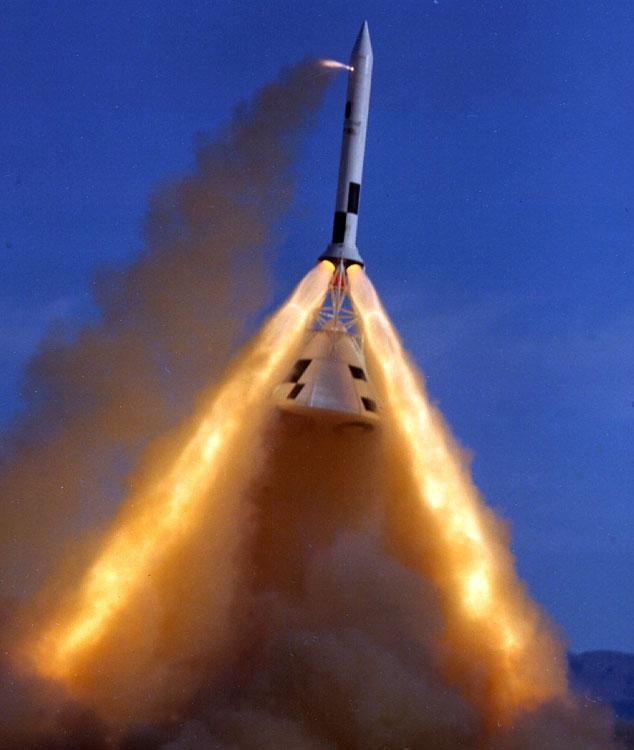
At Langley Research Center NASA showed off an engineering mock up of an Orion engineering mock-up built to test launch failure escape systems. It evoked memories of similar Apollo mock-ups rolled out in 1961, even as Project Mercury was barely underway, and also memories also of Apollo 1 and the launch test Oxygen fire incinerating it's crew, Gus Grissom, Ed White and Roger Chaffee in 1967.

"Institutional Memory isn't a luxury with NASA. Failure to remember is far too expensive.

Last month Thomas D. Jones remembered his friends aboard Columbia five years ago when he wrote in Popular Science that “Orion will launch with a powerful escape motor that can rocket its crew away from a disintegrating booster. A conical crew cabin structure will protect the heat shield beneath it from a debris strike like the one that doomed Columbia.”

Institutional Memory isn't a luxury with NASA. Failure to remember is far too expensive, as is contingency planning that would give a soccer mom a brain cramp. The costly fire on the pad killing the crew of Apollo 1, and the Apollo 204 Investigation Board, led by future Apollo 8 commander Frank Borman, and the discovering of 20,000 design flaws in the Apollo/Saturn vehicles, saved future success for Apollo and nine visits by 27 people to lunar realm.

Of course, the pad fire would not have been prevented by a capsule escape system, a contingency never used in American manned spaceflight, but it does show contingency planning works. It works where failure is anticipated. Critical faults that did end up failing in the future appear always to be ones not planned for in contingency policy, but deadly failure always brought harsh light to systemic and mechanical flaws in need of being contingency planning priorities.

Capsule escape systems were never used during the Mercury, Gemini and Apollo missions, but early NASA officials were informed by the spectacular booster explosions on the pad and just after lift-off of unmanned vehicles before and after, just as they're reminded today by more recent failure. Thomas D. Jones' article in POPSCI shows a return to expendable boosters and “capsules” won't mean that Constellation will be uninformed by the space shuttle and the lessons of both Challenger and Columbia, perhaps in finally giving design and mission critics a voice equal to those of accountants and vendors, and their friends in Congress.

Working the Problem:

In low-Earth-orbit, STS-123 and Endeavour docked with the International Space Station and joined Expedition 16 a few minutes later than planned, and by the end of our work week the first of five planned spacewalks during the shuttle's stay ended with attachment of the Japanese Kibo module and new dexterity added to the space station’s robotic Canadarm2 and crane with Dextre properly installed, at least where it should be.

Initial Power Couplings for the improvement didn't power-up, however, but costly failure was diverted in time when Primary Couplings were installed on the second spacewalk of STS-123, Saturday.

It's been a working weekend for NASA-Houston, and mostly according to plan for the ten people falling around Earth five miles a second, and 200 miles overhead.

On the first spacewalk, EVA record holder and ISS Expedition 16 commander Dr. Peggy Whitson reported her first look inside Kibo from the station showed "nothing unexpected." She was also happy to confirm no "floaters" inside the new station segment, now the first manned space vehicle built by Japan.

Expedition 16 flight engineer Dr. Garrett Reisman and STS-123 mission specialist Dr. Rick Linnehan completed the first spacewalk of the shuttle mission at 0919 UT, out in the void for seven hours and one minute.

Hiccups.

Far beyond the Moon, and just past conjunction, the soft yellowish star overhead before sidereal midnight testifies to the distance Cassini first had to travel even to begin its mission at Saturn.

It has been darting up and around and over and under the gaseous giant, using orbital mechanics of astounding complexities and Saturn and its many moon's gravity wells as third and fourth dimensional side pockets to fly out and away and quickly drawn back in again in precise maneuvering over and over again in an orbit around Saturn unlike any in nature.

Wednesday evening, in a much anticipated event Cassini was busy collecting data as it sliced just under the brightest moon in the solar system, over fresh snow on the south pole of Enceladus.

Slewing cameras as it moved by at 9 miles a second (14.4 kps); and only 32.3 miles above its surface, Cassini performed another unprecedented maneuver in a mission composed of unprecedented maneuvers to discover more about still another outer solar system discovery.

Almost everyone who read a newspaper on Earth knew the purpose. Ice geysers, shooting towers of wispy strands the fan directly away at distances far greater than Enceladus' width had been discovered where a heat signature was spotted in the Infrared spectrum earlier in the mission. Cassini, steered by controllers at JPL a billion miles away in Pasadena, was forced to zip directly through what apparently were the highest water fountains known to exist in our star system.

Enceladus has joined its Saturnian sister Titan, and Jupiter’s Io and Europa, as a member of the human "Hit Parade" of most intriguing moons.” It's large enough for its mass to have crushed itself into a sphere, but has a snow-blinding diameter roughly equal to the length of Interstate 95 in North Carolina.

As monumental a success as the maneuver turned out to be in adding another achievement to Pasadena’s long list of unsurpassed magic, as JPL waited for the data to download as it arrived in packets from 90 light minutes away as it was being scooped up by the Deep Space Network, and as Cassini continued a mad dash toward Titan, it became clear after a time that a “software hiccup” had spoiled a most important part of the show.

Planetary scientists won’t be disappointed with the pictures. They may even yet begin to answer the question of what forces are at play making Enceladus so “dynamic” and new in its south while so obviously ancient and quiet in its north. Those same scientists continue to puzzle over the awesome complexities of Saturn’s rings, and Enceladus with her high fountains of water ice somehow plays a role in that mystery.

Leading into the flyby Cassini shot side glances of those rings nearly edge on and caught now alomost routine shots of more than a few of the Ring’s Shepherd Moons, dancing to a melody we still can’t quite hear. Enceladus may be chief among them, particulary concerning its part in the cycling of Saturn's E-Ring.

But the very experiment onboard Cassini needing to be inside those tremendous Fountains of Enceladus became useless at the very moment it was most needed, though shuffling of software that had been rehearsed and rehearsed, and rehearsed again in the days beforehand. It was an anomaly suitable to a short story by Arthur C. Clarke.

JPL explained the "hiccup" this way:

"During Cassini's closest approach, two instruments were collecting data--the Cosmic Dust Analyzer and the Ion and Neutral Mass Spectrometer. An unexplained software hiccup with Cassini's Cosmic Dust Analyzer instrument prevented it from collecting any data during closest approach, although the instrument did get data before and after the approach. During the flyby, the instrument was switching between two versions of software programs. The new version was designed to increase the ability to count particle hits by several hundred hits per second. The other four fields and particles instruments on the spacecraft, in addition to the ion and neutral mass spectrometer, did capture all of their data, which will complement the overall composition studies and elucidate the unique plume environment of Enceladus."And the raw imagery doesn't disappoint, with promising new information promising to be teased out in the days ahead.

Amazing Cassini, unscathed, roboticly unembarrassed, now speeds on toward Titan, continuing a long and amazing tour.

Cassini returns to Enceladus next October.

Europe’s Progress:

And then there’s the Jules Verne, ESA's new unmanned ATV space truck, which was inserted safely into a parking orbit after being lifted high and fast aloft from equatorial Kourou while perched atop a powerful Ariane 5.

During initial orbital checkout, in a “holding pattern” and with time to kill as controllers waits for Endeavour to depart for its turn at the Harmony Node at ISS, ESA ground controllers worked feverishly to restore 7 of 28 reaction control thrusters and one of three of the ATV’s main engines, failing to respond to command.

They were successful in restoring the fire (though ESA was confident the cargo vessel would safely make it to ISS regardless) and they can stop sweating, for the moment, ahead they can look forward to new ATV’s first semi-automated docking depending the hardcore-proven Russian-supplied and Ukrainian-built Kurs docking system.

Conclusion:

Noteworthy in all this are simple facts illustrating little problems are always essential parts of the stories of big successes, and big success seems highly dependant upon now-working systems that were once spectacular failures.

That Kurs docking system, an unquestioned success today and essential to the ISS and Russia's Progress, was a buggy and unholy mess, playing a role in breath-stealing human and mechanical error such as more than one complete miss, near miss and at least one catastrophic accident in the days of the Soviet MIR space station program only eleven years ago.

And Jules Verne was successfully propelled to its present station-keeping orbit by the once- equally disastrous Ariane 5, which exploded nine miles up and rained debris on the French Guyana and Brazilian coast over an area of many miles twelve years ago.

Remembered clearly that day the cry of a Kourou facility launch director, when it happened, who reported with tears, “it is all over, it is all finished.”

Clearly, it was not.

And then the beginning of this present NewSpace Race, even throughout the world, might well be marked by the hellish disintegration of Columbia over Texas on February 1, 2003., though some would mark it with Ronald Reagan's determination to open the sky to entrepreneurship the previous decade. It was Columbia that refocused public attention, and without political will, Lincoln believed, nothing is possible.

Far from ending manned and unmanned space exploration, renewed Vision starts with documented mechanical and systemic failure. Failure may not be "an option," but it is a proven element essential to success.

Thursday, March 13, 2008

Endeavour Mates, ATV repaired, awaits

NASA - ESA - JAXA "The most International mission
of the International Space Station"

As the Crew of Endeavour safely docked, only a bit behind schedule, early today, word arrived from ESA that a fault in the ATV locking out control of 7 of 28 Reaction Control System thrusters and one main engine had been repaired. In a "holding pattern," ATV is prepared now, with "all systems go" to dock at ISS soon after Endeavour completes its stay, part of the longest planned mission of the Shuttle's nearly twenty-seven year history, with five planned space walks and a longer mission made possible by power shared between the Endeavour and ISS.

NASA The STS-123 and Expedition 16 crews opened the hatches between space shuttle Endeavour and the International Space Station at 06:28 a.m. UT. They are combining forces for 12 days of joint operations. -

Endeavour delivers the first section of the Japan Aerospace Exploration Agency's Kibo laboratory and the Canadian Space Agency's two-armed robotic system, Dextre.

› Complete Shuttle Coverage
› Mission TV Schedule
› Interactive Mission Timeline
› Latest Images and Videos

Tuesday, March 11, 2008

Endeavour Soars into Space

NASA - Night Launch visible throughout US eastern seaboard begins two weeks, five space walks, installation of Kibo Module and Canadarm "Dexter"

Space shuttle Endeavour thundered into orbit early Tuesday morning carrying seven astronauts and Japan's dreams for a space-based laboratory at the International Space Station.

"This is a great launch and a real tribute to the team to get it ready to go fly," said Bill Gerstenmaier, NASA's associate administrator for Space Operations.

The STS-123 mission started with a rare night launch for Endeavour's crew, commanded by veteran astronaut Dominic Gorie. Gregory H. Johnson served as Pilot. The mission specialists for the flight are an international mix of experienced and first-time crew members. Robert L. Behnken, Mike Foreman, Rick Linnehan, Garrett Reisman and Japanese astronaut Takao Doi all have critical roles during the 16-day mission by Endeavour.

Thrust in the form of translucent blue and bright yellow fire ignited a light show over NASA's Kennedy Space Center when Endeavour roared off the launch pad at 2:28 a.m. EDT on March 11.

The first module of the Japanese-built Kibo laboratory complex was packed inside Endeavour's cargo bay, along with a Canadian-built robotics system that will enhance the capabilities of the International Space Station's robotic arm.

The pressurized logistics module for the Kibo complex represents the first manned spacecraft for Japan.

"With this flight, I believe we fully became a real partner in the International Space Station project," said Keiji Tachikawa, president of JAXA, the Japanese space agency.

Dextre is the robotics system that Endeavour lofted into orbit. With it, Canada is making a literal extension to what the nation already built. Canada built both the space shuttle robot arm and the robotic arm used on the International Space Station.

"Today we are marking another point in our space history," said Guy Bujold, director of the Canadian Space Agency.

It will take the STS-123 crew more than two weeks in space and five spacewalks to accomplish the goals of the mission.

Expedition 16 Flight Engineer Leopold Eyharts, who arrived at the station aboard Atlantis in February, will return to Earth with the Endeavour crew as Reisman takes his place on the station.

Endeavour GO for Night Lunch 2:29 AM

STS-123 Boost Phase visible from KSC to New York

SPACE TRAVEL
NASA SPACEFLIGHT said all systems were "go" for the launch of space shuttle Endeavour and its STS-123 mission to the International Space Station.

The shuttle is to lift off at 2:29 a.m. EDT Tuesday from the Kennedy Space Center in Florida. The shuttle's seven astronauts will, among other things, deliver the first section of the Japanese-built Kibo laboratory and the Canadian Space Agency's two-armed robotic system called Dextre.

At 6 a.m. Monday, the rotating service structure that provides access and weather protection for Endeavour was retracted, clearing the way for loading about 500,000 gallons of liquid oxygen and liquid hydrogen propellants into the shuttle's external fuel tank Monday evening.

NASA said the weather forecast called for a 10 percent chance that atmospheric conditions would delay the launch, although meteorologists said they were concerned about the slight chance of a low cloud ceiling around Kennedy at launch time.

STS-123 will be commanded by Dominic Gorie with Gregory Johnson serving as shuttle pilot. The crew includes astronauts Rick Linnehan, Robert Behnken, Mike Foreman, Garrett Reisman and Japanese astronaut Takao Doi.