Showing posts with label Luna 16. Show all posts

Friday, March 26, 2010

The first successful robotic sampler, Luna 16


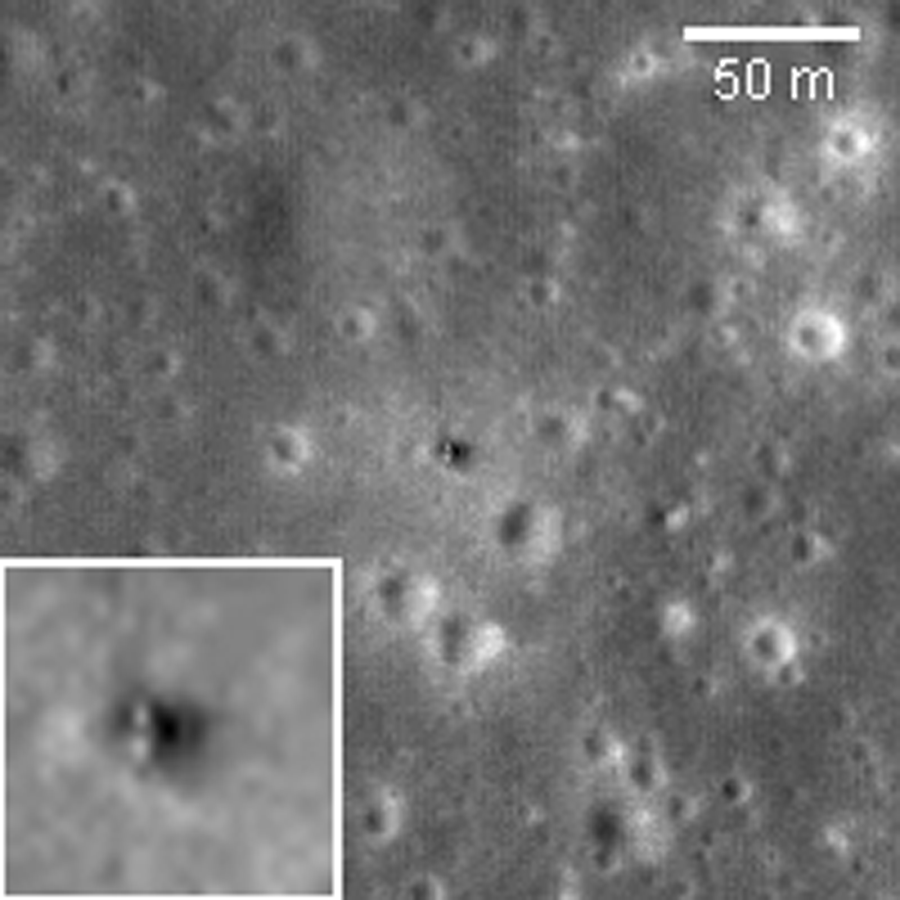
The Soviet Union's Luna 16 descent stage, site of the first successful robotic lunar sampling mission and origination point for the return spacecraft, swept up by the Lunar Reconnaissance Orbiter (LROC) narrow-angle camera from an altitude of 124.18 kilometers, late in last summer's commissioning phase for the orbiter, September 2, 2009 (14,227 days after the soft landing) [NASA/GSFC/Arizona State University].

Mark Robinson
LROC News System

Luna 16 was the first robotic mission to land on the Moon and return a sample to the Earth. It was launched by the Soviet Union on 12 September 1970; landed on the Moon on 20 September; lifted off on 21 September and returned to the Earth on 24 September. The lunar landing occurred on the basaltic plains of Mare Fecunditatis; about 101 grams (3.5 ounces) of lunar material were returned. Sampling operations were conducted entirely in the dark since the Sun had already set when Luna 16 touched down (See below).

Tonight (late March 25, 2010 UT) the Luna 16 landing site bakes in mid-day equatorial sunshine near the eastern limb of a Moon waxing Full as seen from Earth, high overhead after sunset. Amazingly, as the inset showing the Moon's waning phase on Sept. 20, 1970, the robotic sampler was soft-landed, trapped its small but now-proven very valuable sample, and began its return trip to Earth in cold darkness, long after the local nightfall (with Earth, eternally hanging high over the western horizon, waxing Full) [Virtual Moon Atlas, v.5].

The high-altitude, relatively high-angled slew of LRO's fore-shortened view of this narrow-angle camera "target of opportunity," last September 2, left some detail at high contrast in the original commission-phase LROC frame "nacl00008ce6." Of course, the reduced quality of the calibrated version seen above in Google Moon is not a reflection of the image quality at present, in the product now labeled "M106511834." It's yet another tribute to the skill of the LROC team at Arizona State that the quality of the image today, originally imaged at a relatively high angle and from three times the LRO's present nominal mission altitude, made resolving the Luna 16 descent stage even remotely possible [Google/USGS/NASA/JAXA/GSFC/ASU].

A less-then-completely "notional" scene showing a 3D view of Luna 16 (with ascent stage still intact) as seen within the actual context of the present-day artifact's true surroundings on the Moon, made possible by the LROC and Google Earth.

Zoom into and explore Mare Fecunditatis and the sampling site of the landmark Luna 16 mission within LROC NAC image M106511834L, HERE. (LROC NAC Images of Luna 20, 23, and 24 can be found here).

Wednesday, March 17, 2010

LROC: Lunokhod I & Lunokhod II


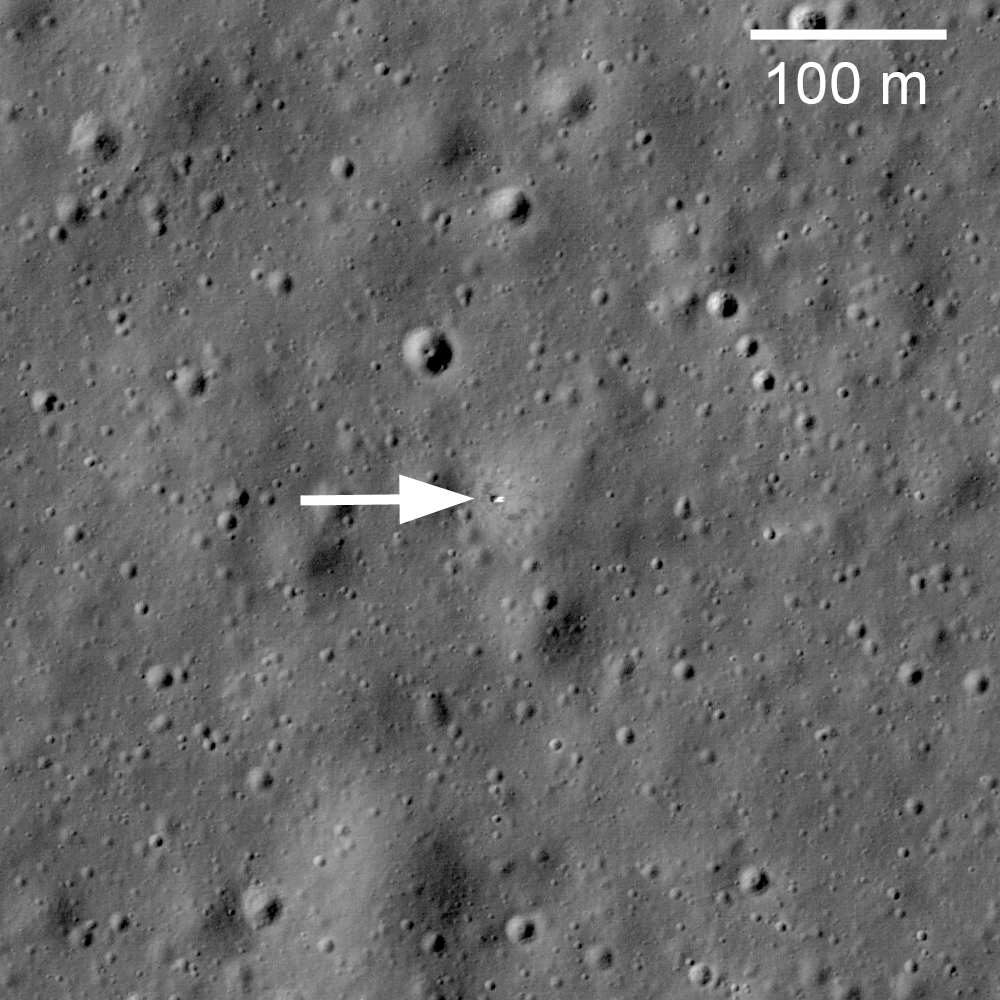
Soviet robotic lander Luna 17 still sitting on Mare Imbrium where it delivered the Lunokhod 1 Rover in November 1970, LROC NAC Image M114185541RE [NASA/GSFC/Arizona State University].

Mark Robinson
LROC News System

An amazing spacecraft gently settled to the lunar surface on 17 November 1970. It carried the first successful robotic lunar rover -- Lunokhod 1. For the next ten months the rover was driven by operators in the Soviet Union, with the total distance traveled exceeding 10 km. For comparison, in six years of operation the Mars Exploration Rover Opportunity has traveled about 12 km.

The Lunokhod rovers are approximately 2.3 meters long and 1.5 meters tall.

After landing, the rover drove down a ramp onto the lunar surface and tested its eight wheels. The rover was driven by solar power during the day; at night it parked and relied on thermal energy from a polonium-210 radioisotope heater to survive the cold (-150°C).


Lunokhod 1 Rover in its final parking spot, LROC NAC Image M114185541RE [NASA/GSFC/Arizona State University].

The intrepid rover sent back valuable data concerning the composition of the regolith (soil), close up views of the local topography, and important engineering measurements of the regolith. Examine the full NAC image and trace out the path of Lunokhod 1.

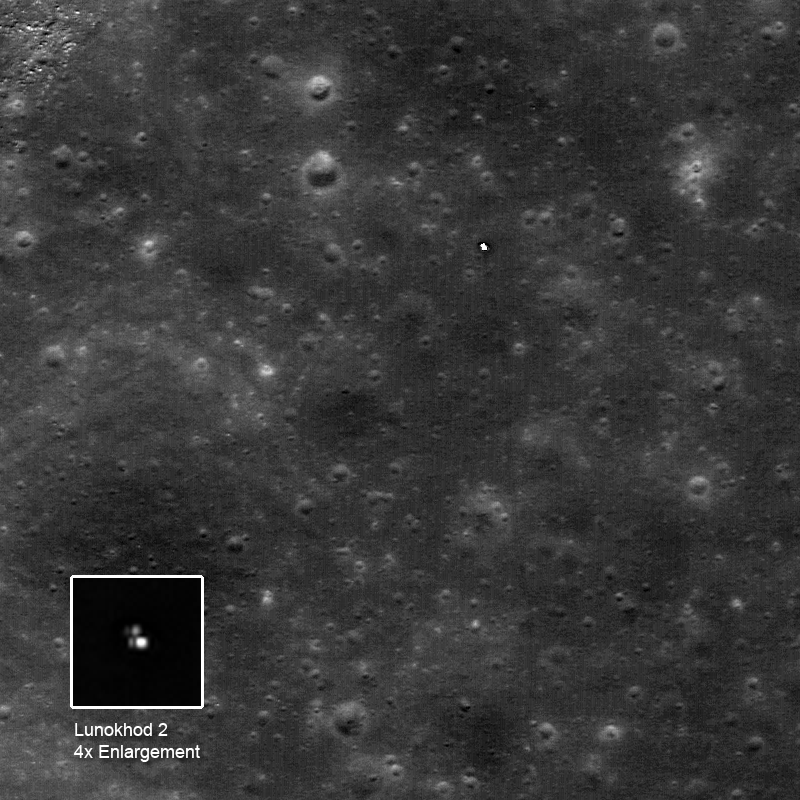
Two years later (January 1973) Luna 21 landed in Le Monnier crater, delivering an upgraded Lunokhod 2. It sported higher resolution cameras and an improved scientific payload. Like its predecessor, it was driven by engineers on Earth during the day, and parked at night. Lunokhod 2 explored the Moon for about four months. Unfortunately, the mission was brought to an early end due to overheating, perhaps when soil got on the rover and covered key components.


Lunokhod 2 rover, note its tracks tracing its route southward. The enlargement is specially stretched to show the form of the rover, the brightest area may be the open clam shell lid; NAC Image M109039075LE [NASA/GSFC/Arizona State University].

The two Lunokhods showed the value of robotic explorers on the surface of another world. It would be another 24 years before the next robotic rover, Sojourner, drove on another world - this time Mars. The next lunar rover, 40 years later, is scheduled for 2013, a joint venture between India and Russia.

Old friends receive a visitor

Recently the LROC Science Operations Center received an unexpected visitor - Ruslan Kuzmin. He was one of the scientists who had actually participated in the Lunokhod missions! We were able to show him LROC pictures of the hardware on the surface and he was gracious enough to write down some of thoughts upon seeing his "old friends".

"Thank you very much for showing me the excellent LROC images of the Lander platform from “Luna-21”, as well as the robotic lunar rover “Lunokhod-2” in its last and eternal parking place after a 37-km, 4 month journey of research.

"To see the images with Lunokhod-2 and its tracks on the lunar surface is a very special feeling for me. In the time of the Lunokhod-2 operation, I was a young planetologist who was participating in the mission, and I analyzed the images received by the rover’s TV- cameras. In actual fact, this was the first successful mission in which I was involved. It was 37 years ago (in the last century!) when the Lunokhod-2 traveled for four months within the crater Le Monnier at the eastern edge of the Mare Serenitatis."

"While looking at LROC images of the Lunokhod-2 rover, I felt a deep interior excitement due to the welled up memories of the earliest “pages” of my science career. It is very exciting that the Lunokhod-2, as well as many other American and Soviet Union Landers, which operated many tens of years ago, now might be imaged by LROC so clearly, and viewed by millions of people around the world. The LRO camera is without any doubt a really fantastic instrument that simultaneously brings our eyes close to the lunar surface, while reminding us of pioneering results from historical missions.

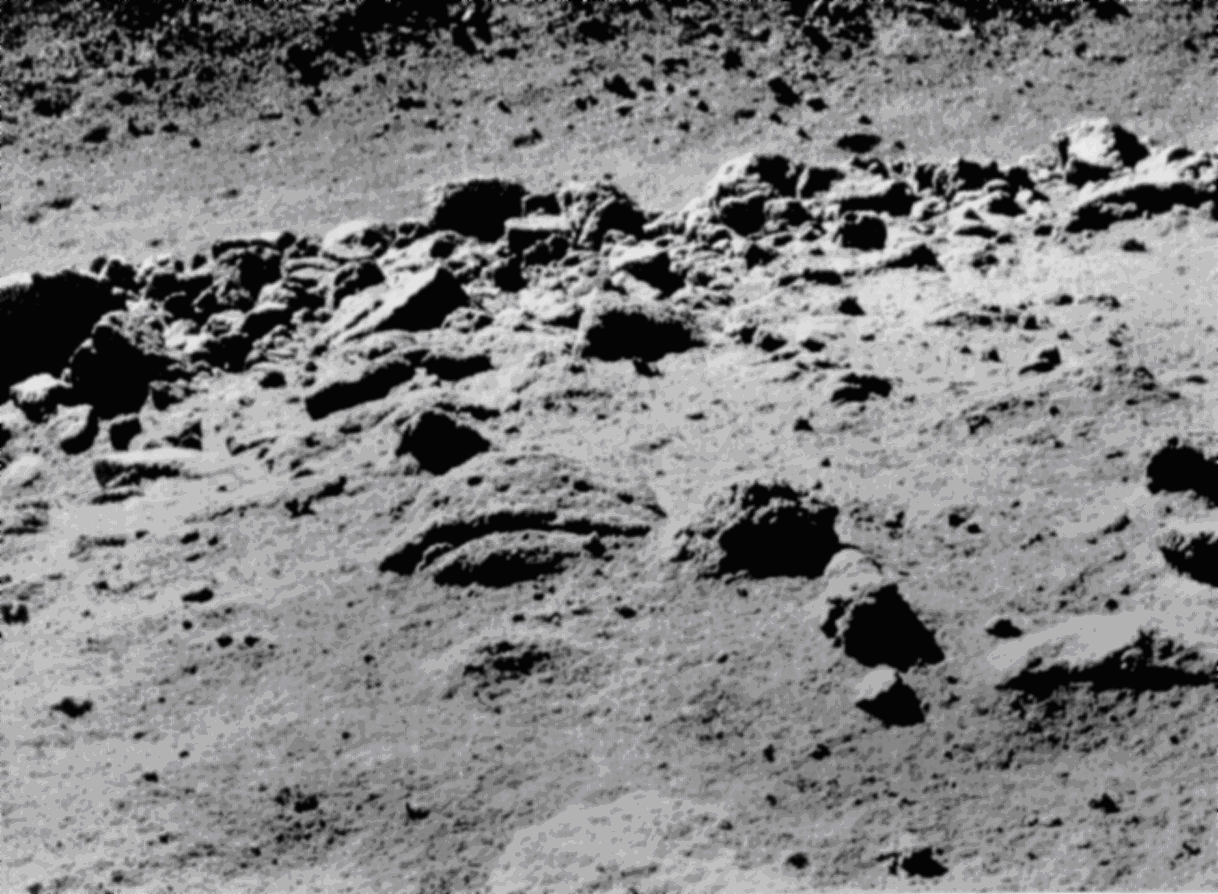
"P.S. In attachment I sent the fragment of the Lunokhod-2 panoramic image of the Fossa Recta - the last object of its research."


Fragment of last Lunokhod 2 panorama, image courtesy of Ruslan Kasmin.

Find the Lunokhod 2 and its tracks in the full resolution NAC image.

Tuesday, March 16, 2010

LROC: The Soviet lunar sampling missions


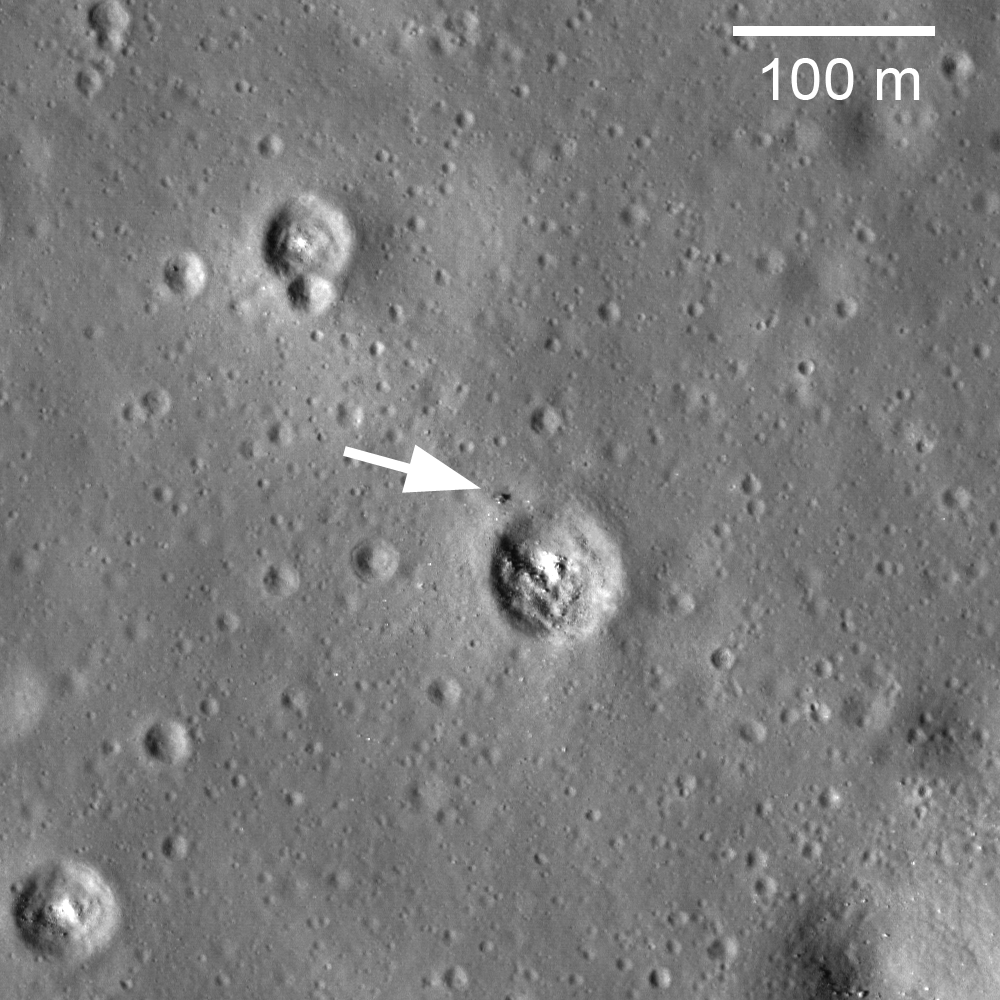
On February 21, 1972, Luna 20 soft landed in the rugged highlands between Mare Fecunditatis and Mare Crisium. The next day a sample return capsule blasted off carrying 55 grams of lunar soil. The Luna 20 descent stage is clearly visible in LROC Narrow-Angle Camera image M119482862RE [NASA/GSFC/Arizona State University].

Mark Robinson
LROC News System

The Soviet Union successfully executed three robotic sample return missions as part of the Cold War competition with the United States. The first mission, Luna 16, returned a small sample (101 grams) from Mare Fecunditatis in September of 1970, a time between the US Apollo 12 and 14 manned landings. A year and half later (February 1972) Luna 20 returned 55 grams of soil from the Apollonius highlands region. Explore the Luna 20 landing site.

Luna 16 and 20 were very similar in design and sampling method. A drill at the end of the sampling arm collected soil from a few tens of cm below the surface. The arm then placed the sample into the return capsule on top of the vehicle. The distinctive shadow seen in the LROC image of Luna 20 is most likely that of the sampling arm. The Luna 20 sample contained minerals similar to those sampled by the US Apollo 16 astronauts two months later from the Cayley plains (8°58"S, 15°30"E).

In October of 1974 Luna 23 set down on Mare Crisium, however technical difficulties prevented it from successfully acquiring a sample. Undeterred, the Soviets tried again in August of 1976, this time with much better luck. Luna 24 was designed to auger over 2 meters into the lunar soil thus collecting a better section and a larger sample, 170 grams. The positions of Luna 23 and 24 were not well constrained and are reported as within several hundred meters of each other. From the new NAC images we can accurately measure the distance between the two landers to be about 2400 meters. However the absolute position of the landers is only know to about 500 meters accuracy. As the LRO mission ephemeris improves, the Luna absolute positions should be known to better than 100 meters. Scroll around in a mosaic of two NAC high Sun images (M111185087L,R) and find Luna 23 and Luna 24. Look for a few very bright pixels near Luna 24; they may be small pieces of material blown off the descent stage as the ascent staged blasted off towards Earth.

The successful Soviet Luna sample return missions returned small, but important, samples from three locations on the Moon. In this new era of lunar exploration several countries plan to soft land on the Moon in the near future, the first soft-landed spacecraft since Luna 24. India and Russia plan to launch a lander and rover called Chandrayaan 2 in 2013. The Chinese Chang'e lunar exploration program also plans a soft landing in 2013. Though NASA currently has no firm plans for a future lunar landing (robotic or crewed), it is considering a sample return mission from the lunar far side as a part of its New Frontiers program.